Unit 066 Unit 066
Big, remote Snowstorm Mountains-and-Owyhee-Desert country: antelope-strong with all-elevation mule deer and a stray Shiras moose.
Northern Nevada — Elko / Humboldt County line (NDOW Area 6) · Last reviewed 2026-07-12
Area
1,901
sq mi
Public land
81%
approx.
Elevation
5,100–8,400
feet
Motorized
moderate
access
Overview
Unit 066 is a sprawling ~1,900-square-mile block of northern Nevada straddling the Elko–Humboldt county line, built around the Snowstorm Mountains and the vast Owyhee Desert north toward the Idaho line. Antelope are the standout (about 75% five-year success) across the open sagebrush, while mule deer occupy all elevations and concentrate in the higher Snowstorm country, and elk are present in small numbers. Nevada's expanding Shiras moose herd even puts the occasional animal into the willows here. This is big, empty, self-sufficient country — plan on hard scouting, long dirt drives and no cell service.
Terrain
Broad sagebrush flats and rolling benches of the Owyhee Desert broken by the higher Snowstorm Mountains, which rise to roughly 8,400 ft and hold the unit's timber and aspen. It hunts as open glassing country across the desert, with deer and elk holding to the mid-to-upper slopes and shaded draws of the Snowstorms above about 6,500 ft.
Cover: Big sagebrush and grass steppe dominate the flats and benches, with mixed aspen, serviceberry and mahogany pockets in the Snowstorm Mountains and green riparian stringers and willows along creeks and around reservoirs.
Landmarks: Snowstorm Mountains (unit high country, ~8,400 ft) · Owyhee Desert (northern flats) · Wilson Reservoir · Chimney Reservoir · Rock Creek drainage · Idaho state line (to the north)
Access
About 81% public, overwhelmingly BLM sagebrush and desert with scattered higher Forest ground in the Snowstorms, so dispersed camping is wide open — including scenic sites at Wilson Creek and Chimney reservoirs. Access is via long graded and dirt roads off the regional highways and a web of two-tracks; distances between anything are large. Cell service is limited to nonexistent across most of the unit.
Managers: BLM, USFS Humboldt-Toiyabe NF (scattered higher parcels), Private (ranches and checkerboard sections)
Access points: Roads north from the Interstate 80 / Battle Mountain corridor · Wilson Reservoir access roads · Chimney Reservoir access roads · BLM dirt-road network through the Owyhee Desert and Snowstorm Mountains
Species notes
Pronghorn
common qualityAntelope are the unit's strongest draw, with roughly 75% five-year success across the expansive sagebrush of the Owyhee Desert and the flats around the Snowstorms. Tags are limited-draw over a lot of country, so glassing miles pays off.
- →Glass the big open flats and benches from high points at first and last light — antelope rely on eyesight and open ground.
- →Key on water sources, reservoirs and green riparian pockets during warm early seasons.
- →Cover ground to inventory bucks across the huge sagebrush expanse, then use terrain folds to close.
- →Get away from the reservoir and road corridors where pressure concentrates once seasons open.
Mule Deer
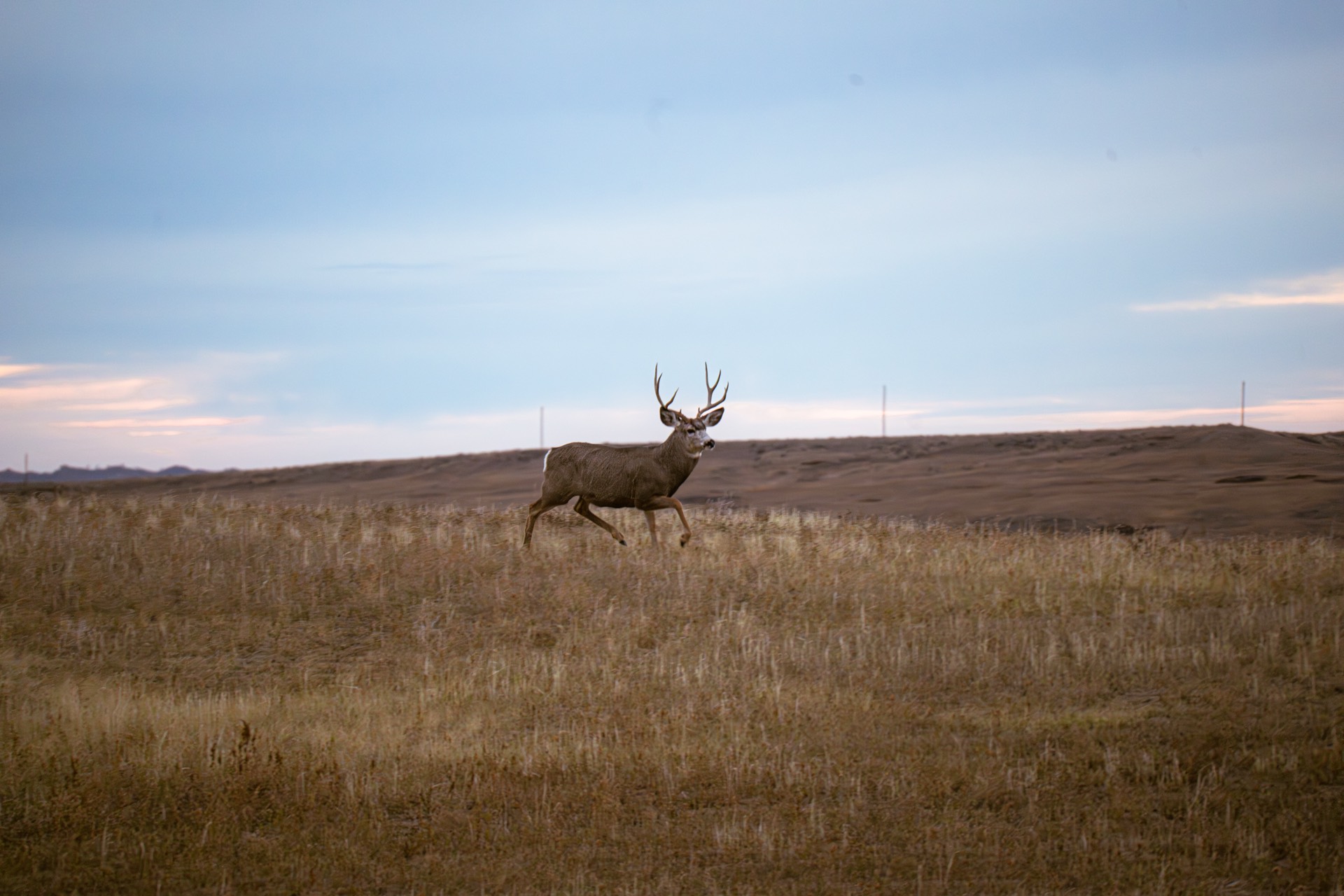
common opportunityMule deer occupy all elevations but concentrate above roughly 6,500 ft in the Snowstorm Mountains, with about 44% five-year success. Numbers are moderate; the late rifle season is the best window for a trophy-class buck as the rut pulls bucks into the open.
- →Focus deer effort on the Snowstorm Mountains above 6,500 ft where bucks hold in aspen, mahogany and brush.
- →Glass slopes and high draws morning and evening; mature bucks use timber and brush for security cover.
- →Hunt the late rifle season if you hold that tag — rutting bucks move most and drop their guard.
- →Hike off the two-tracks into the roughest heads of the drainages for the better bucks.
Rocky Mountain Elk
limited opportunityRocky Mountain elk are present in small numbers (about 40% five-year success on very few tags), using the higher Snowstorm country. This is a lightly stocked elk unit rather than a headline elk hunt — treat a tag as a bonus opportunity.
- →Hunt the aspen and timbered upper slopes of the Snowstorm Mountains where the few elk hold.
- →Locate bulls at dawn and dusk during the rut, then use wind and terrain to slip in through the aspen.
- →Work water and wallows in the high country during warm early seasons.
- →Cover ground — elk here are scattered and you may need to find the herd before you can hunt it.
Moose
transient lowNevada's small, expanding Shiras moose herd reaches into this northern country, and a very small number turn up in the unit — incidental rather than a huntable target. Manage expectations: this is an antelope and deer unit first.
- →Treat any moose sighting as incidental — check willow-choked creek bottoms and riparian pockets where a stray bull might feed.
- →Do not plan a trip around moose here; focus effort on the unit's real strengths in antelope and deer.
Pro tips
- →Come for the antelope — about 75% success across a huge sagebrush unit rewards hunters willing to glass miles.
- →Hunt deer high: bucks concentrate above 6,500 ft in the Snowstorm Mountains, best in the late rifle season.
- →Base out of Wilson or Chimney reservoir for water and scenic dispersed camping.
- →Treat elk and moose as bonus opportunities — both are lightly represented here.
- →This is big, empty country — carry extra fuel, recovery gear, offline maps and a paper backup.
- →Time your access to the weather; the dirt roads become impassable mud after storms.
Watch out for
- !Very remote with little to no cell service — a breakdown or injury is serious; go fully self-sufficient.
- !Long unmaintained dirt and gravel roads become impassable mud after rain or early snow.
- !Scattered private ranch and checkerboard sections exist — verify ownership before crossing to public ground.
- !Overlapping deer, elk and antelope seasons cause crowding on the main access roads.
- !The unit's California bighorn have been recovering from a pneumonia die-off — herd health here can be fragile.
Logistics
This is remote country with few services close by. Tiny Tuscarora and Midas offer little more than a landmark; Battle Mountain (west, on I-80) and Elko (east, on I-80) are the full-service hubs for lodging, groceries, fuel and gear. Dispersed camping is easy across the BLM ground, with scenic sites at Wilson Creek and Chimney reservoirs. Cell service is limited to nonexistent — download offline maps, carry paper backups, top off fuel and tell someone your plan. Roads are long dirt and gravel two-tracks that turn to impassable mud after rain.
Nearest towns: Tuscarora, Midas, Battle Mountain, Elko
Seasons & regulations
This page carries no season dates or regulations. Get current rules from the official Nevada sources:
Research sources: GOHUNT — Nevada Unit 066 Unit Profile (size ~1,899 sq mi, elevation 5,100–8,400 ft, ~80.7% public, Snowstorm Mountains and Owyhee Desert, Wilson/Chimney reservoirs, deer above 6,500 ft, bighorn pneumonia recovery, limited cell service) · NDOW Hunt Information Sheets (unit descriptions, access, recommended areas) · BLM Nevada Elko District Office (land status, dispersed camping, Owyhee Desert)
FAQ
- How big is Unit 066 in Nevada?
- Unit 066 (Unit 066) covers about 1,901 square miles, ranging from roughly 5,100 to 8,400 feet in elevation. Area is computed from the unit boundary polygon.
- How much public land is in Unit 066?
- Approximately 81% of the unit is public land. Primary managers: BLM, USFS Humboldt-Toiyabe NF (scattered higher parcels), Private (ranches and checkerboard sections). Always verify ownership boundaries on the ground.
- What species does the catalog list for Unit 066?
- Pronghorn, Mule Deer, Rocky Mountain Elk, Moose. For seasons, tags, and regulations, use the official Nevada agency resources linked on this page — this page carries no regulatory information.
Put Unit 066 on your map.
Boundary lines, public/private ownership, topo, and offline maps for this unit — in Baseline Maps, free for 14 days.