Unit 073 Unit 073
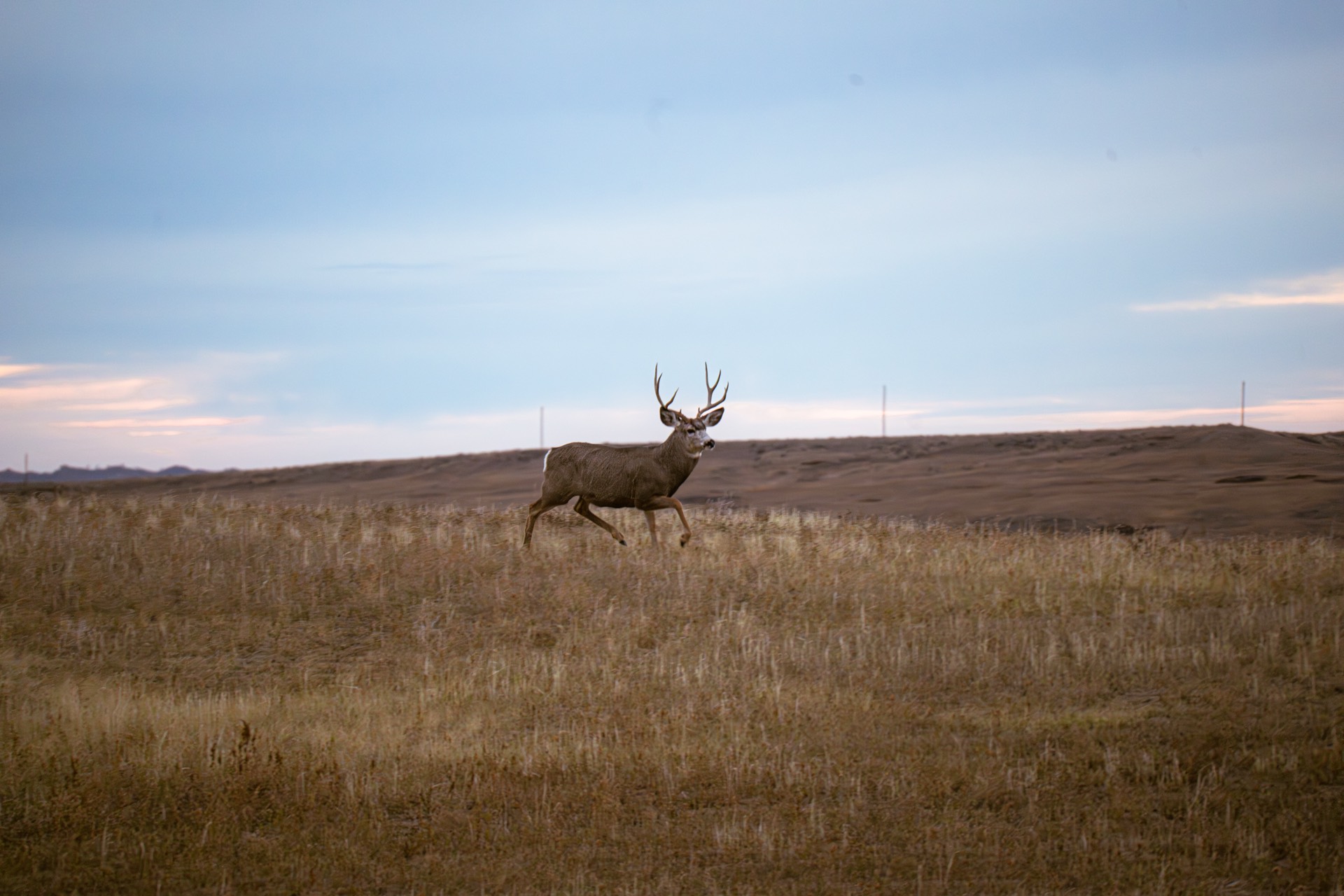
Wide-open, fire-recovered glassing country north of Elko: antelope-strong with a solid scattering of deer.
Northeastern Nevada — Elko County · Last reviewed 2026-07-12
Area
1,249
sq mi
Public land
72%
approx.
Elevation
5,100–6,000
feet
Motorized
extensive
access
Overview
Unit 073 is a large (~1,249 sq mi) block of rolling high desert immediately north of Elko, bounded roughly by State Route 225 on the west, the Marys River drainage on the east and Interstate 80 on the south. Much of it burned in the 2006 fire season and has grown back into productive grass-and-forb range, making it prime open-country antelope habitat (about 80% five-year success) with a good scattering of mule deer (~53%). Expect low, rolling terrain built for glassing and stalking rather than steep timber. A very small elk presence and the occasional stray Shiras moose round out the tag list, but this is an antelope-and-deer unit first.
Terrain
Low, rolling sagebrush hills, broad benches and open flats with long sightlines — classic glass-and-stalk country. The Adobe Range and the lower eastern flank of the Independence Mountains rim the unit, but most huntable ground is gentle terrain that hunts fast and open.
Cover: Post-fire grasslands and forbs dominate much of the unit after the 2006 burns, mixed with big sagebrush and bitterbrush; recovering aspen pockets and willow-lined creek bottoms hold in the draws and along the Marys River corridor. The abundant new-growth forage is what makes this antelope and deer country.
Landmarks: Adobe Range · Independence Mountains (lower eastern flank) · Marys River drainage (east boundary) · State Route 225 / Mountain City Highway (west boundary) · Interstate 80 (south boundary near Elko and Deeth) · Independence Valley
Access
Roughly 72% public, mostly BLM sagebrush-steppe with a good grid of dirt and gravel roads for the open-country glassing this unit is built around. Substantial private ranchland lines the Marys River bottom and the Independence Valley floor — verify ownership before crossing to reach public ground. Interstate 80 and SR 225 give easy paved access to the unit's edges.
Managers: BLM, Private (Marys River / Independence Valley ranches), USFS Humboldt-Toiyabe NF (higher fringes)
Access points: State Route 225 (Mountain City Highway) off Elko · Interstate 80 corridor (Elko to Deeth exits) · BLM dirt-road network off SR 225 and the frontage roads · Marys River area roads (east side)
Species notes
Pronghorn
common qualityAntelope are the headline hunt, with about 80% five-year success on this open, fire-recovered range. The mix of new-growth grasses and forbs supports good numbers and respectable buck quality across the flats and benches.
- →Glass the big open flats and low benches from high points at first and last light — this is eyesight country for both you and the antelope.
- →Key on green forb pockets and water sources during warm early seasons; bucks pattern predictably to feed and water.
- →Use the subtle terrain folds and swales to close the distance on a located buck rather than pushing across open ground.
- →Cover ground with the truck to inventory groups, then plan stalks on the best bucks away from road pressure.
Mule Deer
common opportunityMule deer are well scattered through the sagebrush and post-fire forage at moderate densities (about 53% five-year success). Not a trophy factory, but the improved feed since 2006 holds solid numbers of bucks, with the best chances as fall cools and deer move.
- →Glass sagebrush slopes, draw heads and aspen edges morning and evening; bucks bed in mahogany and brush pockets for security.
- →Work the recovering aspen and willow bottoms along the Marys River drainage where deer concentrate.
- →Hunt later in the season if you hold that tag — cooler weather and the pre-rut pull bucks into the open.
- →Get off the road grid into a rough draw; the better bucks live away from vehicle disturbance.
Rocky Mountain Elk
limited opportunityElk are present but thin here (about 44% five-year success on very few tags). They use the better feed and cover pockets, but this is not a primary elk unit — treat a tag as a bonus opportunity, not a sure thing.
- →Focus on the higher aspen pockets, recovering burns and draw heads that hold the best feed and cover.
- →Locate animals at dawn and dusk by glassing far edges and timbered fringes, then move on wind.
- →Be mobile — scattered elk mean you may need to cover a lot of country to find a huntable group.
Moose
transient lowNevada's small, expanding Shiras moose herd occasionally reaches this corner of Elko County, and a very rare tag has produced a bull. This is a novelty/incidental at best, not a target species.
- →Check willow-choked creek bottoms and the Marys River riparian corridor where a stray bull might feed.
- →Do not plan a trip around moose here — build your hunt around antelope and deer.
Pro tips
- →Come for the antelope — ~80% success on open, fire-recovered range makes it the unit's marquee hunt.
- →Hunt the post-2006 burn mosaic; the new grasses and forbs are exactly why antelope and deer numbers are good here.
- →Base out of Elko and cover country with the truck to inventory bucks before committing to a stalk.
- →For deer, work the Marys River aspen and willow bottoms and hunt later season for moving bucks.
- →Map private ranchland along the valley bottoms before you cross — access is the main puzzle, not terrain.
- →Save your legs for the open glassing — this is a spot-and-stalk unit, not a timber-still-hunt unit.
Watch out for
- !Substantial private ranchland lines the Marys River bottom and Independence Valley — verify ownership before crossing to public ground.
- !Interior dirt/gravel roads turn to impassable mud after rain or early snow.
- !Open, featureless country makes stalks tough — antelope will see you first if you skyline yourself.
- !Cell coverage drops off quickly away from the I-80 corridor; carry offline maps and a paper backup.
- !Elk tags are few and animals are scattered — set expectations accordingly.
Logistics
Elko, at the unit's southern doorstep on I-80, is a full-service hub with lodging, groceries, fuel, gear and a regional airport — you can base in town and day-hunt easily. Dispersed camping is straightforward on the surrounding BLM ground. Cell service is decent near the I-80/Elko corridor but fades quickly on the interior dirt roads. Roads are mostly dirt and gravel two-tracks that get greasy after rain — carry recovery gear and download offline maps.
Nearest towns: Elko, Deeth, Halleck
Seasons & regulations
This page carries no season dates or regulations. Get current rules from the official Nevada sources:
Research sources: GOHUNT — Nevada Unit 073 Unit Profile (~1,248 sq mi, elevation 5,100–6,000 ft, 71.7% public, 2006 burn recovery, open glassing terrain, Elko at south end) · NDOW Hunt Unit Boundaries and Big Game Season Structure (unit 073 bounded by SR 225, Marys River, I-80; antelope unit group 061/062/064/071/073) · NDOW Hunt Information Sheets (unit descriptions, access, recommended areas)
FAQ
- How big is Unit 073 in Nevada?
- Unit 073 (Unit 073) covers about 1,249 square miles, ranging from roughly 5,100 to 6,000 feet in elevation. Area is computed from the unit boundary polygon.
- How much public land is in Unit 073?
- Approximately 72% of the unit is public land. Primary managers: BLM, Private (Marys River / Independence Valley ranches), USFS Humboldt-Toiyabe NF (higher fringes). Always verify ownership boundaries on the ground.
- What species does the catalog list for Unit 073?
- Pronghorn, Mule Deer, Rocky Mountain Elk, Moose. For seasons, tags, and regulations, use the official Nevada agency resources linked on this page — this page carries no regulatory information.
Put Unit 073 on your map.
Boundary lines, public/private ownership, topo, and offline maps for this unit — in Baseline Maps, free for 14 days.