Unit 163 Unit 163
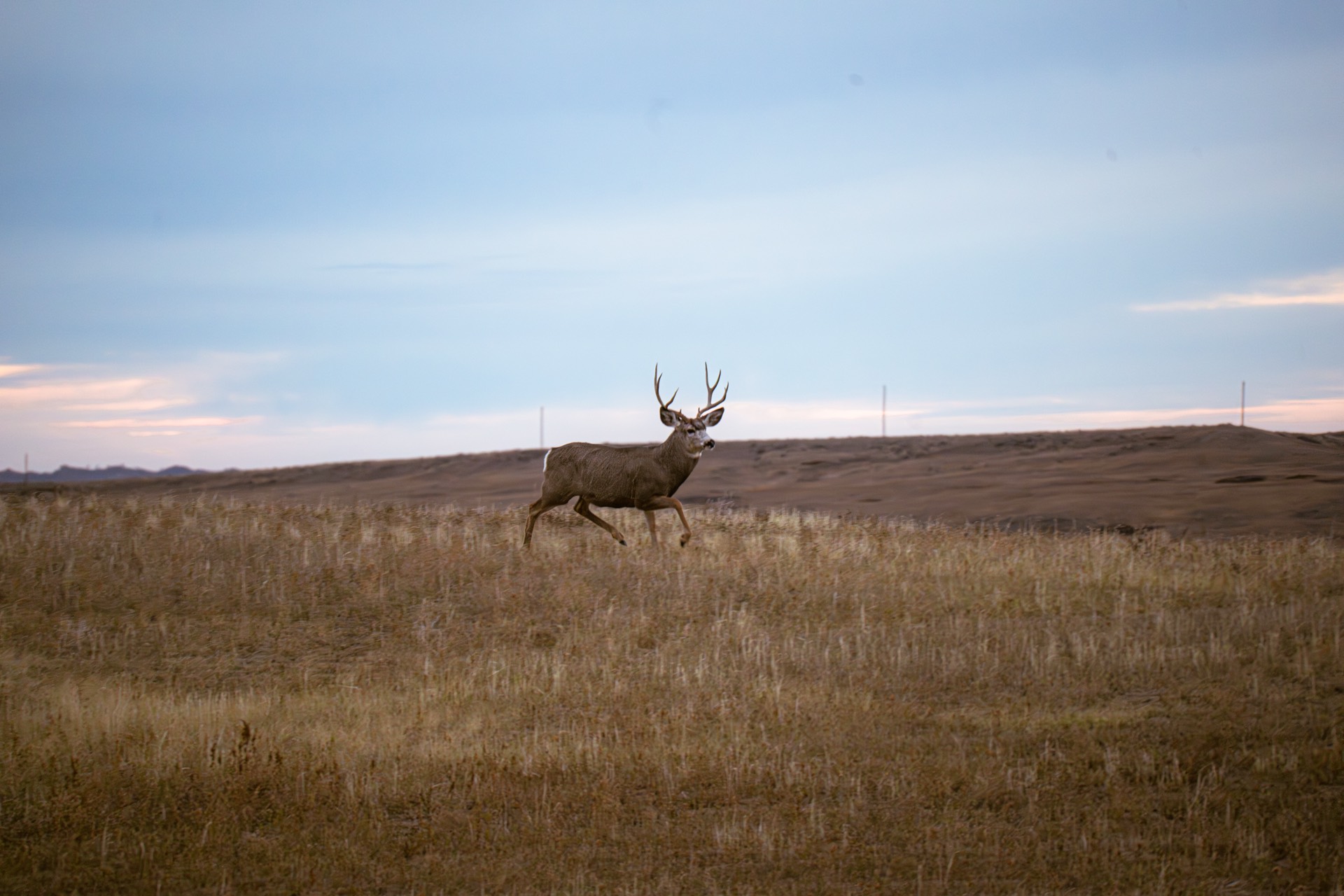
Hot Creek Range high country that fills with migrating mule deer once the snow flies
Central Nevada — Nye County (Management Area 16) · Last reviewed 2026-07-12
Area
1,179
sq mi
Public land
99%
approx.
Elevation
5,200–10,246
feet
Motorized
moderate
access
Overview
Unit 163 covers the Hot Creek Range with the Antelope and Park ranges rolling out of central Nevada's basin-and-range interior, roughly between Warm Springs, Eureka and Tonopah. It is a remote, almost entirely public unit built on classic mule deer high country, and it plays an outsized role as winter range: NDOW notes that once measurable snow hits Area 16, deer from the surrounding units migrate into 163. Expect a low-pressure, do-it-yourself experience with modest harvest and long distances between glassing points.
Terrain
North-south trending fault-block ranges topping out on Morey Peak (~10,246 ft) above wide sagebrush valleys (Hot Creek, Little Fish Lake, Railroad). The best hunting sits above the dense pinyon-juniper belt from roughly 8,000 to 10,000 feet where the country opens into brush, meadows and mahogany.
Cover: Desert brush and big sagebrush on the valley floors and foothills, a thick pinyon-juniper belt on the mid-slopes, and open mountain brush, mountain mahogany, aspen pockets and scattered pine near the peaks.
Landmarks: Hot Creek Range · Morey Peak · Antelope Range · Park Range · Hot Creek Valley · Little Fish Lake Valley · Railroad Valley
Access
Almost entirely public. US Highway 50 borders the management area to the north and US Highway 6 to the south, with graded county and BLM roads paralleling the ranges north-to-south. No wilderness inside 163 (the Alta Toquima and Table Mountain wilderness areas lie in neighboring 161/162), so motorized access into the foothills is good, but the best deer country is reached on foot away from roads.
Managers: BLM Battle Mountain / Tonopah, USFS Humboldt-Toiyabe NF
Access points: US Highway 6 (south) · US Highway 50 (north) · Hot Creek Valley roads · Morey / Tybo area roads
Species notes
Mule Deer
common opportunityThe unit's headline species. Densities are moderate and success runs in the high-30s percent, but 163 shines as migration/winter range — later-season snow pushes deer in from surrounding units.
- →Hunt above the pinyon-juniper belt from 8,000-10,000 ft early season, working meadows, mahogany and aspen pockets near water
- →On later hunts, watch the Hot Creek Range benches and foothills as snow triggers migration into the unit
- →Glass hard and stay put — NDOW stresses patience; one hunter will see deer where another sees none
- →Get well away from roads; the farther you walk, the better the buck quality
Pronghorn
limited qualityA small, hard-to-draw antelope tag with strong success (~79%) but very few permits. Buck quality is good on the open valley flats between the ranges.
- →Glass the sage flats and low benches of Hot Creek and Little Fish Lake valleys
- →Locate herds at first light and use terrain rolls to close the distance
- →Water sources and wallows concentrate animals in dry years
Rocky Mountain Elk
limited opportunityElk are present but thin here as central Nevada's herds continue to expand; a very small tag allotment with mid-30s to ~40% success.
- →Focus on the higher basins and mahogany/aspen stringers of the Hot Creek Range
- →Locate bulls by bugling the timbered heads of drainages at dawn
- →Cover country — elk in this unit are scattered and mobile
Bighorn Sheep
limited trophyA premium, once-in-a-lifetime desert bighorn tag with only a permit or two issued. Sheep hold in the rugged rimrock and canyons of the range.
- →Glass rimrock, cliff bands and canyon breaks from long range
- →Plan multi-day backcountry efforts and scout well before the season
- →Coordinate with NDOW biologists on recent ram sightings
Pro tips
- →Time a later hunt to catch the migration — 163 is where snow-pushed deer collect, so a storm during your hunt can dramatically improve it
- →Burn boot leather above the pinyon-juniper; roadside country is picked over and deer bail uphill
- →Set up on a high glassing knob at first light and give it hours before moving
- →Key on mahogany stands, aspen pockets and green meadow edges near the peaks
- →Scout water in dry years — surface water shrinks to a handful of springs that concentrate deer and antelope
Watch out for
- !Extremely remote — a breakdown or injury is serious; tell someone your plan and carry a satellite communicator
- !Long dirt approaches turn to greasy mud or snow after storms; a 2WD can get stranded
- !Water is scarce and unreliable in dry years — pack your own
- !Services and fuel are far apart; top off in Tonopah, Eureka or Austin before heading in
Logistics
This is deep, remote central Nevada — plan to be fully self-contained. Full services (fuel, groceries, lodging) are only in Tonopah, Eureka, Austin and Round Mountain/Carvers, all an hour or more away. Expect primitive dispersed camping with few developed sites, no reliable cell coverage in the field, and long drives on dirt. Carry extra fuel, water, recovery gear and spare tires.
Nearest towns: Tonopah, Eureka, Warm Springs (junction), Round Mountain / Carvers, Austin
Seasons & regulations
This page carries no season dates or regulations. Get current rules from the official Nevada sources:
Research sources: NDOW Mule Deer Unit Group 161, 162, 163, 164 Hunt Information Sheet · NDOW 2023 Big Game Hunt Unit Map · GoHunt Nevada Unit 163 profile (public land %, elevation cross-check)
FAQ
- How big is Unit 163 in Nevada?
- Unit 163 (Unit 163) covers about 1,179 square miles, ranging from roughly 5,200 to 10,246 feet in elevation. Area is computed from the unit boundary polygon.
- How much public land is in Unit 163?
- Approximately 99% of the unit is public land. Primary managers: BLM Battle Mountain / Tonopah, USFS Humboldt-Toiyabe NF. Always verify ownership boundaries on the ground.
- What species does the catalog list for Unit 163?
- Mule Deer, Pronghorn, Rocky Mountain Elk, Bighorn Sheep. For seasons, tags, and regulations, use the official Nevada agency resources linked on this page — this page carries no regulatory information.
Put Unit 163 on your map.
Boundary lines, public/private ownership, topo, and offline maps for this unit — in Baseline Maps, free for 14 days.