Unit 33 Sprague
Flat, timbered marsh-and-pine country in the Klamath Basin where deer come easier than elk.
South-Central Oregon — Klamath Basin / Winema · Last reviewed 2026-07-12
Area
776
sq mi
Public land
75%
approx.
Elevation
4,300–7,000
feet
Motorized
extensive
access
Overview
Unit 33 (Sprague) covers roughly 776 sq mi of the Klamath Basin north and east of Chiloquin, wrapped around the Williamson, Sprague, and Sycan rivers and the Klamath Marsh. It's about 75% public land, dominated by the Fremont-Winema National Forest, with private ranch and irrigated bottomland along the river valleys. Most of the unit is relatively flat to gently rolling — marshy lowlands and open ponderosa/lodgepole flats rising into low forested hills — which makes for tough spot-and-stalk hunting. Big-game tags here are issued through the controlled draw; ODFW notes this is a hard unit to find a mature elk, with deer hunting somewhat better but still challenging on the flat, timbered ground.
Terrain
Broad, nearly flat marshy lowlands and river bottoms (4,300-4,700 ft) grade into gently rolling forested hills that climb to about 6,500 ft, most of it inside the Fremont-Winema National Forest. Relief is low across most of the unit, and it is hard to get more than a mile from an open road — an unusual challenge that keeps game pressured and spread out. Yamsay Mountain anchors the higher, timbered eastern edge.
Cover: Marshy bottomlands full of reeds, cattails, and creekside willows; the surrounding hills carry fairly open conifer forest of ponderosa (yellow) pine, lodgepole pine, and Douglas-fir. Logged-over blocks and reseedings scattered through the forest create the best feed and edge for deer and elk.
Landmarks: Klamath Marsh National Wildlife Refuge · Williamson River · Sprague River · Sycan River · Yamsay Mountain · Chiloquin · Winema (Fremont-Winema) National Forest
Access
About 75% public land, overwhelmingly Fremont-Winema National Forest, laced with an extensive grid of logging and forest roads — it's hard to get more than a mile from an open road anywhere in the unit. That easy access spreads hunting pressure everywhere and gives game little untouched refuge. Klamath Marsh National Wildlife Refuge is closed to deer and elk hunting. Private ranch and irrigated valley land along the Sprague, Sycan, and Williamson rivers is intermixed and should be verified before entry.
Managers: U.S. Forest Service (Fremont-Winema National Forest), Private ranch / timber, U.S. Fish & Wildlife Service (Klamath Marsh NWR)
Access points: US Hwy 97 corridor (west boundary) north from Chiloquin · State Hwy 62 toward Fort Klamath / Crater Lake on the northwest · Sprague River Road / Klamath Co Rd 858 into the eastern valleys · Silver Lake Road (Co Rd 676) across the north end past Klamath Marsh · Dense Fremont-Winema forest-road grid off these corridors
Species notes
Mule Deer
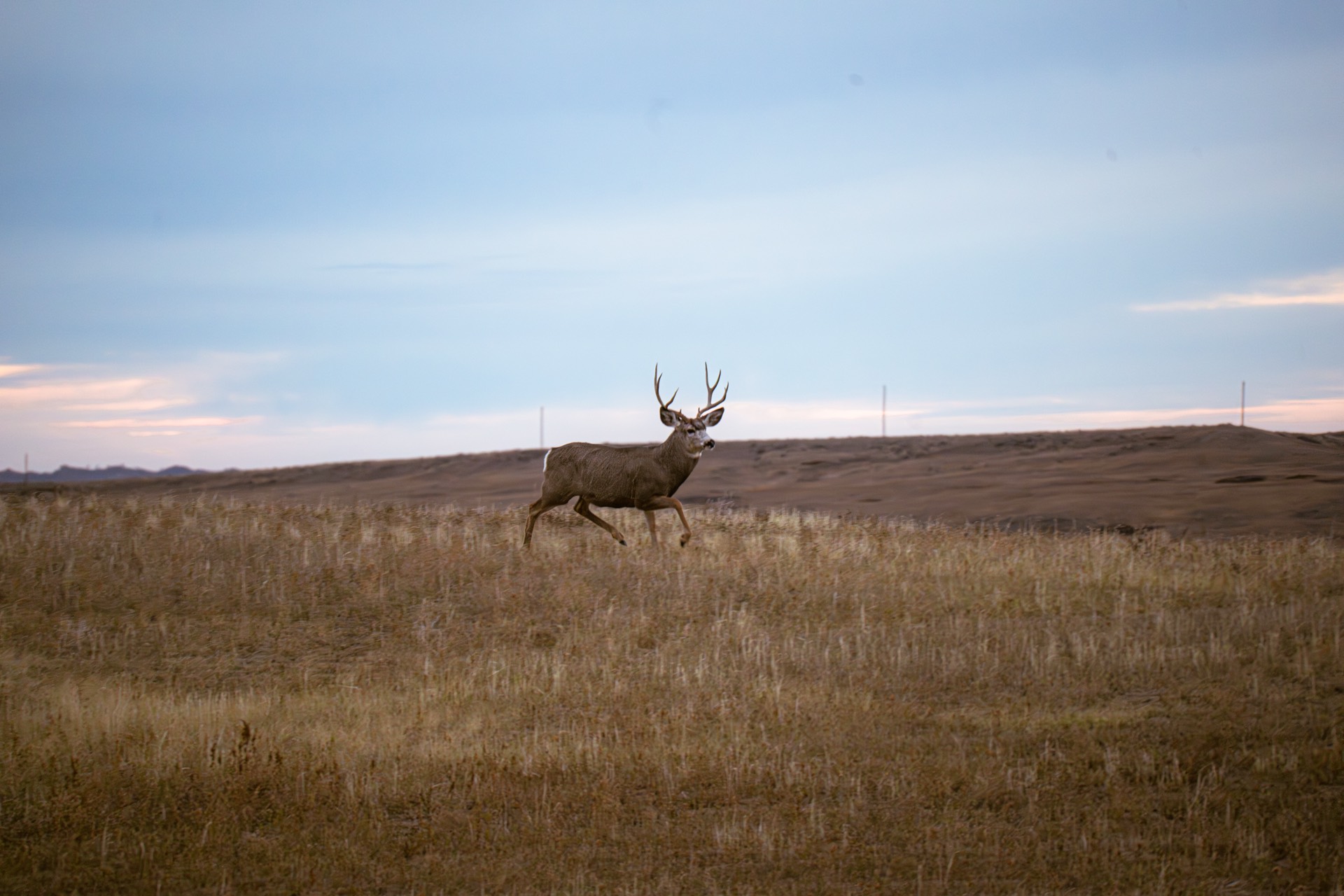
common opportunityThe unit's best big-game bet, though hunting is not easy — relatively flat, timbered ground defeats most standard techniques and bucks use the endless cover. Managed through the controlled draw. Deer favor the forest edges, logged blocks, and reseedings over the deep flat timber.
- →Hunt the edges between open pine flats/reseedings and thicker cover where bucks feed at first and last light
- →Still-hunt slowly through the open ponderosa and lodgepole rather than trying to glass flat, screened ground
- →Work the logged-over blocks and burns that hold the freshest browse
- →Get away from the dense road grid — even a mile off a road puts you ahead of most hunters here
- →Late-season weather concentrates deer on lower, south-facing benches and river-margin feed
Rocky Mountain Elk
limited opportunityA genuinely tough elk unit — ODFW notes most hunters see few if any elk and finding a mature bull is hard. Elk are present but low-density and scattered across the timbered flats and logged blocks. Controlled-draw tags.
- →Focus reseedings, logged units, and meadow-marsh edges where the scattered elk find feed
- →Cover a lot of ground to cut fresh sign, then work quietly into the timber blocks holding animals
- →Hunt the transition from open flats into denser conifer where elk shade up mid-day
- →Locate bulls by bugling during the rut in the timber-meadow transition, then close carefully on flat, quiet ground
- →Push into the least-roaded pockets you can find — pressure is everywhere on the road grid
Pronghorn
limited opportunityPronghorn occur in small numbers in the open flats and rangeland margins rather than the timbered core, and tags are scarce and hard to draw. This is not a primary antelope unit.
- →Glass the open high-desert flats and sage-grass margins on the drier eastern and northern edges
- →Spot-and-stalk with quality optics; locate bands from vantage points then plan a terrain-screened approach
- →Watch feed edges and water in warm early-season conditions
Black Bear
limited opportunityBlack bear are present in the forested portions of the unit at modest densities, with spring and fall opportunity through the controlled/general framework. Not a destination bear unit.
- →Glass green-up slopes, meadow edges, and marsh margins in spring as bears feed on emerging forage
- →In fall, focus berry- and forb-rich pockets and logged blocks in the conifer
- →Cover ground and glass feeding edges — the open forest makes bears visible when they're out
Cougar
common opportunityCougar range throughout the unit, following the deer and elk through the timbered flats and river country. Available on a general statewide tag.
- →Hunt where deer concentrate — cats follow the prey base into river bottoms and forest edges
- →After fresh snow, cut the road grid and creek crossings for tracks, then follow into cover
- →Use predator calls in the broken timber and marsh-edge brush
Pro tips
- →It's hard to get more than a mile from an open road here — that same access means pressure is everywhere, so the little you can get off-road pays off big
- →Klamath Marsh National Wildlife Refuge is CLOSED to deer and elk hunting — know exactly where its boundary sits before you set up
- →This is a tough elk unit; most hunters see few or no elk, so don't build a trip around a bull tag here — deer are the more realistic opportunity
- →Flat, open timber defeats glassing — slow still-hunting and working feed edges beats sitting and scanning
- →Verify private ranch and irrigated-valley boundaries along the Sprague, Sycan, and Williamson rivers with a mapping app before crossing
Watch out for
- !Klamath Marsh NWR is closed to deer and elk hunting — a large no-hunt block in the middle of the unit
- !Intermixed private ranch and irrigated bottomland along the river valleys can landlock or restrict access; confirm boundaries
- !Dense road access concentrates hunting pressure across the whole unit
- !Fine-soil forest roads get slick and rutted after rain/snow; the higher hills can snow early
- !Big game is controlled-draw and elk odds of encounter are low — plan expectations and point strategy accordingly
Logistics
Chiloquin is the closest town and gateway on US Hwy 97, with basic services; Klamath Falls, about 30 miles south, is the practical basecamp and supply hub with full services and the nearest commercial airport. The ODFW Klamath Watershed office (541-883-5732) is the local contact for conditions and questions. Dispersed camping is available throughout the Fremont-Winema National Forest, with developed sites near Klamath Marsh and along the highway corridors. Fuel and groceries in Klamath Falls or Chiloquin before heading onto the forest roads.
Nearest towns: Chiloquin, Klamath Falls, Fort Klamath, Beatty, Sprague River
Seasons & regulations
This page carries no season dates or regulations. Get current rules from the official Oregon sources:
Research sources: ODFW Sprague Unit 33 · GoHunt — Oregon Unit 33 Sprague Profile · Fremont-Winema National Forest (USFS) · ODFW Eastern Oregon Deer Hunts
FAQ
- How big is Unit 33 in Oregon?
- Unit 33 (Sprague) covers about 776 square miles, ranging from roughly 4,300 to 7,000 feet in elevation. Area is computed from the unit boundary polygon.
- How much public land is in Unit 33?
- Approximately 75% of the unit is public land. Primary managers: U.S. Forest Service (Fremont-Winema National Forest), Private ranch / timber, U.S. Fish & Wildlife Service (Klamath Marsh NWR). Always verify ownership boundaries on the ground.
- What species does the catalog list for Unit 33?
- Mule Deer, Rocky Mountain Elk, Pronghorn, Black Bear, Cougar. For seasons, tags, and regulations, use the official Oregon agency resources linked on this page — this page carries no regulatory information.
Put Unit 33 on your map.
Boundary lines, public/private ownership, topo, and offline maps for this unit — in Baseline Maps, free for 14 days.