Unit 183 San Juan Bull Elk
One of the elk-hunting world's crown jewels — Elk Ridge and the Abajos over an ocean of Bears Ears canyon country, where drawn bulls routinely score 340–360 with 380–400+ upside.
Southeastern Utah — Abajo Mountains, Elk Ridge & Bears Ears · Last reviewed 2026-07-12
Area
4,374
sq mi
Public land
91%
approx.
Elevation
5,000–11,360
feet
Motorized
extensive
access
Overview
The San Juan unit spreads across roughly 4,370 square miles of southeastern Utah's San Juan County, anchored by Elk Ridge and the Abajo (Blue) Mountains and wrapped in hundreds of square miles of desert, mesas, and canyonlands east of the Colorado River and Lake Powell. It is overwhelmingly public — most elk live on the Manti-La Sal National Forest and surrounding BLM/Bears Ears ground — and it sits at the very top of Utah's trophy elk hierarchy alongside the Book Cliffs and Wasatch. Bull elk here are once-in-a-lifetime tags with 15-plus-year draw waits, harvested at 7–9 years old and averaging 340–360 inches with true 380–400+ giants taken annually, and early rifle hunts falling in the rut. The San Juan/Elk Ridge deer hunt is a separate trophy-managed limited-entry unit, and desert bighorn range the canyon country below.
Terrain
A dramatic vertical range from 5,000-ft desert canyon floors and mesas up to 11,360-ft Abajo Peak. High country is steep ponderosa and aspen forest on Elk Ridge and the Abajos rising above the Dark Canyon Wilderness; below sprawl pinyon-juniper mesas, red-rock canyons, and open desert benches.
Cover: High-elevation ponderosa pine, aspen, spruce-fir, and mountain meadows on Elk Ridge and the Abajos; extensive pinyon-juniper and mountain brush across the mesas; sagebrush, blackbrush, and slickrock desert in the lower canyon country. Oak brush and Gambel oak fill the mid-elevation transition.
Landmarks: Abajo (Blue) Mountains / Abajo Peak (11,360 ft) · Elk Ridge · Bears Ears buttes · Dark Canyon Wilderness · Cedar Mesa · Natural Bridges National Monument · Newspaper Rock · Comb Ridge · Canyonlands National Park (north edge)
Access
Access is excellent and heavily public — roughly 91% public land. The Manti-La Sal National Forest (Monticello district) covers Elk Ridge and the Abajos, with BLM and Bears Ears National Monument ground blanketing the surrounding mesas and canyons, plus scattered SITLA state-trust parcels that are generally open to hunting. Dirt and gravel forest and BLM roads give strong access, and hunters can leave the crowds by walking or riding horses into the canyon heads and wilderness fringe. Private ranch ground and some tribal land occur mainly at the lower/eastern edges near Monticello and Blanding — carry an ownership map.
Managers: USFS Manti-La Sal NF, BLM, SITLA, private, tribal
Access points: Forest roads onto Elk Ridge and the Abajos from Monticello (US-191) · UT-95 / UT-275 corridor to Natural Bridges and Bears Ears · Blanding-side approaches from US-191 · BLM/Bears Ears roads across Cedar Mesa and the canyon country · Cottonwood/Beef Basin road system into the backcountry (high-clearance)
Species notes
Rocky Mountain Elk
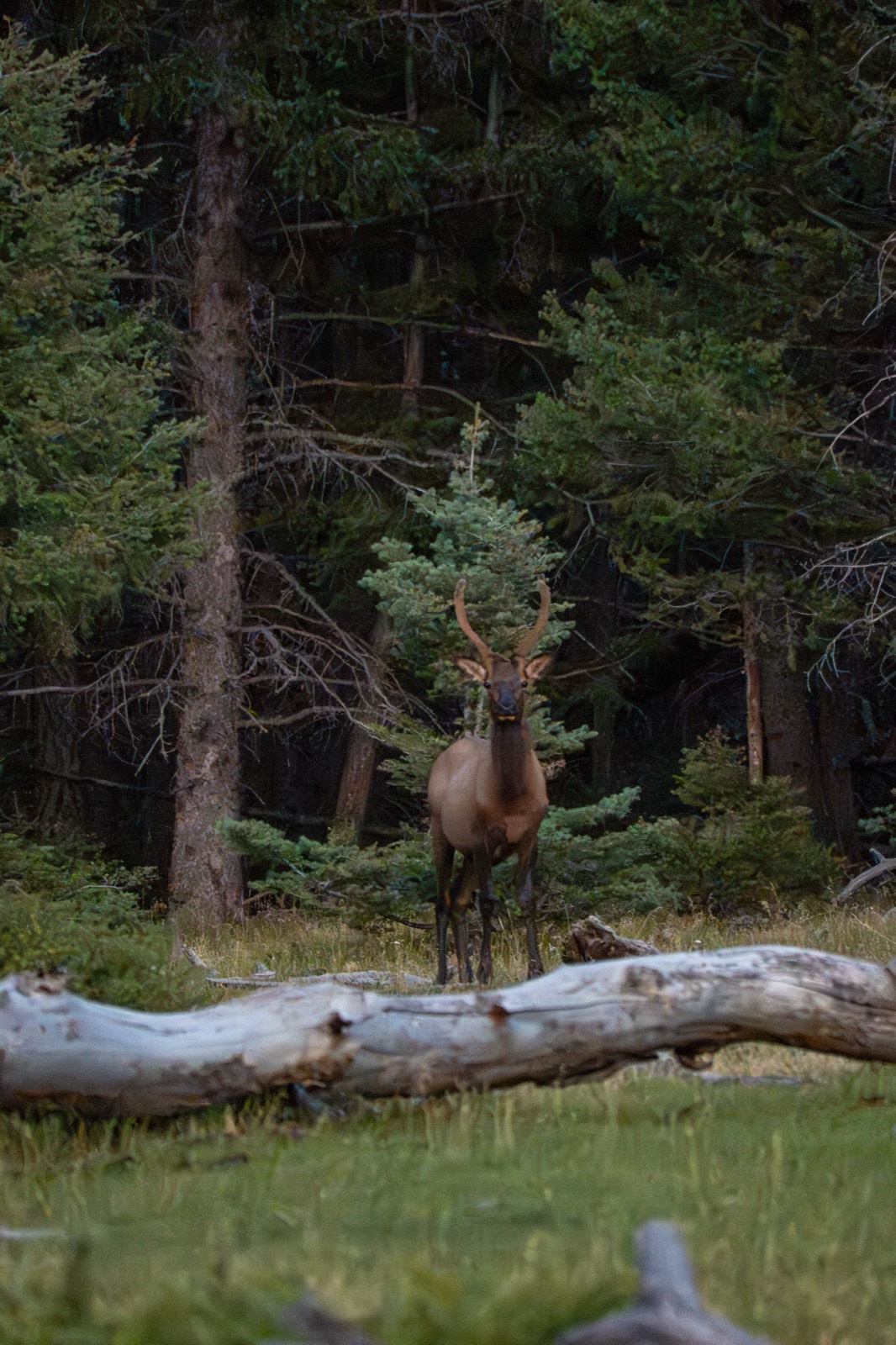
common trophyA true trophy destination and once-in-a-lifetime-caliber draw — the San Juan sits near the top of the elk world. Bulls are harvested at 7–9 years old, average 340–360 inches, and produce genuine 380–400+ giants every year. Combine that quality with early rifle hunts timed to the rut and it's one of the best bull hunts in the West, well worth the 15-plus-year point wait.
- →Focus the high country — Elk Ridge and the Abajo ponderosa/aspen benches and meadow edges hold the mature bulls.
- →Hunt the rut aggressively: bugle to locate herd bulls at first and last light and close on them in the timber.
- →Set up on saddles, wallows, and meadow edges between feeding parks and dark north-slope bedding.
- →Use the Dark Canyon Wilderness fringe and canyon heads to get away from other tag-holders and onto undisturbed bulls.
- →Given the tag's rarity, scout hard or hire local knowledge — you likely get one crack at this in a lifetime.
Mule Deer
common trophyThe San Juan/Elk Ridge deer hunt is a separate trophy-managed limited-entry unit with great genetics and healthy herds, managed for 25–30 bucks per 100 does. It produces roughly 160–180-inch bucks yearly with bigger ones taken, over moderate terrain with good public access — a strong draw for a mature muley.
- →Glass the aspen/oak-brush edges and high meadows of Elk Ridge and the Abajos early season while bucks are up high.
- →As weather moves deer, drop to the pinyon-juniper mesas and mid-elevation brush for migrating bucks.
- →Hunt the transition benches at dawn and dusk and still-hunt the black timber where old bucks bed.
- →Ride or walk beyond the roads into the canyon heads for less-pressured, more mature deer.
Bighorn Sheep
limited trophyDesert bighorn range the red-rock canyon country of the lower unit toward the Colorado River corridor — an extremely limited, once-in-a-lifetime tag and one of the most coveted hunts in Utah.
- →Glass the rimrock, cliff bands, and canyon breaks where desert bighorn feed and escape.
- →Focus on rugged slickrock terrain near water sources in the canyon country.
- →Plan a physically demanding backcountry hunt and scout the specific canyon systems well ahead of the season.
Black Bear
common opportunityBlack bears inhabit the oak brush, aspen, and canyon country of the Abajos and Elk Ridge, taken on limited-entry tags. Good mast and berry years concentrate feeding bears.
- →Glass oak-brush and aspen slopes with acorn and berry feed in late summer and fall.
- →Key on shaded north-facing timber and canyon bottoms with water in warm stretches.
- →Check drainages and seeps for feeding sign, then watch the openings at the edges of daylight.
Cougar
common opportunityMountain lions are well established through the Abajos and canyon country, following the strong deer and elk herds. Taken mostly in winter with good numbers in the broken terrain.
- →Hunt after fresh snow, cutting the forest and mesa roads for tracks.
- →Concentrate on deer winter range and the steep pinyon-juniper canyons where lions hunt.
- →Work the rimrock and canyon breaks where deer concentrate.
Pro tips
- →If you draw the bull tag, treat it as the once-in-a-lifetime hunt it is — scout relentlessly or lean on local expertise, because the quality is real and the opportunity likely won't repeat.
- →Hunt the rut on Elk Ridge and the Abajos; early rifle timing plus bugling herd bulls is the whole draw of this unit.
- →Get off the roads — walking or riding into the canyon heads and Dark Canyon fringe reaches undisturbed, more mature animals.
- →For deer, work the high aspen/oak edges early and follow them down the pinyon-juniper mesas as weather moves them.
- →Carry water and plan resupply in the lower canyon country — it's big, dry, and remote away from the forest.
Watch out for
- !Private ranch ground and some tribal land at the lower/eastern edges near Monticello and Blanding — verify boundaries with an ownership map.
- !Bears Ears National Monument overlays much of the unit — know any area-specific access or travel rules.
- !Vast, remote country with big elevation swings — plan for altitude up high and heat/water scarcity in the canyons.
- !High-clearance/4WD roads and long distances between services; come self-sufficient.
- !Extreme draw odds for the bull elk and desert bighorn tags — don't expect a quick turnaround.
- !Early storms can close high forest roads on Elk Ridge and the Abajos.
Logistics
Base out of Monticello for the fastest access to Elk Ridge and the Abajos, or Blanding for the southern and canyon-country side, both on US-191 with lodging, fuel, and groceries; Moab is the larger hub to the north and Bluff/Mexican Hat serve the deep south. Dispersed camping is abundant on the Manti-La Sal and BLM/Bears Ears ground, with the high country offering cool timber camps and the canyons requiring water hauling. High-clearance/4WD is smart for the backcountry road systems, and a good ownership and forest map is essential across this vast unit.
Nearest towns: Monticello, Blanding, Bluff, Moab, Mexican Hat
Seasons & regulations
This page carries no season dates or regulations. Get current rules from the official Utah sources:
Research sources: GOHUNT Utah San Juan elk & San Juan/Elk Ridge deer unit profiles (91% public, 5,000–11,360 ft, trophy bull reputation, deer 160–180" and 25–30 bucks:100 does) · UDWR Elk Herd Unit 14 (San Juan) Management Plan (unit boundary, Manti-La Sal/BLM habitat, trophy management) · UDWR Deer Herd Unit 14 (San Juan) Management Plan
FAQ
- How big is Unit 183 in Utah?
- Unit 183 (San Juan Bull Elk) covers about 4,374 square miles, ranging from roughly 5,000 to 11,360 feet in elevation. Area is computed from the unit boundary polygon.
- How much public land is in Unit 183?
- Approximately 91% of the unit is public land. Primary managers: USFS Manti-La Sal NF, BLM, SITLA, private, tribal. Always verify ownership boundaries on the ground.
- What species does the catalog list for Unit 183?
- Rocky Mountain Elk, Mule Deer, Bighorn Sheep, Black Bear, Cougar. For seasons, tags, and regulations, use the official Utah agency resources linked on this page — this page carries no regulatory information.
Put Unit 183 on your map.
Boundary lines, public/private ownership, topo, and offline maps for this unit — in Baseline Maps, free for 14 days.