Unit 222 Wasatch Mtns
A big, heavily public range of high meadows and steep drainages — premium trophy elk, one of Utah's best moose hunts, and high-country mule deer
Northern Utah — Wasatch Range / Strawberry · Last reviewed 2026-07-12
Area
2,573
sq mi
Public land
75%
approx.
Elevation
5,500–11,750
feet
Motorized
extensive
access
Overview
The Wasatch Mountains unit is one of Utah's marquee big-game destinations: a large, mostly public block of the Wasatch Range stretching from the Park City–Heber front across the Strawberry Reservoir highlands. It is managed as a premium limited-entry elk unit where 300-inch bulls are common and 350-plus bulls are a real possibility, and it holds one of the best Shiras moose hunts in the state. A general-season mule deer herd runs the same country, with the biggest bucks living high above where most hunters are willing to climb. Public access is excellent — the vast majority of the unit is open to anyone willing to hunt it.
Terrain
Varied Wasatch terrain: broad meadows and rolling flats along the high tops, steep timbered creek drainages falling to the valley floors, and rolling sage-and-oak foothills at the base. The Strawberry basin forms a high rolling plateau; peaks like Mount Timpanogos rise above 11,700 ft.
Cover: Sagebrush, oak brush and mountain mahogany on the foothills; aspen and mixed conifer through the mid slopes; Engelmann spruce, subalpine fir and open high meadows up top; willow and riparian bottoms around Strawberry and the creek drainages that hold moose.
Landmarks: Strawberry Reservoir · Mount Timpanogos (11,752 ft) · Provo River / Provo Canyon · Deer Creek Reservoir · Daniels Canyon · Currant Creek · Uinta National Forest / Wasatch front tops
Access
The core of the unit is Uinta-Wasatch-Cache National Forest, and the vast majority of the country is open to public hunting with good road and trail access off US-40, US-189 (Provo Canyon) and the Strawberry-area forest roads. SITLA state-trust sections are also open to hunting. Private ranch and subdivision land lines the valley floors and the Heber, Midway and Park City fringes, so the friction is at the low-elevation edges, not in the high country. Some higher basins are roadless and reached on foot or horseback.
Managers: USFS Uinta-Wasatch-Cache National Forest, SITLA, BLM, private
Access points: US-40 (Heber–Daniels Summit–Strawberry) · Strawberry Reservoir road network · US-189 Provo Canyon · SR-35 (Wolf Creek Pass toward Kamas) · Currant Creek road · Forest trailheads off the Heber and Kamas fronts
Species notes
Rocky Mountain Elk
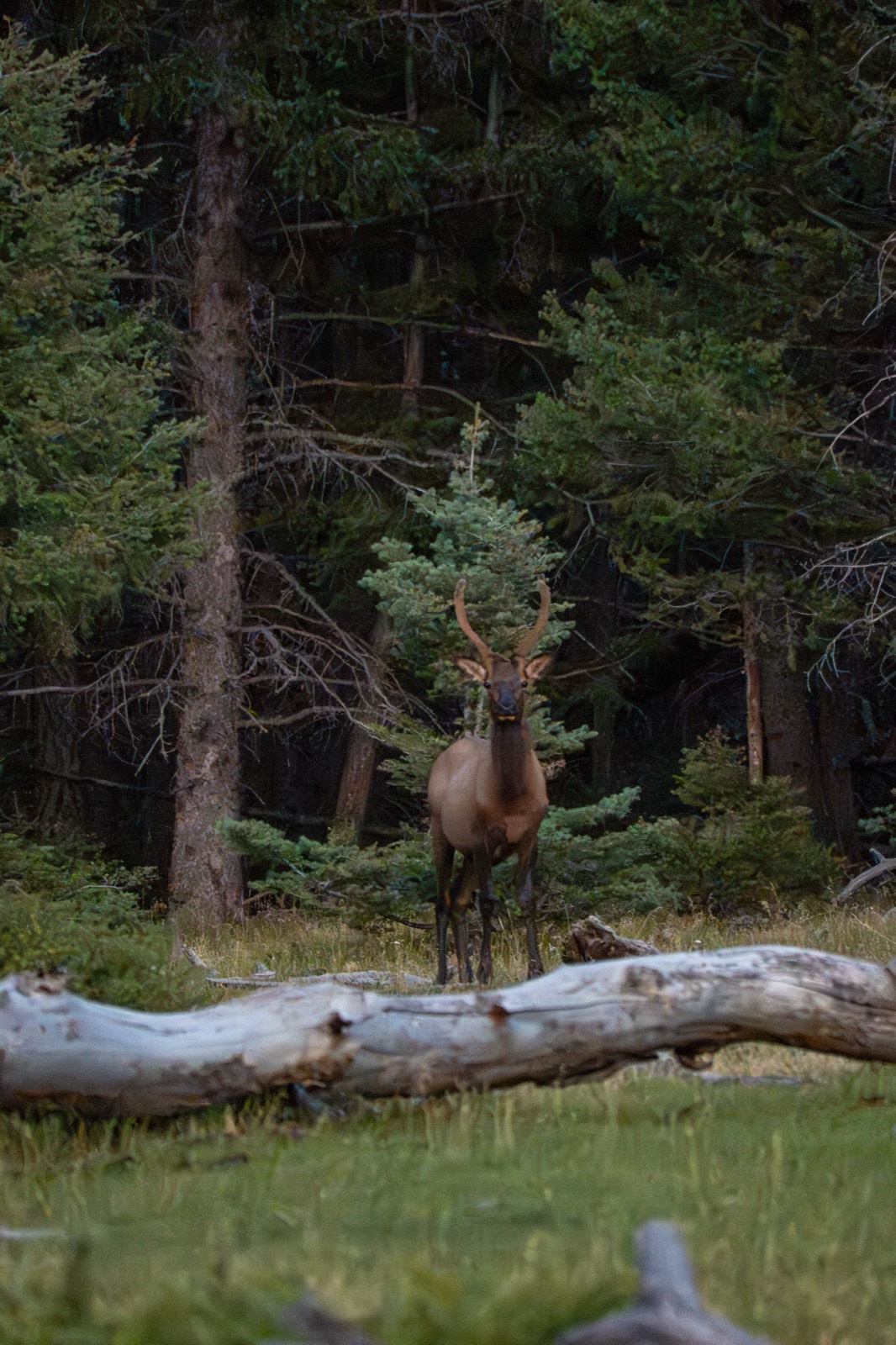
abundant trophyThe headline hunt. The Wasatch carries very large elk herds and is managed as a premium limited-entry trophy unit — 300-inch bulls are fairly common and 350-plus bulls are a genuine possibility with hard work and a little luck. A coveted, high-point tag that rewards hunters who put in the miles.
- →Glass the high meadows and aspen-conifer edges at first and last light where bulls feed
- →Hunt the September rut by locating bugling bulls from ridge vantages, then closing through the timbered drainages
- →Push into the roadless high basins away from the road-hunting crowd for the biggest bulls
- →Work the steep creek drainages that connect the high tops to the valley — travel corridors between bedding and feeding
Moose
common qualityOne of the best moose hunts in Utah. Shiras moose thrive in the willow bottoms and riparian basins around Strawberry and the creek drainages, with most bulls scoring in the 135-145-inch range and a few larger taken each year. Bull moose is a once-in-a-lifetime Utah permit — a rare draw on excellent habitat.
- →Hunt willow-choked creek bottoms, beaver ponds and the Strawberry-area riparian basins
- →Glass wet meadow and lake edges early and late when moose feed in the open
- →Move slowly and quietly through riparian cover where bulls hold
Mule Deer
common qualityA general-season mule deer herd shares the unit. Most trophy-class bucks live high in the aspen and conifer, above the elevations where the average hunter is willing to hike, so buck quality tends to increase with elevation and effort while the foothills hold more, smaller bucks.
- →Climb high into the aspen and conifer benches where mature bucks escape pressure
- →Glass the open high meadows and timber edges at dawn
- →Hunt the rut transitions as bucks follow does down off the peaks
- →Work the oak-brush and mahogany foothills early season for feeding deer
Black Bear
common opportunityBlack bears use the oak brush, aspen and berry-rich drainages of the Wasatch. Populations are healthy across the forest, offering a solid opportunity hunt for those pursuing them on the mountain.
- →Focus on oak-brush and berry patches in late summer and fall
- →Glass open feeding slopes and avalanche chutes at dawn and dusk
- →Check drainage bottoms and springs where bears travel
Cougar
common opportunityMountain lions follow the abundant deer and elk across the unit's timber and canyon country. Densities track wintering deer, making the mid-elevation drainages productive for winter hunters.
- →Cut fresh tracks on forest roads and ridgelines after new snow
- →Concentrate near wintering-deer concentrations on the lower slopes
- →Work timbered north-facing slopes and rimrock where lions travel
Pro tips
- →The biggest bulls and bucks live above the road-accessible pockets — miles and elevation are the price of trophy animals here
- →If you draw the elk tag, scout the high basins and rut funnels preseason; this is a high-point hunt worth doing right
- →Hunt the willow bottoms around Strawberry for moose — some of Utah's most reliable Shiras habitat
- →Ride the snow line: hunt high early and follow animals down as fall storms arrive
- →Use the extensive road network to cover country, then hike off the roads where pressure drops
Watch out for
- !Private ranch and subdivision land lines the valley floors around Heber, Midway and Park City — respect the low-elevation boundaries
- !The premium elk and once-in-a-lifetime moose tags are hard draws, not annual plans
- !Strawberry highlands can see early, fast-moving snowstorms
- !Popular unit — expect company on the road-accessible Strawberry ground
- !Secondary forest roads turn greasy and slick when wet
Logistics
This is one of Utah's most accessible big units — Heber City, Midway, Kamas and the Park City area sit right at the unit's edge with full lodging, fuel, groceries, sporting goods and outfitters, and Provo/Orem anchor the west side. US-40 and Provo Canyon (US-189) put you at trailheads within minutes, and the Strawberry road network opens the high country. Cell service is good along the highways and near towns but fades in the deeper drainages and roadless basins. High-clearance helps on the secondary forest roads.
Nearest towns: Heber City, Midway, Kamas, Park City, Provo, Orem
Seasons & regulations
This page carries no season dates or regulations. Get current rules from the official Utah sources:
Research sources: GOHUNT — Utah Wasatch Mtns Limited-Entry Elk Unit Profile · GOHUNT — Utah Wasatch Mtns/Central Mtns Moose Unit Profile · Hunt Addicts — Utah's Top Hunt Units (Wasatch) · UDWR Hunt Planner
FAQ
- How big is Unit 222 in Utah?
- Unit 222 (Wasatch Mtns) covers about 2,573 square miles, ranging from roughly 5,500 to 11,750 feet in elevation. Area is computed from the unit boundary polygon.
- How much public land is in Unit 222?
- Approximately 75% of the unit is public land. Primary managers: USFS Uinta-Wasatch-Cache National Forest, SITLA, BLM, private. Always verify ownership boundaries on the ground.
- What species does the catalog list for Unit 222?
- Rocky Mountain Elk, Moose, Mule Deer, Black Bear, Cougar. For seasons, tags, and regulations, use the official Utah agency resources linked on this page — this page carries no regulatory information.
Put Unit 222 on your map.
Boundary lines, public/private ownership, topo, and offline maps for this unit — in Baseline Maps, free for 14 days.