Unit 742 Wasatch Mtns, North
Trophy-managed bulls in the steep, roadless spine above Salt Lake and Park City
Northern Utah — Wasatch Front / Park City high country · Last reviewed 2026-07-12
Area
284
sq mi
Public land
80%
approx.
Elevation
4,800–11,330
feet
Motorized
moderate
access
Overview
The northern end of Utah's famed Wasatch Mountains limited-entry unit rises straight out of the Salt Lake and Weber valleys into a wall of peaks, glacial cirques, and dark timber that tops 11,000 feet along the crest above Park City, Kamas, and the Cottonwood canyons. It is a big, physical, heavily public unit — dominated by Uinta-Wasatch-Cache National Forest and three designated wildernesses (Lone Peak, Twin Peaks, Mount Olympus) — and is managed for mature bull elk, giving hunters who wait years for a tag a genuine shot at a 300-plus bull. Deer, moose, and mountain goats round out a mountain unit hunted hard from well-developed trailheads but with plenty of roadless country for those willing to climb.
Terrain
Abrupt west-facing front rising thousands of feet from the valley floor to a serrated alpine crest, with large meadows and flats on top and steep, brushy creek drainages falling to rolling foothills.
Cover: Sagebrush, oakbrush, and maple on the lower foothills grading into aspen and mixed conifer (Douglas-fir, spruce, subalpine fir) on the mid-slopes, with alpine meadow, rock, and krummholz along the high crest.
Landmarks: Wasatch crest above Park City · Lone Peak Wilderness · Twin Peaks Wilderness · Mount Olympus Wilderness · Big and Little Cottonwood Canyons · Parleys Canyon (I-80) · Kamas / South Summit country
Access
Overwhelmingly public on the mountain, but the front is ringed by dense private development, ski-resort land, and watershed-protected canyons (dogs and camping restricted in the Cottonwoods). Access is via well-established Forest Service trailheads and canyon roads; the wilderness interiors are foot-and-horse only and physically demanding. Expect crowds near roads and trailheads close to the metro area.
Managers: USFS Uinta-Wasatch-Cache NF, SITLA, private
Access points: Big Cottonwood and Little Cottonwood Canyon trailheads · Millcreek Canyon · Park City / Guardsman Pass area · Kamas and the Mirror Lake Highway (SR-150) fringe · American Fork Canyon (SR-92)
Species notes
Rocky Mountain Elk
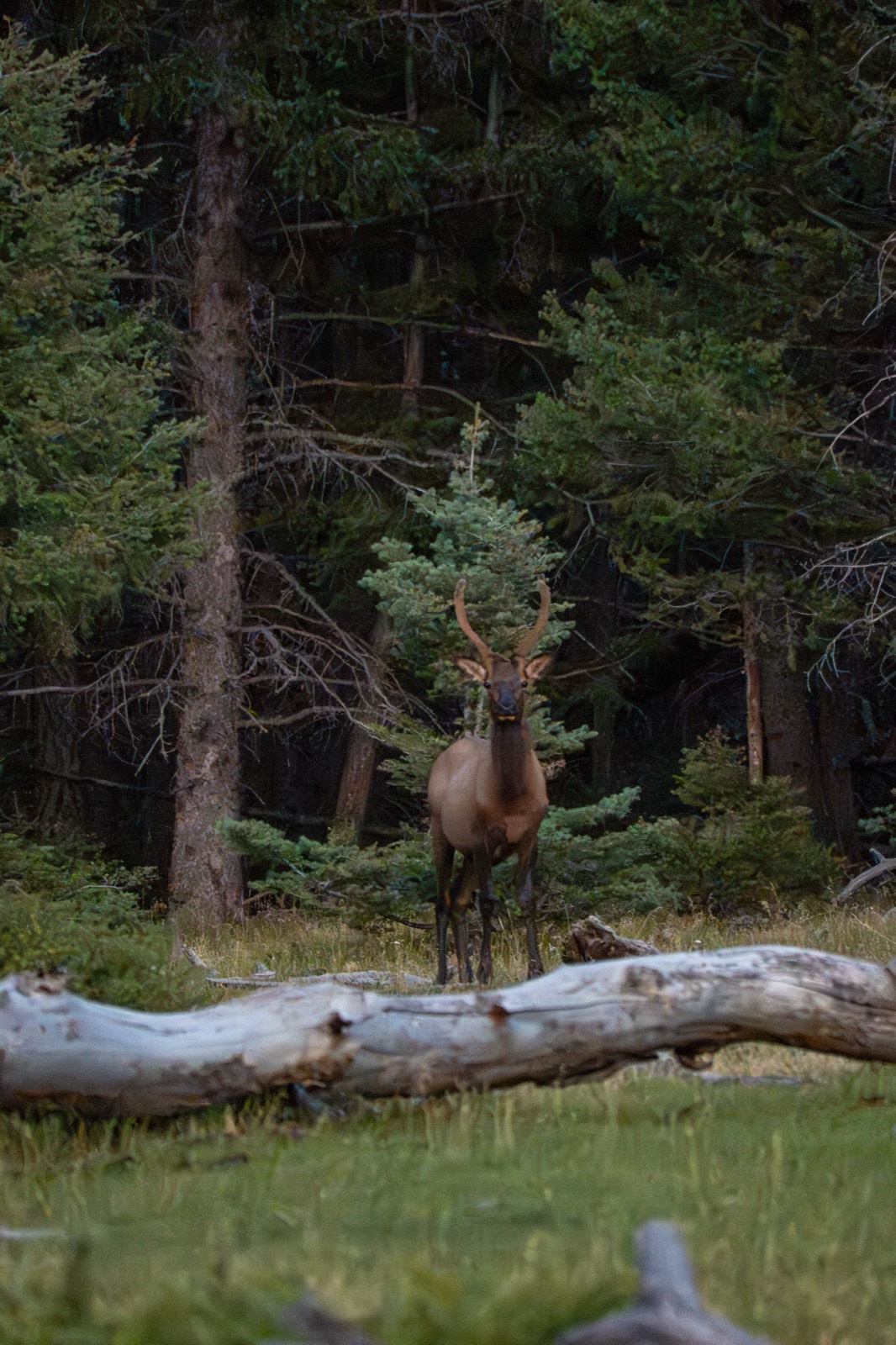
common trophyThe northern Wasatch is part of a premier limited-entry unit managed for mature bulls; the herd is large and 300-class bulls are realistic, with 340-plus animals killed most years by hunters who scout and grind the steep country.
- →Glass high meadows and timber pockets along the crest at first and last light
- →Get above the elk before dawn and let thermals work in your favor on the steep front
- →Hunt the transition between alpine parks and the dark north-facing timber where bulls bed
- →Cover ground on foot into roadless basins away from the trailhead crowds
Mule Deer
common qualityGood deer numbers use the oakbrush foothills and aspen benches, with mature bucks holding in the rough, timbered pockets. Weather and rut timing push better bucks down onto the front late in the fall.
- →Glass oakbrush and maple foothills at dawn for bucks feeding out of cover
- →Work the aspen-conifer edges on the mid-mountain benches
- →Focus on rough, broken pockets between the popular trailheads
- →Hunt lower and later as storms move deer off the high country
Moose
common qualityThe Wasatch canyons hold a healthy Shiras moose population — a once-in-a-lifetime Utah tag — concentrated in the willow bottoms and aspen-conifer drainages of the Cottonwoods, Millcreek, and Park City side.
- →Still-hunt willow-choked creek bottoms and beaver ponds
- →Glass aspen-conifer edges in the mornings and evenings
- →Check the wetter north-facing drainages where bulls stay in shade
Mountain Goat
limited trophyA transplanted goat herd clings to the alpine cliffs of the Lone Peak / Twin Peaks high country — a coveted once-in-a-lifetime tag for those who draw and can hunt genuinely dangerous terrain.
- →Glass the highest cliff bands and cirques from a distance to locate billies
- →Plan multi-day, technical approaches into the wilderness peaks
- →Hunt early before snow makes the high rock unclimbable
Cougar
common qualityLions track the abundant deer through the foothill and canyon country; best hunted with hounds on tracking snow when cats drop toward the lower front.
- →Cut canyon bottoms and foothill roads for tracks after fresh snow
- →Focus effort where deer concentrate on the winter front
Black Bear
limited opportunityBlack bears range the aspen and oakbrush drainages in modest numbers, favoring the wetter, food-rich canyons of the range.
- →Concentrate on oak and serviceberry pockets in late summer
- →Check aspen benches and riparian stringers with good forage
Pro tips
- →Treat this as a physical, boots-and-glass mountain hunt — the best bulls live in the steep, roadless timber above the trailheads
- →Scout hard; elk patterns shift with pressure and weather, and local knowledge of specific basins pays off
- →Get well past the day-hiker zone early each morning to beat the metro-area crowds
- →Know the Cottonwood watershed restrictions (no dogs, limited camping) before you plan a camp
- →Time your effort to storms — cold fronts pull mature animals down the front and concentrate them
Watch out for
- !Heavy recreational and hunting pressure near roads, canyons, and ski resorts
- !Extensive private development and watershed-restricted canyons ring the public land
- !Steep, technical terrain — especially the alpine goat country — is genuinely dangerous
- !Weather on the crest can turn fast; be prepared for early snow at elevation
Logistics
This is one of the most accessible major elk units in the West — the entire Salt Lake / Park City metro sits at the base with full services, fuel, lodging, and gear. The tradeoff is people: trailheads, canyons, and resort country see heavy recreational traffic. Watershed rules in the Cottonwood canyons restrict dogs and dispersed camping, so plan legal camps on the Kamas/Park City side or day-hunt from town.
Nearest towns: Salt Lake City, UT, Park City, UT, Kamas, UT, Draper, UT, Bountiful, UT
Seasons & regulations
This page carries no season dates or regulations. Get current rules from the official Utah sources:
Research sources: UDWR Elk Herd Unit Management Plan — Elk Herd Unit 17 Wasatch Mountains · GOHUNT — Wasatch Mtns limited-entry elk unit profile (trophy management, terrain, access) · USFS Uinta-Wasatch-Cache National Forest — maps & publications · UDWR Utah Hunt Planner
FAQ
- How big is Unit 742 in Utah?
- Unit 742 (Wasatch Mtns, North) covers about 284 square miles, ranging from roughly 4,800 to 11,330 feet in elevation. Area is computed from the unit boundary polygon.
- How much public land is in Unit 742?
- Approximately 80% of the unit is public land. Primary managers: USFS Uinta-Wasatch-Cache NF, SITLA, private. Always verify ownership boundaries on the ground.
- What species does the catalog list for Unit 742?
- Rocky Mountain Elk, Mule Deer, Moose, Mountain Goat, Cougar, Black Bear. For seasons, tags, and regulations, use the official Utah agency resources linked on this page — this page carries no regulatory information.
Put Unit 742 on your map.
Boundary lines, public/private ownership, topo, and offline maps for this unit — in Baseline Maps, free for 14 days.