Unit 870 Boulder Elk
A trophy-managed elk unit sprawling from 11,000-foot Boulder Mountain down through red slickrock canyon country to Lake Powell
Southern Utah — Boulder Mountain & the Escalante Canyons · Last reviewed 2026-07-12
Area
1,854
sq mi
Public land
90%
approx.
Elevation
3,700–11,328
feet
Motorized
extensive
access
Overview
The Boulder unit is one of southern Utah's marquee big-game landscapes, ranging from the timbered, lake-dotted top of Boulder Mountain (the Aquarius Plateau, among the highest forested plateaus in North America) down through pinyon-juniper benches and red slickrock canyons toward the Escalante River and Lake Powell. It is managed for trophy bull elk on a limited-entry basis, with healthy herds, strong genetics and enough country for hunters to be selective. The same footprint carries the general-season Boulder/Kaiparowits buck deer hunt (currently under restricted-weapon rules), an established Boulder Mountain mountain goat herd, and good black bear and cougar populations.
Terrain
Enormous vertical range: the high country tops out near Bluebell Knoll (~11,328 ft) on the Boulder Mountain/Aquarius Plateau, a broad forested plateau studded with alpine lakes, then steps down through timbered slopes and pinyon-juniper benches into slickrock canyon country dropping to the Escalante River and the arms of Lake Powell.
Cover: Spruce-fir, aspen and mixed conifer with subalpine meadows and lakes on top of Boulder Mountain; ponderosa and pinyon-juniper on the mid slopes; sagebrush, blackbrush and slickrock/desert scrub in the lower canyon and Lake Powell country.
Landmarks: Boulder Mountain / Aquarius Plateau · Bluebell Knoll (~11,328 ft) · Escalante River canyons · Lake Powell (Bullfrog arm) · Hell's Backbone · Burr Trail · Grand Staircase-Escalante NM (adjacent)
Access
Overwhelmingly public. Boulder Mountain itself is Fishlake/Dixie National Forest with a good network of forest roads and trailheads off SR-12 and the Boulder Mountain Road; the lower country is BLM and Glen Canyon NRA laced with slickrock two-tracks. Private inholdings cluster around the towns of Boulder, Escalante, Torrey and Grover — respect fences and access agreements near the valley bottoms. SITLA state trust parcels are scattered and generally open to hunting.
Managers: USFS Dixie NF, USFS Fishlake NF (Boulder Mountain), BLM, SITLA, NPS Glen Canyon NRA, private
Access points: SR-12 Scenic Byway (Torrey–Boulder–Escalante) · Boulder Mountain Road / forest roads off SR-12 · Burr Trail (Boulder toward Capitol Reef/Lake Powell) · Hell's Backbone Road · Bullfrog / Lake Powell (Bullfrog Marina, SR-276) · Hole-in-the-Rock Road (BLM)
Species notes
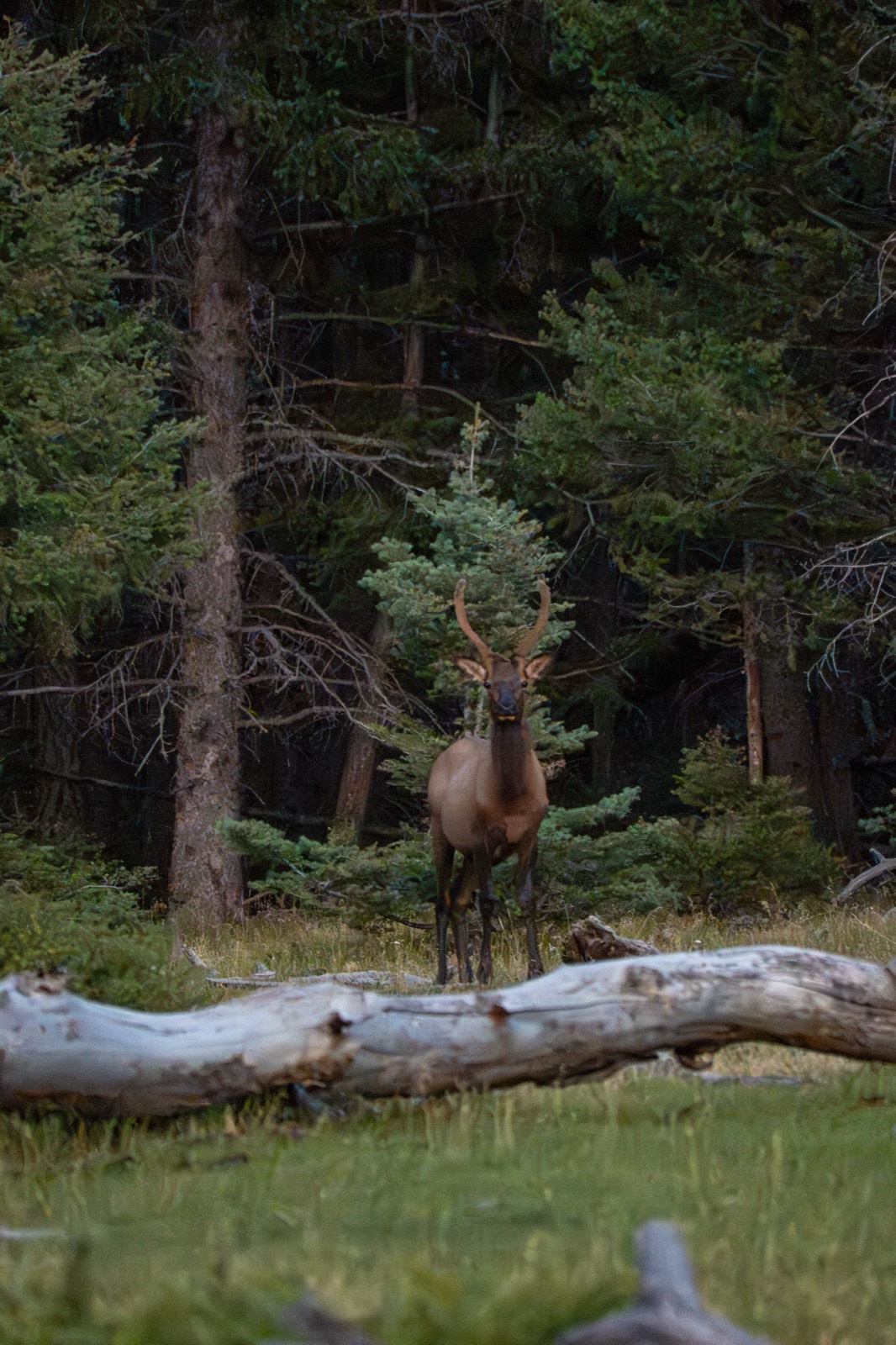
Rocky Mountain Elk
common trophyThe unit's headline hunt — a limited-entry, trophy-managed bull elk unit with healthy herds and good genetics. Limited tags plus a very large unit let successful applicants hold out for a mature 6-point bull. Elk numbers have grown strongly here in recent years.
- →Focus the high country of Boulder Mountain during early hunts — glass parks, aspen edges and the many lakes and meadows at first and last light
- →Locate bulls by bugling in the timber pockets and meadow fringes during the rut
- →As weather pushes elk, work the transition zone off the plateau into the ponderosa and pinyon benches
- →Cover ground with quality glass — the unit is huge, so finding the right bull matters more than volume of animals
Mule Deer
common qualityHunted as the general-season Boulder/Kaiparowits buck deer unit, currently under Utah's restricted-weapon framework. Rising elk numbers are thought to have pressured deer somewhat, but the varied country and lower hunter density than the Wasatch Front still produce respectable mature bucks.
- →Glass the aspen and sagebrush pockets high on Boulder Mountain in the early season, then follow deer down as storms hit
- →Work the pinyon-juniper benches and canyon rims in the mid-elevation country where bucks hold
- →Hunt away from the SR-12 corridor to escape road hunters and find undisturbed bucks
- →Time effort to the rut when mature bucks move and become huntable in the open
Mountain Goat
limited trophyBoulder Mountain holds an established transplanted mountain goat herd on the plateau's rocky rims and cliff bands. Managed as a once-in-a-lifetime species in Utah with very few permits and high success rates for those who draw.
- →Glass the cliff bands, rockslides and rimrock along the edges of the Aquarius Plateau
- →Spend time behind a spotting scope locating and judging billies before committing to a stalk
- →Be ready for steep, broken terrain and volatile high-country weather
Black Bear
common qualityBoulder Mountain and the surrounding forest carry a solid black bear population in the oak brush, aspen and mixed timber.
- →Hunt oak brush and berry pockets on the mid-mountain slopes in fall
- →Glass avalanche chutes, meadow edges and mast-producing draws at dawn and dusk
Cougar
common opportunityCougars follow the deer and elk across the timbered plateau and canyon rims; the broken slickrock and forest edges hold good numbers.
- →Cut fresh tracks on forest roads and canyon rims after a snowfall
- →Concentrate on deer wintering areas along the pinyon-juniper transition
Pro tips
- →Treat this as two units in one: hunt the timbered high plateau early, then chase animals down into the pinyon-juniper and canyon country as snow arrives
- →Boulder Mountain's lakes, meadows and aspen edges are elk magnets — glass them hard at first and last light
- →Get well off the SR-12 corridor and the main forest roads to find undisturbed bulls and bucks
- →Carry more water and vehicle recovery gear than you think you need — the lower slickrock country is unforgiving and far from help
- →Scout the plateau rims in advance if you draw the goat tag; that terrain is steep and time-consuming
Watch out for
- !Private inholdings around Boulder, Escalante, Torrey and Grover — mind fences in the valley bottoms
- !Early snow can close high Boulder Mountain roads and strand vehicles
- !Vast distances between high country and canyon country — plan fuel and time
- !Heat, exposure and scarce water in the lower Escalante/Lake Powell portion
- !Little to no cell service across most of the unit
Logistics
Base out of the SR-12 corridor towns — Torrey, Boulder and Escalante offer lodging, fuel and limited groceries; Loa/Bicknell and Hanksville add options, and Bullfrog serves the Lake Powell end. This is remote country: fuel up before heading onto Boulder Mountain or into the Escalante backcountry, carry recovery gear for the slickrock and forest roads, and expect long drives between the high plateau and the canyon country. Cell coverage is spotty to nonexistent off the highway. Snow can close the high Boulder Mountain roads early.
Nearest towns: Boulder, Escalante, Torrey, Bicknell, Loa, Hanksville, Bullfrog
Seasons & regulations
This page carries no season dates or regulations. Get current rules from the official Utah sources:
Research sources: GOHUNT — Utah Boulder Elk Limited-Entry Unit Profile · UDWR — Restricted-weapon general deer units (Boulder/Kaiparowits) · Utah Mountain Goat Statewide Management Plan (UDWR) · Hunt Addicts — Utah's Top Hunt Units
FAQ
- How big is Unit 870 in Utah?
- Unit 870 (Boulder Elk) covers about 1,854 square miles, ranging from roughly 3,700 to 11,328 feet in elevation. Area is computed from the unit boundary polygon.
- How much public land is in Unit 870?
- Approximately 90% of the unit is public land. Primary managers: USFS Dixie NF, USFS Fishlake NF (Boulder Mountain), BLM, SITLA, NPS Glen Canyon NRA, private. Always verify ownership boundaries on the ground.
- What species does the catalog list for Unit 870?
- Rocky Mountain Elk, Mule Deer, Mountain Goat, Black Bear, Cougar. For seasons, tags, and regulations, use the official Utah agency resources linked on this page — this page carries no regulatory information.
Put Unit 870 on your map.
Boundary lines, public/private ownership, topo, and offline maps for this unit — in Baseline Maps, free for 14 days.