GMU 111 Aladdin
High-country whitetail unit in the far northeast corner — Abercrombie's peaks over a strong public-land road network, with a Selkirk moose draw.
WDFW Region 1 — Northeast WA / Pend Oreille & Stevens Counties · Last reviewed 2026-07-12
Area
445
sq mi
Public land
65%
approx.
Elevation
1,500–7,308
feet
Motorized
moderate
access
Overview
GMU 111 "Aladdin" is a ~445-square-mile unit in the northeast corner of District 1, straddling the Stevens/Pend Oreille county line between the Columbia River / Lake Roosevelt edge on the west and the high Selkirk foothills on the east. Unlike the private-heavy valley units to the south, Aladdin is roughly two-thirds public — mostly Colville National Forest with a good gravel-road system — giving free-roaming hunters real elbow room. It is a solid white-tailed deer unit (recent modern-firearm success around 20%, among the better rates in the district) with a scattering of Rocky Mountain elk from the Pend Oreille sub-herd, black bear, cougar, and a coveted Selkirk-herd moose that is draw-only.
Terrain
Broken, timbered mountain country rising east from the Columbia River / Lake Roosevelt trench up into the west slope of the Selkirk Range. Abercrombie Mountain (7,308 ft) — the second-highest peak in northeast Washington — and Hooknose Mountain anchor the high ground; lower benches, creek bottoms, and old clearcuts fill the middle elevations. Big Meadow Lake and a web of small creek drainages break up the timber.
Cover: Extensive mixed-conifer forest (Douglas-fir, western larch, lodgepole, cedar) covering the bulk of the unit, interlaced with regenerating clearcuts, brushy benches, riparian bottoms, small meadows and beaver ponds. Farm-forest edge and pasture concentrate along the Columbia and the highway corridors.
Landmarks: Abercrombie Mountain (7,308 ft, 2nd highest in NE WA) · Hooknose Mountain · Big Meadow Lake · Seldom Seen Mountain / Bon Ayre Ridge · North & South Forks Mill Creek · Columbia River / Lake Roosevelt (western edge) · Metaline / Northport corridor
Access
One of District 1's more accessible units: roughly 65% public, dominated by Colville National Forest with a good system of Forest Service and gravel roads, so most of the mountain interior is open to walk-in and vehicle hunting. WDFW notes large timber-company lands are open to hunting though not always to private motor vehicles — expect gated spurs behind which you walk or bike. Private ground is concentrated along the Columbia/Lake Roosevelt bottom and the highways; those parcels need written permission. A few road closures exist, so carry a GPS/onX ownership layer and plan gated access in advance. Colville and Newport Ranger Districts and the DNR office in Colville sell current road/forest maps.
Managers: US Forest Service (Colville National Forest), Washington DNR (state forest sections), Private industrial timber companies, Private landowners (Columbia River / highway corridors)
Access points: SR 25 / Northport corridor along the Columbia (west) · Deep Lake–Boundary Road and Deep Creek Road into the Abercrombie block · Big Meadow Lake Road / Campground (central) · Forest Service gravel network on the Selkirk west slope · Gated timber-company spurs (walk/bike-in)
Species notes
Whitetail Deer
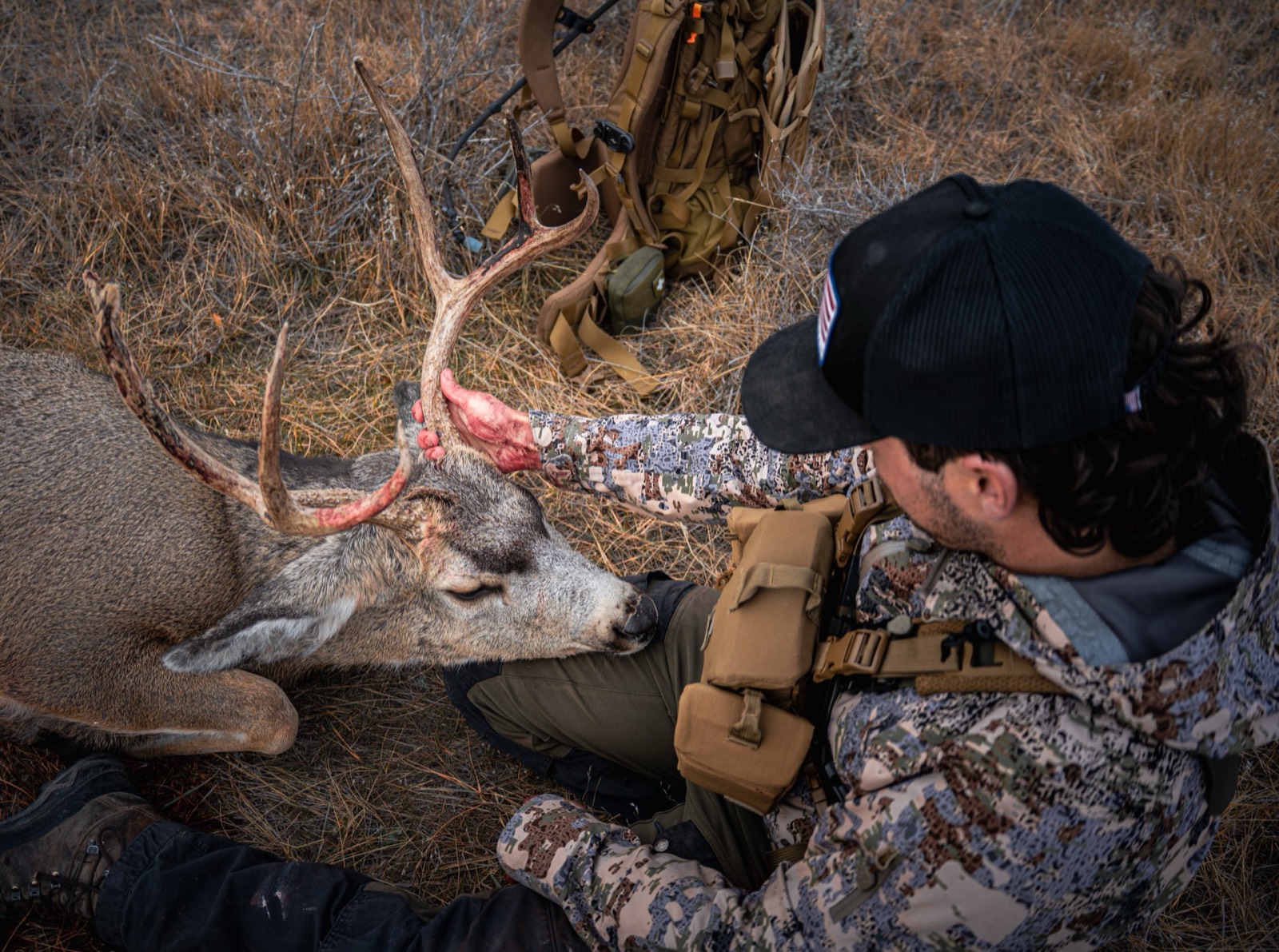
common qualityThe bread-and-butter species and the reason most hunters come to Aladdin. WDFW describes whitetail as present with a more localized distribution here than in the farm-forest valley units, with the highest densities on private valley/benchland; recent modern-firearm success has run near 20%, one of the better rates in District 1. Legal harvest is buck-only for all user groups.
- →Hunt the edges of regenerating clearcuts and old cuts at first and last light, then set up back in the adjacent timber where bucks hold in daylight.
- →Still-hunt slowly through brushy benches and creek bottoms, glassing for a leg or an antler tine rather than a whole deer.
- →Stand-hunt trails, habitat edges, and funnels between bedding cover and feed.
- →Time the mid-November rut — rattling and grunting can pull mature bucks in the days before peak breeding.
- →Work the private-ground fringe along the Columbia and highways only with written permission; push higher and deeper on the national forest for pressured, wiser bucks.
Rocky Mountain Elk
limited opportunityAladdin sits in the Pend Oreille sub-herd area that WDFW flags as District 1's better elk country, but 'better' is relative — elk are scattered in small groups through dense timber and district-wide success is low (Aladdin's ~3% is at the bottom of the seven GMUs). Numbers are trending up. This is a spot-and-scout, cover-a-lot-of-ground elk hunt, not a herd hunt.
- →Scout hard before the opener — elk shift fast once pressure hits; find fresh sign before deciding where to hunt.
- →Glass forest clearcuts at dawn/dusk, but push into thicker timber, swamps, and young forest for bulls that avoid the openings.
- →Get in on foot, bike, or horse behind gated roads to reach elk that see little pressure.
- →Hunt fresh snow to cut and track a group late in the season.
Moose
common qualitySelkirk-herd Shiras moose are well established and hunted by special permit (draw) only. WDFW reports moose most frequently in the south and central portions of the unit, with some in the north. A hard-to-draw but high-quality tag.
- →Focus the south/central drainages: Big Meadow Lake, Seldom Seen Mountain, Bon Ayre Ridge, the North and South Forks of Mill Creek, Amazon Creek, and Clark Creek.
- →Glass willow bottoms, beaver ponds, meadows, and old cut edges morning and evening.
- →Moose are solitary — expect to cover ground and hunt sign, not congregations.
Black Bear
common opportunityBlack bear are common throughout the Northeastern bear unit and taken mostly opportunistically during deer and elk seasons, aided by abundant open public land. A two-bear limit with an August opener.
- →Glass clearcuts, avalanche chutes, and berry benches in late summer/early fall when bears feed heavily.
- →Hunt the same berry-rich Selkirk slopes you'd scout for deer.
- →Cover ground and use optics — most bears are spot-and-stalk finds.
Cougar
common opportunityCougars occur throughout District 1 and follow the deer. Most are taken incidentally; success climbs with snow for tracking.
- →Cut fresh tracks after snow along forest roads and ridge saddles in the whitetail winter range.
- →Hunt where deer concentrate — cats are never far from the herd.
- →Know the harvest-guideline closure status for the unit before you go.
Pro tips
- →This is one of the more public-land-friendly units in District 1 — use it. Push past the roadside crowds into the Abercrombie/Hooknose high country.
- →Buck-only across all user groups here, so pass does and focus glassing time on cut edges and timber funnels.
- →Learn which timber-company gates are walk-in vs. drive-in before the opener; a bike doubles your reach behind a locked gate.
- →Hunt the first hard snow — it drops deer out of the high country and lets you track both deer and cougar.
- →If you draw the moose tag, concentrate on the south/central creek bottoms and Big Meadow Lake rather than the peaks.
Watch out for
- !Scattered private inholdings along the Columbia and the highways — confirm ownership and get written permission before hunting the valley fringe.
- !Gated timber and Forest Service roads; some spurs are closed to motor vehicles even where hunting is allowed.
- !Mountain weather on Abercrombie flips fast — snow can trap vehicles on high gravel spurs.
- !Moose is draw-only; do not shoot one on a deer/elk tag.
- !EHD/bluetongue can locally thin whitetail numbers after a drought summer.
Logistics
Access from the Colville / SR 20 corridor or up SR 25 along the Columbia to Northport. Fuel, groceries, lodging, and licenses in Colville; smaller services in Northport, Metaline Falls, and Ione. Forest Service ranger stations at Colville and Newport and the Colville DNR office are good sources for road status and maps. Dispersed and developed camping on the Colville NF (Big Meadow Lake); expect gravel forest roads that turn slick with weather.
Nearest towns: Northport, Metaline Falls, Ione, Colville
Seasons & regulations
This page carries no season dates or regulations. Get current rules from the official Washington sources:
Research sources: WDFW 2024 District 1 Hunting Prospects (Region 1) · WDFW Game Management Units · GoHunt — Washington Unit 111 Aladdin
FAQ
- How big is GMU 111 in Washington?
- GMU 111 (Aladdin) covers about 445 square miles, ranging from roughly 1,500 to 7,308 feet in elevation. Area is computed from the unit boundary polygon.
- How much public land is in GMU 111?
- Approximately 65% of the unit is public land. Primary managers: US Forest Service (Colville National Forest), Washington DNR (state forest sections), Private industrial timber companies, Private landowners (Columbia River / highway corridors). Always verify ownership boundaries on the ground.
- What species does the catalog list for GMU 111?
- Whitetail Deer, Rocky Mountain Elk, Moose, Black Bear, Cougar. For seasons, tags, and regulations, use the official Washington agency resources linked on this page — this page carries no regulatory information.
Put GMU 111 on your map.
Boundary lines, public/private ownership, topo, and offline maps for this unit — in Baseline Maps, free for 14 days.