GMU 166 Tucannon
Nearly all-public Tucannon River backcountry — District 3's top general-season deer success rate, wilderness-edge elk, dense bears.
Region 1 — Blue Mountains (Eastern WA) · Last reviewed 2026-07-12
Area
136
sq mi
Public land
90%
approx.
Elevation
1,800–6,000
feet
Motorized
limited
access
Overview
GMU 166 "Tucannon" is a small (~131-135 sq mi), overwhelmingly public unit on the north face of Washington's Blue Mountains in Garfield/Columbia counties, climbing from the Tucannon River Valley (~1,800 ft) — historic big-game winter range — south into Umatilla National Forest timber and the Wenaha-Tucannon Wilderness, topping out above 6,000 ft. WDFW rates access here "Excellent": the unit is mostly USFS and WDFW ground (the W.T. Wooten Wildlife Area sits in the northern tip), and it has recently posted District 3's highest general-season deer success rate (~17% modern firearm, 2024) — but it also carries one of the district's higher hunter densities. Elk are present but at low numbers as part of the below-objective single Blue Mountains herd; 2021 wildfires burned a large portion of the unit and should improve deer and elk forage for years. Wolves are established and move game around.
Terrain
A steep, rugged Blue Mountains river-canyon-to-timber gradient. The Tucannon River bottom (~1,800 ft) in the north is the unit's low ground and a historic big-game wintering area; from there the country climbs south through folded ridges and creek-carved draws into dense Umatilla NF timber and the roadless Wenaha-Tucannon Wilderness above 6,000 ft. The southern roadless core (Al Williams Ridge, Horse Ridge, Elk Flat area) is physically demanding backpack/horse country, much of it regenerating from the 2005-2006 and 2021 fires.
Cover: Riparian brush and grass along the Tucannon River, grading into ponderosa pine, Douglas fir, grand fir and subalpine fir on the higher slopes. Extensive old burns from 2005-2006 and 2021 wildfires have opened the canopy and created thick regenerating brush and forest-edge forage that benefits deer, elk and bears.
Landmarks: Tucannon River / Tucannon River Valley (historic big-game winter range, low ground ~1,800 ft) · W.T. (Wooten) Wildlife Area (northern tip, WDFW-owned) · Wenaha-Tucannon Wilderness (southern portion of the unit) · Umatilla National Forest (majority of the unit) · Al Williams Ridge / Horse Ridge / Elk Flat (roadless southern core) · 2021 wildfire burn scars
Access
WDFW rates GMU 166 access "Excellent" — a majority of the unit is WDFW- and USFS-owned and access is good throughout most of it, with the roadless Wenaha-Tucannon Wilderness occupying the physically demanding southern portion. This is one of District 3's most public units (public-access rank 1 of 12). Numerous roads reach the Tucannon River corridor and the wilderness edge, but the southern core is walk-in/horse-in only. Because the public land is so accessible, hunter density runs on the higher side despite the small unit size, and general-season deer success is nonetheless the best in the district. Motorized-vehicle restrictions apply on much of the USFS ground and the wilderness is closed to motorized/mechanized travel.
Managers: U.S. Forest Service (Umatilla National Forest), WDFW (W.T. Wooten Wildlife Area), Wenaha-Tucannon Wilderness (USFS wilderness within the unit)
Access points: Tucannon River Road / Tucannon Road up the river corridor from the north · W.T. Wooten Wildlife Area access in the northern tip · USFS roads off the Umatilla NF perimeter into the wilderness trailheads · Backpack/horse trails into the roadless southern wilderness core
Species notes
Mule Deer
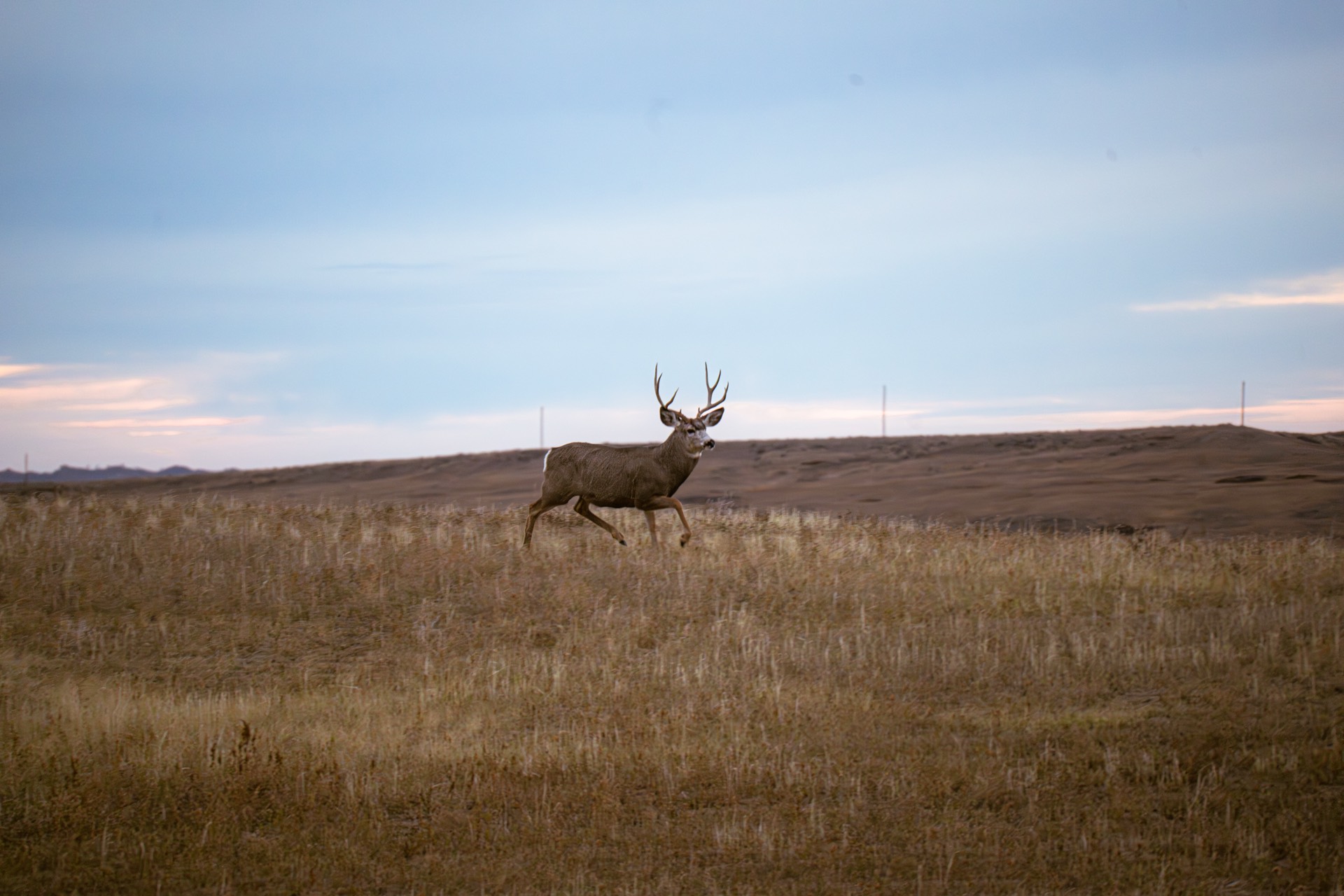
common opportunityGMU 166 recently posted District 3's highest general-season deer success rate (about 17% modern firearm in 2024, top-ranked among the district's forested units). Mule deer favor the higher, more open timber-edge and burn country in the south; general seasons are typically spike/antler-point restricted with antlerless opportunity withdrawn on this public ground. Mountain mule deer numbers show the long-term regional decline, but recent fires have improved forage.
- →Hunt away from the road-accessed Tucannon corridor into the burns and wilderness edge where deer hold with less pressure
- →Glass open grass faces, burn regrowth and timber edges at first and last light, then still-hunt shaded benches mid-day
- →Early season find deer higher on cool north slopes; they shift toward the river valley winter range as weather pushes in
- →Work the 2021 burn scars — regenerating brush and forest edge concentrates feeding deer
Whitetail Deer
common opportunityWhitetails share the unit and are concentrated in the lower Tucannon River bottom, brushy draws and cover edges, contributing to the strong deer harvest. District 3 whitetails are periodically knocked back by hemorrhagic disease (EHD/bluetongue) outbreaks tied to hot, dry summers, so numbers and antlerless opportunity fluctuate.
- →Hunt the brushy Tucannon River bottom and shrubby side draws where whitetails bed and feed
- →Watch riparian cover edges at dawn and dusk; whitetails hold tight to thick cover by day
- →Still-hunt the creek bottoms slowly; rattling/calling can work in the rut window
- →After warm, dry summers scout for EHD die-off signs before committing time to a drainage
Rocky Mountain Elk
limited opportunityGMU 166 is part of the single Blue Mountains elk herd, managed for stability/growth but running well below objective, with record-low calf recruitment in recent years limiting yearling-bull availability. General elk seasons here are typically spike-only and antlerless opportunity has been eliminated on the core public land. Elk harvest is modest (roughly three dozen in 2024) against high hunter numbers, giving the unit one of the district's lower elk success rates despite its excellent access. The 2021 burns should improve elk habitat going forward.
- →Treat this as a low-density elk unit — locate herds and fresh sign before the season rather than road-hunting
- →Push into the roadless wilderness burns and steeper southern drainages where elk escape the heavy access-driven pressure
- →Hunt north-facing timber early while it's warm; shift to south-facing slopes and openings after snow flies
- →Be realistic about spike availability — it tracks the recent weak calf crops
Black Bear
common opportunityThe Tucannon holds a healthy Blue Mountains black bear population, and most bears are taken opportunistically by deer and elk hunters. Color-phase (cinnamon/brown) bears occur. The mix of river-bottom fruit, burn-edge berry fields and timber makes for good early-fall bear feeding.
- →Glass open slopes cut by shrubby, berry-filled draws very early and very late, watching from a vantage with distance
- →Hunt the burn edges and riparian draws where bears feed on ripening berries and fruit in early fall
- →Locate fresh sign in huckleberry/elderberry/blackberry patches before committing
- →Carry a bear tag while deer/elk hunting — most Tucannon bears are incidental
Cougar
common opportunityCougars occur throughout the timbered unit, following the deer and elk. GMU 166 falls in Cougar Hunt Management Unit 11 (with 145/175/178), which is governed by a seasonal mortality cap and closes once the cap is met; hound use is prohibited statewide, so harvest is nearly all incidental. Verify current CHMU quota status before hunting.
- →Most cougars are taken by deer/elk hunters who cut fresh tracks — carry a tag through the fall seasons
- →Hunt the prey-rich timbered drainages; cats stay near the deer and elk
- →Watch the CHMU 11 quota status closely — the season can close on short notice once the cap fills
- →Fresh snow greatly improves your odds of cutting and following tracks
Pro tips
- →This is one of the most public units in District 3 (access rank 1 of 12) and recently the best general-season deer success rate — but that draws hunters. Grind past the road-accessed Tucannon corridor into the wilderness burns to find deer with less pressure.
- →Play the vertical: whitetails and bears low in the Tucannon River bottom and brushy draws; mule deer and elk high in the burns and wilderness timber.
- →Hunt the 2021 (and older 2005-2006) burn scars — regenerating brush and forest edge concentrates deer, elk and bears.
- →For elk, don't expect a roadside herd — the Blue Mountains herd is below objective with record-low calf recruitment. Scout and locate sign before the opener, and plan on spike-only general opportunity.
- →Mandatory CWD testing applies to deer, elk and moose harvested in Region 1 (100-series GMUs), and whole carcasses can't be moved out of the 100-series — debone or follow the allowed-parts rules.
- →Wolves are established in the Blue Mountains and will move deer and elk; be ready to relocate if a drainage goes quiet.
Watch out for
- !The roadless southern core is Wenaha-Tucannon Wilderness — no motorized or mechanized travel; plan to backpack or pack in with horses.
- !Motorized-vehicle restrictions apply on much of the USFS ground; know which roads are open.
- !Excellent public access means real hunter density for such a small unit, especially on general-season openers.
- !Wildfire risk is high in hot, dry late summers/falls (2021 burned a large portion of the unit; 2024-2025 were also hot and dry) — check InciWeb, USFS and WDFW for road/area closures before heading out.
- !Chronic wasting disease is confirmed in WDFW's Eastern Region — mandatory CWD testing for harvested deer/elk/moose in the 100-series and carcass-transport restrictions apply.
- !Hemorrhagic disease (EHD/bluetongue) periodically knocks back whitetails after hot, dry summers.
- !The cougar season is capped by CHMU 11 and can close mid-season once the mortality cap is met — verify status if carrying a cougar tag.
Logistics
Pomeroy (to the northeast) and Dayton (to the west) are the closest towns for gas, groceries and basic lodging; Clarkston/Lewiston and Walla Walla are the larger regional hubs with full services and the nearest airports. Most hunters camp in the Umatilla National Forest or along the Tucannon River corridor — dispersed/primitive camping is the norm, and the W.T. Wooten Wildlife Area draws day-users. Roads reach the river bottom and wilderness edge, but plan to backpack or use horses to hunt the roadless southern core. Fire bans and USFS road/area closures are common in late summer and early fall. WDFW's Eastern Region (Region 1) office in Spokane Valley (509-892-1001) answers access questions.
Nearest towns: Pomeroy, WA, Dayton, WA, Clarkston, WA, Walla Walla, WA
Seasons & regulations
This page carries no season dates or regulations. Get current rules from the official Washington sources:
Research sources: WDFW — Game Management Units (GMUs) · WDFW — 2025 District 3 Hunting Prospects (Walla Walla, Columbia, Garfield, Asotin counties) · WDFW — Blue Mountains Elk Herd At-Risk Assessment (2021) · GoHunt — Washington Unit 166 (Tucannon) Profile · WDFW — Chronic wasting disease (CWD) rules
FAQ
- How big is GMU 166 in Washington?
- GMU 166 (Tucannon) covers about 136 square miles, ranging from roughly 1,800 to 6,000 feet in elevation. Area is computed from the unit boundary polygon.
- How much public land is in GMU 166?
- Approximately 90% of the unit is public land. Primary managers: U.S. Forest Service (Umatilla National Forest), WDFW (W.T. Wooten Wildlife Area), Wenaha-Tucannon Wilderness (USFS wilderness within the unit). Always verify ownership boundaries on the ground.
- What species does the catalog list for GMU 166?
- Mule Deer, Whitetail Deer, Rocky Mountain Elk, Black Bear, Cougar. For seasons, tags, and regulations, use the official Washington agency resources linked on this page — this page carries no regulatory information.
Put GMU 166 on your map.
Boundary lines, public/private ownership, topo, and offline maps for this unit — in Baseline Maps, free for 14 days.