GMU 290 Desert
Special-permit Quality Deer unit in the Desert Unit dunes, seeps, and potholes
WDFW Region 2 / District 5 — Columbia Basin / Potholes (Grant County) · Last reviewed 2026-07-12
Area
285
sq mi
Public land
41%
approx.
Elevation
900–1,400
feet
Motorized
limited
access
Overview
GMU 290 (Desert) is a compact special-permit Quality Deer Hunt Unit southwest of Moses Lake, managed to hold mature mule-deer bucks by capping hunter density. About 41% of the unit is public — the Desert Unit of the Columbia Basin Wildlife Area — a maze of sand dunes, seeps, potholes, and wasteway wetlands created by the Columbia Basin Irrigation Project. Buck-to-doe ratios run about 50:100 with most bucks older than 2.5 years, and permit success is high for those who draw: early modern-firearm hunters hit 79% in 2024. Beyond deer, it is the district's best public-land wild-pheasant ground and a heavy waterfowl draw.
Terrain
Flat-to-rolling sand-dune and shrub-steppe country laced with seeps, potholes, winding wasteways, and reservoir shoreline — 'wet desert' that reads more like marshland between the dunes.
Cover: Bitterbrush and sagebrush on the sandy uplands, with dense phragmites, cattail, bulrush, willow, and Russian olive choking the wetlands and wasteway channels. Irrigated farmland occupies the western part of the unit.
Landmarks: Potholes Reservoir · Winchester Wasteway · Frenchman Wasteway / Frenchman Hills · West Canal · Seep Lakes / Desert Unit
Access
Deer hunting is permit-only — GMU 290 is a Quality Deer Hunt Unit and you must draw. Once drawn, access is good: about 41% of the unit is the WDFW-managed Desert Unit of the Columbia Basin Wildlife Area, open public land of riparian and wetland ground near the Winchester and Frenchman wasteways surrounded by dunes. Roads are few, so scouting and walking in are essential. Three Regulated Access Areas govern waterfowl hunting, and two game reserves (Frenchman, Winchester) are closed to hunting. A Discover Pass is required; primary entries are Road M SW, Frenchman Hills Road, and Dodson Road.
Managers: WDFW — Columbia Basin Wildlife Area (Desert Unit, part of ~62,601 ac), US Bureau of Reclamation (Columbia Basin Irrigation Project, ~2/3 of the Desert Unit under a 25-year agreement), Private irrigated farmland (western part of the unit)
Access points: Road M SW · Frenchman Hills Road · Dodson Road · SR 262 / O'Sullivan Dam Road along Potholes Reservoir
Species notes
Mule Deer
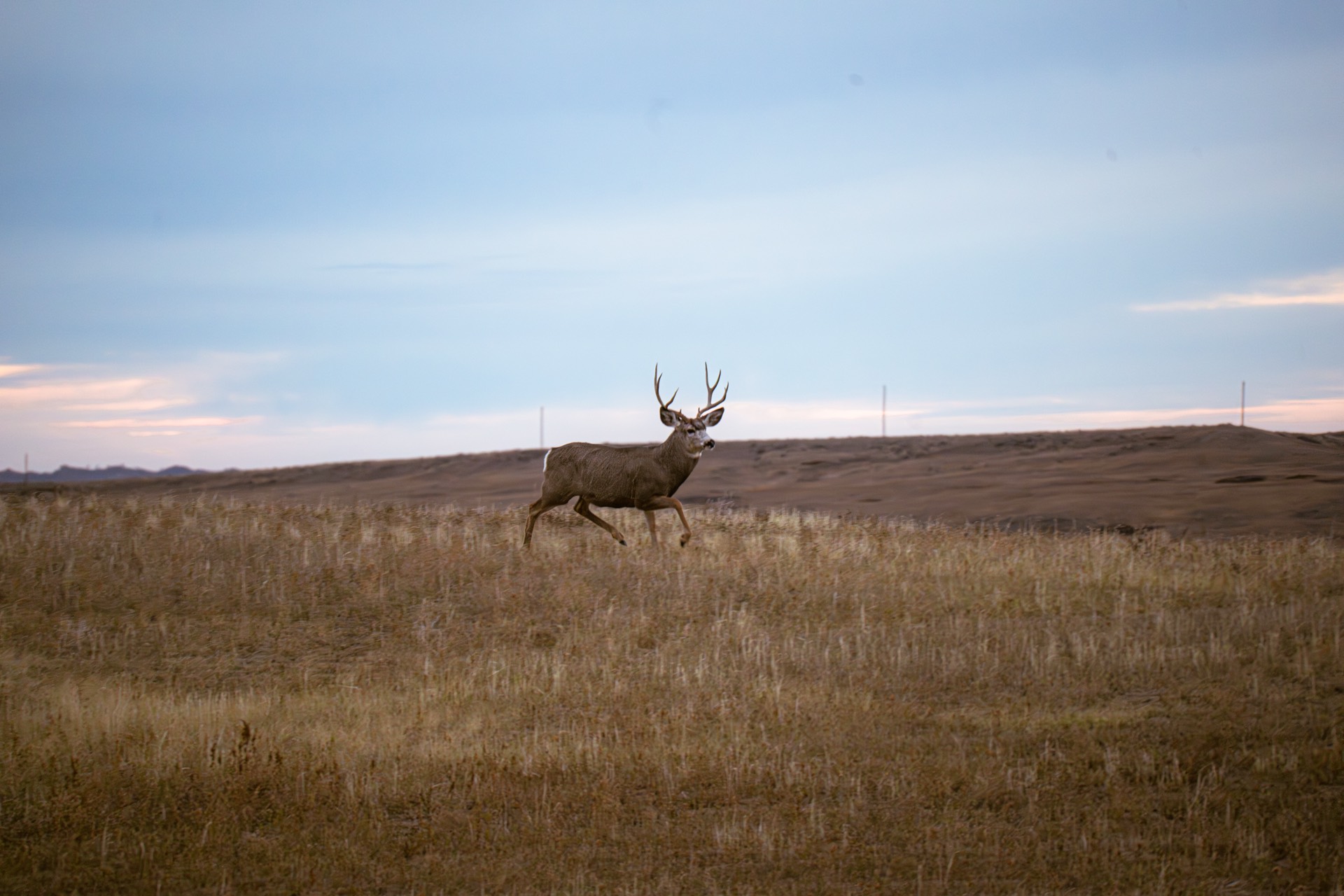
common qualityA managed Quality unit: permit-only, low hunter density, and older bucks — aerial surveys show roughly 50 bucks:100 does with most bucks over 2.5 years. If you draw, odds are strong: 2024 permit success ran 79% early modern firearm, 57% late modern, and 33% muzzleloader; archery is tougher at 25-33%. Bucks live in the bitterbrush uplands and dune pockets around the wetlands.
- →Scout hard before the hunt — GMU 290 has very few roads and rewards those who walk in
- →Hunt the large, remote bitterbrush patches away from the roads and farmland
- →Glass the sandy dune benches above the seeps and wasteways where mature bucks bed
- →Focus on the wetland-upland edge near the Winchester and Frenchman channels
Rocky Mountain Elk
transient opportunityNo resident herd — District 5 has none — but 'Any Elk' opportunity runs all seasons and 6 elk were taken in GMU 290 in 2024. Animals are scattered and tied to ag ground.
- →Chase fresh sightings rather than patterning a herd
- →Focus on farm edges in the western part of the unit
- →Private-land permission drives what little elk success exists
Cougar
limited opportunityDistrict 5 holds a small, stable cougar population with fewer than five taken district-wide most years. A low-odds opportunistic possibility, not a target.
- →Cut for tracks along the wasteway brush after fresh snow
- →Treat it as incidental
- →Odds are low
Pro tips
- →You must draw — treat GMU 290 as a premium application unit, not a general-season option.
- →With very few roads, boot leather wins: hunters who hike well away from access points and scout ahead consistently do best.
- →This is the top public-land wild-pheasant spot in the district (Potholes-to-George) — a drawn deer hunt pairs well with a bird gun.
- →Learn the two game reserves (Frenchman, Winchester) and three Regulated Access Areas before you go — parts of the Desert Unit are closed or restricted.
- →Hunt the bitterbrush uplands and dune benches around the seeps; the mature bucks aren't down in the cattail choke.
Watch out for
- !Deer hunting is special-permit ONLY — no general-season buck opportunity.
- !Frenchman and Winchester game reserves are closed to hunting; waterfowl is restricted to three Regulated Access Areas.
- !Dense phragmites and cattail have overtaken many wetlands — footing is soft and navigation is slow.
- !Sandy two-track roads bog vehicles; heavy waterfowl/upland pressure crowds the public ground.
- !Discover Pass required; CWD carcass-transport rules apply in eastern Washington.
Logistics
Moses Lake, just northeast, is the full-service hub for fuel, lodging, and supplies; Othello and George are closer for basics. Cell coverage is decent near Moses Lake and SR 262 but drops in the dune-and-pothole interior. The few roads are sandy two-tracks and gravel — a high-clearance vehicle and a willingness to walk are worth more than road mileage here.
Nearest towns: Moses Lake, Othello, George, Warden
Seasons & regulations
This page carries no season dates or regulations. Get current rules from the official Washington sources:
Research sources: WDFW 2025 District 5 Hunting Prospects (Grant & Adams counties) · WDFW Desert Wildlife Area Unit · WDFW Game Management Units
FAQ
- How big is GMU 290 in Washington?
- GMU 290 (Desert) covers about 285 square miles, ranging from roughly 900 to 1,400 feet in elevation. Area is computed from the unit boundary polygon.
- How much public land is in GMU 290?
- Approximately 41% of the unit is public land. Primary managers: WDFW — Columbia Basin Wildlife Area (Desert Unit, part of ~62,601 ac), US Bureau of Reclamation (Columbia Basin Irrigation Project, ~2/3 of the Desert Unit under a 25-year agreement), Private irrigated farmland (western part of the unit). Always verify ownership boundaries on the ground.
- What species does the catalog list for GMU 290?
- Mule Deer, Rocky Mountain Elk, Cougar. For seasons, tags, and regulations, use the official Washington agency resources linked on this page — this page carries no regulatory information.
Put GMU 290 on your map.
Boundary lines, public/private ownership, topo, and offline maps for this unit — in Baseline Maps, free for 14 days.