GMU 368 Cowiche
The Cowiche and Nasty Creek breaks west of Yakima — District 8's best of this cluster for deer, elk and bear
WDFW Region 3 — South Central (District 8, Yakima County) · Last reviewed 2026-07-12
Area
352
sq mi
Public land
55%
approx.
Elevation
1,500–6,000
feet
Motorized
moderate
access
Overview
GMU 368 (Cowiche) spreads west of Yakima across the Cowiche Creek and Nasty Creek country, climbing from the orchard-and-shrubsteppe valleys near Cowiche and Tieton up into the ponderosa and mixed-conifer breaks that include part of the Oak Creek Wildlife Area. Of the Bumping/Bethel/Cowiche cluster it is the largest and the most productive across the board — it posted the best 2023 deer success in the group (about 11% archery, 18% multi-weapon), the best modern-firearm elk success (~9.4%), and the most bears (15 harvested over ~2,900 hunter-days). It's Yakima elk herd range with real winter-range value, a mix of WDFW, DNR, USFS and private ground stitched together under the Green Dot access system, and a legitimate DIY deer-and-elk unit close to town.
Terrain
Rolling to steep breaks rising from the Cowiche/Naches valley floor near 1,500 ft up to timbered ridges approaching 6,000 ft on the western, Oak Creek headwaters side. Cowiche Creek, Nasty Creek and the North Fork drain east toward the Naches and Tieton.
Cover: A classic east-Cascade gradient: Oregon white oak, bitterbrush and sagebrush shrub-steppe with irrigated orchard on the lower east edge, grading up through ponderosa pine into Douglas-fir and grand fir on the higher western breaks. Grassy south slopes and timbered north-facing draws set up the deer and elk.
Landmarks: Cowiche Creek · Cowiche Mountain · Cowiche Canyon · Nasty Creek · Oak Creek Wildlife Area (east) · Tieton River (south edge)
Access
Public ground is substantial but interwoven with private orchard and ag land, so boundaries matter. WDFW, DNR and cooperating landowners manage the road network here under the Yakima/Kittitas 'Green Dot' system: only roads marked with a green reflector on a white marker are open to motor vehicles; everything else is closed to wheels, and seasonal closures protect wintering game. Access runs from the Cowiche/Tieton and Naches valley roads up FR and DNR spurs into the breaks and the Oak Creek Wildlife Area. Get the Green Dot map (Oak Creek WLA HQ or the WDFW Yakima regional office) and respect the private orchard edges on the valley floor.
Managers: WDFW Oak Creek Wildlife Area, WDNR, USFS Okanogan-Wenatchee National Forest, Private (orchard/ag & timber)
Access points: Cowiche / Naches Heights valley roads (east) · US-12 / Oak Creek Road access (south) · Nasty Creek road network (grouse-barrel junction ~46.565, -120.920) · Oak Creek Wildlife Area interior roads
Species notes
Mule Deer
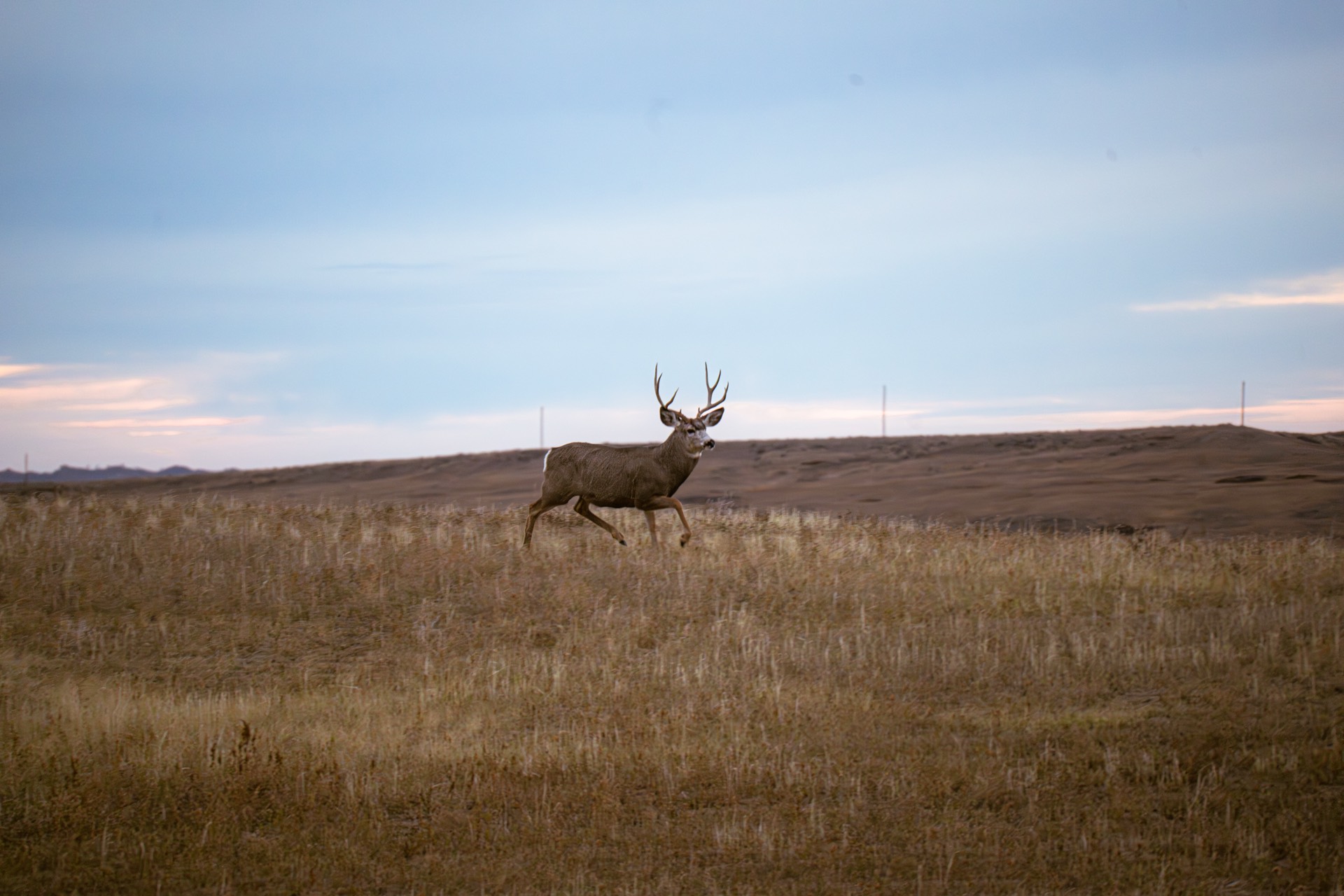
common opportunityCowiche is the best deer opportunity of this cluster — 2023 success was roughly 11.2% archery, 6.2% modern firearm and 17.8% multi-weapon, well above Bumping and Bethel. District 8 runs a mule deer / mule-blacktail hybrid mix under mule deer rules; the lower oak-and-bitterbrush breaks here hold good numbers of hybrids and mule deer.
- →Glass the oak, bitterbrush and grass south slopes at first and last light
- →Still-hunt north-facing timbered draws where bucks bed in cover
- →Hunt the private/public edge near orchards where deer feed, but stay legal on boundaries
- →Archery and multi-weapon hunters do best here — beat the modern-firearm crowd
Rocky Mountain Elk
common qualityYakima elk herd range with important winter habitat. Cowiche posted the cluster's best modern-firearm elk success in 2023 (~9.4%, multi-weapon ~7.6%), and WDFW described the season here as pretty good in spots. Elk hold in security cover in the breaks and shift with snow toward lower winter range.
- →Hunt drainages and timbered stringers that provide security cover far from open Green Dot roads
- →Focus on the western, higher-timber portion early before elk drop toward winter range
- →Time late hunts to snow that concentrates elk lower in the breaks
- →Cover ground with optics on the open slopes, then slip into the draws where elk hide by day
Black Bear
common opportunityThe most-hunted and most-productive bear GMU of this cluster — 15 black bears taken over ~2,900 hunter-days in 2023 (about 3.8% success). Forested western breaks and berry/oak habitat carry the bears.
- →Glass regenerating cuts, oak stands and berry patches in late summer and early fall
- →Hunt forest-road and clear-cut edges where bears feed on early greens
- →Move up with the ripening huckleberries; do not shoot sows with cubs
Cougar
common opportunityCougars follow the strong deer and elk numbers, concentrating on lower winter range in late fall. Most are taken incidentally by deer and elk hunters carrying a cougar tag, with fresh snow the key.
- →Cut tracks on the breaks roads after fresh snow
- →Call with a fawn bleat near wintering-deer cover
- →Work timbered stringers in otherwise open country where cats hide by day
Pro tips
- →This is the sleeper of the cluster — best deer, elk and bear success of the three and it sits right next to Yakima, so hunt weekdays to dodge the local pressure.
- →Archery and multi-weapon deer hunters crush the modern-firearm success rate here; pick your weapon season to hunt quieter and more effectively.
- →Learn the Green Dot map cold — public and private are braided together, and the orchard edge is a fast way to trespass without meaning to.
- →Glass the open oak-and-grass south slopes to locate, then still-hunt the shady north-facing draws where bucks and elk bed.
- →Let snow do the work late — it drives western-timber elk and deer down into the more accessible breaks.
Watch out for
- !Braided private orchard/ag and public ownership on the valley floor — trespass risk is real; verify boundaries
- !Green Dot system: only green-reflector roads are legal for motor vehicles; seasonal winter-range closures apply
- !Oak Creek Wildlife Area closures protect wintering game — obey posted dates
- !Dry oak/ponderosa breaks are fire-prone; check regional fire and area closures before hunting
- !Steep, loose south-slope breaks and limited water on the lower unit
Logistics
Yakima is minutes away with full services; Naches, Cowiche and Tieton cover fuel and basics closer to the ground. Being this close to town, Cowiche is an easy day-hunt or short-stay unit — camping is available on the Oak Creek Wildlife Area and the national forest to the west. Cell coverage is decent on the valley floor and fades in the western breaks. Carry the Green Dot map and mind the orchard/private edges.
Nearest towns: Yakima, Naches, Cowiche, Tieton
Seasons & regulations
This page carries no season dates or regulations. Get current rules from the official Washington sources:
Research sources: WDFW 2024 District 8 Hunting Prospects (Yakima & Kittitas counties) · WDFW Game Management Units (GMUs) · USFS Okanogan-Wenatchee National Forest
FAQ
- How big is GMU 368 in Washington?
- GMU 368 (Cowiche) covers about 352 square miles, ranging from roughly 1,500 to 6,000 feet in elevation. Area is computed from the unit boundary polygon.
- How much public land is in GMU 368?
- Approximately 55% of the unit is public land. Primary managers: WDFW Oak Creek Wildlife Area, WDNR, USFS Okanogan-Wenatchee National Forest, Private (orchard/ag & timber). Always verify ownership boundaries on the ground.
- What species does the catalog list for GMU 368?
- Mule Deer, Rocky Mountain Elk, Black Bear, Cougar. For seasons, tags, and regulations, use the official Washington agency resources linked on this page — this page carries no regulatory information.
Put GMU 368 on your map.
Boundary lines, public/private ownership, topo, and offline maps for this unit — in Baseline Maps, free for 14 days.