GMU 503 Randle
Small Cowlitz-valley unit at the Gifford Pinchot's edge — USFS access is the key to Randle's deer and elk.
WDFW Region 5 — Southwest Washington (District 10) · Last reviewed 2026-07-12
Area
55
sq mi
Public land
20%
approx.
Elevation
850–3,800
feet
Motorized
moderate
access
Overview
GMU 503 (Randle) is a compact unit entirely in Lewis County, east of I-5 near the town of Randle, east of Riffe Lake and south of State Route 12 along the Cowlitz and Cispus rivers. It mixes private ag and rural residences in the valley bottom with private industrial timber and a slice of U.S. Forest Service (Gifford Pinchot) land climbing toward the Cascade crest, and it includes the Kiona Creek and Kosmos units of the Cowlitz Wildlife Area. WDFW rates it as moderate opportunity for both black-tailed deer and elk; its small size and heavy private ownership make access the limiting factor, so the USFS and wildlife-area ground carries the public hunt.
Terrain
Cowlitz/Cispus river valley floor around 850-1,000 ft rising steeply south and east into forested Cascade foothills on Gifford Pinchot National Forest ground. Flat agricultural bottomland gives way quickly to timbered ridges and drainages.
Cover: Douglas-fir and western hemlock forest — industrial clearcuts and replants at lower elevation grading into older USFS timber upslope, with alder and cottonwood river bottoms and agricultural fields along the Cowlitz and Cispus. Regen cuts carry salmonberry, huckleberry, and forbs for deer and bear.
Landmarks: Cowlitz River · Cispus River · Riffe Lake (west boundary) · State Route 12 · U.S. Forest Service Road 25 · Cowlitz Wildlife Area (Kiona Creek & Kosmos units) · Gifford Pinchot National Forest (south/east)
Access
Only about 20% of GMU 503 is public, but that fraction — Gifford Pinchot National Forest, scattered WDNR parcels, and the Kiona Creek and Kosmos units of the WDFW Cowlitz Wildlife Area — is what carries the hunt and is open to the public. Roughly half the unit is private industrial forestland and the valley is small private ag with essentially no urban area. Industrial owners in the district are often open to walk-in hunting without a fee though roads may be gated; verify each company's policy via its website or access hotline before counting on a mainline. The USFS Road 25 corridor is the main artery into the national-forest ground. Because the unit is small and heavily private, boundary awareness matters — know where public ends.
Managers: U.S. Forest Service (Gifford Pinchot NF), Private industrial timber, Small agricultural / private, WDFW (Cowlitz Wildlife Area)
Access points: State Route 12 (Randle corridor) · U.S. Forest Service Road 25 (into Gifford Pinchot NF) · Cowlitz Wildlife Area — Kiona Creek and Kosmos units · Riffe Lake / SR 12 staging near Randle
Species notes
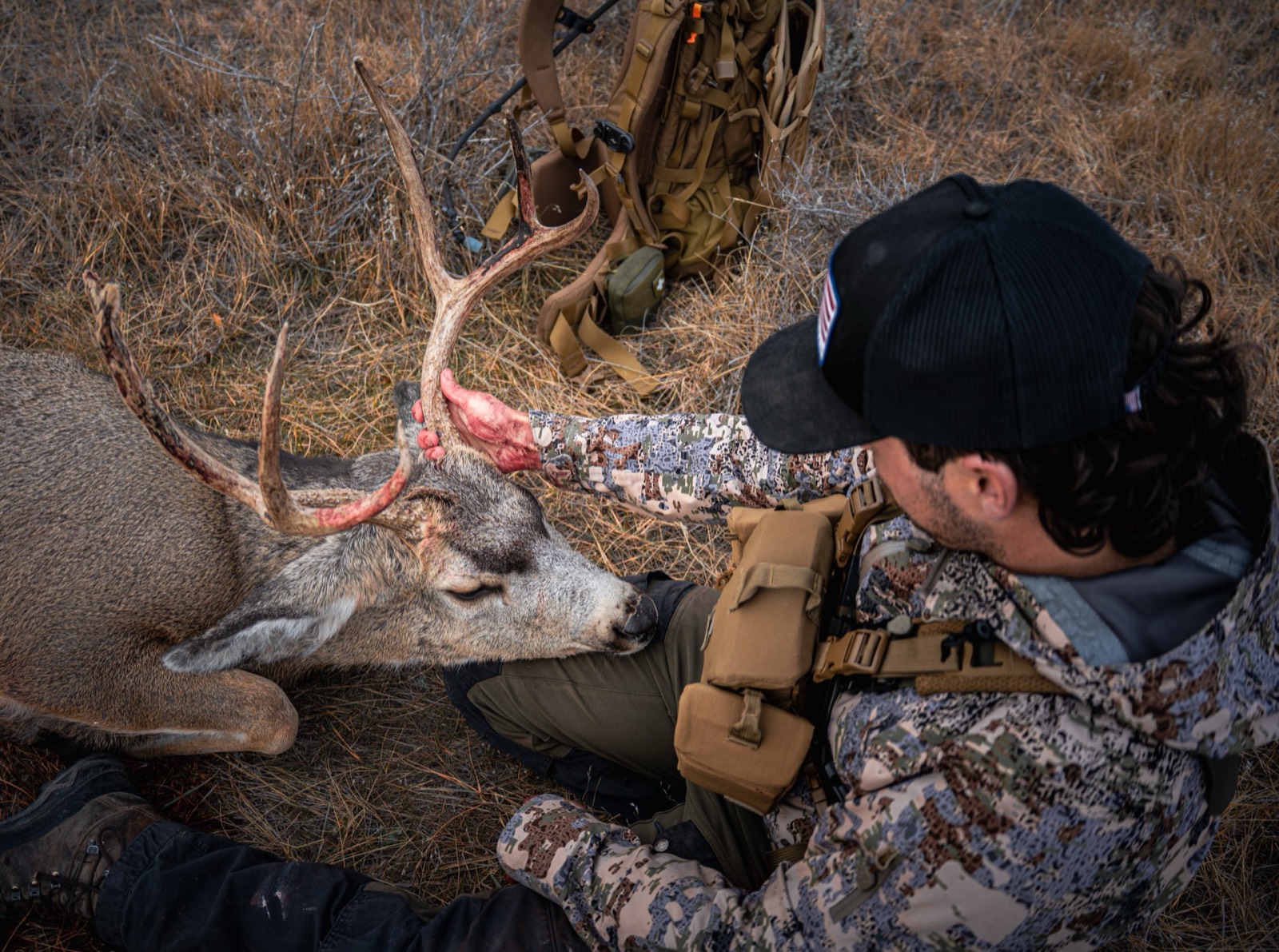
Blacktail Deer
common opportunityWDFW rates 503 as moderate blacktail opportunity — a 5-year average of ~64 bucks at ~16% success across ~290 hunters. Deer are here, but the small unit and private ground concentrate hunters on the public USFS and wildlife-area parcels. About 30% of the bucks are 3-point-or-better.
- →Focus on the Gifford Pinchot ground up the USFS 25 road and glass clearcuts and regen stands at first and last light.
- →Hunt the Kiona Creek and Kosmos units of the Cowlitz Wildlife Area for public-land opportunity.
- →Still-hunt the timber edge and the transition from valley cover to forested slopes.
- →Push the late-October/early-November rut and work brushy creek bottoms where bucks travel.
Roosevelt Elk
limited lowModerate on paper but low-odds in practice — a 5-year average of only ~9 elk and ~5% success. Randle sits at the Cascade edge, where WDFW notes elk are of mixed origin (native Roosevelt blended with introduced Rocky Mountain stock). The small unit and private ownership hold numbers down; scout the national-forest ground.
- →Hunt the higher USFS timber and forage edges away from the road and the private valley.
- →Locate elk in the timbered basins and meadow edges of the Gifford Pinchot ground before the season.
- →Glass river-bottom forage and cut edges in warm early weather; expect bulls to hold in cover by day.
- →Manage expectations — treat this as a low-density hunt on limited public ground.
Black Bear
common opportunityBlack bear are common in the timbered Cascade foothills of the unit. GMU 503 falls in the Mount St. Helens Black Bear Management Unit (statewide two-bear limit, unlike the neighboring one-bear Willapa Hills BBMU to the west). Bears key on the berry-rich regen cuts.
- →Glass clearcuts and old cuts on the Gifford Pinchot ground with ripe huckleberry and salmonberry at dawn and dusk.
- →Hunt open ground so you can spot a bear before it winds you.
- →Sit fresh sign in a berry cut rather than covering ground.
- →Submit the mandatory premolar tooth after a successful hunt per WDFW rules.
Cougar
common opportunityCougars work the forested drainages and are taken mostly incidentally by deer and elk hunters. District 10 cougar harvest is modest. The season is harvest-cap managed by Cougar Hunt Management Unit and can close mid-season once the cap is met.
- →Carry the tag and hunt cougar opportunistically while pursuing deer and elk.
- →Hunt where deer concentrate on the public ground.
- →Check the WDFW Cougar Hotline / openings page for CHMU status before and during your hunt.
- →Cut roads and landings for tracks after rain or fresh snow at the higher elevations.
Pro tips
- →The public land is small (~20%) but it's the whole game here — build your hunt around Gifford Pinchot NF up USFS Road 25 and the Cowlitz Wildlife Area (Kiona Creek, Kosmos).
- →Carry a good ownership map: the unit is compact and private ground is interlaced with the public parcels.
- →Glass regen clearcuts on the national forest at first/last light for deer and bear.
- →Don't over-invest in elk — numbers are low and the huntable public ground is limited; treat a bull as a bonus.
- →Push into the rut and work brushy creek bottoms for the better blacktail bucks.
Watch out for
- !Substantial private industrial and ag ownership in a small unit — know exactly where public ends before you hunt.
- !Elk and deer opportunity are only moderate and the unit is small, so public ground can see concentrated pressure.
- !Higher Gifford Pinchot roads may hold early snow late in the season and some may be gated or decommissioned.
- !Cougar seasons are cap-managed and can close mid-season; verify the CHMU status.
- !Verify each timber company's current access policy via its hotline/website before relying on a gated road.
Logistics
Randle on State Route 12 is the local hub for fuel, groceries, and limited services; Morton and Packwood bracket the corridor. Dispersed and developed camping is available on the Gifford Pinchot National Forest up the USFS 25 road, giving you a public base near the best public hunting. Carry a current Gifford Pinchot travel map plus a land-ownership layer — the unit is small and the public/private mosaic is tight. Cell coverage fades quickly off the SR 12 corridor.
Nearest towns: Randle, Morton, Packwood, Mossyrock, Glenoma
Seasons & regulations
This page carries no season dates or regulations. Get current rules from the official Washington sources:
Research sources: WDFW 2025 District 10 Hunting Prospects — GMU 503 (Randle) land summary, deer & elk 5-year averages, access · WDFW 2024 District 10 Hunting Prospects · WDFW Game Management Units (GMU boundaries & maps)
FAQ
- How big is GMU 503 in Washington?
- GMU 503 (Randle) covers about 55 square miles, ranging from roughly 850 to 3,800 feet in elevation. Area is computed from the unit boundary polygon.
- How much public land is in GMU 503?
- Approximately 20% of the unit is public land. Primary managers: U.S. Forest Service (Gifford Pinchot NF), Private industrial timber, Small agricultural / private, WDFW (Cowlitz Wildlife Area). Always verify ownership boundaries on the ground.
- What species does the catalog list for GMU 503?
- Blacktail Deer, Roosevelt Elk, Black Bear, Cougar. For seasons, tags, and regulations, use the official Washington agency resources linked on this page — this page carries no regulatory information.
Put GMU 503 on your map.
Boundary lines, public/private ownership, topo, and offline maps for this unit — in Baseline Maps, free for 14 days.