GMU 522 Loo-wit
The Mount St. Helens crater unit — closed to almost everything except permit-only elk and a coveted goat tag.
WDFW Region 5 — Southwest Washington (District 10) · Last reviewed 2026-07-12
Area
107
sq mi
Public land
95%
approx.
Elevation
1,000–8,363
feet
Motorized
limited
access
Overview
GMU 522 "Loo-wit" is a small (~93 sq mi) unit straddling Skamania and Cowlitz counties, built around Mount St. Helens itself and the North Fork Toutle River. It is overwhelmingly public (~95%), dominated by the USFS-managed Mount St. Helens National Volcanic Monument, with slivers of DNR, WDFW (the Mudflow and Hoffstadt units of the Mount St. Helens Wildlife Area) and Weyerhaeuser. This is not a general-season unit: WDFW keeps it closed to hunting except for permit-only elk (cow and bull) and permit-only mountain goat. Deer, bear, and small game are closed here. Monument policy severely limits recreational access to protect the recovering blast-zone landscape, so plan around the permit hunts and the open road corridors only.
Terrain
Extreme volcanic relief: from Toutle River bottoms around 1,000-1,500 ft up the debris-avalanche and pumice plain to the 8,363-ft crater rim of Mount St. Helens. The 1980 eruption blast zone defines the core — mudflow deposits, the pumice plain, and a mosaic of recovering forest surround the crater.
Cover: A living recolonization laboratory: the pumice plain and blast zone hold sparse pioneer vegetation, willow and alder along drainages, huckleberry and fireweed on the recovering slopes, grading into replanted and older Douglas-fir/hemlock stands and DNR/Weyerhaeuser regen on the unit margins. Alpine and subalpine goat habitat exists on the cone and higher ridges.
Landmarks: Mount St. Helens (crater and dome) · North Fork Toutle River · Mount St. Helens National Volcanic Monument · Pumice Plain / debris-avalanche deposit · Mudflow and Hoffstadt units (Mount St. Helens Wildlife Area) · State Route 504 (Spirit Lake Highway)
Access
WDFW describes recreational access as heavily limited by Monument policies designed to protect the recovering landscape. The unit is closed to hunting except permit-only elk and permit-only mountain goat, so drawing a tag is the price of entry. Where hunting is allowed, the WDFW Mudflow and Hoffstadt wildlife-area units are heavily managed for elk and provide the most usable ground. Motorized/road access is confined to open corridors; large parts of the Monument restrict off-road and dispersed travel. The small Weyerhaeuser inholdings fall under the St. Helens Tree Farm permit system ($250-400 motorized, $75-125 non-motorized). Successful goat-tag holders receive a letter with hunt-area boundaries plus mandatory check-in and goat-ID training.
Managers: USFS — Mount St. Helens National Volcanic Monument (Gifford Pinchot NF), WA DNR, WDFW (Mount St. Helens Wildlife Area — Mudflow & Hoffstadt units), Weyerhaeuser
Access points: State Route 504 (Spirit Lake Highway) — primary corridor · USFS Road 26 / Road 99 (Monument roads) · DNR 3000 Road · North Fork Toutle River drainage
Species notes
Roosevelt Elk
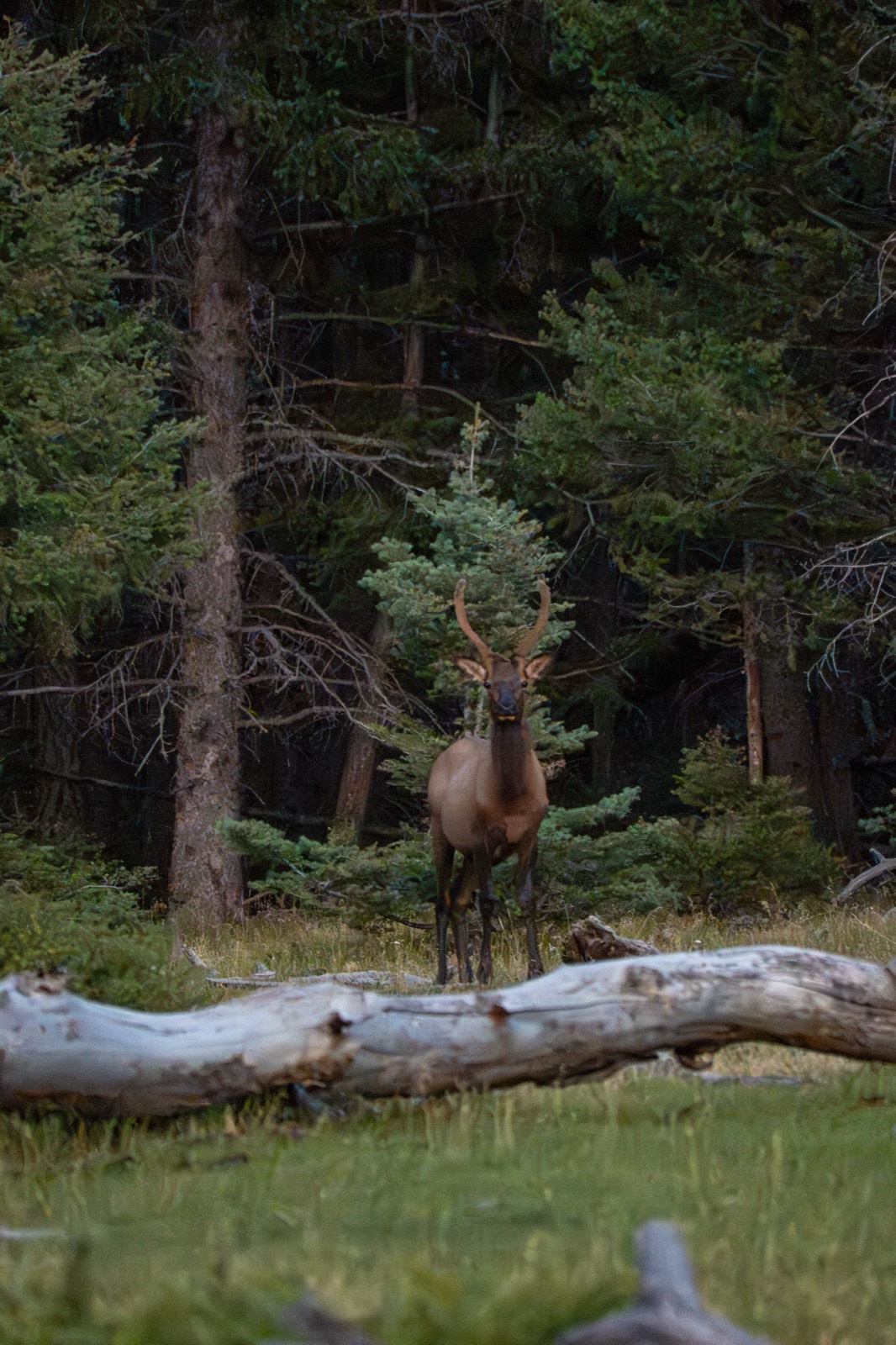
common opportunityGMU 522 is permit-only for both cow and bull elk — there is no general season. It sits inside the Mount St. Helens elk herd, which WDFW surveys put at roughly 1,250 adult females as of spring 2024, still below management objectives and well below the mid-2000s highs. Late-winter storms and treponeme-associated hoof disease (TAHD) have held the herd down, so even permit hunters should expect a challenging hunt. The Mudflow and Hoffstadt wildlife-area units are heavily managed for elk and concentrate animals.
- →Apply for the permit hunts — you cannot hunt elk here on a general tag.
- →Focus on the WDFW Mudflow and Hoffstadt units, which are managed for elk and hold the densest concentrations.
- →Glass the open blast-zone and pumice-plain edges and recovering drainages at dawn and dusk when elk move to feed.
- →Expect elk in cooler, wetter, shaded pockets during warm weather; hunt the timber-meadow edges hard early and late.
- →Report and avoid taking obviously hoof-diseased animals per WDFW guidance, and clean mud from boots/tires to limit TAHD spread.
Mountain Goat
limited trophyThe Mount St. Helens goat population has grown steadily since re-colonizing the cone after the 1980 eruption and is now estimated at about 335 animals. WDFW splits the area into two hunt areas with a very small number of once-in-a-lifetime permits (two tags per hunt area since 2023). Draw odds are long, but a drawn tag on the recovering volcano is a genuine trophy hunt.
- →This is a once-in-a-lifetime permit hunt — build points and apply; there is no other way to hunt goats here.
- →If drawn, complete the mandatory check-in and goat-identification training and study your assigned hunt-area boundaries.
- →Scout the cone, alpine ridges, and rugged subalpine benches where goats hold; glass steep escape terrain at first light.
- →Plan for physically demanding alpine terrain and volatile mountain weather; collect required biological samples.
Black Bear
common lowBlack bears inhabit the recovering forests and berry fields of the unit and fall within the Mount St. Helens Black Bear Management Unit, but GMU 522 itself is closed to bear hunting — hunting is prohibited here except permit-only elk and goat. Bears are present for viewing and incidental to the permit hunts, not a huntable resource in this GMU.
- →Do not plan a bear hunt in 522 — it is closed to bear hunting; hunt adjacent open GMUs (524, 556, 550) instead.
- →Be bear-aware while on permit elk or goat hunts, especially around ripe huckleberry and cascara.
- →Store food and secure camps; the recovering landscape concentrates bears on seasonal berry crops.
Pro tips
- →Treat 522 as a draw-only unit — permit elk or a once-in-a-lifetime goat tag are the only ways to hunt it.
- →It is closed to deer, bear, and small game; don't drive up on a general tag expecting to hunt.
- →For elk, key on the WDFW Mudflow and Hoffstadt wildlife-area units, which are managed to hold elk.
- →Monument policy limits off-road and dispersed access — plan around open corridors (SR 504, FR 26/99, DNR 3000).
- →Expect a challenging elk herd: below objective, hit by hard winters and hoof disease — manage expectations.
- →Goat-tag holders must complete check-in and goat-ID training and collect biological samples — read your permit letter closely.
Watch out for
- !Hunting is generally prohibited here — only permit-only elk and permit-only mountain goat are open. Deer, bear, and small game are CLOSED.
- !Mount St. Helens National Volcanic Monument restrictions sharply limit motorized and off-trail access and dispersed camping.
- !The Mount St. Helens elk herd is below objective and affected by treponeme-associated hoof disease (TAHD); clean gear to avoid spreading it.
- !Volcanic and alpine terrain plus early snow make goat hunts physically serious and weather-dependent.
- !Small Weyerhaeuser inholdings require a St. Helens Tree Farm access permit — know the ownership boundaries.
- !Verify current Monument and road closures with USFS before the hunt; conditions and gates change.
Logistics
Base out of Castle Rock or Toutle along I-5 and the SR 504 (Spirit Lake Highway) corridor for fuel, lodging, and groceries before heading up into the Monument. SR 504 is the main paved artery; USFS Roads 26 and 99 and the DNR 3000 Road provide the limited interior access. Dispersed camping and off-road travel are restricted across much of the National Volcanic Monument, so confirm where camping is legal on Gifford Pinchot NF/DNR ground outside Monument restrictions. Carry a current ownership/access map and check Monument closures before you go.
Nearest towns: Toutle, Castle Rock, Kid Valley, Silver Lake, Cougar
Seasons & regulations
This page carries no season dates or regulations. Get current rules from the official Washington sources:
Research sources: WDFW 2025 District 10 Hunting Prospects — GMU 522 Loo-wit land summary, elk, goat, closures · WDFW Mudflow Wildlife Area Unit (Mount St. Helens Wildlife Area) · GoHunt — Washington Unit 522 Loo-wit profile
FAQ
- How big is GMU 522 in Washington?
- GMU 522 (Loo-wit) covers about 107 square miles, ranging from roughly 1,000 to 8,363 feet in elevation. Area is computed from the unit boundary polygon.
- How much public land is in GMU 522?
- Approximately 95% of the unit is public land. Primary managers: USFS — Mount St. Helens National Volcanic Monument (Gifford Pinchot NF), WA DNR, WDFW (Mount St. Helens Wildlife Area — Mudflow & Hoffstadt units), Weyerhaeuser. Always verify ownership boundaries on the ground.
- What species does the catalog list for GMU 522?
- Roosevelt Elk, Mountain Goat, Black Bear. For seasons, tags, and regulations, use the official Washington agency resources linked on this page — this page carries no regulatory information.
Put GMU 522 on your map.
Boundary lines, public/private ownership, topo, and offline maps for this unit — in Baseline Maps, free for 14 days.