GMU 572 Siouxon
Nearly all Gifford Pinchot public land — a productive Mount St. Helens elk unit reshaped by the 2020 Big Hollow Fire.
WDFW Region 5 — Southwest Washington (District 9) · Last reviewed 2026-07-12
Area
429
sq mi
Public land
92%
approx.
Elevation
800–4,800
feet
Motorized
moderate
access
Overview
GMU 572 (Siouxon) is a west-Cascade unit in WDFW District 9, located almost entirely within the Gifford Pinchot National Forest along the Siouxon Creek and upper Lewis River country of Skamania and Clark counties. WDFW rates it roughly 92% public and 8% private — one of the most public-accessible units in the district — with the northwest corner in WDNR land and PacifiCorp offering free walk-in access on some reservoir lands to the north. It is one of District 9's productive Roosevelt elk units (part of the Mount St. Helens herd); deer densities are low as in most Cascade units, but bear, cougar, and forest grouse round out the opportunity. The 2020 Big Hollow Fire burned a significant portion of the GMU and its access can still be affected by closures.
Terrain
Steep, timbered west-Cascade high country drained by Siouxon Creek and its tributaries, rising from the Lewis River reservoir corridor toward the Gifford Pinchot ridgelines and the edges of the Trapper Creek and Indian Heaven wilderness areas. Terrain is rugged, with fire-shaped patches from the 2020 Big Hollow Fire adding standing burn and new browse.
Cover: Mixed conifer forest of Douglas-fir and western hemlock with subalpine stands toward the crest; clearcuts, recent thinnings, and the Big Hollow burn create the openings and edge where elk and deer concentrate. Berry brush — huckleberry, salmonberry, blackberry — fills the cuts and burns.
Landmarks: Siouxon Creek · Big Hollow Fire burn (2020) · Indian Heaven Wilderness (east) · Trapper Creek Wilderness · Gifford Pinchot National Forest · Lewis River / PacifiCorp reservoirs (north)
Access
WDFW rates the unit roughly 92% public and 8% private — nearly all Gifford Pinchot National Forest, with the northwest corner in WDNR land and PacifiCorp offering free walk-in hunting access on some of its lands along the reservoirs in the northern part of the unit. Forest Service road access on the public ground is generally good. The catch is the 2020 Big Hollow Fire, which burned a significant portion of the GMU: hazardous conditions and road/area closures may still be present, so check with the Gifford Pinchot National Forest before scouting or hunting. This is a Western Washington elk tag area.
Managers: USFS Gifford Pinchot National Forest, WDNR, PacifiCorp, Private
Access points: Gifford Pinchot NF road system off the Lewis River corridor · Siouxon Creek trailheads and forest roads · PacifiCorp reservoir walk-in lands (north) · WDNR ground in the northwest corner
Species notes
Roosevelt Elk
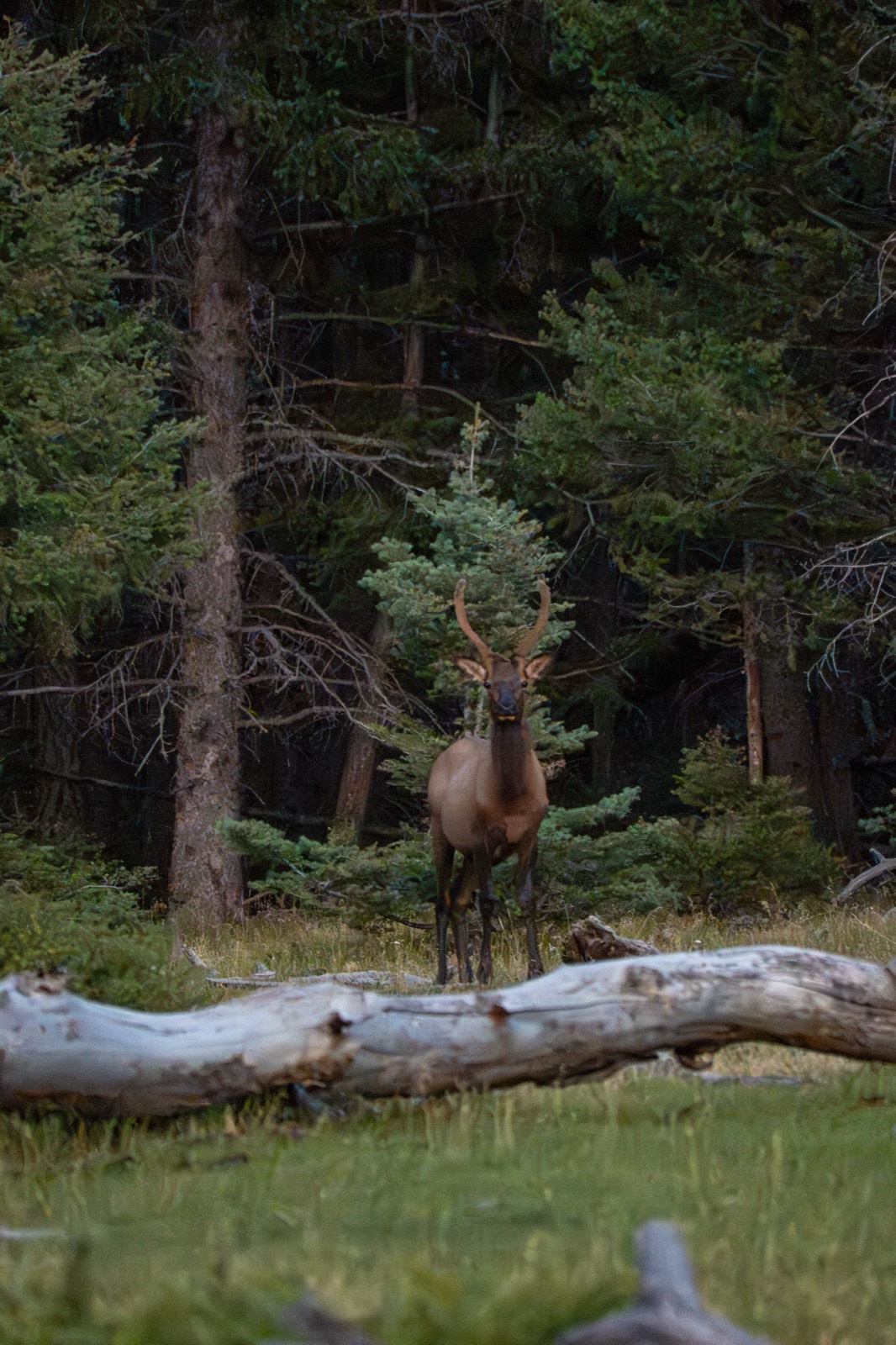
common opportunityWDFW lists Siouxon among District 9's productive elk units, and because it's mainly public Forest Service and DNR land it's one of the better DIY options in the Mount St. Helens herd. The herd sits at a lower, stabilized level than its mid-2000s highs, but a 2024 survey showed a 38% increase — a hopeful recovery signal. Elk concentrate where clearcuts, thinnings, and the Big Hollow burn provide forage.
- →Hunt the openings — clearcuts, recent thinnings, and the Big Hollow burn — where elk feed, then work the timbered benches and creek bottoms where they bed by day
- →Run Forest Service roads to cut fresh sign, then commit on foot to the drainage holding the herd
- →Watch early-season snow levels, which push elk down and affect access during modern firearm season
- →Harvest and turn in hooves from limping elk under the TAHD incentive program
Blacktail Deer
limited opportunityDeer populations are generally low in the Cascade Mountain units including Siouxon, though WDFW still lists 572 as an attractive general-season deer opportunity. Density is thin and the country is steep and heavily timbered; recent seasons have shown some recovery, with 2024 the best deer harvest year since 2015 district-wide.
- →Key on clearcuts, thinnings, and burn edges where the few deer concentrate for browse
- →Be in position at first and last light — blacktails here are highly nocturnal
- →Hunt the November late buck window, when rutting bucks cross open cuts
- →Cover ground to find pockets of deer rather than expecting them everywhere
Black Bear
common opportunityBlack bear are common in this berry-rich burn-and-timber country; 572 is in the South Cascades West Black Bear Management Unit, open Aug. 1-Nov. 15 with a two-bear limit. District 9 fall success is modest (around 6% in the South Cascades), rewarding scouting and patience.
- →Glass clearcuts, thinnings, and the Big Hollow burn for bears on grass, forbs, and ripening berries at dawn and dusk
- →Sit berry-rich openings on extended watches rather than covering ground
- →Check for cubs before shooting; taking a cub or a sow with cubs is illegal
- →Submit the mandatory premolar tooth after a successful hunt
Cougar
common opportunityCougars follow the elk and deer through the unit and are mostly taken incidentally. The general season runs Sept. 1-March 31 or until the Cougar Hunt Management Unit harvest cap is met, whichever is first.
- →Carry a tag while elk or deer hunting for an opportunistic cat
- →Cut for tracks on muddy or snow-dusted Forest Service roads after weather; look for four-claw vertical rake marks
- →Check the CHMU status via the WDFW Cougar Hotline (866-364-4868) or the weekly Thursday openings page before hunting
Pro tips
- →This is a genuine public-land DIY unit — roughly 92% public Gifford Pinchot and DNR ground with good Forest Service roads.
- →Hunt it for elk first: it's one of District 9's productive elk units and mostly public.
- →Focus effort on clearcuts, thinnings, and the 2020 Big Hollow burn — the openings hold both elk and the thin deer numbers.
- →Check Gifford Pinchot NF closures before scouting or hunting; Big Hollow hazards and fire-season restrictions can lock up ground.
- →Watch early-season snow levels, which drive both elk movement and your ability to reach the high roads.
- →Turn in hooves from any limping elk under WDFW's TAHD incentive program for a shot at a bonus bull permit.
Watch out for
- !The 2020 Big Hollow Fire burned a significant portion of the unit — hazardous conditions and closures may still be present; confirm with Gifford Pinchot NF first.
- !Elk hoof disease (TAHD) is present in the Mount St. Helens herd; clean mud from boots and tires to limit spread.
- !Early snow at elevation can close high roads during modern firearm elk season — scout access ahead of time.
- !Deer densities are low; manage expectations and treat elk as the primary draw.
- !No cell coverage through most of the drainage — carry offline navigation and emergency gear.
- !Fire-season road and area closures can shut down access even where you've hunted before.
Logistics
Base out of Cougar or Amboy near the Lewis River, or the Woodland/Battle Ground area for fuel and supplies before heading into the Gifford Pinchot. Dispersed camping is available on the National Forest, subject to fire restrictions and any lingering Big Hollow Fire closures. Because the unit is overwhelmingly public with good Forest Service roads, access is comparatively straightforward for District 9 — the main homework is checking current fire-area closures. Carry offline maps; cell coverage is nonexistent through most of the drainage.
Nearest towns: Cougar, Amboy, Yacolt, Woodland, Battle Ground
Seasons & regulations
This page carries no season dates or regulations. Get current rules from the official Washington sources:
Research sources: WDFW 2025 District 9 Hunting Prospects — GMU 572 Siouxon access, elk, deer, bear, cougar, Big Hollow Fire · WDFW — Game Management Units (GMU maps & boundaries) · WDFW — Elk Hoof Disease (TAHD)
FAQ
- How big is GMU 572 in Washington?
- GMU 572 (Siouxon) covers about 429 square miles, ranging from roughly 800 to 4,800 feet in elevation. Area is computed from the unit boundary polygon.
- How much public land is in GMU 572?
- Approximately 92% of the unit is public land. Primary managers: USFS Gifford Pinchot National Forest, WDNR, PacifiCorp, Private. Always verify ownership boundaries on the ground.
- What species does the catalog list for GMU 572?
- Roosevelt Elk, Blacktail Deer, Black Bear, Cougar. For seasons, tags, and regulations, use the official Washington agency resources linked on this page — this page carries no regulatory information.
Put GMU 572 on your map.
Boundary lines, public/private ownership, topo, and offline maps for this unit — in Baseline Maps, free for 14 days.