GMU 602 Dickey
West-end Roosevelt elk unit from the Pacific to the interior — one of District 16's top elk and bear producers, but a fractured private/state checkerboard.
WDFW Region 6 — Coastal / Olympic Peninsula (District 16) · Last reviewed 2026-07-12
Area
293
sq mi
Public land
—
approx.
Elevation
0–2,800
feet
Motorized
moderate
access
Overview
GMU 602 "Dickey" is a ~293-square-mile unit on the west side of the Olympic Peninsula, spanning the Dickey and Ozette river country from the Pacific coast inland through Clallam County northwest of Forks. It sits in the productive western end of District 16 — WDFW names Dickey (with Clearwater, Goodman and Sol Duc) among 'the highest elk harvests in District 16,' and it consistently posts the district's second-highest black bear harvest. Deer, by contrast, are sparse across the whole west end. Land ownership is a highly fractured mix of large and small private timber holdings and landlocked state (DNR) sections; Rayonier was historically the largest private owner and recently sold much of its District 16 ground to Nuveen Natural Capital, Campbell Global and Ecotrust Forest Management. Olympic National Park's coastal strip (Ozette) borders the west, and the Quileute (La Push) and Makah reservations lie nearby.
Terrain
Wet Pacific coast-range timber country from sea level at the outer coast and Lake Ozette up into low interior foothills. Modest relief; a working-forest mosaic of clearcuts, young regen and older stands cut by the Dickey, Ozette and upper Sol Duc/Bogachiel tributary drainages, all soaked by heavy west-side rainfall.
Cover: Coastal Sitka spruce and western hemlock/Douglas-fir rainforest with red alder in the bottoms; recent clearcuts and regen carry salmonberry, salal, huckleberry, blackberry and elderberry — prime elk forage and bear feed in an otherwise dense, low-visibility unit.
Landmarks: Dickey River · Lake Ozette · Ozette River · Pacific Ocean coast (west; Olympic National Park strip) · Olympic National Park — Ozette / coastal wilderness (west boundary) · Quileute Reservation (La Push, southwest) · Forks (southeast gateway) · US 101 corridor
Access
Dickey is one of the western GMUs WDFW describes as containing 'large areas of public land, much of it without restricted access,' though 'all these GMUs include gated roads, some of which allow hunter access and others that are closed.' The unit is a highly fractured checkerboard of private timber and landlocked state sections — Rayonier historically tied many DNR sections together and recently sold the majority of its District 16 holdings to three managers whose access plans aren't all public. Nuveen Natural Capital allows hunting with a FREE online permit (nncpermits.com) on its 601/602/603/607/621 blocks; Ecotrust Forest Management (Olympic Rainforest LLC, with holdings in 602/612/615) allows non-motorized public access on most properties. Access is historically NON-MOTORIZED walk-in/bike behind gates, and several companies are shifting from free to fee programs. Read the posted gate signage for each ownership and carry a current ownership map.
Managers: Rayonier (legacy; largest private owner, much now sold), Nuveen Natural Capital (Olympic Peninsula Timberlands), Campbell Global, Ecotrust Forest Management (Olympic Rainforest LLC), WA DNR, Olympic National Park (NPS, adjacent)
Access points: US 101 north of Forks, then west via the Dickey/Ozette road networks · Hoko-Ozette Road toward Lake Ozette (northwest) · Gated timber mainlines opened for walk-in/bike access · DNR sections reached through cooperating timber-road networks
Species notes
Roosevelt Elk
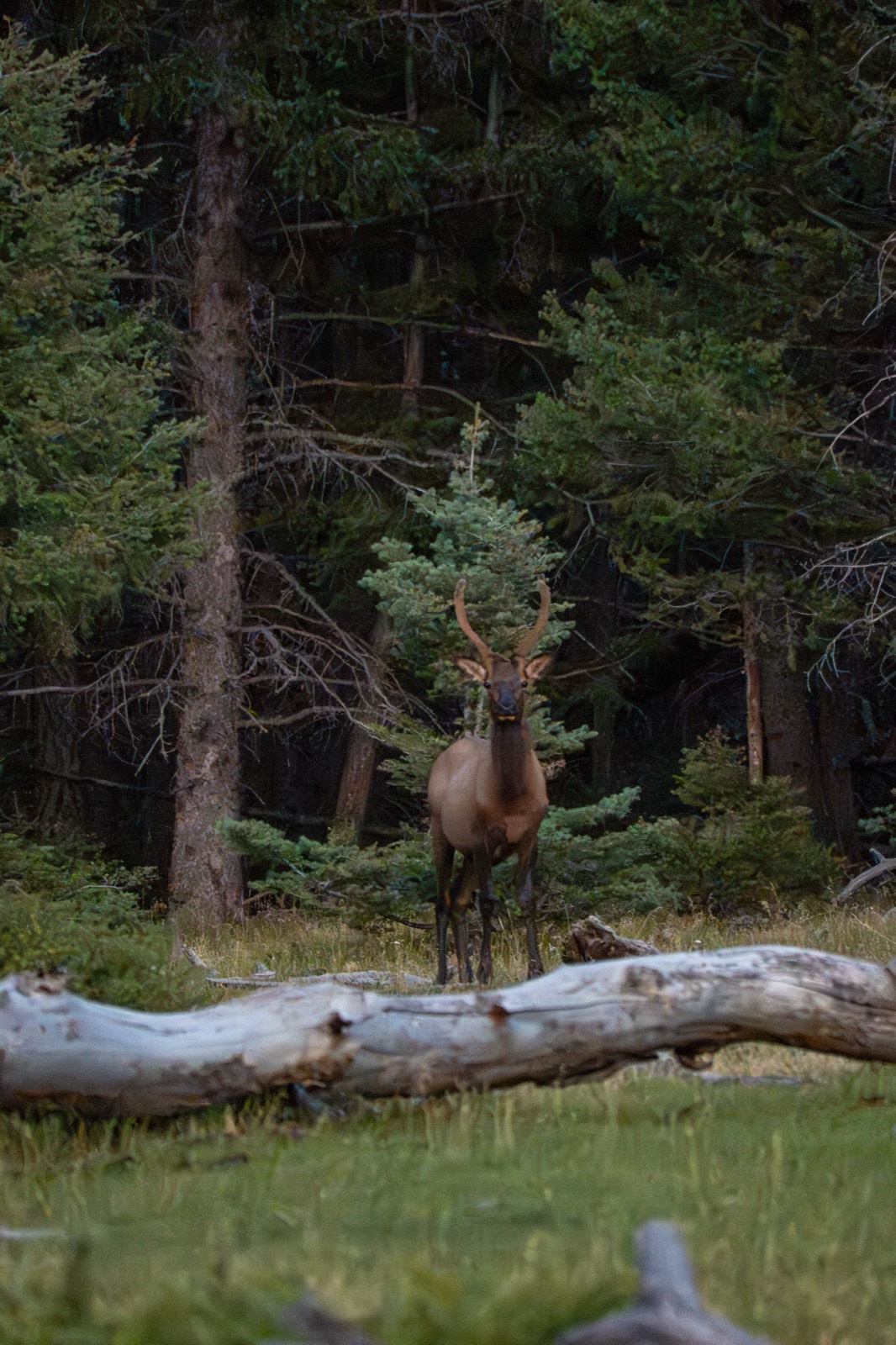
common qualityDickey is one of District 16's best elk units. WDFW puts it among the four highest-harvest GMUs (602/607/612/615), and 'bull elk harvest within the western GMUs (602, 607, 612, and 615) consistently contributes the district's highest levels' — 89 bulls across those four in the 2024 general season. Roosevelt elk are three-point-minimum, bull-only in the general season (no general cow harvest); total bull harvest peaked around 2019 and has softened since, but this remains a legitimate general-season elk destination. Dickey also historically carried much of the district's muzzleloader elk effort.
- →Hunt the west end's well-distributed herds — glass fresh clearcuts and regen edges near cover at first and last light where elk feed.
- →Scout for elk moving out of Olympic National Park along the major river drainages into huntable timber (it is unlawful to hunt in ONP).
- →Work behind gates on foot or by bike; the best elk roads are frequently closed to trucks.
- →Consider a muzzleloader or archery hunt — Dickey has long carried strong primitive-weapon elk effort and lower crowding than modern-firearm Clearwater.
- →Focus on three-point-minimum bulls holding in closed timber by day, feeding cuts at the edges of light.
Black Bear
common qualityDickey is a standout black bear unit — WDFW recorded it as the district's second-highest bear harvest in 2024 (17 bears) with about 15% hunter success, among the best in District 16. Coastal BBMU bears are abundant in the berry-rich regen; most are taken during general deer and elk seasons but Dickey rewards dedicated bear hunters more than the neighboring units.
- →Glass open clearcuts and regen units full of salmonberry, huckleberry, blackberry and elderberry at dawn and dusk.
- →Hunt the open ground so you spot a bear before it winds you in the thick coastal cover.
- →Locate fresh sign on ripe berry feed, then sit extended watches over the best cut rather than covering ground.
- →Hunt early fall while bears are keyed on berries, before deer and elk pressure scatters them.
Blacktail Deer
limited opportunityLike the whole western district, Dickey is deer-sparse — WDFW lists it among the GMUs with 'low buck harvest,' though at 123 bucks in 2024 it out-produced Hoko and several neighbors. Black-tailed deer densities are genuinely low across the west end; deer here are more of a bonus to an elk or bear hunt than the main draw.
- →Hunt the newest clearcuts and replants where the scattered blacktails concentrate on regen forage.
- →Put in effort — western-peninsula deer success 'largely depends on the amount of effort hunters put into the hunt.'
- →Still-hunt timber/clearcut edges at first and last light; glass landings across the cuts.
- →Combine the deer tag with an elk or bear focus rather than dedicating a trip to deer alone.
Cougar
common opportunityCougars occur throughout District 16 and are taken opportunistically by deer and elk hunters. Seasons are harvest-guideline managed at the unit/PMU level and can close once removal thresholds are met, so check current status before and during your hunt.
- →Carry the tag as an opportunistic add-on while glassing cuts for elk, bear and deer.
- →Hunt where prey concentrates — the regen stands and river bottoms holding elk and deer hold cougars.
- →Check the harvest-area status regularly since cap-managed cougar areas can close mid-season.
- →After fresh snow on the higher inland ridges, cut roads and landings for tracks.
Pro tips
- →Hunt Dickey for what it's best at: Roosevelt elk and black bear — it's a top-tier western-district elk unit and the district's #2 bear producer.
- →Consider a muzzleloader or archery elk hunt; Dickey has long carried heavy primitive-weapon effort with less crowding than modern-firearm Clearwater.
- →Sort access first — much former Rayonier ground moved to Nuveen (free online permit), Campbell Global and Ecotrust; read each gate's signage.
- →Assume non-motorized behind gates (no e-bikes); plan to walk or pedal to the best elk cuts.
- →Scout elk leaving Olympic National Park along the Dickey/Ozette drainages — but never hunt inside ONP.
- →Buy WDFW-recommended DNR quad maps in Forks to untangle the fractured private/state section checkerboard.
Watch out for
- !Ownership is a fractured private/state checkerboard with landlocked DNR sections often reached only through private timber roads — a current ownership map is essential.
- !Much former Rayonier ground changed managers (Nuveen, Campbell Global, Ecotrust) and not all published access plans; read gate signage and verify.
- !Olympic National Park (the Ozette/coastal strip on the west) is closed to hunting — know the boundary.
- !The Quileute (La Push) and Makah reservations nearby are tribal land, not general-season ground.
- !Deer densities are low; don't plan the trip around blacktail numbers.
- !Elk hoof disease (TAHD) is present in the Olympic herd — report abnormal hooves and follow WDFW hoof-submission guidance.
- !Companies are shifting from free to fee access; policies change by owner, season and fire danger.
Logistics
Base out of Forks — the west end's service hub for fuel, groceries, lodging and DNR/road maps — with Clallam Bay/Sekiu to the north and La Push on the coast. Access the unit off US 101 north of Forks via the Dickey and Hoko-Ozette road networks. Expect gated gravel mainlines that are largely non-motorized behind the gate; plan to walk or bike, carry a current ownership map (much former Rayonier ground recently changed hands), and secure any required timber-company access ahead of time (a free Nuveen online permit covers their blocks). West-side weather is very wet — dress and drive for coastal rainforest conditions.
Nearest towns: Forks, Clallam Bay, Sekiu, La Push, Beaver
Seasons & regulations
This page carries no season dates or regulations. Get current rules from the official Washington sources:
Research sources: WDFW 2025 District 16 Hunting Prospects — GMU 602 Dickey elk/deer/bear/cougar, western-district harvest ranking, timber ownership (Rayonier→Nuveen/Campbell Global/Ecotrust) · WDFW 2024 District 16 Hunting Prospects · GoHunt — Washington Unit 602 Dickey unit profile (land ownership, Pacific-to-interior extent, Rayonier) · WDFW Game Management Units (GMU boundaries & maps)
FAQ
- How big is GMU 602 in Washington?
- GMU 602 (Dickey) covers about 293 square miles, ranging from roughly 0 to 2,800 feet in elevation. Area is computed from the unit boundary polygon.
- What species does the catalog list for GMU 602?
- Roosevelt Elk, Black Bear, Blacktail Deer, Cougar. For seasons, tags, and regulations, use the official Washington agency resources linked on this page — this page carries no regulatory information.
Put GMU 602 on your map.
Boundary lines, public/private ownership, topo, and offline maps for this unit — in Baseline Maps, free for 14 days.