GMU 653 White River
Rugged alpine north of Mount Rainier: a draw-only trophy elk hunt, high-country blacktail, and half public national forest.
WDFW Region 6 — South Puget Sound / West Cascades (District 11) · Last reviewed 2026-07-12
Area
393
sq mi
Public land
53%
approx.
Elevation
700–6,800
feet
Motorized
moderate
access
Overview
GMU 653 "White River" is a ~393-square-mile unit on the west slope of the Cascades in WDFW District 11, wrapping the north and northwest sides of Mount Rainier National Park along the White and Carbon river drainages. Unlike the lowland units to its west, 653 is genuinely mountainous — elevations climb from about 700 ft near Buckley to alpine country near 6,800 ft — and it is roughly half public, anchored by Mt. Baker-Snoqualmie National Forest, the Clearwater and Norse Peak wilderness areas, and DNR ground, alongside the Muckleshoot Tribe's 78,000-acre Tomanamus (White River) Tree Farm and other industrial timber. It is the elk crown jewel of District 11: a draw-only, bull-only permit hunt (since 2006) that carries the district's highest success rate — a rugged, high-alpine hunt that produces quality bulls for the few who draw. It also grows high-elevation trophy blacktail and is a solid bear unit.
Terrain
A steep, rugged west-Cascade elevation gradient from lowland timber near Buckley up through the White and Carbon river canyons into alpine basins and ridges bordering Mount Rainier National Park. The eastern portion is high subalpine/alpine country — Bullion and Pickhandle basins, Big Crow Basin, Grand Park meadows, and the ridges off Highway 410 near Crystal Mountain. Old fire scars leave hazardous downed logs and standing dead timber in places.
Cover: Lowland and mid-elevation Douglas-fir/western hemlock industrial and public forest with clearcut/regen mosaics, grading up into mountain hemlock, silver fir, and subalpine parkland with huckleberry fields and high meadows near timberline. River-bottom corridors along the White and Carbon carry migrating elk between the park and lower winter range.
Landmarks: White River and Carbon River drainages · Mount Rainier National Park (southern boundary — no hunting) · Clearwater Wilderness / Norse Peak Wilderness · Mt. Baker-Snoqualmie National Forest · Bullion Basin, Pickhandle Basin, Big Crow Basin (off Hwy 410, near Crystal Mountain) · Grand Park high meadows (elk rut area) · Greenwater and Highway 410 corridor · Muckleshoot Tomanamus (White River) Tree Farm · Buckley (northwest, lowland edge)
Access
About 53% public — a rarity for western Washington — but access is still work. USFS Mt. Baker-Snoqualmie ground is free to hunt yet much of it is permanently or seasonally gated (e.g., roads off Hwy 410 close Dec. 15), so the high country demands hunting by foot or horse deep off the roads; the Pacific Crest Trail accesses the eastern basins. The Muckleshoot Tomanamus (White River) Tree Farm runs a fee access program — permits (as of 2024) obtained through the Muckleshoot Wildlife Program by contacting the manager, allowing access April-December (closed July 2-5), with both motorized and non-motorized use, and no deer-hunting restrictions on that ground. Critically, the elk resource is draw-only: you must hold a WDFW bull elk permit to hunt elk on the White River timberlands, and NO recreational access is allowed on the private Buckley timberlands during any bull elk season. Winter elk-habitat closures (Dec. 15-May) gate several Greenwater-area USFS roads. Fire season can close both USFS and private timber entirely.
Managers: USFS Mt. Baker-Snoqualmie NF (incl. Clearwater & Norse Peak Wilderness), Muckleshoot Indian Tribe (Tomanamus / White River Tree Farm, ~78,121 ac), WDNR, Manulife / private industrial timber, Private (Buckley timberlands)
Access points: Highway 410 corridor through Greenwater to the Crystal Mountain area · USFS roads 70/71/73/74 and spurs off Hwy 410 (gated seasonally; walk-in past Dec. 15) · Pacific Crest Trail into Bullion/Pickhandle/Big Crow basins from the east · Muckleshoot Tomanamus Tree Farm fee-permit gates (April-December) · Carbon River drainage access south/east of Wilkeson and Carbonado · Mt. Baker-Snoqualmie NF (Snoqualmie/White River ranger districts)
Species notes
Roosevelt Elk
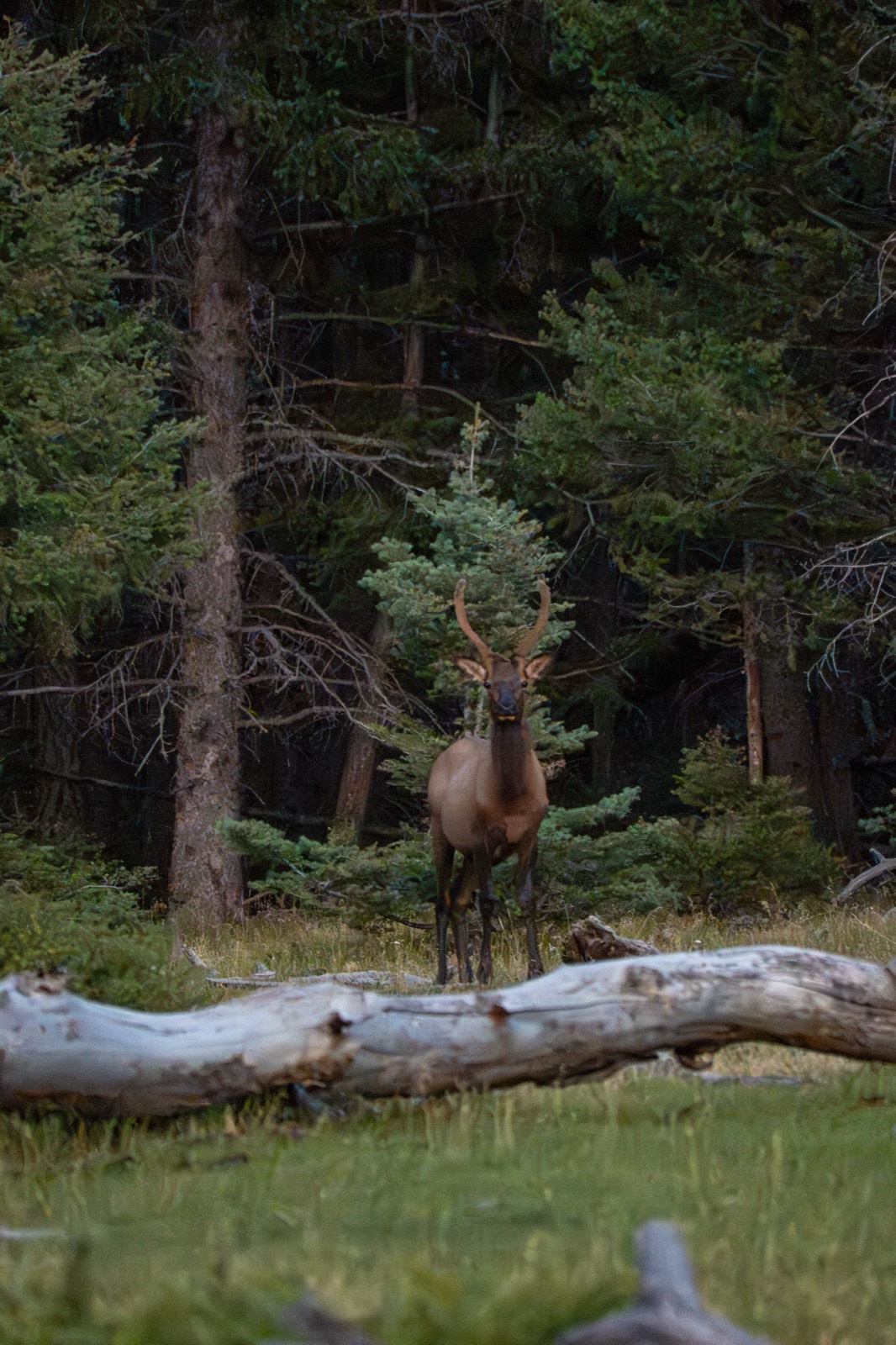
common qualityThe marquee draw of GMU 653: a draw-only, bull-only permit hunt in place since 2006 that carries the highest success rate in District 11 (historically averaging around 40%). Hunters annually report a quality experience and quality bulls, and success rose ~11% in 2024. This is a rugged, high-alpine hunt on the recovering North Rainier herd — elk summer in and around Mount Rainier National Park and migrate down the White and Carbon drainages before deep snow. Antlerless harvest is limited to the small slice of Elk Damage Area 6014 that overlaps the GMU near Buckley; the rest is bull-permit only across all weapon types.
- →Apply for the bull-only permit and prepare for a rugged, high-country hunt — this is a draw tag, not a general-season option, and it is worth the effort.
- →Hunt the high basins off Hwy 410 (Bullion, Pickhandle, Big Crow, Grand Park) early, before snow pushes elk down; access the east side via the Pacific Crest Trail.
- →Time the migration: elk drop toward the Hwy 410 lower elevations in October with the first high-country snow — intercept them on the way down.
- →Watch the Greenwater-area gates — after Dec. 15 you walk in past the winter-closure gates, which thins competition dramatically.
- →Scout elk leaving the park down the Carbon River into the Clearwater Wilderness and the White River into the Mt. Baker-Snoqualmie NF.
- →If drawn to hunt the Muckleshoot White River timberlands, still hold your WDFW bull permit; no recreational access is allowed on the private Buckley timberlands during any bull elk season.
Blacktail Deer
common qualityGMU 653 offers high-elevation trophy black-tailed deer in its eastern alpine portions — a distinctly different, backcountry blacktail hunt from the lowland units. Deer success rates have been increasing (though harvest is stable), and the mountain country accessed via USFS roads and trails holds mature bucks. There is no antlerless deer hunting in 653. Buck harvest is any antlered buck; Manulife timber carries a two-point-minimum restriction on its ground.
- →Go high and backcountry: hunt the eastern alpine via USFS road/trail systems toward Norse Peak, Clearwater, and the ridges near Crystal Mountain for mature high-country blacktail.
- →Glass subalpine huckleberry basins and timberline edges at first and last light where big bucks feed.
- →Hunt regenerating clearcuts on the timber ownerships lower down for numbers, but climb for quality.
- →There's no antlerless season here — pass unless you have an antlered buck, and hold out for a mature deer in the high country.
- →Consider a Muckleshoot Tomanamus permit for unrestricted deer access on the tree farm (no deer restrictions on that ground).
Black Bear
common opportunityGMU 653 is part of the South Cascades BBMU and a solid bear unit — a seven-year average of about 17 bears taken by ~187 hunters at roughly 9% success, the best success in the district's bear table. Harvest jumped after the 2019 earlier Aug. 1 start and two-bear statewide limit and has since stabilized. The mix of timbered clearcuts and subalpine huckleberry makes for good spot-and-stalk bear country.
- →Glass clearcuts and subalpine huckleberry fields at dawn and dusk in late summer and early fall when bears feed heavily on berries.
- →Work the higher huckleberry basins near timberline for spot-and-stalk opportunities with good visibility.
- →Hunt the long Aug. 1-Nov. 15 season early, before deer/elk pressure and snow move bears around.
- →Carry the bear tag on your deer or elk hunt — the same high country produces both.
Cougar
common opportunityCougars are widespread in District 11 forestlands, and the deer- and elk-rich 653 provides good habitat. It is grouped with Mashel (654) in a cougar hunt management unit carrying a six-cougar harvest cap — the pairing that provides the district's highest cougar harvest. Most cats are taken incidentally by deer, elk, and bear hunters, and snow conditions strongly affect success.
- →Hunt where deer and elk concentrate along the White/Carbon corridors and mid-elevation timber; cougars follow the prey.
- →Cut fresh snow on gated roads and ridgelines to track — a good snow year sharply improves cougar odds.
- →Carry the tag as an incidental opportunity while pursuing other game.
- →Call the WDFW cougar hotline (1-866-364-4868, updated Thursdays) — the six-cougar cap can close the season mid-year.
Pro tips
- →The bull-only permit is the prize — District 11's highest elk success (historically ~40%) and quality bulls, but you must draw it and be ready for a rugged alpine hunt.
- →Time your elk hunt to the migration: intercept animals dropping down the White/Carbon drainages toward Hwy 410 with the first October snows.
- →After the Dec. 15 winter-closure gates shut, walk in past them — competition falls off sharply for the hunters willing to hike.
- →Climb for trophy high-country blacktail in the eastern alpine (Norse Peak/Clearwater/Crystal Mountain country); remember there's no antlerless deer season here.
- →Buy the Muckleshoot Tomanamus Tree Farm fee permit early for ~78,000 acres of access with no deer restrictions — but you still need a WDFW bull permit to hunt its elk.
- →Check USFS ranger-station road-closure status and the Incident Information System for fire closures before every trip.
Watch out for
- !Elk are draw-only: general-season elk hunters cannot hunt 653 elk without a WDFW bull permit — and NO recreational access is allowed on the private Buckley timberlands during any bull elk season.
- !No hunting inside Mount Rainier National Park, which forms the southern boundary — know exactly where the park line is.
- !Winter elk-habitat closures (Dec. 15-May) gate several Greenwater USFS roads; much USFS ground is foot/horse access only.
- !Old fire scars leave hazardous downed logs and standing dead timber — plan routes accordingly.
- !Fire season can close both USFS and private industrial timber entirely; verify status before setting out.
- !The Muckleshoot Tomanamus Tree Farm requires an advance fee permit (April-December, closed July 2-5) obtained through the Muckleshoot Wildlife Program — don't assume walk-on access.
- !Snow and elevation make this a physically demanding, weather-dependent hunt — success hinges on being high and mobile at the right time.
Logistics
Base out of Enumclaw or Buckley for full services, or push up Highway 410 to Greenwater (limited services) as a jump-off for the high country and the Crystal Mountain-area basins. Mt. Baker-Snoqualmie NF offers dispersed camping and developed sites along the Hwy 410 and White River corridors — the most reliable public camp option. Plan for a mountain hunt: variable weather, high elevation, seasonally gated roads that force foot or horse travel, and old fire-scar deadfall. If hunting the Muckleshoot Tomanamus Tree Farm, arrange the fee permit in advance through the Muckleshoot Wildlife Program. Carry a current ownership/access and USFS road-closure map.
Nearest towns: Enumclaw, Buckley, Greenwater, Wilkeson, Carbonado
Seasons & regulations
This page carries no season dates or regulations. Get current rules from the official Washington sources:
Research sources: WDFW 2025 District 11 Hunting Prospects — GMU 653 White River bull-only permit hunt (highest district success, North Rainier herd, migration, Grand Park/Bullion/Big Crow), high-elevation blacktail, South Cascades BBMU bear, cougar CHMU cap, Muckleshoot Tomanamus & Buckley timberland access · WDFW 2023 District 11 Hunting Prospects · GoHunt — Washington Unit 653 White River profile (elevation 700-6,800 ft, ~53% public, Mt. Baker-Snoqualmie NF / Muckleshoot / timber, north of Mount Rainier) · Mt. Baker-Snoqualmie National Forest — Recreation & road status (USFS)
FAQ
- How big is GMU 653 in Washington?
- GMU 653 (White River) covers about 393 square miles, ranging from roughly 700 to 6,800 feet in elevation. Area is computed from the unit boundary polygon.
- How much public land is in GMU 653?
- Approximately 53% of the unit is public land. Primary managers: USFS Mt. Baker-Snoqualmie NF (incl. Clearwater & Norse Peak Wilderness), Muckleshoot Indian Tribe (Tomanamus / White River Tree Farm, ~78,121 ac), WDNR, Manulife / private industrial timber, Private (Buckley timberlands). Always verify ownership boundaries on the ground.
- What species does the catalog list for GMU 653?
- Roosevelt Elk, Blacktail Deer, Black Bear, Cougar. For seasons, tags, and regulations, use the official Washington agency resources linked on this page — this page carries no regulatory information.
Put GMU 653 on your map.
Boundary lines, public/private ownership, topo, and offline maps for this unit — in Baseline Maps, free for 14 days.