Unit 72 Berry Creek (Area 72)
Small, roadless Berry Creek corner in the far northwest Tetons — remote elk on the wildest edge of the range
Northern Teton Range / Berry Creek (Grand Teton NP & Jedediah Smith Wilderness) · Last reviewed 2026-07-12
Area
60
sq mi
Public land
100%
approx.
Elevation
6,800–10,700
feet
Motorized
wilderness
access
Overview
Hunt Area 72 is a compact unit of about 60 square miles taking in the Berry Creek, Owl Creek, and Webb Canyon Creek drainages in the northwest corner of the Teton Range, spanning the boundary country of Grand Teton National Park and the Jedediah Smith Wilderness on the Caribou-Targhee NF. It is roadless, rugged, and lightly hunted, part of the Jackson elk herd on the wildest fringe of the range. Access is difficult from every side, which is exactly why the elk here see so little pressure. Grizzly bears and a sensitive native Teton bighorn herd share the high country.
Terrain
Steep west-slope Teton canyons — Berry, Owl, and Webb Canyon creeks — climbing from timbered lower drainages near Jackson Lake to high alpine cirques and the northern Teton crest. Rough, brushy, and physically demanding.
Cover: Lodgepole and spruce-fir timber and heavy downfall on the slopes, willow and alder in the creek bottoms, aspen and open parks on lower benches, and alpine meadow and rock in the upper cirques.
Landmarks: Berry Creek · Owl Creek · Webb Canyon · Jackson Lake (east, Grand Teton NP) · Jedediah Smith Wilderness boundary · Northern Teton Range crest
Access
All public and roadless, straddling designated wilderness and the Grand Teton NP boundary — no checkerboard and no private-land problem, but genuinely hard to reach. Common approaches are a boat across Jackson Lake to the Berry Creek/Owl Creek area, a long walk in from the Grassy Lake (Reclamation) Road corridor to the north, or a climb over the crest from the Idaho side (Teton Canyon / Jackass Loop) into the Jedediah Smith Wilderness. Wyoming law requires nonresidents to have a licensed guide or resident companion (with a free non-commercial guide license) to hunt in designated wilderness.
Managers: USFS Caribou-Targhee NF (Jedediah Smith Wilderness), NPS Grand Teton National Park (unit boundary)
Access points: Boat access across Jackson Lake to Berry Creek / Owl Creek · Grassy Lake Road (Reclamation Road / FR 261) approaches from the north · Jedediah Smith Wilderness trails from the Idaho west slope · Webb Canyon trail
Species notes
Rocky Mountain Elk
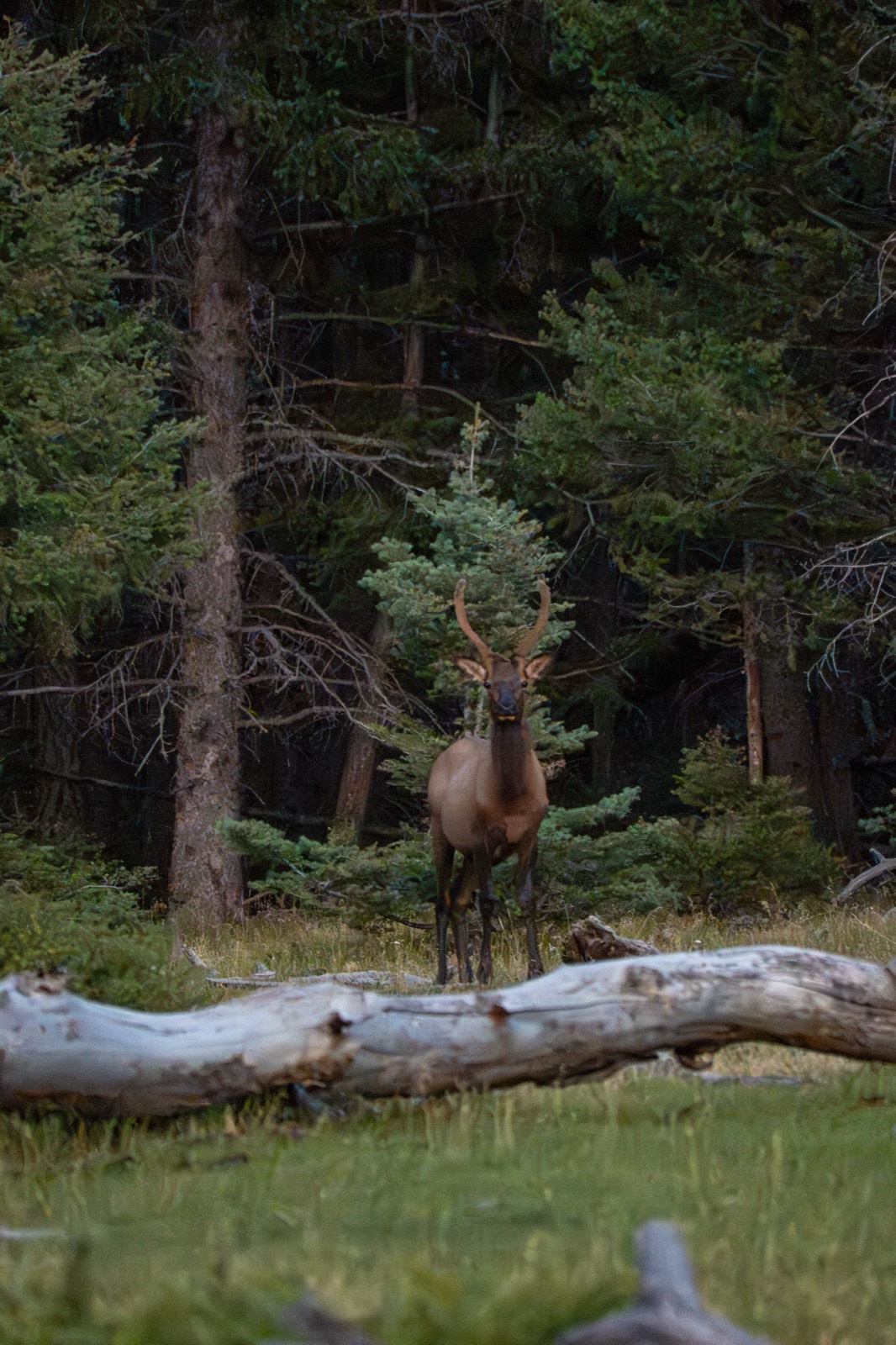
common qualityPart of the Jackson elk herd, Area 72 holds elk in low numbers but with real quality potential because access is so hard that pressure is minimal. Bulls use the timbered canyons and high basins of the Berry, Owl, and Webb drainages. Tags are limited, and the hunt rewards physical, self-reliant hunters who commit to a demanding approach.
- →Commit to a hard approach — boat across Jackson Lake or hike over the crest to reach the drainages
- →Glass high cirques and timbered canyon edges at first and last light
- →Work the creek-bottom willow and timber transitions where elk feed and bed
- →Bugle the dark timber early and let terrain funnel your calling
- →Plan for a snow front to move elk down the west-slope canyons
Moose
common qualityThe willow and beaver bottoms of Berry, Owl, and Webb Canyon creeks are good Shiras moose habitat within the Jackson moose herd. Permits are scarce and draw-only, but a bull taken here comes from lightly hunted country.
- →Glass the willow flats and beaver ponds along the creek bottoms at dawn and dusk
- →Still-hunt slowly through riparian willow and timber edges
- →Check spring seeps and pond complexes low in the drainages
Mule Deer
limited opportunityMule deer are present on lower benches and open parks but at low density in this steep timber; they are incidental to an elk or moose hunt, with summer bucks leaving the high basins early as weather turns.
- →Glass aspen and sage-grass parks on lower slopes
- →Hunt early before high-country bucks migrate off the range
- →Treat deer as a bonus, not the objective
Black Bear
common opportunityGrizzly and black bears both use this remote corner of the Tetons. Grizzlies are protected and not huntable but their presence governs camp discipline and meat care; black bears carry their own seasons.
- →Keep a bear-safe camp and store food and meat well away from tents
- →Carry bear spray and stay alert in thick brush and downfall
- →Retrieve and cool meat fast — never abandon a kill overnight
Bighorn Sheep
limited lowThe high northern Teton crest above these drainages is home to the small, isolated, native Teton Range bighorn herd — a sensitive population that is a conservation priority, not a general hunting opportunity. Note it as a species you may see, not one to plan a hunt around; verify any current status and closures with WGFD.
- →Treat any sheep sighting as an observation, not a hunt, unless holding a specific valid license
- →Give the isolated Teton herd a wide berth in winter-range and lambing terrain
- →Confirm sheep hunt-area status and closures directly with WGFD before planning
Pro tips
- →Solve the approach first: boat, long north hike, or a crest crossing from Idaho each demand real planning
- →Nonresidents must hunt the wilderness with a licensed guide or resident companion (free non-commercial guide license)
- →Small unit with limited tags — study the exact drainage boundaries before you commit
- →Time a hunt to a snow front to pull elk down the canyons
- →Do not target the sensitive Teton bighorn herd; treat sheep as observations only
Watch out for
- !Very hard access from every direction — boat, long hike, or crest crossing required
- !Designated wilderness and NP boundary: no motorized access; nonresidents need a guide or resident companion
- !Grizzly country — bear spray, food storage, and fast meat care are essential
- !Sensitive native Teton bighorn herd in the high country — a conservation concern, not a hunt
- !Severe early snow on a high, snow-holding northwest exposure; no cell coverage
Logistics
There is no easy road in. Hunters typically boat across Jackson Lake from the Grand Teton NP side, walk in from the Grassy Lake Road corridor to the north, or approach over the crest from Idaho's Teton Valley. Jackson (WY) and Ashton/Driggs (ID) are the nearest supply points depending on your approach. Expect self-supported backcountry camps, weed-free certified stock feed on the forest, and no cell service.
Nearest towns: Moran, Jackson, Ashton (ID), Driggs (ID)
Seasons & regulations
This page carries no season dates or regulations. Get current rules from the official Wyoming sources:
Research sources: WGFD Chapter 7 Elk Hunting Seasons (Area 72 boundary description) · WGFD Elk Hunt Area Maps (2023) · GOHUNT Wyoming Elk Unit Profiles
FAQ
- How big is Unit 72 in Wyoming?
- Unit 72 (Berry Creek (Area 72)) covers about 60 square miles, ranging from roughly 6,800 to 10,700 feet in elevation. Area is computed from the unit boundary polygon.
- How much public land is in Unit 72?
- Approximately 100% of the unit is public land. Primary managers: USFS Caribou-Targhee NF (Jedediah Smith Wilderness), NPS Grand Teton National Park (unit boundary). Always verify ownership boundaries on the ground.
- What species does the catalog list for Unit 72?
- Rocky Mountain Elk, Moose, Mule Deer, Black Bear, Bighorn Sheep. For seasons, tags, and regulations, use the official Wyoming agency resources linked on this page — this page carries no regulatory information.
Put Unit 72 on your map.
Boundary lines, public/private ownership, topo, and offline maps for this unit — in Baseline Maps, free for 14 days.