Unit 77 National Elk Refuge (Area 77)
The famous winter feedground north of Jackson — a permit-and-vehicle-pass antlerless elk hunt on the National Elk Refuge itself.
National Elk Refuge / Jackson Hole · Last reviewed 2026-07-12
Area
39
sq mi
Public land
100%
approx.
Elevation
6,200–7,800
feet
Motorized
limited
access
Overview
Hunt Area 77 is the National Elk Refuge, the ~24,500-acre U.S. Fish & Wildlife Service refuge immediately north of Jackson that winters thousands of Jackson-herd elk. It is run as a tightly-controlled Hunter Management Area: hunters draw a permission slip and carry a vehicle pass for a specific hunt period, and the season is used as a management tool to move and harvest cow/calf elk as they arrive on winter range. The country is open sagebrush flats, grassy benches and marsh along Flat Creek beneath the Gros Ventre foothills and Miller Butte. It is not wild backcountry — it is a structured, rules-heavy hunt on one of the most storied pieces of elk ground in North America.
Terrain
Broad sagebrush and grassland flats and low benches on the floor of Jackson Hole, laced by Flat Creek and its marshes, rising toward the Gros Ventre foothills and the rocky rise of Miller Butte on the east.
Cover: Big sagebrush and native grassland, wet meadows and willow-marsh along Flat Creek, scattered aspen and conifer on the foothill fringe.
Landmarks: National Elk Refuge · Miller Butte · Flat Creek · Gros Ventre foothills · Curtis Canyon (adjacent) · Sleeping Indian / Sheep Mountain skyline
Access
No checkerboard — the refuge is a single federal block. Access is entirely permit-controlled: hunters must hold the appropriate HMA permission slip and a vehicle pass for their assigned hunt period and animal type, and must know and obey posted refuge rules. Only designated portions are open, on specific days; large parts of the refuge remain closed. The refuge adjoins Grand Teton National Park and the town of Jackson.
Managers: USFWS National Elk Refuge, WGFD (managed hunt)
Access points: Refuge Road / National Elk Refuge entrance from Jackson · designated refuge parking and access points per hunt period · Flat Creek corridor · east-side foothill access near Miller Butte
Species notes
Rocky Mountain Elk
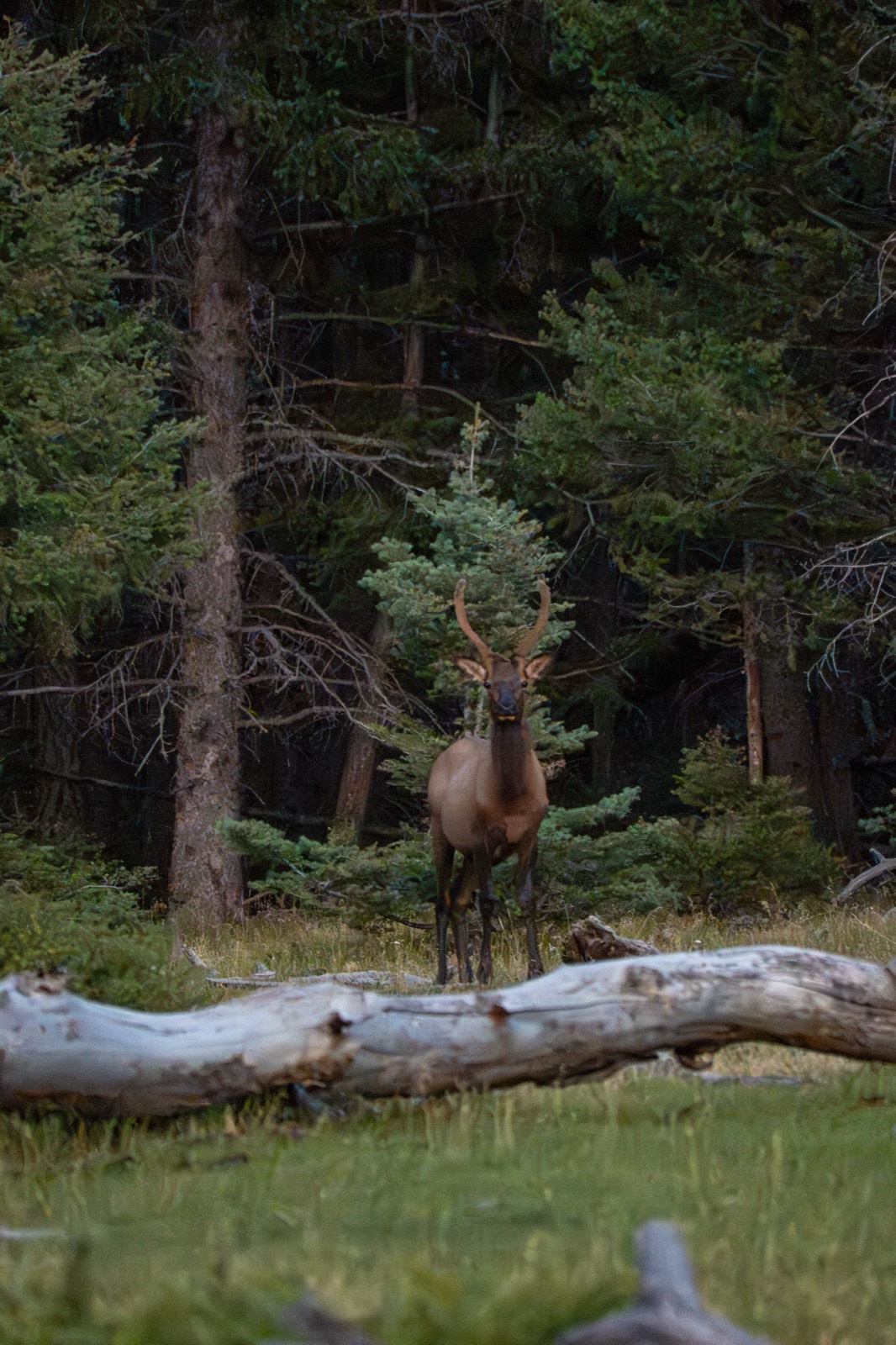
abundant opportunityThe refuge winters thousands of Jackson-herd elk, and the hunt exists to harvest and redistribute cow/calf animals as they move onto winter range. Antlerless elk are the focus in most periods (Type 6 licenses add later cow/calf opportunity); success depends on drawing a period that lines up with elk arriving on the open ground.
- →Draw and hunt a period timed to when elk push onto the refuge — later periods often hold more animals
- →Glass the open sage flats and Flat Creek edges and set up on travel routes
- →Use the terrain of Miller Butte and the foothills to approach open feeding flats
- →Follow the permission-slip and vehicle-pass rules exactly to keep access
- →Be efficient and mobile within the open sub-areas
Moose
limited qualityShiras moose use the Flat Creek willow bottoms and marsh on and around the refuge; a very-limited-draw resource in the broader Jackson area.
- →Glass Flat Creek willows and wet meadows at dawn and dusk
- →Work willow-and-aspen edges near water slowly
Pro tips
- →Everything runs on the draw — secure the permission slip and the correct vehicle pass before you go
- →Know and obey the posted refuge rules exactly; violations mean fines and loss of access
- →Pick a hunt period timed to when elk are actually on the refuge — later periods often hold more animals
- →Hunt the open sage flats and Flat Creek edges; use Miller Butte and foothill terrain to approach
- →Chronic wasting disease has been detected in Area 77 — handle carcasses accordingly and consider testing
- →Dress for exposed, cold, windy flats — there is little shelter
Watch out for
- !Strictly permit-, permission-slip- and vehicle-pass-controlled; only designated areas open on designated days
- !Chronic wasting disease documented on the refuge — follow carcass-handling and testing guidance
- !Adjacent Grand Teton National Park and closed refuge zones — know the boundaries
- !Antlerless-focused management hunt, not a trophy-bull opportunity
- !Exposed flats with hard winter cold, wind and snow
- !Heavy public visibility next to Jackson — behave accordingly
Logistics
The refuge sits at the north edge of Jackson, so full services — fuel, lodging, groceries, gear, hospital — are minutes away. This is one of the most accessible hunts in the state logistically, but everything hinges on the draw, the permission slip and the vehicle pass; there is no just-show-up option.
Nearest towns: Jackson, Kelly, Wilson, Moose
Seasons & regulations
This page carries no season dates or regulations. Get current rules from the official Wyoming sources:
Research sources: WGFD National Elk Refuge Elk Hunter Management Area · WGFD — Changes to 2025 elk hunting season on the National Elk Refuge · WGFD/USFWS — CWD detected on the National Elk Refuge
FAQ
- How big is Unit 77 in Wyoming?
- Unit 77 (National Elk Refuge (Area 77)) covers about 39 square miles, ranging from roughly 6,200 to 7,800 feet in elevation. Area is computed from the unit boundary polygon.
- How much public land is in Unit 77?
- Approximately 100% of the unit is public land. Primary managers: USFWS National Elk Refuge, WGFD (managed hunt). Always verify ownership boundaries on the ground.
- What species does the catalog list for Unit 77?
- Rocky Mountain Elk, Moose. For seasons, tags, and regulations, use the official Wyoming agency resources linked on this page — this page carries no regulatory information.
Put Unit 77 on your map.
Boundary lines, public/private ownership, topo, and offline maps for this unit — in Baseline Maps, free for 14 days.