GMU 142 GMU 142 — Las Animas Co.
Open-prairie pronghorn unit with plains elk, mule deer, and river-bottom whitetail on private ranchland
Southeast Colorado — Purgatoire plains and canyon country of northeast Las Animas County · Last reviewed 2026-07-12
Area
369
sq mi
Public land
10%
approx.
Elevation
4,800–6,600
feet
Motorized
moderate
access
Overview
GMU 142 occupies the northeast corner of Las Animas County, where the shortgrass plains roll toward the Purgatoire River canyon and the edge of the Comanche National Grassland. Pronghorn lead the harvest across the open prairie, with mule deer in the piñon-juniper breaks and a plains elk herd working the canyon country; along the wooded Purgatoire bottoms a few whitetail deer also turn up. Elk and deer are limited-draw — no over-the-counter elk here — and the unit is overwhelmingly private ranchland, making access the defining challenge.
Terrain
Open shortgrass plains breaking into the deep piñon-juniper canyons of the Purgatoire River, with scattered mesas, sandstone rims, and sagebrush flats.
Cover: Shortgrass prairie and sagebrush on the tablelands, piñon-juniper and Gambel oak on the canyon slopes and rims, with cottonwood, tamarisk, and willow lining the Purgatoire and its tributaries.
Landmarks: Purgatoire River canyon · Picketwire canyon country · Comanche National Grassland edge · shortgrass tablelands · sandstone-rimmed mesas
Access
GMU 142 is predominantly private ranchland, with public opportunity limited to Comanche National Grassland tracts and small BLM parcels along the plains and Purgatoire breaks. State Trust Land is generally closed to hunting unless enrolled in CPW's Public Access Program. Note that the core Picketwire Canyonlands unit of the grassland has its own access rules and seasonal/vehicle restrictions. Most hunting here runs through landowner permission, leases, or CPW access programs.
Managers: private ranch, Comanche National Grassland (USFS, Picketwire/Timpas units nearby), BLM (small parcels), Colorado State Trust Land (generally closed unless in CPW Public Access Program)
Access points: US-350 (Trinidad–La Junta) corridor · county-road network across the plains · Comanche National Grassland / Picketwire access points · canyon-rim county roads
Species notes
Pronghorn
common opportunityThe top harvest species — pronghorn range the open shortgrass tablelands and sagebrush flats. Numbers are good and the open country favors spot-and-stalk, though most animals live on private ground.
- →Glass open tablelands and flats at dawn and dusk
- →Stalk through arroyos and terrain folds using sparse cover
- →Water and windmills concentrate animals in dry early season
- →Secure access first — the best flats are private
Rocky Mountain Elk
common opportunityA plains-and-canyon elk herd holds in the piñon-juniper breaks and oak brush of the Purgatoire country, feeding onto parks and flats. Limited-draw, not over-the-counter.
- →Hunt oak brush and timber in the canyon breaks where elk bed
- →Glass parks and rims at first and last light
- →During the rut, call timbered draws and canyon heads
- →Pin down huntable public timber or ranch access early
Mule Deer
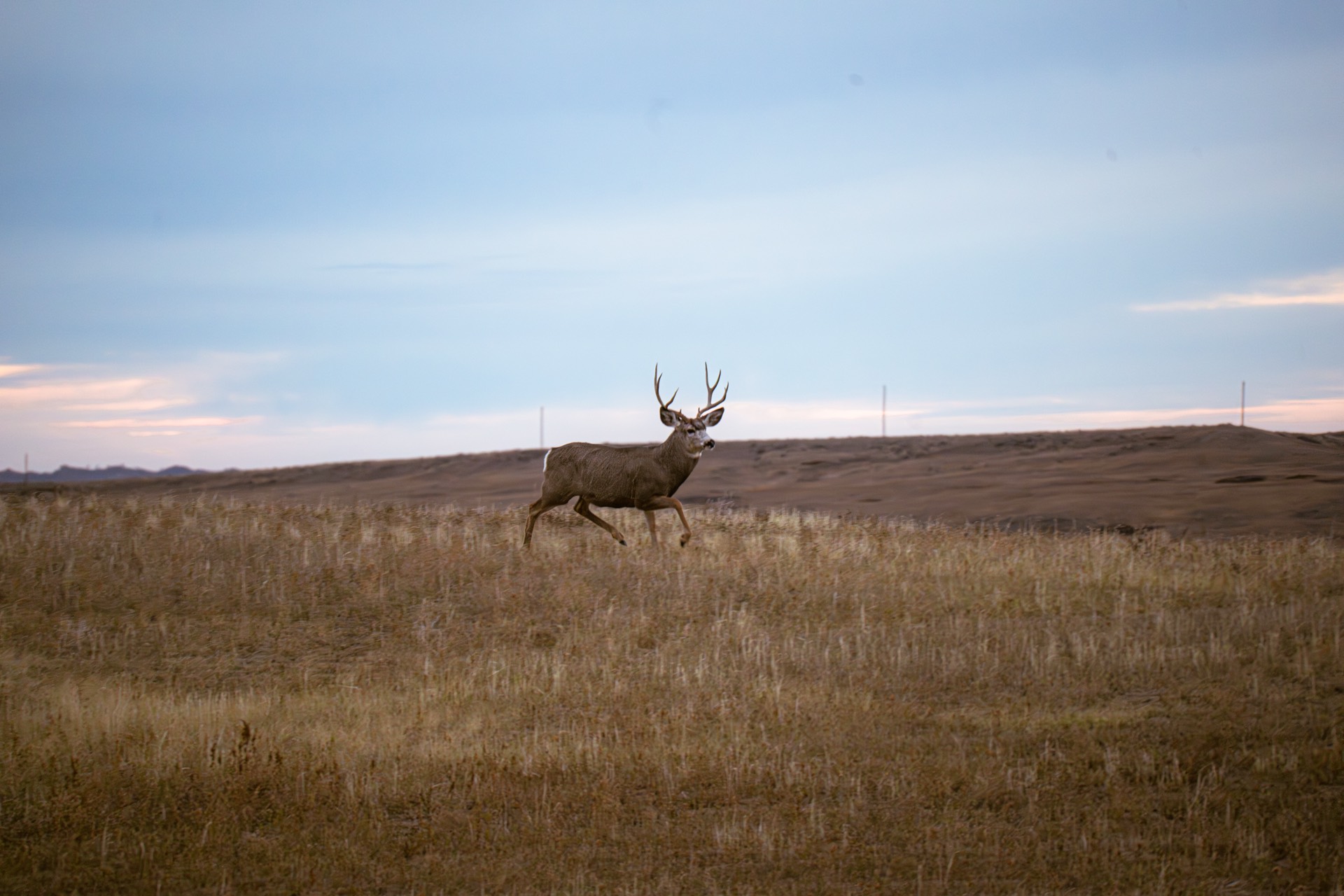
common opportunityMule deer use the piñon-juniper breaks, oak brush, and canyon rims throughout the unit. Limited-draw, with moderate success on largely private country.
- →Glass juniper and oak-brush edges at first and last light
- →Bucks bed in canyon-head thickets and rim cover midday
- →Hunt the plains-to-breaks transition where deer feed
- →Focus on huntable breaks with good vantage
Whitetail Deer
limited opportunityA small number of whitetail deer inhabit the wooded Purgatoire River bottoms and tributary corridors on the eastern plains, a minor component of the deer harvest overshadowed by mule deer in the uplands.
- →Hunt the cottonwood and tamarisk river bottoms at first and last light
- →Watch trails between riparian bedding cover and adjacent feed
- →Access to river-bottom ground is almost entirely private — permission is key
Pro tips
- →Access is the hard part — this is ranch country, so line up permission or leases ahead of the draw
- →Pronghorn on the open tablelands are the highest-odds opportunity; hunt water in dry years
- →For whitetail, focus the Purgatoire bottoms — but nearly all river-bottom ground is private
- →Check Comanche National Grassland / Picketwire access rules and vehicle restrictions before you go
- →Clay roads turn to gumbo when wet — time movements around weather
Watch out for
- !Overwhelmingly private land — very limited DIY public opportunity
- !State Trust Land generally closed unless in CPW's Public Access Program
- !Picketwire Canyonlands has special access and vehicle restrictions
- !Clay roads impassable when wet; fire risk in dry grass and juniper
- !Long distances between water and services
Logistics
Trinidad to the southwest and La Junta to the north are the practical service hubs for fuel, lodging, groceries, and processing. Travel is on dirt and clay county roads and ranch two-tracks that turn slick and impassable when wet — carry recovery gear and watch the forecast. Cell coverage is limited away from the US-350 corridor, and distances between services are long.
Nearest towns: Trinidad, La Junta, Model, Kim
Seasons & regulations
This page carries no season dates or regulations. Get current rules from the official Colorado sources:
Research sources: CPW Big Game Hunting Statistics · CPW GMU boundary descriptions · USFS Comanche National Grassland / Picketwire Canyonlands
FAQ
- How big is GMU 142 in Colorado?
- GMU 142 (GMU 142 — Las Animas Co.) covers about 369 square miles, ranging from roughly 4,800 to 6,600 feet in elevation. Area is computed from the unit boundary polygon.
- How much public land is in GMU 142?
- Approximately 10% of the unit is public land. Primary managers: private ranch, Comanche National Grassland (USFS, Picketwire/Timpas units nearby), BLM (small parcels), Colorado State Trust Land (generally closed unless in CPW Public Access Program). Always verify ownership boundaries on the ground.
- What species does the catalog list for GMU 142?
- Pronghorn, Rocky Mountain Elk, Mule Deer, Whitetail Deer. For seasons, tags, and regulations, use the official Colorado agency resources linked on this page — this page carries no regulatory information.
Put GMU 142 on your map.
Boundary lines, public/private ownership, topo, and offline maps for this unit — in Baseline Maps, free for 14 days.