GMU 15 GMU 15 — Routt/Grand/Eagle Co.
A big-woods OTC elk unit on the west flank of the Continental Divide near Rabbit Ears Pass
Northwest Colorado — Upper Yampa / Routt National Forest elk country · Last reviewed 2026-07-12
Area
493
sq mi
Public land
66%
approx.
Elevation
6,300–12,000
feet
Motorized
moderate
access
Overview
GMU 15 is a roughly 493-square-mile mountain unit straddling Routt, Grand, and Eagle Counties, bounded by US 40 to the north, the Colorado River to the south, and County Road 131 to the west. The Routt National Forest blankets the eastern two-thirds in aspen and dark spruce-fir timber climbing to the Continental Divide, while the lower west end opens into mountain shrub, sage, and private ranch land. This is classic Colorado over-the-counter elk country — plenty of elk on the forest, heavy hunter pressure, and much better hunting for those willing to walk well off the roads. Mule deer, a limited pronghorn tag, Shiras moose, black bear, and mountain lion round out the unit.
Terrain
Steep, timbered mountain country rising from the Colorado and Yampa River valleys to alpine ridgelines along the Continental Divide. Aspen benches and dark-timber pockets are broken by parks, beaver meadows, and drainages that funnel elk between feed and cover.
Cover: Aspen and mixed conifer (spruce-fir, lodgepole) on the forest ground, grading down through Gambel oak and mountain shrub into rolling sagebrush and irrigated hay meadows on the private valley floors.
Landmarks: Continental Divide · Routt National Forest · Muddy Creek · Colorado River · Yampa River valley · Rabbit Ears Pass (US 40 corridor)
Access
About two-thirds of the unit is public — dominated by the Routt National Forest on the east, with BLM and a wilderness-quality high country. The lower west end and the valley bottoms are private ranch land where access is by permission only. Colorado State Trust parcels are NOT open to hunting unless enrolled in CPW's Public Access Program, so do not count them as huntable. Forest roads off US 40 and CO 131 give good motorized entry, but the best hunting is on foot away from those corridors.
Managers: USFS Routt National Forest, BLM Kremmling Field Office, private ranch, Colorado State Trust (generally closed to hunting)
Access points: US Highway 40 / Rabbit Ears Pass corridor · County Road 131 · Routt National Forest roads off US 40 · Colorado River / CO 134 access on the south
Species notes
Rocky Mountain Elk
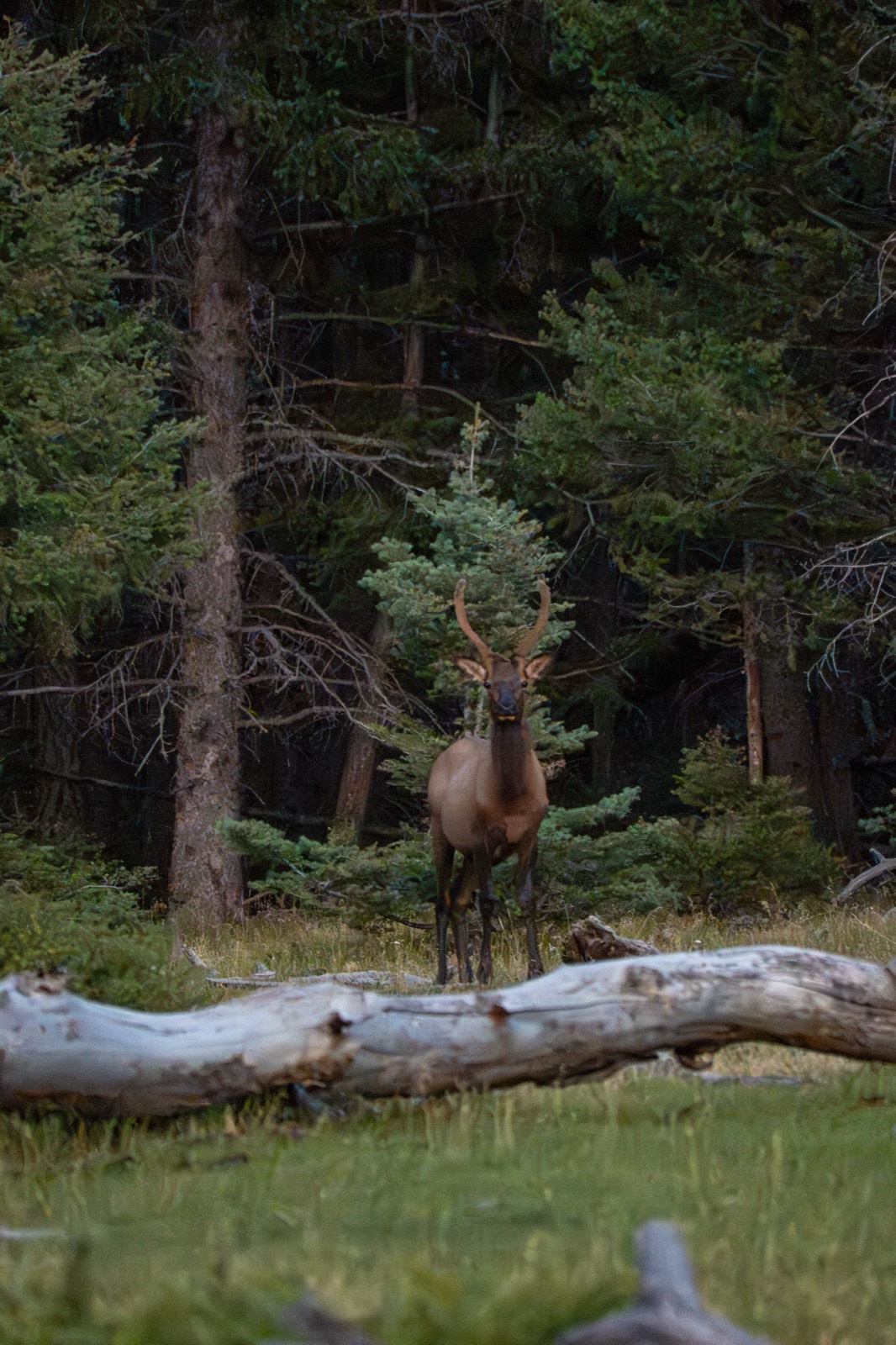
abundant opportunityThe headline hunt and an over-the-counter option in the general seasons — no draw required for many bull tags. Large elk numbers hold on the Routt National Forest and the herd is plentiful across the Upper Yampa. Pressure is heavy on the roaded ground, so success favors hunters who push into remote timber and travel corridors. Recent bull success ran near 10% unit-wide.
- →Break well off the US 40 and forest-road corridors — the further you walk into the dark timber and beaver-meadow drainages, the less pressured the elk.
- →Hunt the aspen/conifer edges and parks at first and last light; work the transitions between the private hay meadows and the forest where elk feed at night and bed up high.
- →Time an archery or muzzleloader hunt to the rut, which can fire the first week of September and run a month — locate bugling bulls off the mid-elevation benches.
- →Watch the weather: an early snow up high will push elk down toward the valley edges and concentrate them.
Mule Deer
common qualityA solid limited-draw mule deer unit — deer tags here are drawn, not OTC, and the unit puts out good numbers of bucks off the oak-brush and aspen benches. Recent success ran around one in three.
- →Glass the Gambel oak and mountain-shrub benches on the lower-to-mid slopes rather than the high timber.
- →Later rifle seasons improve as bucks slide down out of the high country toward the sage and oak transition.
- →Focus on south-facing feed edges in the morning and shaded north pockets midday.
Moose
limited qualityShiras moose inhabit the willow drainages and beaver-meadow bottoms; this is a rare, hard-to-draw tag but a genuine trophy opportunity for the lucky applicant.
- →Hunt the willow-choked creek bottoms, beaver ponds, and wet meadows where moose feed.
- →Glass drainages morning and evening and be patient — bulls hold small home ranges.
- →Treat this as a once-in-a-lifetime tag and scout the specific willow complexes before season.
Pronghorn
limited opportunityA very thin pronghorn opportunity on the open sage and hay-meadow country at the lower west end — only a handful of tags and low harvest. Incidental to the unit's elk and deer identity.
- →Focus on the open sage flats and ranch edges on the west/lower end where the country opens.
- →Access is largely private out on the sage, so line up permission or hunt the public sage pockets.
- →Treat it as a bonus tag paired with elk scouting.
Black Bear
common opportunityBlack bears use the oak-brush and aspen country and can be hunted alongside a fall elk or deer trip, keying on natural food.
- →Glass Gambel oak slopes and berry patches in late summer and fall when bears are feeding hard.
- →Hunt the aspen/oak transition at first and last light.
- →Pair a bear tag with an early elk or deer hunt to make the most of forest time.
Pro tips
- →Elk is OTC in the general seasons here — expect company, and let that shape your plan: go deeper than the crowd.
- →The Routt National Forest is the engine of this unit; learn the forest-road network and pick a walk-in basin before opening morning.
- →Verify State Trust parcel boundaries — they are generally closed to hunting unless in CPW's Public Access Program.
- →Watch the forecast; a well-timed early snow up high can make an OTC elk hunt.
- →Deer, moose, and pronghorn are draw tags — bank points and don't count on them as walk-up hunts.
Watch out for
- !Heavy hunter pressure on the roaded forest ground during rifle seasons.
- !Private ranch land dominates the valley floors and lower west end — know your boundaries.
- !State Trust parcels are generally closed to hunting; do not treat them as public.
- !Early snow can close forest roads fast; carry chains and recovery gear.
- !Steep dark-timber recoveries — plan for tough pack-outs.
Logistics
Steamboat Springs (north) and Kremmling (east) are the practical bases for fuel, groceries, motels, and repair; the unit itself has campgrounds but few services within 20 miles. Most hunters camp on the forest. Forest roads turn greasy with rain or early snow, so bring high-clearance 4WD and recovery gear. Cell service drops off quickly on the forest — carry a satellite communicator and leave an itinerary.
Nearest towns: Kremmling, CO, Steamboat Springs, CO, Yampa, CO, Oak Creek, CO
Seasons & regulations
This page carries no season dates or regulations. Get current rules from the official Colorado sources:
Research sources: CPW GMU 15 boundary and big-game statistics · HuntScore — GMU 15 (Routt/Grand/Eagle) land ownership and hunt summary
FAQ
- How big is GMU 15 in Colorado?
- GMU 15 (GMU 15 — Routt/Grand/Eagle Co.) covers about 493 square miles, ranging from roughly 6,300 to 12,000 feet in elevation. Area is computed from the unit boundary polygon.
- How much public land is in GMU 15?
- Approximately 66% of the unit is public land. Primary managers: USFS Routt National Forest, BLM Kremmling Field Office, private ranch, Colorado State Trust (generally closed to hunting). Always verify ownership boundaries on the ground.
- What species does the catalog list for GMU 15?
- Rocky Mountain Elk, Mule Deer, Moose, Pronghorn, Black Bear. For seasons, tags, and regulations, use the official Colorado agency resources linked on this page — this page carries no regulatory information.
Put GMU 15 on your map.
Boundary lines, public/private ownership, topo, and offline maps for this unit — in Baseline Maps, free for 14 days.