GMU 214 GMU 214 — Routt Co.
Limited-draw migratory elk in the high sagebrush and oakbrush country between Hayden and Steamboat
Northwest Colorado — Routt County sage and aspen, Bears Ears elk country · Last reviewed 2026-07-12
Area
231
sq mi
Public land
30%
approx.
Elevation
6,450–9,600
feet
Motorized
moderate
access
Overview
GMU 214 lies in Routt County northwest of Steamboat Springs and southeast of Craig, taking in the rolling sagebrush parks, oakbrush ridges, and aspen benches of the Bears Ears elk region. This is a migration unit — big elk herds funnel through in fall as snow pushes them off the high country, and the harvest is dominated by elk. Unlike much of the Colorado mountains, elk here are managed as limited-draw rather than over-the-counter, which protects age structure and keeps hunt quality up. Mule deer are present but modest and fully draw, while small pronghorn bands work the open sage, largely on private ground.
Terrain
Mid-to-high hill country — sagebrush and grass parks rising into oakbrush ridges, aspen stands, and mixed-conifer stringers, cut by creek drainages.
Cover: Big sagebrush and mountain-shrub parks, Gambel oakbrush, expansive aspen benches, mixed conifer on the high ground, with willow-lined creek bottoms and hay-meadow valleys.
Landmarks: Bears Ears region · Yampa River valley to the south · Hayden-area sagebrush parks · aspen benches of the upper drainages
Access
This is a heavily private unit — much of the sage-and-hay winter range and the pronghorn ground is deeded ranch land, and a large share of the migrating elk spend time on private. Public opportunity centers on BLM parcels and the national-forest fringe on the higher, timbered ground; access to those blocks often requires care to avoid landlocked public. State Trust Land is generally closed to hunting unless enrolled in CPW's Public Access Program.
Managers: private ranch, BLM (Little Snake Field Office), USFS Routt NF / Medicine Bow-Routt NF (higher eastern fringe), Colorado State Trust Land (generally closed unless in CPW Public Access Program)
Access points: County roads off US-40 in the Hayden/Yampa valley · BLM two-tracks in the sage benches · Routt NF trailheads on the higher eastern edge
Species notes
Rocky Mountain Elk
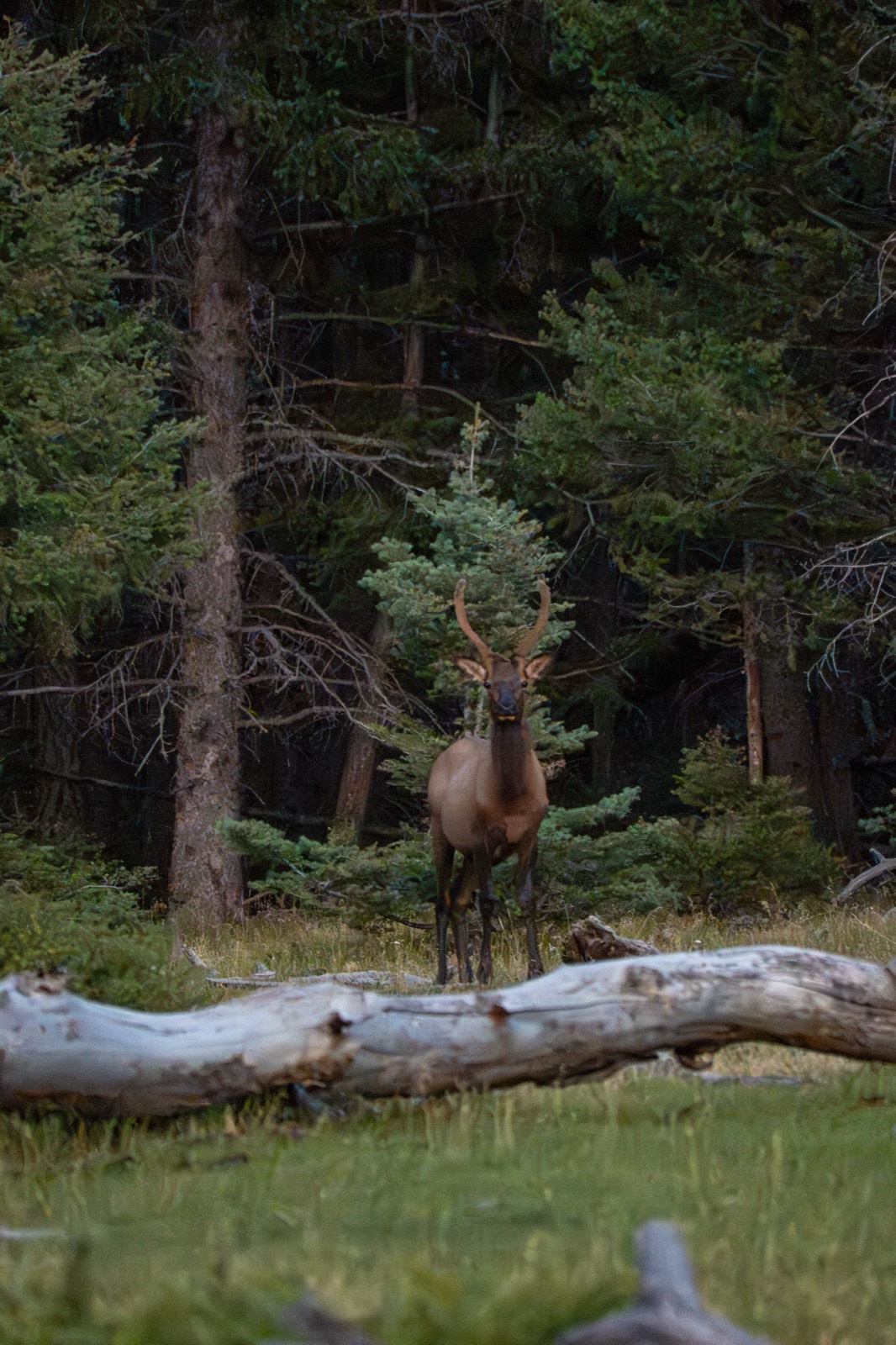
abundant qualityThe marquee species and the overwhelming majority of the harvest — part of the Bears Ears complex, one of the highest elk-density regions in Colorado. Managed as a limited-draw unit, which protects bull age structure. Large herds move through on fall migration, so timing and weather matter as much as the tag.
- →Glass sagebrush and grass parks at dawn and dusk for feeding herds
- →Hunt the oakbrush/aspen-to-sage transition where elk bed and stage
- →During the rut, work aspen benches and timbered draws with calling
- →Later rifle seasons: intercept migration corridors as snow moves elk down through the unit
- →Focus effort on public BLM and NF blocks and know exactly where private begins
Mule Deer
limited opportunityMule deer are present but the modest harvest and lower success mark this as an elk-first unit for deer hunters. Fully limited-draw. Deer use the same oakbrush-aspen-sage mosaic and migrate with the weather.
- →Glass oakbrush and aspen edges at first and last light
- →Bucks hold in oakbrush pockets and aspen through midday
- →Concentrate on public benches with good glassing
- →Later-season migration puts deer on the move into lower country
Pronghorn
limited opportunitySmall pronghorn bands use the open sagebrush parks and hay-ground flats, largely on private ranch land. High success on a small harvest reflects a small, tightly managed population and limited public access — a bonus tag rather than a primary draw.
- →Glass open sage and grass flats for scattered bands
- →Secure private-land permission where the antelope concentrate, or work the few public flats
- →Use terrain for the stalk in sparse cover
Black Bear
common opportunityBlack bears work the oakbrush and aspen country, keying on acorns and serviceberry in early fall — typical of the mountain-shrub habitat across this part of Routt County.
- →Hunt oakbrush thickets and berry patches in early fall
- →Glass shrubby slopes for feeding bears at dawn and dusk
- →Often an incidental opportunity while elk hunting
Pro tips
- →This is quality, not opportunity — elk are drawn, so the payoff is age structure and elbow room versus the OTC units nearby
- →Time later hunts to migration; the fall push through 214 is what makes it
- →With so much private, lock down which public blocks actually hold elk before the season
- →Chase the oakbrush/aspen-to-sage edge for both elk and deer
- →Pronghorn opportunity is largely private — arrange access early or treat it as a bonus
Watch out for
- !Heavily private unit — much winter range, pronghorn ground, and migration land is deeded ranch
- !Landlocked public parcels — verify access to BLM and NF blocks
- !State Trust Lands generally closed unless enrolled in CPW's Public Access Program
- !Dirt roads become greasy and impassable when wet
- !Migratory elk mean a slow year without snow to move them
Logistics
Craig, Hayden, and Steamboat Springs provide fuel, lodging, groceries, and processing, with Steamboat offering the fullest services. Backcountry and ranch-access roads are dirt that turns greasy when wet — carry recovery gear and watch storms. Cell coverage is decent along the US-40/Yampa corridor and fades in the back country.
Nearest towns: Hayden, Craig, Steamboat Springs, Yampa valley communities
Seasons & regulations
This page carries no season dates or regulations. Get current rules from the official Colorado sources:
Research sources: CPW Big Game Hunting Statistics · CPW Hunting Atlas — GMU boundaries and public access · Colorado Big Game Regulations Brochure (limited elk / either-sex changes) · USFS — Medicine Bow-Routt National Forest
FAQ
- How big is GMU 214 in Colorado?
- GMU 214 (GMU 214 — Routt Co.) covers about 231 square miles, ranging from roughly 6,450 to 9,600 feet in elevation. Area is computed from the unit boundary polygon.
- How much public land is in GMU 214?
- Approximately 30% of the unit is public land. Primary managers: private ranch, BLM (Little Snake Field Office), USFS Routt NF / Medicine Bow-Routt NF (higher eastern fringe), Colorado State Trust Land (generally closed unless in CPW Public Access Program). Always verify ownership boundaries on the ground.
- What species does the catalog list for GMU 214?
- Rocky Mountain Elk, Mule Deer, Pronghorn, Black Bear. For seasons, tags, and regulations, use the official Colorado agency resources linked on this page — this page carries no regulatory information.
Put GMU 214 on your map.
Boundary lines, public/private ownership, topo, and offline maps for this unit — in Baseline Maps, free for 14 days.