GMU 231 GMU 231 — Routt/Rio Blanco/Garfield Co.
A compact, high OTC bull-elk unit on the Routt National Forest edge of the White River herd
Northwest Colorado — the Little Flat Tops and Williams Fork high country · Last reviewed 2026-07-12
Area
178
sq mi
Public land
55%
approx.
Elevation
7,000–10,600
feet
Motorized
moderate
access
Overview
GMU 231 is a small, high unit straddling Routt, Rio Blanco, and Garfield Counties in the Williams Fork Valley and the Little Flat Tops — the Dunkley and Beaver Flat Tops country on the north edge of Colorado's White River elk complex. Much of it is Routt National Forest timber and park, with private ranch ground concentrated in the Williams Fork Valley bottom. Elk are the marquee and dominate the harvest; mule deer are present but the annual take is small. Bull elk are over-the-counter for second and third rifle seasons, making this an opportunity unit — a tighter, higher piece of the White River herd's range with constant elk movement off the adjacent Flat Tops.
Terrain
Compact high mountain country — timbered ridges and open flat-topped parks of the Dunkley and Beaver Flat Tops dropping into the Williams Fork Valley, with aspen benches and willow drainages between.
Cover: Spruce-fir and lodgepole timber, heavy aspen, sagebrush and grass parks on the flat tops and valley, oakbrush on the lower slopes, and willow-lined creek bottoms.
Landmarks: Dunkley Flat Tops · Beaver Flat Tops · Williams Fork Valley · Dunckley Pass area · Routt National Forest
Access
A mixed unit — substantial Routt National Forest on the higher flat-tops ground, laced with meaningful private ranch ownership through the Williams Fork Valley bottom. Public access is real via the forest, but the valley floor and some prime lower parks are private, so map the boundaries carefully. State Trust Land is generally closed unless enrolled in the Public Access Program.
Managers: USFS Routt NF, private ranch (Williams Fork Valley), BLM, Colorado State Trust Land (generally closed unless in CPW Public Access Program)
Access points: Routt NF roads and trailheads onto the Dunkley/Beaver Flat Tops · Williams Fork Valley access off the county-road network · Dunckley Pass corridor
Species notes
Rocky Mountain Elk
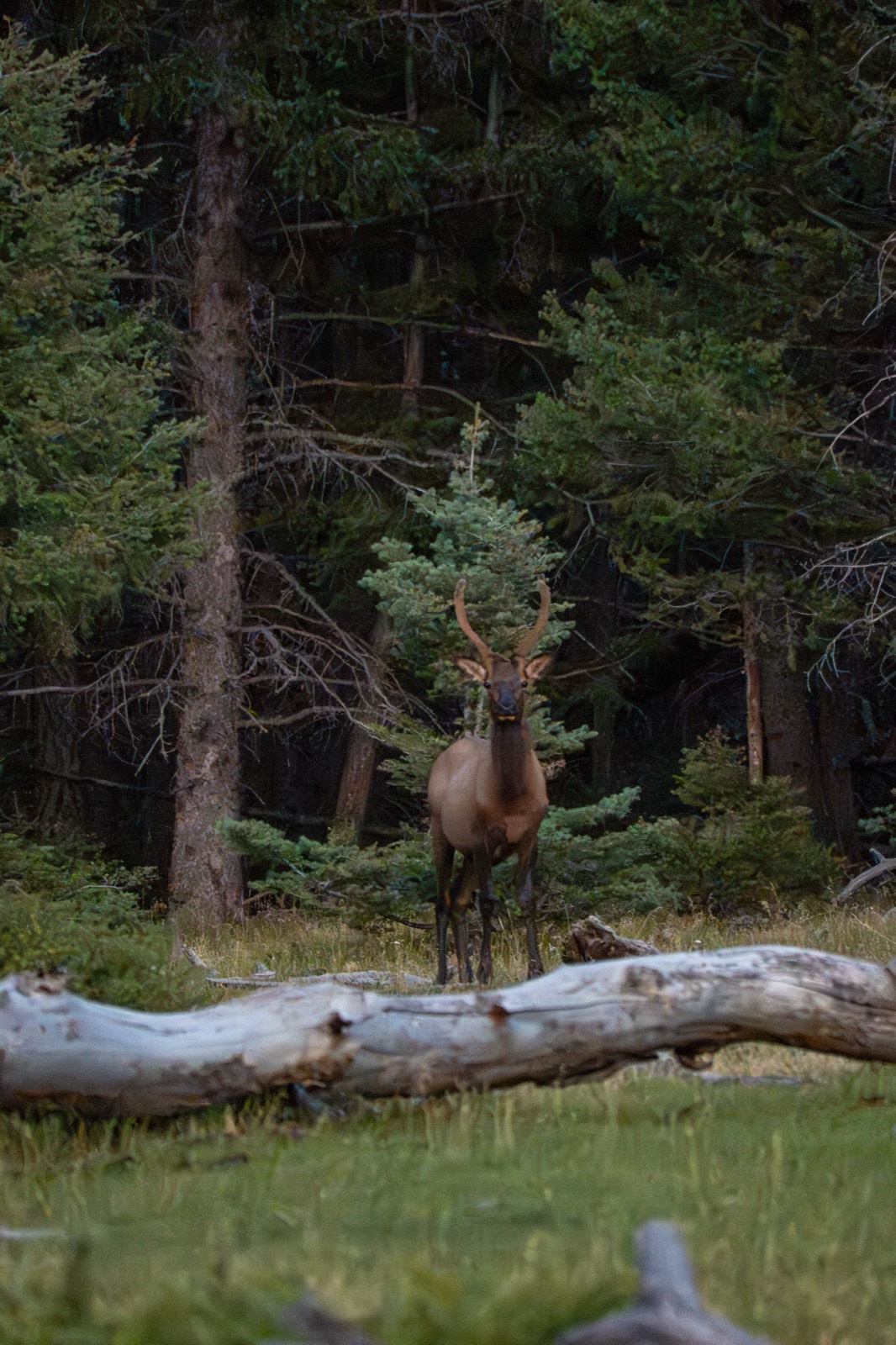
abundant opportunityThe marquee species and the backbone of the harvest — part of the White River herd, the largest migratory elk herd in North America, with constant movement off the adjacent Flat Tops. Bull elk are over-the-counter for second and third rifle seasons, so this compact unit is genuine elk opportunity, though success runs modest with pressure.
- →Hunt the timber-to-park transitions on the Dunkley and Beaver Flat Tops where elk feed and bed
- →Glass open flat-top parks and aspen edges at dawn and dusk
- →During the rut, work the aspen-and-conifer fringes and wallows with calling
- →Later rifle seasons: watch for elk pushing off the high flat tops toward the valley with snow
- →Sort public forest from Williams Fork private before you commit to a stand
Mule Deer
common qualityA fully limited-draw mule deer unit with quality potential, though the annual harvest is small — deer share the aspen-oakbrush-park mosaic with elk and much of the lower ground is private ranch. A points-to-draw tag rather than a high-volume one.
- →Glass aspen and oakbrush edges at first and last light
- →Bucks hold in aspen stringers and oak pockets through midday
- →Migration and rut bring mature bucks lower into accessible cover
- →Prioritize public forest benches over the private valley bottom
Moose
limited qualityThe greater Flat Tops moose population extends into the willow drainages and creek bottoms of the Little Flat Tops. Tags are very limited and hard to draw — a bonus, not a season plan — but moose habitat and animals are genuinely present.
- →Glass willow bottoms and beaver-pond complexes in the drainages
- →Still-hunt willow-and-timber edges slowly
- →Moose stay tied to wet drainages rather than the open parks
Black Bear
common opportunityBlack bears work the aspen and oakbrush country, keying on berries and mast in early fall — typical mountain-shrub habitat across the White River units.
- →Hunt aspen and oakbrush berry patches in early fall
- →Glass feeding bears at dawn and dusk on shrubby slopes
- →Usually an incidental opportunity while elk or deer hunting
Pro tips
- →OTC 2nd/3rd rifle in a small unit means pressure concentrates — hunt the timber and park edges away from roads
- →The Dunkley/Beaver Flat Tops parks are elk magnets; glass the transitions morning and evening
- →Verify Williams Fork Valley boundaries — the productive valley floor is largely private
- →Willow drainages hold the moose; glass them even while elk hunting
- →Watch for early snow to push elk off the high flat tops toward accessible lower ground
Watch out for
- !Meaningful private ranch ownership through the Williams Fork Valley — verify boundaries
- !State Trust Lands generally closed unless enrolled in the Public Access Program
- !Small unit concentrates OTC elk pressure
- !High-country snow can arrive early and make clay roads impassable
- !Early-season fire danger in dry years
Logistics
Meeker to the southwest and Yampa/Oak Creek to the northeast are the nearest supply points, with Steamboat Springs the larger hub for fuel, lodging, and processing. This is a small, high unit — plan for backcountry forest camps and self-sufficiency. Forest and clay roads turn greasy when wet; carry chains and recovery gear. Cell coverage is spotty to absent off the main roads.
Nearest towns: Meeker, Yampa, Oak Creek, Steamboat Springs
Seasons & regulations
This page carries no season dates or regulations. Get current rules from the official Colorado sources:
Research sources: CPW Big Game Hunting Statistics · CPW 2024 Big Game Regulations — OTC bull elk units (White River herd) · CPW Hunting Atlas — GMU 231 boundaries and public access · USFS Medicine Bow-Routt National Forest
FAQ
- How big is GMU 231 in Colorado?
- GMU 231 (GMU 231 — Routt/Rio Blanco/Garfield Co.) covers about 178 square miles, ranging from roughly 7,000 to 10,600 feet in elevation. Area is computed from the unit boundary polygon.
- How much public land is in GMU 231?
- Approximately 55% of the unit is public land. Primary managers: USFS Routt NF, private ranch (Williams Fork Valley), BLM, Colorado State Trust Land (generally closed unless in CPW Public Access Program). Always verify ownership boundaries on the ground.
- What species does the catalog list for GMU 231?
- Rocky Mountain Elk, Mule Deer, Moose, Black Bear. For seasons, tags, and regulations, use the official Colorado agency resources linked on this page — this page carries no regulatory information.
Put GMU 231 on your map.
Boundary lines, public/private ownership, topo, and offline maps for this unit — in Baseline Maps, free for 14 days.