GMU 74 GMU 74 — La Plata County/San Juan County Co.
Big-country elk in the alpine and dark timber above the Animas and Vallecito
Southwest Colorado — high San Juans north of Durango · Last reviewed 2026-07-12
Area
596
sq mi
Public land
70%
approx.
Elevation
7,000–13,000
feet
Motorized
limited
access
Overview
GMU 74 is a long, narrow, high-elevation unit running north from Durango up the spine of the San Juan Mountains in La Plata and San Juan Counties. The great majority of it is San Juan National Forest, much of it steep alpine and dark-timber backcountry along the flanks of the Weminuche Wilderness. Elk are the marquee resource and dominate the harvest by a wide margin, with mule deer a solid secondary species, and the surrounding high country holds some of Colorado's best-known bighorn sheep along with a small but growing Shiras moose presence. This is genuine mountain elk hunting — high public percentage, big vertical, and country that rewards fitness and good glass.
Terrain
Steep, high, and rugged — timbered river valleys climbing through aspen and spruce-fir to alpine basins, talus, and peaks along the western San Juans.
Cover: Ponderosa and oakbrush on the lower slopes, extensive aspen benches, dark spruce-fir and mixed conifer at mid-to-high elevation, and alpine tundra, willow, and rock above treeline.
Landmarks: Animas River valley · Vallecito Creek and Reservoir · Missionary Ridge · Weminuche Wilderness (edge) · Endlich Mesa · Florida River drainage
Access
A high-public unit — the bulk is San Juan National Forest, with the Weminuche Wilderness along the northern and eastern reaches (foot and horseback only, no motorized). Private ranch land is concentrated in the lower river valleys near Durango and around Vallecito, where much of the road access and winter range sits, so entry points into the public high country matter. State Trust Land is generally closed unless enrolled in CPW's Public Access Program. Success on the deep public here often means backpacking or packing in with stock.
Managers: USFS San Juan National Forest, Weminuche Wilderness (USFS), private ranch (lower valleys), Colorado State Trust Land (generally closed unless in CPW Public Access Program)
Access points: Vallecito Creek and Pine River trailheads · Missionary Ridge Road / FR access above the Animas and Florida · Endlich Mesa and Lemon Reservoir approaches · US-550 corridor north of Durango
Species notes
Rocky Mountain Elk
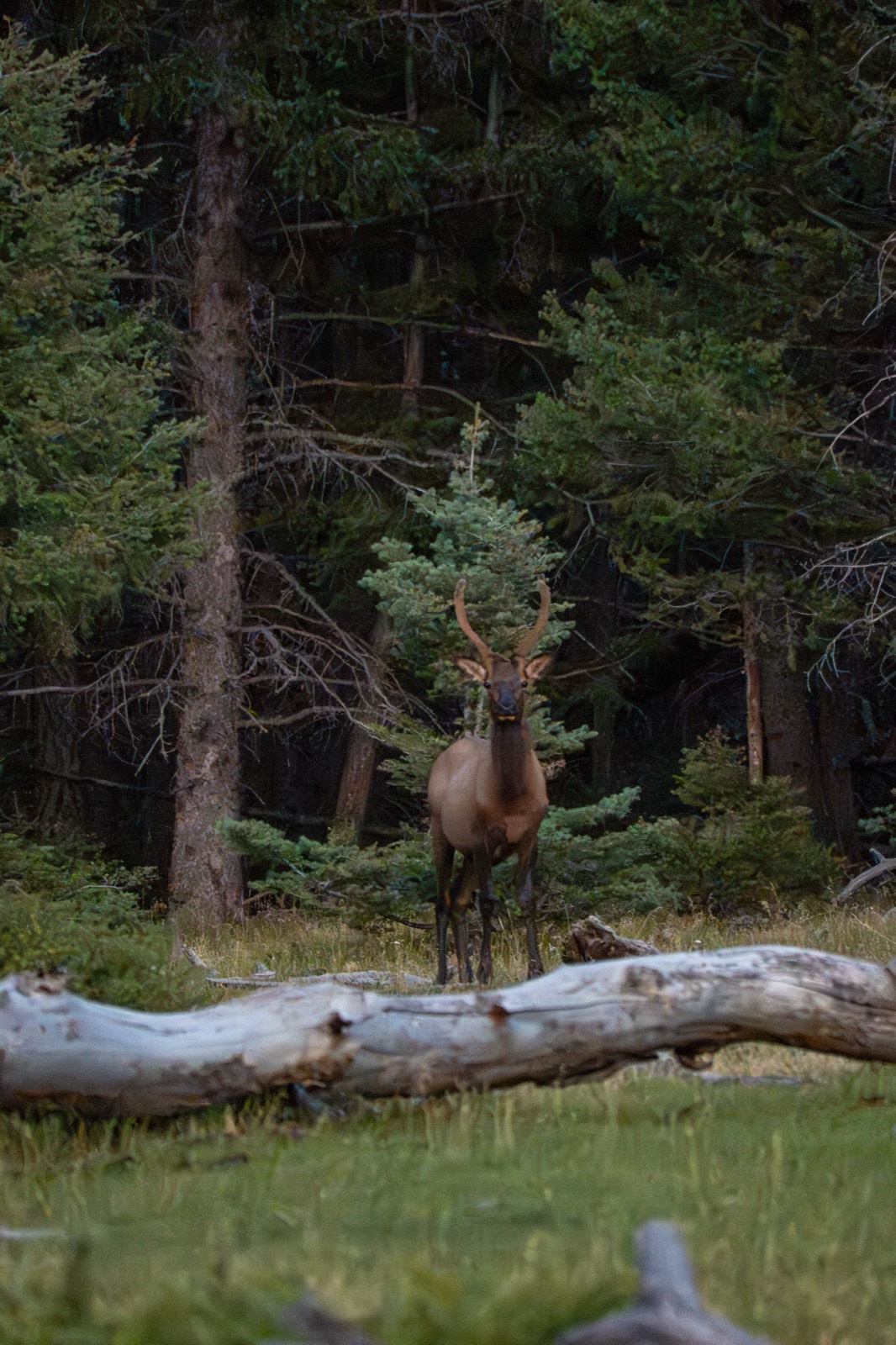
abundant qualityThe marquee species and the clear driver of the harvest — a strong high-country elk herd that summers in the alpine and timber and migrates down the drainages as snow builds. High harvest volume with respectable success on a mostly-public unit reflects good elk numbers and country that holds them. The San Juan Basin herd carries an over-the-counter bull component in some seasons, which is a big part of GMU 74's appeal.
- →Hunt the aspen-to-spruce transition and dark timber pockets where elk bed
- →Glass alpine basins and high parks at first and last light in early seasons
- →During the rut, work timbered benches and wallows with calling
- →Later rifle seasons: intercept migration down the Animas, Florida, and Vallecito drainages as snow pushes elk
- →Be willing to hike or pack in — the best elk are well off the roads
Mule Deer
common qualityA solid secondary species — mule deer use the oakbrush, aspen, and high basins and follow the same seasonal descent off the peaks as elk. Limited-draw, with success reflecting a healthy herd in classic San Juan high country.
- →Glass alpine and subalpine basins for high-summer bucks in early seasons
- →Work oakbrush and aspen edges at first and last light
- →Bucks migrate to lower country with snow — time later hunts to the movement
- →Focus on public benches with good glassing
Bighorn Sheep
limited trophyThe San Juans north of Durango hold some of Colorado's most notable Rocky Mountain bighorn sheep, using the alpine cliffs, talus, and high basins. A rare, hard-to-draw once-in-a-lifetime tag rather than a general opportunity, but the country is genuine sheep habitat.
- →Glass alpine cliff bands, talus, and high basins from long range
- →Sheep favor rugged escape terrain near feeding meadows
- →Serious boot-and-glass hunting at elevation for anyone lucky enough to draw
Moose
limited qualityShiras moose have established in the San Juan high country and use the willow-choked drainages, beaver ponds, and subalpine wetlands. Numbers are modest and tags very limited, but the habitat along the higher creek bottoms supports them.
- →Glass willow bottoms, beaver ponds, and subalpine meadows at dawn and dusk
- →Moose hold near water and dense willow
- →A tightly limited draw — scout wetland corridors if you're fortunate to hold a tag
Black Bear
common opportunityBlack bears work the oakbrush and berry country of the lower and mid slopes, concentrating on mast in early fall. Typically an incidental opportunity while elk or deer hunting.
- →Hunt oakbrush and berry patches on the lower slopes in early fall
- →Glass shrubby hillsides at dawn and dusk
- →Often taken opportunistically on an elk hunt
Pro tips
- →This is a fitness-and-glass elk unit — the payoff is on public high country well off the roads
- →Learn the trailheads into the Weminuche and the forest high basins; lower valley access is often private
- →Time later rifle hunts to the first real snows that trigger migration down the drainages
- →Wilderness portions are foot/horseback only — plan to backpack or pack in with stock
- →Respect the weather: high elevation, early snow, and fast-moving storms are the real challenge
Watch out for
- !Private ranch land in the lower valleys controls much of the easy access and winter range
- !Weminuche Wilderness is non-motorized — foot or horseback only
- !State Trust Land generally closed unless in CPW's Public Access Program
- !Serious high-elevation weather, early snow, and avalanche/slick-road hazards
- !Physically demanding country — many hunts require backpacking or stock
Logistics
Durango is the full-service hub — fuel, lodging, groceries, outfitters, and processing — with Bayfield closer to the Vallecito side. This is high, rugged country: many hunts require backpacking or stock, forest roads are steep dirt that turn treacherous with snow, and weather at elevation shifts fast and hard. Carry serious cold-weather and recovery gear and expect no cell coverage in the backcountry.
Nearest towns: Durango, Bayfield, Silverton (north end, seasonal)
Seasons & regulations
This page carries no season dates or regulations. Get current rules from the official Colorado sources:
Research sources: CPW GMU 74 boundary & unit description · Colorado Hunting Atlas (NDIS) · San Juan National Forest (USFS) · CPW Bighorn Sheep Conservation & Management (San Juans)
FAQ
- How big is GMU 74 in Colorado?
- GMU 74 (GMU 74 — La Plata County/San Juan County Co.) covers about 596 square miles, ranging from roughly 7,000 to 13,000 feet in elevation. Area is computed from the unit boundary polygon.
- How much public land is in GMU 74?
- Approximately 70% of the unit is public land. Primary managers: USFS San Juan National Forest, Weminuche Wilderness (USFS), private ranch (lower valleys), Colorado State Trust Land (generally closed unless in CPW Public Access Program). Always verify ownership boundaries on the ground.
- What species does the catalog list for GMU 74?
- Rocky Mountain Elk, Mule Deer, Bighorn Sheep, Moose, Black Bear. For seasons, tags, and regulations, use the official Colorado agency resources linked on this page — this page carries no regulatory information.
Put GMU 74 on your map.
Boundary lines, public/private ownership, topo, and offline maps for this unit — in Baseline Maps, free for 14 days.