Unit 150 District 150 (Region 1)
The heart of the Bob — South Fork Flathead wilderness elk, mule deer and color-phase bears by horseback
Bob Marshall Wilderness — Region 1 · Last reviewed 2026-07-12
Area
1,170
sq mi
Public land
98%
approx.
Elevation
3,500–9,000
feet
Motorized
wilderness
access
Overview
HD 150 lies almost entirely inside the Bob Marshall Wilderness along the upper South Fork of the Flathead, one of the largest roadless landscapes in the Lower 48. It is classic horseback wilderness hunting: draw-permit elk at low densities (roughly 200 counted in recent surveys), better mule deer than whitetail, and outstanding color-phase black bear. Cold winters and limited winter range keep numbers modest, but the setting, solitude and quality of the experience are unmatched.
Terrain
Vast wilderness drainage of the upper South Fork Flathead, from river bottoms near 3,500 ft to high limestone peaks along the Continental Divide and Swan Range crest above 9,000 ft.
Cover: Lodgepole and spruce-fir forest, extensive burns and regenerating brush, willow river bottoms, and open subalpine parks and scree at elevation.
Landmarks: Bob Marshall Wilderness · South Fork Flathead River · Spotted Bear River · Swan Range crest · Continental Divide · Chinese Wall (eastern Bob)
Access
Nearly all public USFS wilderness. Access is entirely non-motorized — foot or stock only from perimeter trailheads such as Spotted Bear and Meadow Creek, or by bush plane to a backcountry strip. Block Management does not apply; realistic hunts require horses or a very committed backpack effort, and many hunters use licensed wilderness outfitters.
Managers: USFS Flathead National Forest, Bob Marshall Wilderness (non-motorized)
Access points: Spotted Bear Ranger Station trailheads · Meadow Creek trailhead · Swan Range crest trails · Backcountry airstrips (Schafer Meadows area)
Species notes
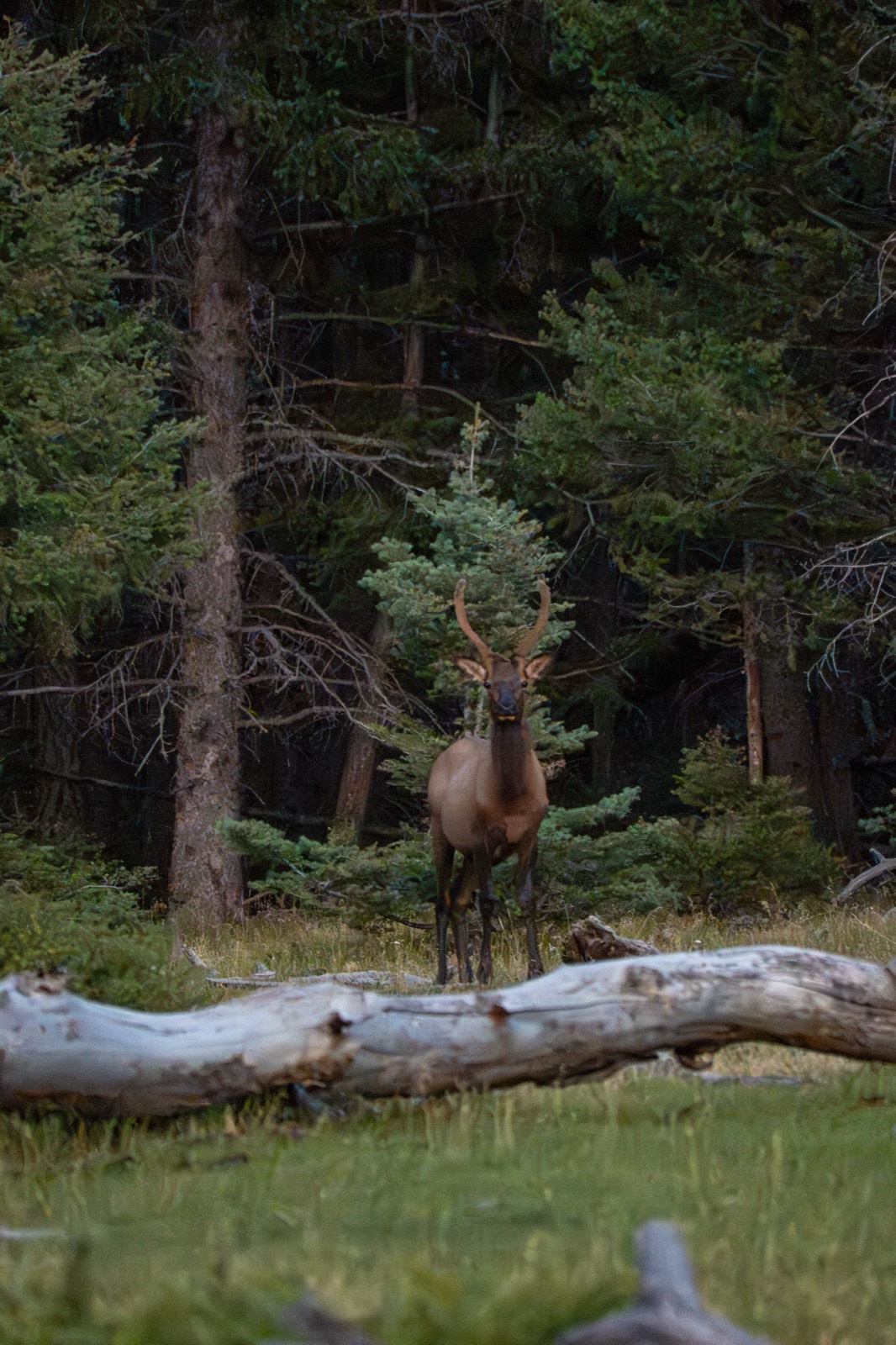
Rocky Mountain Elk
limited qualityLow-density wilderness elk on a special limited drawing permit (shared with HD 130); counts are near historic lows but undisturbed bulls reach maturity in the roadless interior.
- →Draw the permit and plan a horseback camp deep in the backcountry
- →Hunt the rut in September when bulls bugle in the timber parks
- →Glass burns, avalanche chutes and river benches at first light
- →Follow elk down to wintering bottoms as snow accumulates
Mule Deer
common qualityThe district favors mule deer over whitetail; bucks hold in the high basins and open ridges and drift lower with snow, offering a genuine backcountry buck hunt.
- →Glass high open parks and scree edges early season
- →Hunt the high country before storms, then follow deer to lower browse
- →Still-hunt timbered benches during the rut
- →Cover country on horseback to find undisturbed bucks
Whitetail Deer
limited opportunityCold, snowy winters and limited winter range hold whitetail numbers down; a few inhabit the lower South Fork bottoms.
- →Still-hunt willow and cottonwood river bottoms
- →Hunt low after snow
- →Treat as a bonus alongside mule deer and elk
Black Bear
common trophyExcellent black bear hunting with a high frequency of color-phase (brown, cinnamon, blonde) animals; grizzlies are also present throughout and demand careful identification.
- →Glass green avalanche slides and south faces in spring
- →Hunt huckleberry fields and burns in fall
- →Look for color-phase bears feeding on open slopes
- →Positively identify every bear before shooting — grizzlies share this range
Mountain Goat
limited trophyGoats hold along the high limestone cliffs and the Swan Range and Divide crest; a coveted draw-only trophy.
- →Glass high cliff bands and rock ledges
- →Commit to a multi-day stock-supported approach
- →Judge nannies vs billies carefully before the stalk
Moose
limited trophyShiras moose inhabit the willow bottoms and beaver complexes of the South Fork drainages; a rare limited-draw opportunity.
- →Hunt willow river bottoms and marshy park edges
- →Glass at dawn and dusk near water
- →Check beaver pond complexes along the drainages
Cougar
common opportunityLions follow the deer and elk through the wilderness drainages; a winter pursuit limited by access.
- →Cut tracks on fresh snow at accessible perimeter drainages
- →Hunt with hounds after storms
- →Focus deer wintering bottoms
Pro tips
- →This is a horseback wilderness hunt — budget for stock, an outfitter, or a very serious backpack effort
- →Draw the elk permit early and scout access routes; the interior is a multi-day trip from any trailhead
- →Target color-phase black bears on spring green-up and fall berry fields — a district specialty
- →Hunt mule deer high early, then follow snow down to wintering ranges
- →Carry bear spray, store food and meat properly, and stay alert — this is core grizzly country
- →Watch storms closely; early snow can strand stock and close the passes
Watch out for
- !Grizzly bears are common throughout the district — carry spray and manage camp and meat rigorously
- !Bob Marshall Wilderness is strictly non-motorized; stock or foot only, no vehicles or e-bikes
- !Elk require a special limited drawing permit (shared with HD 130)
- !Extreme remoteness and early, heavy snow — self-sufficiency is mandatory
Logistics
Stage from Hungry Horse or the Swan Valley (Condon/Seeley Lake) and reach the wilderness via the long Spotted Bear road or Swan Range trailheads. This is a stock-and-camp operation — plan a multi-day horseback trip or hire a licensed wilderness outfitter. Resupply and services are in Kalispell.
Nearest towns: Hungry Horse, Martin City, Condon, Seeley Lake, Kalispell
Seasons & regulations
This page carries no season dates or regulations. Get current rules from the official Montana sources:
Research sources: MTFWP Hunt Planner (Region 1) · MTFWP 2023 Montana Elk Counts (Bob Marshall / HD 150) · MTFWP Region 1 White-tailed Deer / Elk staff reports
FAQ
- How big is Unit 150 in Montana?
- Unit 150 (District 150 (Region 1)) covers about 1,170 square miles, ranging from roughly 3,500 to 9,000 feet in elevation. Area is computed from the unit boundary polygon.
- How much public land is in Unit 150?
- Approximately 98% of the unit is public land. Primary managers: USFS Flathead National Forest, Bob Marshall Wilderness (non-motorized). Always verify ownership boundaries on the ground.
- What species does the catalog list for Unit 150?
- Rocky Mountain Elk, Mule Deer, Whitetail Deer, Black Bear, Mountain Goat, Moose, Cougar. For seasons, tags, and regulations, use the official Montana agency resources linked on this page — this page carries no regulatory information.
Put Unit 150 on your map.
Boundary lines, public/private ownership, topo, and offline maps for this unit — in Baseline Maps, free for 14 days.