Unit 361 District 361 (Region 3)
Yellowstone's back door: mostly-public wilderness elk country with migration-driven hunting, thick grizzly presence and a hard-hunted crowd.
Hebgen–Upper Madison — Region 3 · Last reviewed 2026-07-12
Area
225
sq mi
Public land
85%
approx.
Elevation
6,400–11,000
feet
Motorized
moderate
access
Overview
HD 361 is the Hebgen Lake and upper Madison country in the far southwest corner of Region 3, wrapping the west boundary of Yellowstone National Park in Madison and Gallatin counties out to the Montana–Idaho line. It is overwhelmingly public — Custer Gallatin National Forest and the Lee Metcalf Wilderness (Taylor–Hilgard) around Hebgen and Earthquake (Quake) lakes — with elk and deer hunting driven by migration out of Yellowstone. Harvest has fallen sharply over recent years, widely tied to a heavy wolf and predator presence, and hunters here contend with high pressure near the park line and among the most frequent grizzly encounters of any Montana district.
Terrain
High mountain lakes and the upper Madison River basin ringed by steep, timbered and rocky ranges — the Lionhead, the Taylor–Hilgard peaks of the Madison Range, and the Henrys Lake Mountains along the Idaho line.
Cover: Lodgepole and Douglas-fir forest blanketing the slopes, spruce-fir and whitebark up high with alpine tundra on the peaks; sage and grass parks and willow bottoms around Hebgen Lake and the Madison River headwaters.
Landmarks: Hebgen Lake · Earthquake (Quake) Lake · Madison River headwaters · Lionhead area · Taylor–Hilgard (Lee Metcalf Wilderness) · Yellowstone National Park boundary
Access
This is a predominantly public district — Custer Gallatin National Forest (Hebgen Lake Ranger District) and the Lee Metcalf Wilderness cover most of the ground, so walk-on access is broad. Private land is limited to pockets around West Yellowstone, Hebgen Lake and the highway corridors; access is rarely the constraint here — grizzlies, pressure and migration timing are. No motorized travel in the wilderness.
Managers: USFS Custer Gallatin NF, Lee Metcalf Wilderness, private ranch + Block Management, MT DNRC state trust
Access points: US 191 corridor · US 287 / Hebgen Lake Road · Custer Gallatin forest roads around Hebgen Lake · Lionhead trailheads · Lee Metcalf Wilderness trailheads · West Yellowstone
Species notes
Rocky Mountain Elk
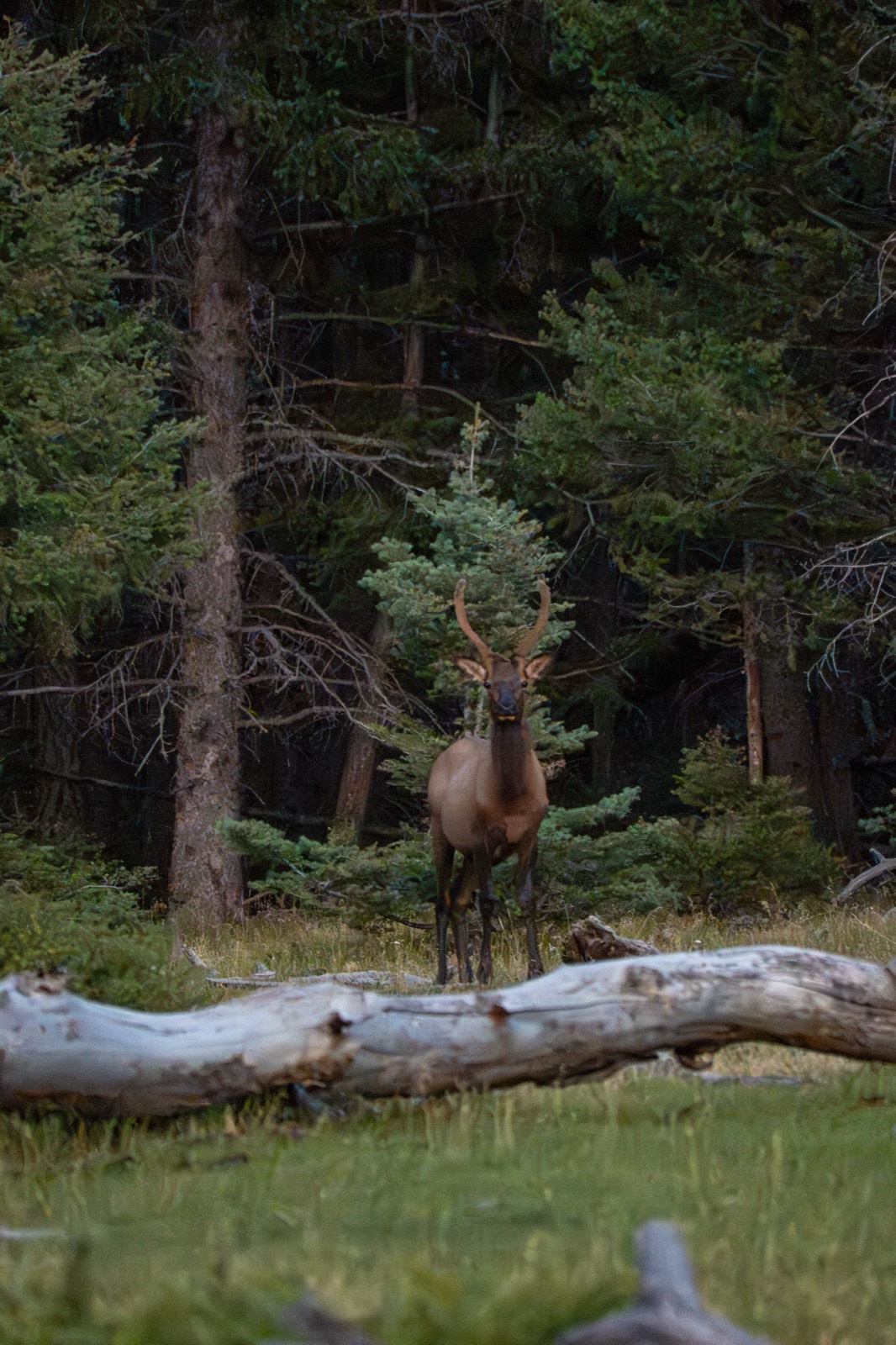
common opportunityElk hunting here hinges on migration out of Yellowstone, with hunters massing on the park's east edge to catch elk moving out under snow. Harvest has declined sharply over the past several years, generally attributed to the region's heavy wolf and predator load; resident elk are thinner and warier than the district's public acreage suggests.
- →Position near the park boundary and wait for snow to trigger the migration
- →Hunt the timber and travel corridors elk use leaving Yellowstone
- →Get away from the crowded highway and park-line access for less-pressured resident elk
- →Be prepared for weather-dependent timing — no snow means few migrating elk
Mule Deer
common opportunityMule deer use the open slopes, sage parks and high basins around Hebgen Lake and the surrounding ranges; a public-land opportunity hunt in steep, high country.
- →Glass open slopes and mountain parks early and late
- →Hunt the timber-to-alpine transition in the Lionhead and Taylor–Hilgard fringe
- →Get high and away from the road system for less-pressured bucks
Whitetail Deer
limited opportunityWhitetails are the minority deer here, holding in the willow and riparian bottoms around Hebgen Lake and the upper Madison River.
- →Hunt willow and cottonwood bottoms near the lake and river
- →Look for bucks in riparian cover during the November rut
Moose
limited qualityShiras moose inhabit the willow bottoms and wet timbered drainages of the upper Madison and Hebgen country; a limited, prized special-permit opportunity.
- →Hunt willow flats and beaver-pond drainages
- →Work wet timbered stringers off the Madison headwaters
- →Requires a special permit — plan around draw odds
Black Bear
common opportunityBlack bears use the heavy timber and berry-rich drainages, but this is core grizzly country on Yellowstone's doorstep — target identification is critical and encounters are frequent.
- →Glass avalanche chutes and green-up in spring
- →Check berry patches in the fall timber
- →Be absolutely certain of species before any shot — grizzlies are common and protected
Cougar
common opportunityMountain lions follow the deer and elk through the timbered mountains; a winter snow-tracking pursuit in the drainages around Hebgen Lake.
- →Cut tracks on forest roads after fresh snow
- →Focus on deer- and elk-wintering slopes near the lake and river bottoms
Pro tips
- →Success is weather-driven — plan to hunt when snow is pushing game out of Yellowstone, and be flexible on timing
- →Escape the park-line crowds by hunting resident game deeper in the Custer Gallatin backcountry
- →This is one of Montana's most active grizzly districts — carry bear spray, hunt in company, and get meat out fast
- →Prepare for deep snow, brutal cold and difficult roads at these elevations
- →Be scrupulous about bear identification given the grizzly density
Watch out for
- !Frequent grizzly encounters — this is core grizzly country on Yellowstone's edge; carry bear spray, be alert, and never leave a carcass unattended
- !Migration- and weather-dependent hunting — no snow can mean very few elk, and harvest has declined sharply in recent years
- !High hunter pressure concentrates along the park boundary during the migration
- !Deep snow, extreme cold and hazardous roads at high elevation late season
- !Know the exact Yellowstone National Park boundary — hunting inside the park is prohibited
Logistics
West Yellowstone in the southeast corner is the practical base, with lodging, fuel, guides and services; options thin quickly outside town. US 191 and US 287 provide the main access and forest roads reach much of the Hebgen country, but the Lee Metcalf Wilderness is foot-and-horse only. Expect deep snow and cold at these elevations; Bozeman airport is roughly two hours north.
Nearest towns: West Yellowstone, Cameron, Ennis
Seasons & regulations
This page carries no season dates or regulations. Get current rules from the official Montana sources:
Research sources: HuntScore — Montana HD 361 Hebgen–Upper Madison · Montana Elk Hunting Unit 361 — HuntInfo (migration, grizzly encounters, declining harvest) · Custer Gallatin National Forest — Hebgen Lake Ranger District · Montana Hunt District 361 Unit Profile — GoHunt
FAQ
- How big is Unit 361 in Montana?
- Unit 361 (District 361 (Region 3)) covers about 225 square miles, ranging from roughly 6,400 to 11,000 feet in elevation. Area is computed from the unit boundary polygon.
- How much public land is in Unit 361?
- Approximately 85% of the unit is public land. Primary managers: USFS Custer Gallatin NF, Lee Metcalf Wilderness, private ranch + Block Management, MT DNRC state trust. Always verify ownership boundaries on the ground.
- What species does the catalog list for Unit 361?
- Rocky Mountain Elk, Mule Deer, Whitetail Deer, Moose, Black Bear, Cougar. For seasons, tags, and regulations, use the official Montana agency resources linked on this page — this page carries no regulatory information.
Put Unit 361 on your map.
Boundary lines, public/private ownership, topo, and offline maps for this unit — in Baseline Maps, free for 14 days.