Unit 425 District 425 (Region 4)
The Sun River Wildlife Management Area unit northwest of Augusta — winter refuge for the Sun River elk herd and one of Montana's hardest elk permits to draw.
Sun River / Rocky Mountain Front — Region 4 · Last reviewed 2026-07-12
Area
143
sq mi
Public land
40%
approx.
Elevation
4,300–8,000
feet
Motorized
moderate
access
Overview
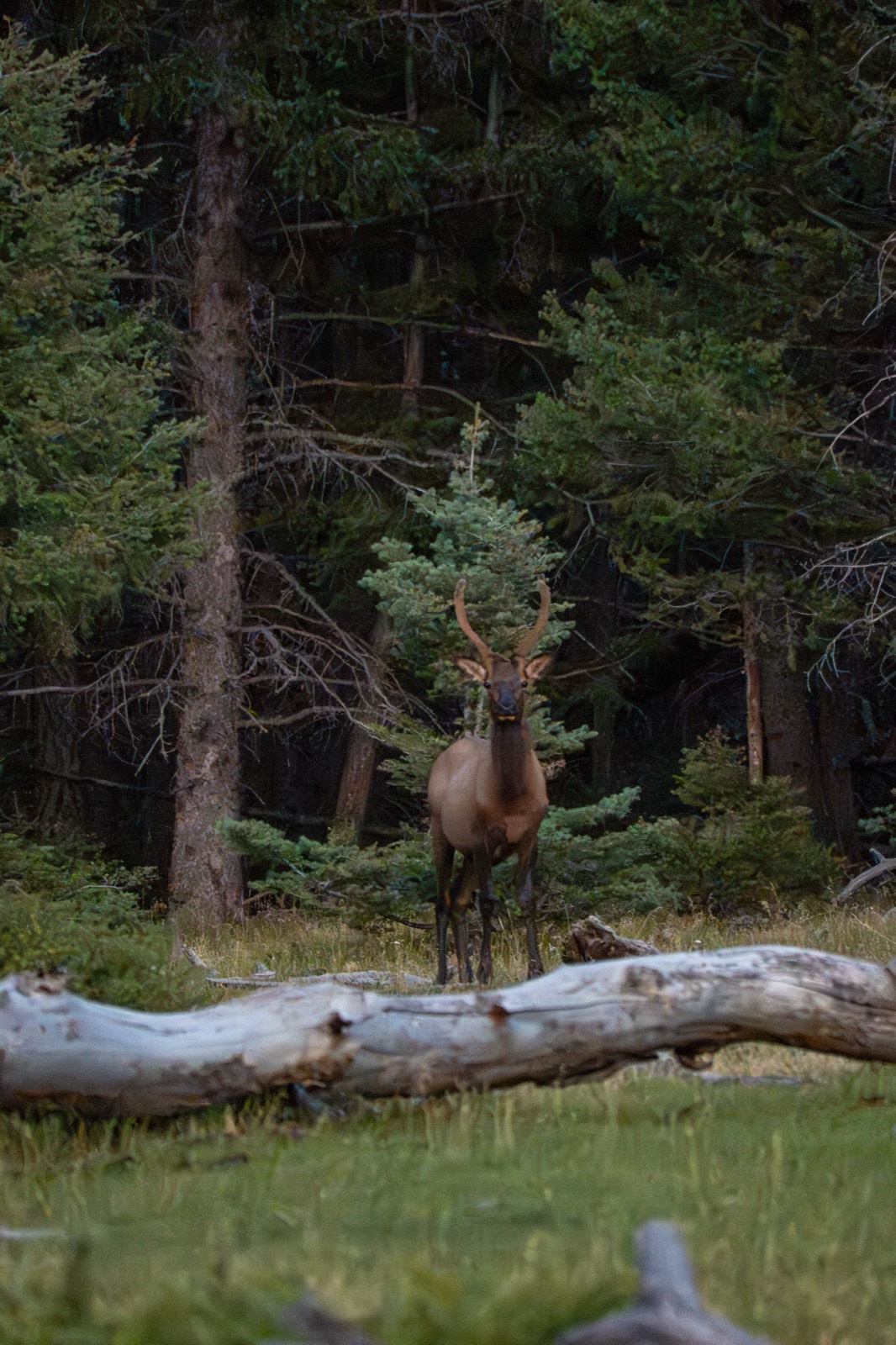
District 425 sits on the Rocky Mountain Front northwest of Augusta and is defined by the Sun River Wildlife Management Area, the roughly 19,700-acre foothill winter range where up to 95 percent of the Sun River elk herd concentrates in winter. It is one of the three core units (with 424 and 442) of that stable ~2,300-head herd. The full-district elk permit (425-20) is famously long odds — recent years drew hundreds of applicants for a handful of tags — because the WMA and neighboring ranches act as a refuge for elk migrating out of the Bob Marshall complex, and finding a mature bull is very weather-dependent. Beyond the trophy elk, the unit offers mule deer, whitetail in the bottoms, pronghorn on the grassland edge, and Front bighorn, all in grizzly country.
Terrain
Intermountain foothill grassland on the eastern slope of the Front — significant grass range, browse meadows, riparian zones and rocky ground rising from the plains to the first limestone reefs of the Sawtooth Range.
Cover: Rough-fescue and bunchgrass foothill grassland, browse meadows, willow and cottonwood riparian along the Sun River, and scattered timber and rocky barren ground toward the reefs.
Landmarks: Sun River Wildlife Management Area · Sun River · Sawtooth Range front reefs · Willow Creek Reservoir · Ear Mountain (nearby) · Rocky Mountain Front
Access
The Sun River WMA is the public anchor of the district — about 19,700 acres of state wildlife land 9 miles northwest of Augusta — but it is open only noon May 15–December 1, a winter closure that protects the wintering elk and shrinks in-season hunting access. Surrounding the WMA is a patchwork of large private ranches, some enrolled in FWP's Block Management program for free public hunting, plus DNRC state trust parcels and a strip of National Forest to the west. Line up Block Management maps and ranch permission before the hunt.
Managers: MT FWP (Sun River WMA), private ranch + Block Management, MT DNRC state trust, USFS Helena-Lewis & Clark NF
Access points: Augusta staging town (WMA is ~9 miles northwest) · Sun River WMA travel-plan access roads (seasonal) · Willow Creek Road / foothill county roads · Block Management sign-in boxes on Front ranches
Species notes
Rocky Mountain Elk
abundant trophyThe marquee species — the Sun River herd winters heavily on the WMA, and the full-district permit (425-20) is one of the state's hardest elk draws. Mature bulls come off the Bob Marshall refuge, so success is highly weather-dependent.
- →Draw permit 425-20 first — it is a long-odds, once-in-a-lifetime-caliber tag
- →Time the hunt to cold, snowy weather that pushes wintering bulls onto the WMA and foothills
- →Glass the grass benches and browse meadows at first and last light
- →Watch the WMA's December 1 closure and hunt the surrounding ranch/BMA ground when elk shift
Mule Deer
common qualityFoothill mule deer use the reef faces, coulees and grass benches; Front numbers run near average with above-average buck-to-doe ratios. Bucks-only on the Forest, either-sex off it.
- →Glass reef faces, coulees and browse benches early and late
- →Hunt the higher open country before storms move deer down
- →Focus mixed timber-and-grass draws during the rut
Whitetail Deer
common opportunityWhitetails hold the Sun River bottom and irrigated ag edges; regional numbers are strong and an over-the-counter antlerless B license adds opportunity.
- →Still-hunt cottonwood and willow river bottoms at dawn and dusk
- →Watch ag-field and timber edges during the November rut
- →Work Block Management bottomland for public access
Pronghorn
common opportunityAntelope use the open foothill grassland along the eastern edge of the unit; a limited-draw opportunity tied to Front antelope numbers.
- →Glass big open grass benches from county-road vantage points
- →Spot-and-stalk using coulees and terrain folds for cover
- →Hunt water and fence-line movement in warm early weather
Bighorn Sheep
limited trophyThe Front's limestone reefs hold premier bighorn; a hard-to-draw, once-in-a-lifetime tier hunt rather than a general opportunity.
- →Apply for the limited permit and glass the reef escarpments and canyon rims
- →Look for rams on steep limestone along the Sawtooth front
- →Lean on local knowledge — rams range widely along the Front
Black Bear
common opportunityBlack bear use the timber and brush against the reefs. Grizzlies frequent the WMA and Front foothills — the WMA even enforces food-storage rules — so identification is critical.
- →Glass green slopes and brush pockets against the timber in spring
- →Positively identify species before any shot — grizzlies are common and protected here
- →Follow WMA food-storage requirements and carry bear spray
Pro tips
- →The 425-20 permit is the whole ballgame — apply and understand the long odds
- →If you draw, hunt the coldest, snowiest window you can and glass the WMA benches
- →Build a Block Management and ranch-permission plan for when elk move off the WMA
- →Respect the WMA's Dec 1–May 15 closure and posted travel plan
- →Carry bear spray, follow food-storage rules, and identify every bear as a possible grizzly
Watch out for
- !Grizzly country — the WMA and Front foothills have frequent grizzly activity and food-storage rules
- !Sun River WMA is closed December 1–May 15, limiting late-season public access
- !Large private ranches gate much of the foothill ground outside Block Management
- !Fast-changing Front weather and gumbo roads when wet
Logistics
Augusta, about 9 miles southeast of the WMA, is the staging town with fuel, a store and lodging; Great Falls (roughly an hour east) is the full-service base and airport. WMA access follows a posted travel plan with designated roads, parking and camping, and is only available noon May 15–December 1.
Nearest towns: Augusta, Choteau, Great Falls
Seasons & regulations
This page carries no season dates or regulations. Get current rules from the official Montana sources:
Research sources: North-central Montana Big Game Forecast (Region 4) — Montana FWP · Sun River Wildlife Management Area — Montana FWP · Tough Tags: Montana's 5 hardest elk permits to draw — Helena IR
FAQ
- How big is Unit 425 in Montana?
- Unit 425 (District 425 (Region 4)) covers about 143 square miles, ranging from roughly 4,300 to 8,000 feet in elevation. Area is computed from the unit boundary polygon.
- How much public land is in Unit 425?
- Approximately 40% of the unit is public land. Primary managers: MT FWP (Sun River WMA), private ranch + Block Management, MT DNRC state trust, USFS Helena-Lewis & Clark NF. Always verify ownership boundaries on the ground.
- What species does the catalog list for Unit 425?
- Rocky Mountain Elk, Mule Deer, Whitetail Deer, Pronghorn, Bighorn Sheep, Black Bear. For seasons, tags, and regulations, use the official Montana agency resources linked on this page — this page carries no regulatory information.
Put Unit 425 on your map.
Boundary lines, public/private ownership, topo, and offline maps for this unit — in Baseline Maps, free for 14 days.