Unit 102 High Uintas Kamas
Timbered western Uintas rising from Kamas to the Mirror Lake high country
Northern Utah — Western High Uintas / Kamas Valley · Last reviewed 2026-07-12
Area
311
sq mi
Public land
63%
approx.
Elevation
6,500–11,500
feet
Motorized
moderate
access
Overview
The High Uintas Kamas unit covers the west end of the Uinta Mountains above the Kamas Valley — dense lodgepole and spruce-fir timber climbing to alpine basins along the Mirror Lake Highway (SR-150) and into the High Uintas Wilderness. It is a general-season deer and elk unit where the challenge is heavy timber, plentiful hunters, and hard-hunting elk rather than a lack of animals. Mule deer and Rocky Mountain elk are the mainstays, with a genuine western-Uintas moose presence and healthy black bear and cougar populations.
Terrain
Steep timbered ridges and glaciated canyons on the west slope of the Uintas, rising from the Kamas Valley and West Hills to alpine lake basins and wilderness peaks along the Mirror Lake corridor.
Cover: Sagebrush and aspen on the lower benches, dense lodgepole pine and spruce-fir across the mid and upper slopes, willow-lined drainages and beaver meadows, and open alpine tundra above timberline.
Landmarks: Mirror Lake Highway (SR-150) · High Uintas Wilderness · Bald Mountain · Provo River headwaters · Weber River · Kamas Valley · Jordanelle Reservoir
Access
The Uinta-Wasatch-Cache National Forest makes up the bulk of the unit and is well served by the paved Mirror Lake Highway plus numerous forest roads and trailheads; the High Uintas Wilderness on the eastern side is foot/horse access only. The Kamas Valley floor and lower benches are largely private, so most hunters access the mountains from the SR-150 corridor and Forest Service side roads. About 63% of the unit is public.
Managers: USFS Uinta-Wasatch-Cache NF, private, SITLA, BLM
Access points: Mirror Lake Highway (SR-150) · Upper Setting / Beaver Creek roads · Soapstone Basin Road · Norway Flat / Whitney Reservoir · Smith and Morehouse · High Uintas Wilderness trailheads
Species notes
Mule Deer
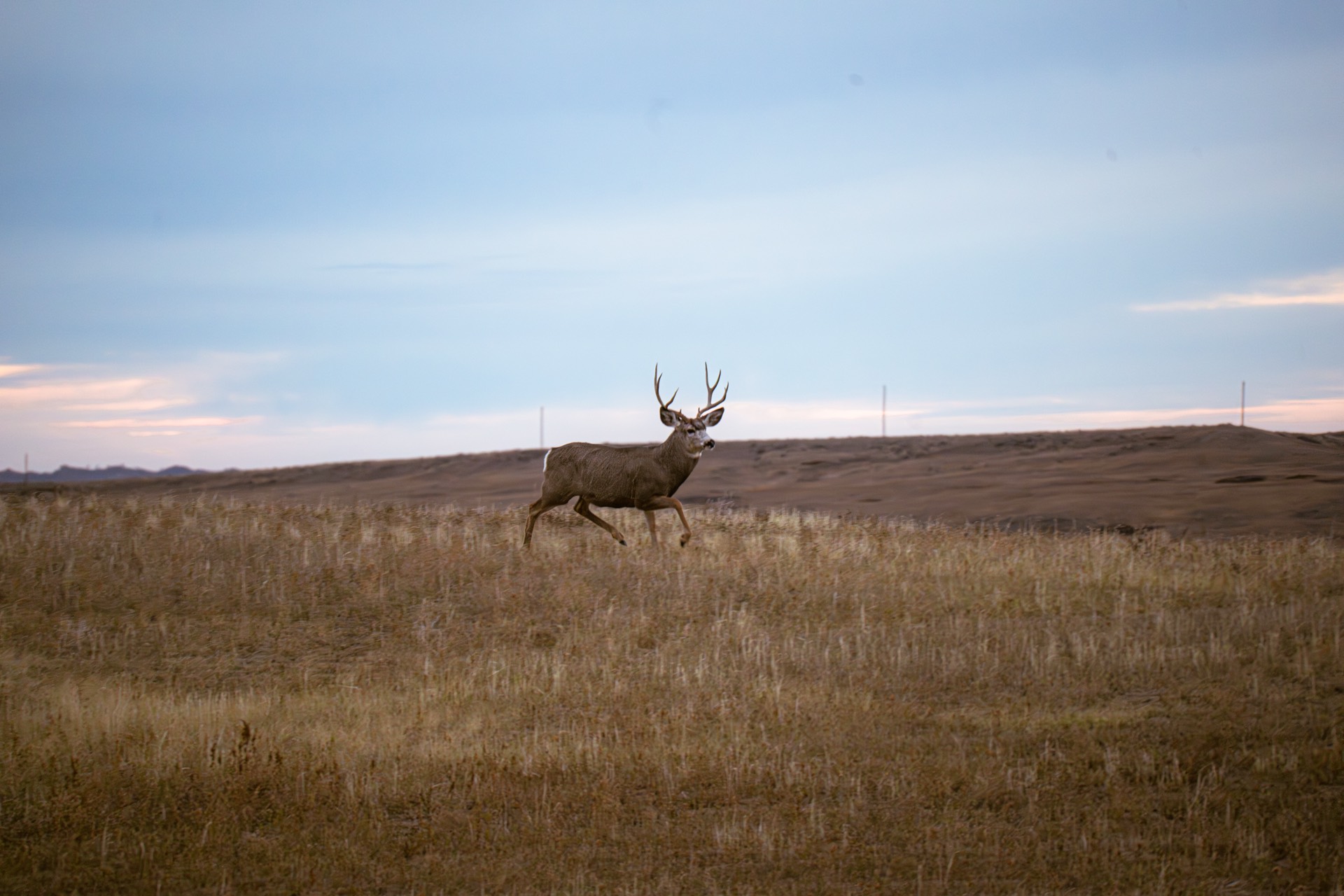
common opportunityGeneral-season mule deer are well distributed through the aspen-conifer transition and high basins; bucks tend to be young in a high-pressure general unit, but the wilderness and remote timber pockets hold mature deer for those who get away from the road.
- →Hunt aspen-conifer edges and high open parks at dawn and dusk
- →Get a drainage or two beyond the Mirror Lake Highway trailheads to escape crowds
- →Watch for a weather-driven migration pushing deer off the high basins later in the season
- →Glass burns, avalanche chutes and meadow fringes for feeding deer
Rocky Mountain Elk
common opportunityElk are widely distributed across the unit but success is typically low — dense timber and heavy hunter numbers let bulls disappear into the black timber. Persistence, deep access, and calling the timber edges pay off.
- →Work the dark timber and its edges; still-hunt into the wind through lodgepole benches
- →Push into wilderness or back-road drainages away from SR-150 pressure
- →Locate elk in high meadows early season, then follow them into thick cover as pressure builds
- →Set up on wallows and travel routes between bedding timber and meadow feed
Moose
limited qualityThe western Uintas hold a genuine Shiras moose population in the willow bottoms and beaver meadows; a limited-entry tag here is a coveted, quality opportunity.
- →Glass willow-choked drainages, beaver ponds and riparian meadows morning and evening
- →Focus the Provo and Weber headwater bottoms and alpine lake outlets
- →Move slowly and glass — moose hold in thick willows and travel little
Black Bear
common opportunityBlack bears use the timbered west-slope drainages and aspen benches, feeding on berries and forbs.
- →Glass avalanche chutes, oak/serviceberry patches and aspen edges for feeding bears
- →Focus riparian corridors and north-slope timber where forage and shade concentrate
Cougar
common opportunityCougars follow the healthy deer herds through the timbered canyons; winter tracking snow along the SR-150 corridor and side roads is the usual approach.
- →Cut fresh tracks on forest roads and drainage bottoms after snow
- →Hunt where deer concentrate on winter transitional range
Pro tips
- →Get off the Mirror Lake Highway — the deeper you access, the less competition and the better the animals
- →Hunt the dark timber for elk; they vanish into it under pressure
- →Scout the aspen-conifer transition and high parks pre-season for deer patterns
- →Willow bottoms and beaver meadows are the moose ticket if you draw the tag
- →Watch the forecast — an early storm can concentrate animals and make the hunt
Watch out for
- !Private land across the Kamas Valley floor and lower benches — verify access
- !Heavy hunter numbers on a popular general-season unit
- !Early snow and cold at high elevation; roads can become impassable
- !High Uintas Wilderness is non-motorized — plan foot/horse access
- !Dense timber makes tracking and recovery difficult
Logistics
Kamas is the gateway town for gas, food and last-minute supplies, with fuller services in Heber City and Park City nearby. Dispersed camping is abundant along the Mirror Lake Highway and Forest Service roads, plus developed campgrounds. Salt Lake City is roughly an hour west. High trailheads can hold snow into fall.
Nearest towns: Kamas, Oakley, Francis, Heber City, Park City
Seasons & regulations
This page carries no season dates or regulations. Get current rules from the official Utah sources:
Research sources: UDWR Hunt Planner — Kamas General Season Buck Deer · GOHUNT — Utah Kamas Unit Profile · UDWR — Maps and boundaries
FAQ
- How big is Unit 102 in Utah?
- Unit 102 (High Uintas Kamas) covers about 311 square miles, ranging from roughly 6,500 to 11,500 feet in elevation. Area is computed from the unit boundary polygon.
- How much public land is in Unit 102?
- Approximately 63% of the unit is public land. Primary managers: USFS Uinta-Wasatch-Cache NF, private, SITLA, BLM. Always verify ownership boundaries on the ground.
- What species does the catalog list for Unit 102?
- Mule Deer, Rocky Mountain Elk, Moose, Black Bear, Cougar. For seasons, tags, and regulations, use the official Utah agency resources linked on this page — this page carries no regulatory information.
Put Unit 102 on your map.
Boundary lines, public/private ownership, topo, and offline maps for this unit — in Baseline Maps, free for 14 days.