Unit 616 Nebo
The rugged southern crest of the Wasatch Range crowned by 11,928-foot Mount Nebo — a steep general-season deer unit that also holds a coveted once-in-a-lifetime mountain-goat herd and trophy-managed bull elk
Central Utah — Southern Wasatch / Mount Nebo · Last reviewed 2026-07-12
Area
1,475
sq mi
Public land
80%
approx.
Elevation
4,600–11,928
feet
Motorized
moderate
access
Overview
The Nebo unit wraps the southern end of the Wasatch Range around Mount Nebo (11,928 ft), the range's highest summit, spanning parts of Juab, Utah and Sanpete counties from Spanish Fork Canyon south past Nephi. It is a big, steep, timbered mountain unit hunted hard as a general-season mule deer area, but it carries far more prestige as home to a small once-in-a-lifetime mountain-goat herd on the Nebo massif and a limited-entry elk hunt managed for mature bulls. Moose, black bear and cougar round out the game. Access is overwhelmingly public — Uinta-Wasatch-Cache and Manti-La Sal national-forest ground laced by the Nebo Loop and canyon roads — but the mountain is genuinely rugged.
Terrain
From valley floors near 4,600 ft along I-15 and the Sanpete side up to the 11,928-ft summit of Mount Nebo — the tallest peak in the Wasatch. Steep, deeply cut canyons, big timbered ridges and a jagged alpine crest at the north end of the massif.
Cover: Sagebrush, oak brush and maple on the lower foothills; thick stands of aspen, Douglas-fir and spruce-fir on the mid and upper slopes; alpine tundra, cliffs and talus on the highest ground where the goats live. Dense timber and brush make for slow, physical hunting.
Landmarks: Mount Nebo (11,928 ft) · Nebo Loop Scenic Byway · Payson Canyon / Payson Lakes · Salt Creek Canyon (Nephi) · Mona Reservoir · Santaquin Canyon · Spanish Fork Canyon (US-6/US-89)
Access
Most of the high country is national forest with excellent trail and road access, anchored by the paved Nebo Loop between Payson and Nephi and by side canyons off I-15. Private ground and orchards ring the foothills near Payson, Santaquin, Mona and Nephi — get onto the forest before hunting. SITLA state-trust sections are scattered through the unit and are open to hunting. The Mount Nebo Wilderness protects the alpine crest, so the best goat and high-buck country is foot/horse access only.
Managers: USFS (Uinta-Wasatch-Cache NF), USFS (Manti-La Sal NF), BLM, SITLA, private
Access points: Nebo Loop Scenic Byway (Payson to Nephi) · Payson Canyon / Payson Lakes trailheads · Salt Creek Canyon out of Nephi · Santaquin Canyon · Mona / Mount Nebo Wilderness trailheads (Andrews Ridge, North Peak) · US-6 through Spanish Fork Canyon
Species notes
Mule Deer
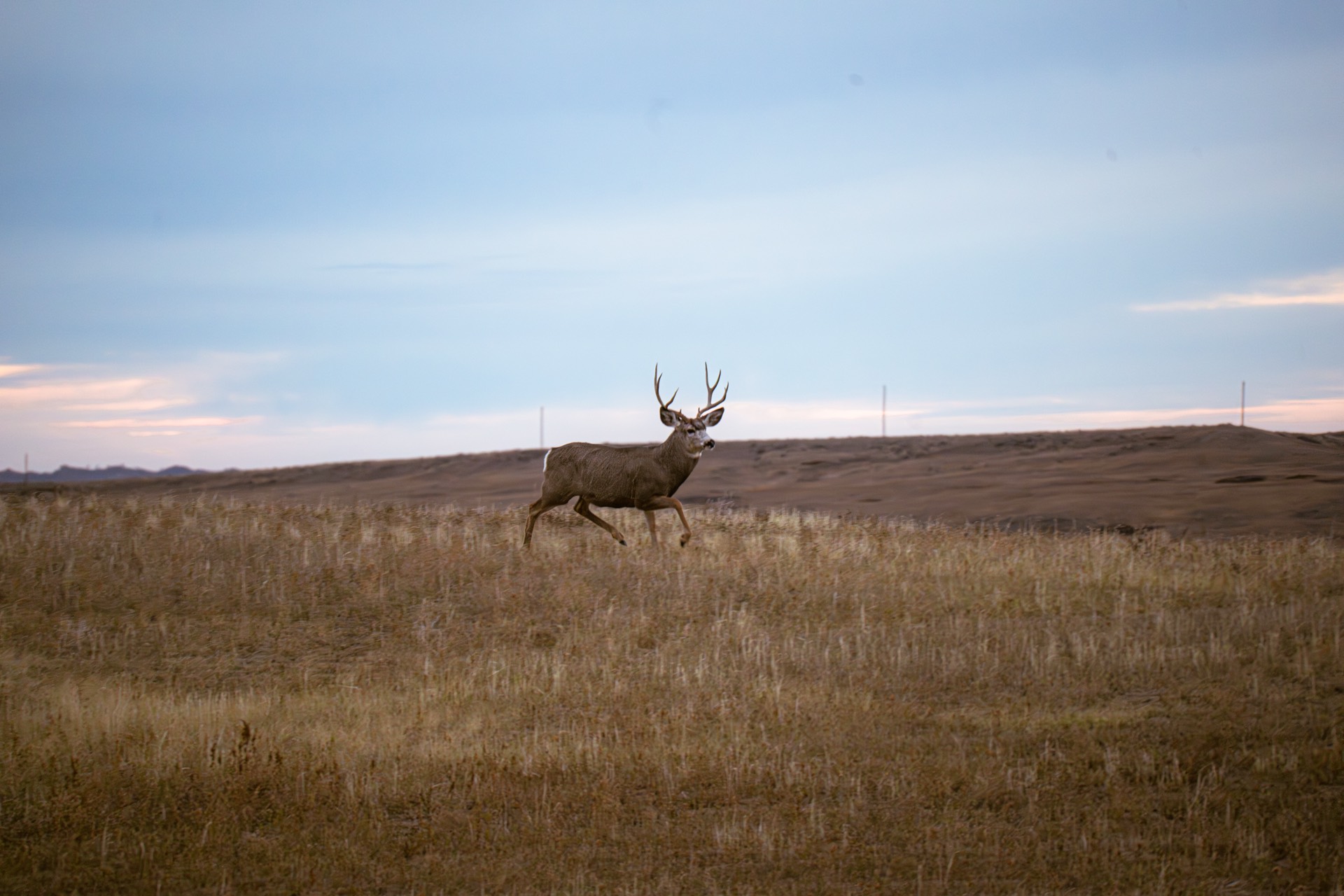
common opportunityA general-season deer unit that draws heavy pressure given its proximity to the Wasatch Front. Deer are plentiful but most bucks are young; mature deer survive in the steepest, thickest canyon and timber pockets away from the roads and the crowds.
- →Get well off the Nebo Loop and canyon roads into the steep oak-and-aspen benches where pressured bucks hide
- →Glass avalanche chutes, timber edges and high basins at first and last light
- →Hunt the thick stuff mid-day — mature bucks bed in near-impenetrable brush
- →Late seasons pull deer down onto the lower foothills as snow builds
Mountain Goat
limited trophyThe Mount Nebo massif holds a small, established Rocky Mountain goat herd. Tags are once-in-a-lifetime and among the hardest draws in Utah — only a handful of permits against hundreds of applicants — but successful hunters take mature billies in spectacular alpine terrain.
- →Glass the cliffs, talus and alpine benches of the Nebo crest and North Peak from long range
- →Plan a physical backpack or horse hunt into the wilderness — the goats live above the roads
- →Locate and judge billies well before the hunt; herds are small and localized
- →Be ready for early snow and exposed high-angle terrain
Rocky Mountain Elk
common qualityElk are hunted here on a limited-entry basis and the unit is managed toward mature bulls, so drawn hunters have a real shot at a good six-point. Numbers are solid across the timbered mid-elevations.
- →Work the aspen-conifer edges, dark timber and high meadows early and late in the day
- →During the rut, locate bulls by bugling along the timbered ridgelines
- →Push into the roadless drainages where bulls escape pressure
- →Focus on north-facing timber and springs in warm early-season conditions
Moose
limited qualityShiras moose inhabit the aspen-willow drainages and riparian bottoms of the Nebo high country. Tags are once-in-a-lifetime and limited, but bulls are present for the fortunate few who draw.
- →Hunt willow-choked creek bottoms, beaver ponds and aspen pockets at dawn and dusk
- →Glass the wet meadows and drainage heads on the forested slopes
- →Move slowly and quietly through the riparian corridors where bulls hold
Black Bear
common opportunityBlack bears use the thick oak-brush and timbered canyons across the unit, feeding heavily on acorns and berries in fall. Numbers are healthy though bears are seldom seen given the dense cover.
- →Focus on oak-brush benches and berry patches in early fall
- →Glass avalanche chutes and open slopes at dawn and dusk
- →Check spring green-up on south faces for early-season bears
Cougar
common opportunityMountain lions are well-distributed across the deer-rich canyons of the Nebo unit but rarely observed. Winter offers the best odds behind hounds on fresh snow.
- →Cut fresh tracks on snow along canyon roads and ridgelines after a storm
- →Concentrate on the steep, deer-heavy drainages where cats hunt
- →Work with experienced hound handlers for consistent success
Pro tips
- →Escape the crowds by hiking into the roadless timber and wilderness — general-season pressure is heavy near the Nebo Loop and canyon roads
- →For goats, glass the Nebo crest for weeks ahead of the hunt to pin down mature billies in specific alpine pockets
- →Hunt the thick oak and aspen mid-day; the biggest bucks rarely leave heavy cover in daylight
- →Time late-season deer hunts to the first big snows that shove deer onto the lower foothills
- →Carry good optics — a lot of this unit is glassed across canyons rather than still-hunted
Watch out for
- !Heavy general-season deer pressure near the road system
- !Private ground and orchards ring the foothills — get onto the forest before hunting
- !Steep, exposed alpine terrain and early snow on the Nebo crest
- !Dense timber and brush make for slow going and tough recoveries
- !Fire closures possible in dry late-summer conditions
- !Afternoon thunderstorms on the exposed high peaks
Logistics
The Wasatch Front puts full services within easy reach — Payson, Spanish Fork, Santaquin and Nephi all sit along I-15 with fuel, lodging, groceries and gear. Camping is abundant on the national forest, with developed sites along the Nebo Loop and dispersed spots up the canyons. High-clearance and 4WD help on the steeper forest roads, and the paved loop makes the core of the unit easy to reach. Cell coverage is decent near the towns and I-15 but drops off in the deep canyons and on the mountain.
Nearest towns: Payson, Santaquin, Nephi, Mona, Spanish Fork
Seasons & regulations
This page carries no season dates or regulations. Get current rules from the official Utah sources:
Research sources: UDWR Big Game Application Guidebook 2026 · UDWR Mountain Goat Unit Management Plan — Wasatch and Central Mountains · GOHUNT — Utah bighorn sheep, moose, mountain goat application strategy (Nebo goat tags) · USFS Uinta-Wasatch-Cache National Forest — Mount Nebo Wilderness
FAQ
- How big is Unit 616 in Utah?
- Unit 616 (Nebo) covers about 1,475 square miles, ranging from roughly 4,600 to 11,928 feet in elevation. Area is computed from the unit boundary polygon.
- How much public land is in Unit 616?
- Approximately 80% of the unit is public land. Primary managers: USFS (Uinta-Wasatch-Cache NF), USFS (Manti-La Sal NF), BLM, SITLA, private. Always verify ownership boundaries on the ground.
- What species does the catalog list for Unit 616?
- Mule Deer, Mountain Goat, Rocky Mountain Elk, Moose, Black Bear, Cougar. For seasons, tags, and regulations, use the official Utah agency resources linked on this page — this page carries no regulatory information.
Put Unit 616 on your map.
Boundary lines, public/private ownership, topo, and offline maps for this unit — in Baseline Maps, free for 14 days.