Unit 902 Valley Mtns
A low, dry pinyon-juniper range walled between the Sevier and Sanpete valleys — quiet mule deer country and important winter range with easy public access.
Central Utah — Valley Mountains (Scipio–Gunnison) · Last reviewed 2026-07-12
Area
413
sq mi
Public land
60%
approx.
Elevation
5,200–8,300
feet
Motorized
moderate
access
Overview
The Valley Mountains are a modest, semi-arid range in central Utah running north–south between Scipio and the Sevier River valley on the west and the Gunnison/Sanpete valley on the east. Topping out near 8,300 feet above valley floors around 5,200 feet, they are classic Great Basin foothill deer country — pinyon-juniper, mountain mahogany, and sagebrush that serve as crucial mule deer winter range while still holding deer through the year. This is lower, drier, less crowded ground than the neighboring Nebo high country, offering accessible mule deer hunting on a mostly public land base with a scattering of transient elk.
Terrain
A rolling-to-rugged low mountain range rising from valley floors near 5,200 feet to brushy, rocky ridgelines around 8,000–8,300 feet. Terrain is moderate — steep-sided canyons and mahogany draws rather than alpine — with abundant benches and finger ridges to glass.
Cover: Sagebrush and grass on the lower benches grading into dense pinyon-juniper woodland, with mountain mahogany, cliffrose, and bitterbrush on the higher rocky slopes. Water is limited and tied to springs, stock ponds, and a few drainages — a defining feature of the range.
Landmarks: Sevier River valley (west) · Sanpete / Gunnison valley (east) · Scipio (northwest gateway) · Yuba Reservoir (north) · US-89 / I-15 corridors flanking the range · Gunnison Reservoir area
Access
The range core is largely BLM and SITLA state-trust ground with pockets of national forest and private ranch and farm ground along the valley edges and foothill mouths. Gravel and dirt county roads reach the range front from Scipio, the Sevier valley, and the Gunnison side, feeding rougher two-tracks up the canyons. SITLA state ground is generally open to hunting. Water and services are sparse once off the valley floor.
Managers: BLM, SITLA, private, USFS Manti-La Sal NF
Access points: County and BLM roads east of Scipio · Access off I-15 near Yuba Reservoir on the north end · Roads from the Gunnison/Sanpete valley side · Two-tracks up the canyon mouths from the Sevier valley
Species notes
Mule Deer
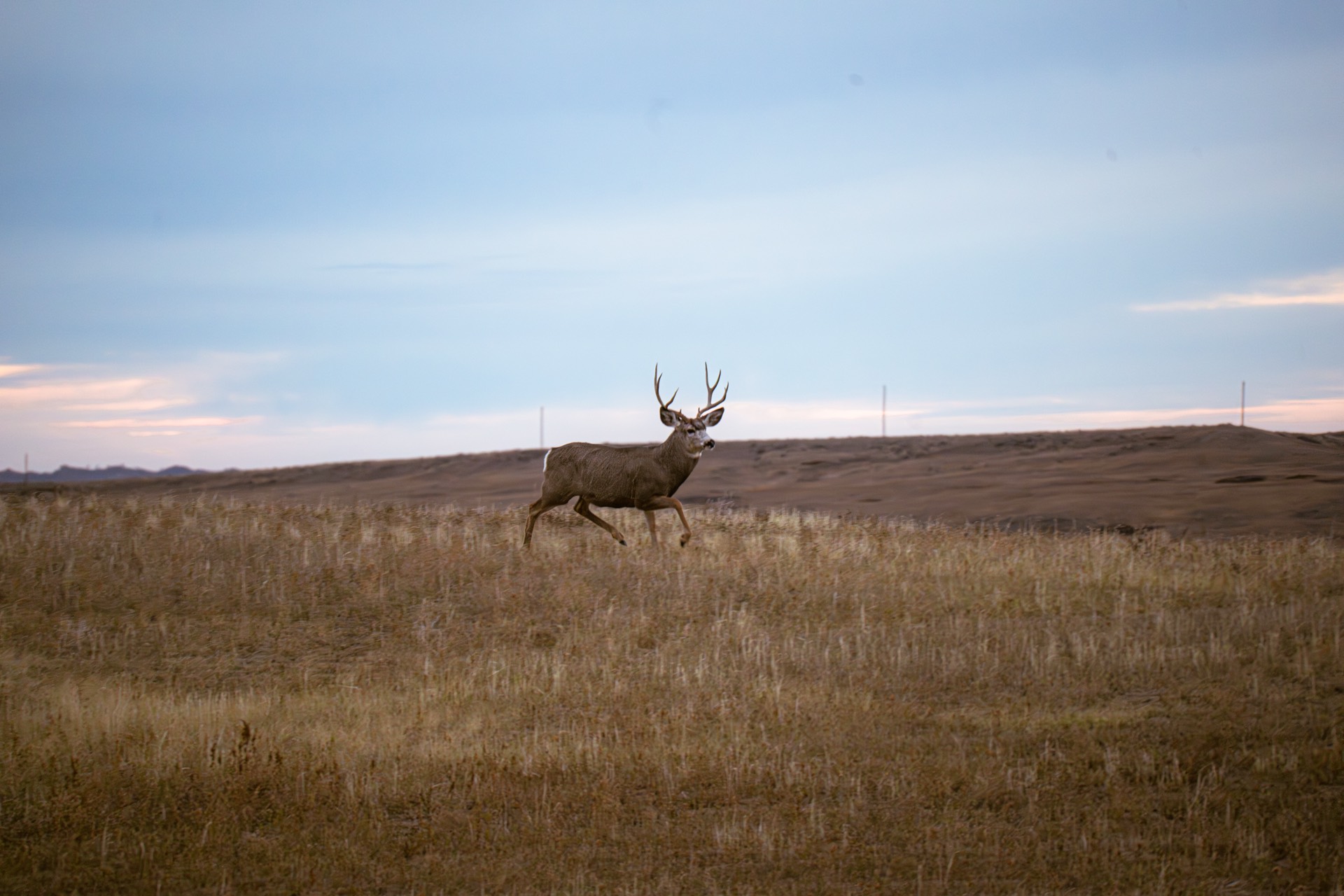
common opportunityThe Valley Mountains are primarily deer country — important central-Utah winter range that also holds resident deer year-round. Densities are moderate and the pinyon-juniper makes deer hard to spot, so this is a glassing-and-grinding hunt rather than a numbers game, but it takes far less pressure than the neighboring high units.
- →Glass the sage-and-mahogany benches and pinyon-juniper edges at first and last light before still-hunting.
- →Work the transition where open sagebrush meets the juniper — bucks bed in the trees and feed the edges.
- →Find the scarce water; springs and stock ponds concentrate deer in this dry range.
- →Push into the rougher canyon heads and mahogany pockets where mature bucks escape road pressure.
Rocky Mountain Elk
transient opportunityElk use the Valley Mountains as transient and winter-range animals rather than a resident summer herd, drifting in from surrounding units. Encounters are opportunistic and tied to feed and snow.
- →Check the higher benches and canyon heads for fresh sign before committing.
- →Watch valley-edge fields and meadows at dawn where elk feed off the range.
- →Cut tracks on snow to locate the moving groups that winter into the range.
Pronghorn
limited opportunityPronghorn range the open sagebrush of the Sevier and Sanpete valley floors that flank the range. Numbers are modest and tags limited; the terrain is prime open-country spot-and-stalk.
- →Glass the wide valley flats from vehicle vantages and pattern resident buck groups.
- →Use terrain rolls and washes to close the distance on wary bucks.
- →Be ready for a longer, flat shot in the open sage.
Cougar
common opportunityCougars follow the wintering deer herds through the pinyon-juniper and canyon country. Hunted mainly in winter with hounds over fresh snow.
- →Cut for tracks on fresh snow along canyon bottoms and the juniper benches.
- →Focus on deer winter-range concentrations where lions hunt.
- →Work the rocky rims and mahogany draws that funnel travel.
Pro tips
- →Treat this as a low-pressure alternative to the crowded high units — solitude and public access are the draw.
- →Water is the key variable; scout springs and stock ponds and hunt near them in dry stretches.
- →The juniper hides deer — slow down, glass every bench edge, and let optics do the walking.
- →Time your hunt to weather if you can; a storm that pushes deer into the winter range changes everything.
- →Confirm ownership at the foothill mouths where private farm ground meets the public range.
Watch out for
- !Private ranch and farm inholdings ring the valley-edge foothills — map before you hunt.
- !Water is genuinely scarce; carry your own and plan around it.
- !Dirt and two-track roads become impassable slick clay when wet.
- !Deer densities are moderate and animals are well hidden in the juniper — manage expectations.
Logistics
Limited services in the small towns of Scipio, Gunnison, and Salina — fuel, basic groceries, and a few motels — with fuller amenities at Nephi and along I-15. Camping is dispersed on BLM and state ground; Yuba State Park on the north end offers developed sites. Carry water and be self-sufficient once off the valley floor. The range is easy to reach from I-15 and US-89.
Nearest towns: Scipio, Gunnison, Salina, Redmond, Aurora, Nephi
Seasons & regulations
This page carries no season dates or regulations. Get current rules from the official Utah sources:
Research sources: UDWR Utah Hunt Planner — unit boundaries & biologist notes · GOHUNT — Utah Nebo Unit Profile (Valley Mountains described as southern winter range) · Manti-La Sal National Forest
FAQ
- How big is Unit 902 in Utah?
- Unit 902 (Valley Mtns) covers about 413 square miles, ranging from roughly 5,200 to 8,300 feet in elevation. Area is computed from the unit boundary polygon.
- How much public land is in Unit 902?
- Approximately 60% of the unit is public land. Primary managers: BLM, SITLA, private, USFS Manti-La Sal NF. Always verify ownership boundaries on the ground.
- What species does the catalog list for Unit 902?
- Mule Deer, Rocky Mountain Elk, Pronghorn, Cougar. For seasons, tags, and regulations, use the official Utah agency resources linked on this page — this page carries no regulatory information.
Put Unit 902 on your map.
Boundary lines, public/private ownership, topo, and offline maps for this unit — in Baseline Maps, free for 14 days.