GMU 139 Steptoe
Idaho-border Palouse unit split between white-tailed ag ground and scabland mule deer
WDFW Region 1 / District 2 — Palouse & Snake River breaks (Eastern WA) · Last reviewed 2026-07-12
Area
1,326
sq mi
Public land
3%
approx.
Elevation
1,900–3,600
feet
Motorized
moderate
access
Overview
GMU 139 (Steptoe) is a large unit along the Idaho line, covering the rolling Palouse wheat country of eastern Whitman County down into the Rock Creek drainage and toward the Snake River breaks. It's a genuine two-species deer unit — roughly split between white-tailed deer in the ag and riparian ground and mule deer in the scablands and breaks (about 46% of the buck harvest is mule deer). Public land is scarce (~3%), so success rides almost entirely on private-land access, and it carries by far the district's deepest Hunt by Reservation network. Elk are increasing along the breaks, filtering in from Idaho.
Terrain
Steep, rolling Palouse loess hills in the east and southeast, dry cropland with some irrigation to the west, springs and seeps in the Rock Creek drainage, and the Palouse River crossing the south.
Cover: Vast dryland wheat, lentils, and legumes over the loess hills; riparian brush, hawthorn, and aspen along creeks; sagebrush-steppe and native grass on the scabland and Snake River breaks.
Landmarks: Steptoe Butte · Palouse River · Rock Creek drainage · Revere Wildlife Area · Escure Ranch (Rock Creek / BLM) · Idaho state line
Access
Only ~3% public — the lowest in District 2 — so this is an access-first unit. Public options are the ~2,291-acre Revere Wildlife Area and BLM's Rock Creek / Escure Ranch tract in northwest Whitman County; a WDFW Vehicle Access Pass or Discover Pass is required on state ground. The real key is WDFW's private-lands program, which is unusually deep here: 36 Hunt by Reservation (HBR) properties totaling ~29,574 acres (reserve online — they fill fast), plus 16 Hunt by Written Permission parcels (~13,063 ac) and 5 Feel Free to Hunt parcels (~4,801 ac). Private ground consistently out-produces the thin public land.
Managers: Private Palouse wheat/legume farms, BLM (Rock Creek / Escure Ranch, ~15,000 ac in NW Whitman Co.), WDFW Revere Wildlife Area (~2,291 ac), WDNR state lands
Access points: Highway 195 corridor (Colfax, Steptoe, Rosalia) · Highway 27 (Palouse, Garfield, Oakesdale) · Rock Creek Road to Escure Ranch / Revere WLA · county grid roads off the Idaho-line towns
Species notes
Whitetail Deer
common opportunityWhite-tailed deer make up the majority (~54%) of the buck harvest, holding in the Palouse ag draws, riparian brush, and aspen pockets. A 3-point minimum applies; the late white-tailed season is permit-only (Palouse Special Permit), which historically produces higher success and bigger bucks than the general season. EHD/bluetongue outbreaks have pressured this population.
- →Hunt the brushy draws, CRP, and riparian fingers between wheat fields at dawn and dusk
- →Focus on aspen/hawthorn pockets and creek bottoms in the Rock Creek country
- →Apply for the Palouse Special Permit late hunt for the best bucks
- →Reserve HBR ground early — the ag draws hold the deer
Mule Deer
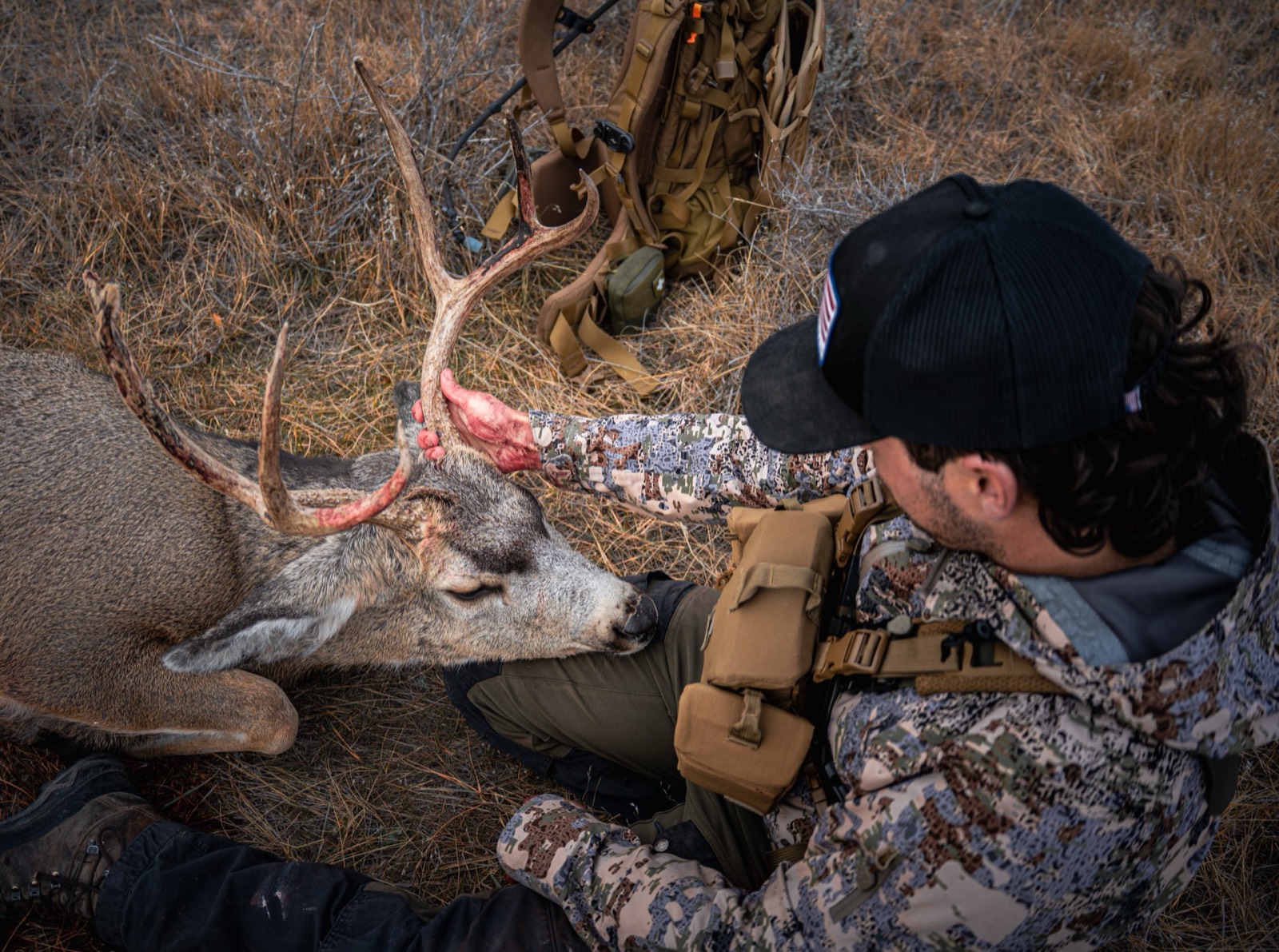
common opportunityMule deer make up about 46% of the harvest and, with GMUs 136 and 142, GMU 139 is among the district's best mule-deer options — ~30% modern-firearm success. They favor the scablands and the Snake River breaks. A 3-point minimum applies.
- →Glass from high loess ridges early and late — spend time behind the glass
- →Work the scabland and Snake-breaks edges where farmland meets untillable ground
- →Follow game trails linking bedding on the breaks to feeding in the fields
- →Muzzleloader and modern firearm suit the open Palouse terrain better than archery
Rocky Mountain Elk
limited opportunityElk are expanding in GMU 139 and harvest has climbed in recent years, with animals moving back and forth from Idaho and 20–100-head groups causing crop damage from Dusty east to Palouse and along the Snake River breaks. The general season is 'any elk,' but timing and private access are everything.
- →Hunt the Snake River breaks and the Dusty-to-Palouse corridor where damage groups concentrate
- →Time your hunt to when elk cross from Idaho and hit the legume fields
- →Line up access on multiple private parcels — these elk are highly mobile
Moose
transient opportunityA few moose occur in GMU 139 and occasionally cause nuisance/damage; the unit was added to the Hangman and Cheney moose hunt units in 2022 for antlerless management. Bull moose are special-permit only and numbers are very low.
- →Applies only if drawn for the relevant moose hunt unit
- →Check creek-bottom willow and riparian pockets where the few resident moose linger
Black Bear
limited lowThe Columbia Basin / Palouse lacks the forested habitat for resident black bears; GMU 139 harvest is very low to nonexistent and not worth targeting.
- →Not a realistic bear unit — at most an incidental encounter in forested draws
Pro tips
- →Reserve Hunt by Reservation ground online the moment it opens — GMU 139 has the district's deepest HBR network (~30k acres across 36 properties) and the good parcels fill fast.
- →Pick your species by ground: whitetails in the ag draws and riparian brush, mule deer on the scablands and Snake-breaks edges.
- →Glass from the high loess ridges at first and last light — patience behind glass finds far more bucks than road-hunting.
- →Time elk to when Idaho animals cross into the legume fields and the Dusty-to-Palouse damage groups show up.
- →Chase the Palouse Special Permit for late-season whitetails — historically higher success and a better age class than the general season.
Watch out for
- !Only ~3% public — the district's tightest access; trespass risk is high and WDFW Enforcement monitors enrolled ground.
- !HBR parcels require an online reservation and fill quickly — no reservation, no access.
- !White-tailed deer here are vulnerable to EHD/bluetongue crashes in warm wet years.
- !Bull moose is special-permit only; know the moose-hunt-unit boundaries before hunting antlerless.
- !CWD surveillance is active in GMUs 101–186 (near confirmed Idaho cases); carcass-transport rules apply — plan to check in your deer.
Logistics
Colfax on Highway 195 is the main hub for fuel, groceries, and lodging; Pullman and Spokane are within an hour for full resupply. Lodging is limited in the small Palouse towns, so many hunters day-trip or camp on the Rock Creek / Escure Ranch BLM. Cell coverage is good near the highways, spottier in the breaks. Wet loess and gravel roads get slick fast.
Nearest towns: Colfax, Steptoe, Rosalia, Palouse, Oakesdale
Seasons & regulations
This page carries no season dates or regulations. Get current rules from the official Washington sources:
Research sources: WDFW District 2 Hunting Prospects 2022 (PDF) · GoHunt — Washington Unit 139 Steptoe profile · Spokesman-Review — Eastern Washington 2019 hunting prospects
FAQ
- How big is GMU 139 in Washington?
- GMU 139 (Steptoe) covers about 1,326 square miles, ranging from roughly 1,900 to 3,600 feet in elevation. Area is computed from the unit boundary polygon.
- How much public land is in GMU 139?
- Approximately 3% of the unit is public land. Primary managers: Private Palouse wheat/legume farms, BLM (Rock Creek / Escure Ranch, ~15,000 ac in NW Whitman Co.), WDFW Revere Wildlife Area (~2,291 ac), WDNR state lands. Always verify ownership boundaries on the ground.
- What species does the catalog list for GMU 139?
- Whitetail Deer, Mule Deer, Rocky Mountain Elk, Moose, Black Bear. For seasons, tags, and regulations, use the official Washington agency resources linked on this page — this page carries no regulatory information.
Put GMU 139 on your map.
Boundary lines, public/private ownership, topo, and offline maps for this unit — in Baseline Maps, free for 14 days.