GMU 172 Mountain View
Oregon-border Mountain View unit — best elk success of the district's forested GMUs, but half private with tough public timber and the 4-O Ranch Wildlife Area at its heart.
Region 1 — Blue Mountains (Eastern WA) · Last reviewed 2026-07-12
Area
104
sq mi
Public land
50%
approx.
Elevation
1,800–6,000
feet
Motorized
limited
access
Overview
GMU 172 "Mountain View" is a small (~104-108 sq mi) unit in Asotin County on the Oregon line, straddling the Blue Mountains front and the Grande Ronde River breaks. WDFW rates access "Good/fair": roughly half the unit is public (Umatilla National Forest, the 4-O Ranch Wildlife Area at the center, the Grouse Flats area, and BLM ground on the Grande Ronde south breaks), while about 50-60% is private where access can be hard to obtain and the USFS timber that is public is physically challenging to hunt. As part of the single Blue Mountains elk herd, 172 held stable elk numbers as of 2024 with a 26:100 calf ratio (still below the long-term average) and posted the best general-season elk success (~20%) among the district's forested units. The 4-O Ranch Wildlife Area is open to general deer and elk hunting under the same rules as the GMU. Elk Area 1013 targets antlerless elk on private ag land; the 2024 Cougar Creek fire is expected to affect elk distribution and access.
Terrain
A Blue Mountains front-to-breaks unit: dense forest and steep inclines climb toward ~6,000 ft along the southern/USFS edge, dropping to about 1,800 ft in the canyons and toward the Grande Ronde River breaks on the Oregon border. The public USFS timber is steep and physically demanding with very little interior road; the private ground trends toward more open foothill and agricultural country. Grouse Flats and the Grande Ronde south breaks add distinct terrain on the margins.
Cover: Ponderosa pine, Douglas fir and grand fir on the higher forested slopes, grading to bunchgrass, shrub and agricultural/foothill ground at lower elevation and along the Grande Ronde breaks. The 2024 Cougar Creek fire altered habitat and cover in part of the unit.
Landmarks: 4-O Ranch Wildlife Area (center of the unit, WDFW-managed, open to general deer/elk hunting) · Umatilla National Forest (southern public timber) · Grouse Flats area · Grande Ronde River breaks (Oregon border, BLM south breaks) · 2024 Cougar Creek fire scar
Access
WDFW rates GMU 172 access "Good/fair" — approximately 50% of the unit is public (USFS, the 4-O Ranch Wildlife Area, Grouse Flats, and BLM on the Grande Ronde south breaks), but roughly 50-60% is private and access to it can be difficult to obtain. WDFW cautions that the public USFS lands here are physically challenging to hunt, with very little interior road, so plan to backpack or use horses off the main roads. The 4-O Ranch Wildlife Area at the unit's center is open to general-season deer and elk hunting under the same regulations as the GMU and is a key public anchor. Elk Area 1013 limits antlerless hunting to private lands where agricultural damage occurs while maximizing elk on public land; Elk Area 1081 covers the extreme northeast corner of the GMU. The 2024 Cougar Creek fire is expected to affect elk distribution and hunting access.
Managers: Private agricultural and ranch landowners (roughly half to 60%), U.S. Forest Service (Umatilla National Forest), WDFW (4-O Ranch Wildlife Area), Bureau of Land Management (Grande Ronde south breaks)
Access points: 4-O Ranch Wildlife Area access roads/parking (unit center) · USFS roads/trailheads into the southern Umatilla NF timber · Grouse Flats access on the southwest edge · BLM ground on the Grande Ronde River south breaks (Oregon border)
Species notes
Rocky Mountain Elk
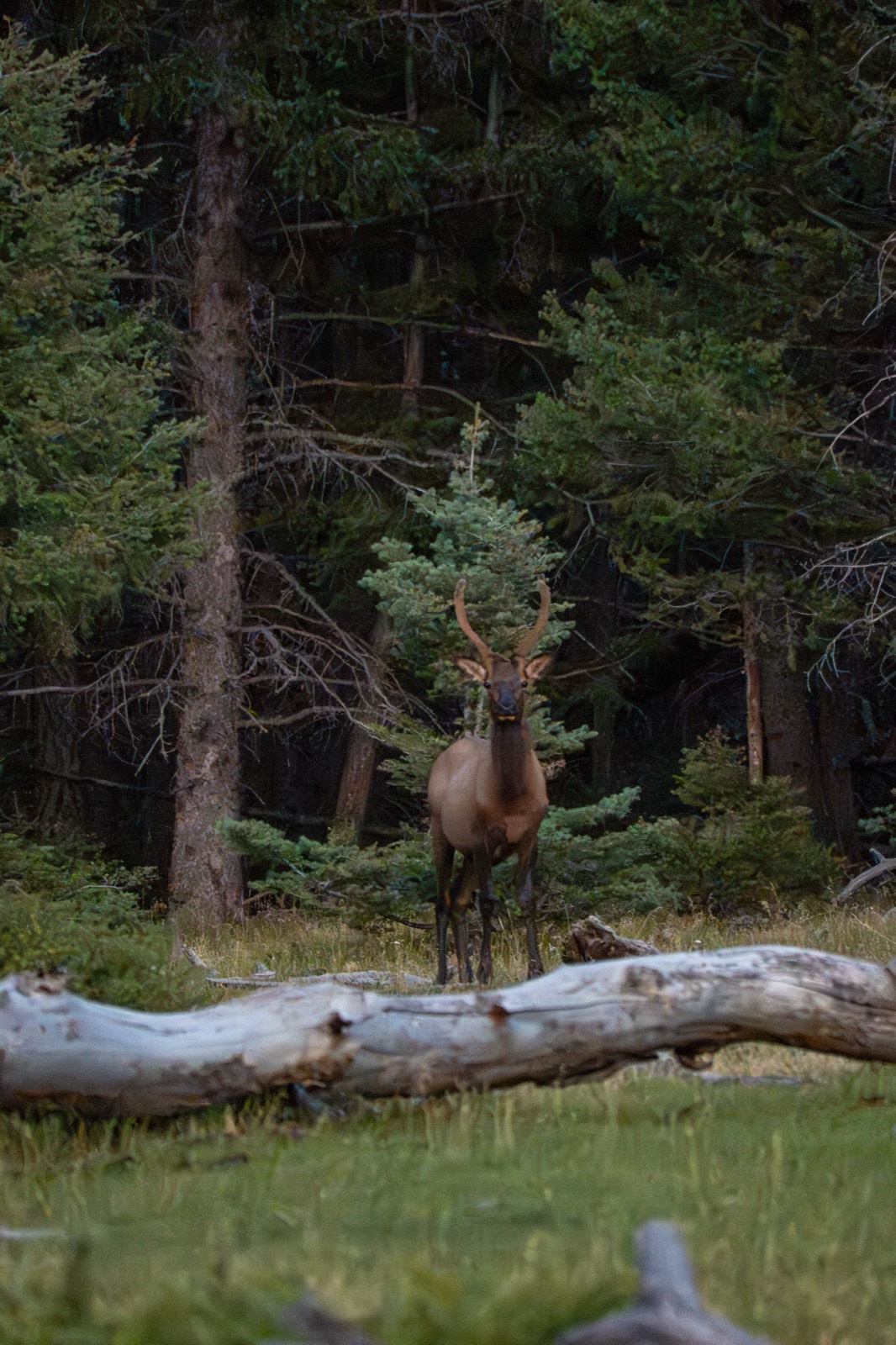
common opportunityGMU 172 is part of the single Blue Mountains elk herd and, as of 2024, elk numbers appeared stable with a 26:100 calf ratio (a decent yearling-bull indicator but still below the long-term average). It posts the best general-season elk success (~20% modern firearm in 2024) of the district's forested units, and hunters note a comparatively robust elk population, especially early. General seasons are spike-only; antlerless opportunity is confined to private ag land via Elk Area 1013. The 2024 Cougar Creek fire is expected to shift elk distribution and access.
- →Hunt early while elk are on cooler north-facing timber and before pressure scatters them — the early elk hunting here is the unit's strength
- →Work the public USFS timber and the 4-O Ranch Wildlife Area, pushing away from the few roads into the steep folds
- →Locate herds before the opener; elk shift quickly across the private/public boundary under pressure
- →Scout the 2024 Cougar Creek burn edges, which may concentrate elk on regenerating forage
Mule Deer
common opportunityMule deer favor the higher-elevation forested and timber-edge country in the south. GMU 172 puts up one of the district's stronger forested-unit deer harvests (about two dozen taken, ~11% modern-firearm success in 2024). General seasons are typically spike/antler-point restricted with antlerless opportunity withdrawn on public land. Muzzleloader deer opportunity is also notable here.
- →Hunt mule deer high — glass open faces, timber edges and burn regrowth in the USFS south end at first and last light
- →Climb into the steep public timber where pressure thins; muleys hold the higher, cooler ground early
- →Still-hunt shaded benches mid-day, then watch openings on the evening feed
- →As weather pushes in, expect deer to shift lower toward the breaks
Whitetail Deer
common opportunityWhitetails occupy the lower foothills, brushy draws and farm-edge cover, contributing to the unit's deer harvest. Most of the low whitetail ground is private, so access is the limiting factor. District 3 whitetails are periodically knocked back by hemorrhagic disease (EHD/bluetongue) after hot, dry summers.
- →Hunt the lower brushy draws, creek bottoms and ag/cover edges where whitetails concentrate
- →Most whitetail ground is private — line up landowner permission well before the season
- →Watch field and cover edges at dawn and dusk; whitetails bed in thick draws by day
- →After hot, dry summers, check for EHD die-off before committing to a drainage
Black Bear
common opportunityBlack bears are common in the forested south end and the Grande Ronde breaks, feeding on berries and forage. Most are taken opportunistically by deer and elk hunters. Color-phase (cinnamon/brown) bears occur in the Blue Mountains.
- →Glass shrubby, berry-filled draws and burn-regrowth slopes very early and very late from a distant vantage
- →Hunt the forested south end and riparian draws where bears feed in early fall
- →Locate fresh sign in huckleberry/elderberry/blackberry patches before committing
- →Carry a bear tag while deer/elk hunting — most are incidental
Cougar
common opportunityCougars occur throughout the timbered and breaks country, following the deer and elk. GMU 172 is in Cougar Hunt Management Unit 13 (with 169/181/186), governed by a seasonal mortality cap; hound use is prohibited statewide, so harvest is nearly all incidental. Verify current CHMU 13 quota status before hunting.
- →Most cougars are taken by deer/elk hunters who cut fresh tracks — carry a tag through the fall seasons
- →Hunt the prey-rich forested drainages and Grande Ronde breaks
- →Fresh snow greatly improves the odds of cutting and following tracks
- →Watch the CHMU 13 quota status — the season can close once the cap fills
Pro tips
- →This is the best-elk-success forested unit in District 3 (~20% in 2024) with stable numbers and a 26:100 calf ratio — hunt it early, before pressure and weather scatter the herds.
- →Play the ownership split: the 4-O Ranch Wildlife Area and USFS south timber are your public anchors (about half the unit), while the private ~50-60% needs permission lined up well in advance.
- →Expect the public USFS ground to be steep with very little interior road — plan to backpack or use horses to hunt it effectively.
- →Scout the 2024 Cougar Creek burn — it altered elk distribution and access, and burn edges can concentrate elk on new forage.
- →Antlerless elk opportunity is limited to private ag land via Elk Area 1013 — if that's your hunt, secure landowner access before you apply or hunt.
- →Mandatory CWD testing applies to deer, elk and moose harvested in Region 1 (100-series GMUs), and whole carcasses can't be moved out of the 100-series — debone or follow the allowed-parts rules.
Watch out for
- !Roughly 50-60% of the unit is private and access there can be difficult — don't assume you can hunt the foothills without permission; arrange access early.
- !WDFW warns the public USFS lands here are physically challenging to hunt with very little interior road — plan to hike or pack in.
- !The 2024 Cougar Creek fire altered habitat and access in part of the unit; check current road/area status before relying on burned country.
- !Wildfire risk in hot, dry late summers/falls can close National Forest roads and areas on short notice — check InciWeb, USFS and WDFW.
- !Chronic wasting disease is confirmed in WDFW's Eastern Region — mandatory CWD testing for harvested deer/elk/moose in the 100-series and carcass-transport restrictions apply.
- !Hemorrhagic disease (EHD/bluetongue) periodically knocks back whitetails after hot, dry summers.
- !The cougar season is capped by CHMU 13 and can close mid-season once the mortality cap is met — verify status if carrying a cougar tag.
- !Confirm 4-O Ranch Wildlife Area rules and boundaries — it's open under GMU 172 regulations but may carry posted restrictions.
Logistics
Anatone (just north) and Asotin/Clarkston along the Snake River are the closest towns for gas, groceries and basic lodging; Clarkston/Lewiston is the regional hub with full services and the nearest airport, and Pomeroy sits to the west. Most hunters camp in the Umatilla National Forest, on the 4-O Ranch Wildlife Area (per posted rules), or on the Grande Ronde breaks. There is very little interior road on the public USFS ground, so plan to backpack or use horses off the main roads. Private-land access should be arranged with landowners well before the season. Fire bans and USFS road/area closures are common in late summer and early fall — the 2024 Cougar Creek fire affected part of this unit. WDFW's Eastern Region (Region 1) office in Spokane Valley (509-892-1001) answers access questions.
Nearest towns: Asotin, WA, Anatone, WA, Clarkston, WA, Pomeroy, WA
Seasons & regulations
This page carries no season dates or regulations. Get current rules from the official Washington sources:
Research sources: WDFW — Game Management Units (GMUs) · WDFW — 2025 District 3 Hunting Prospects (Walla Walla, Columbia, Garfield, Asotin counties) · WDFW — Deer and elk special hunt areas (Elk Areas 1013 & 1081) · GoHunt — Washington Unit 172 (Mountain View) Profile · WDFW — Chronic wasting disease (CWD) rules
FAQ
- How big is GMU 172 in Washington?
- GMU 172 (Mountain View) covers about 104 square miles, ranging from roughly 1,800 to 6,000 feet in elevation. Area is computed from the unit boundary polygon.
- How much public land is in GMU 172?
- Approximately 50% of the unit is public land. Primary managers: Private agricultural and ranch landowners (roughly half to 60%), U.S. Forest Service (Umatilla National Forest), WDFW (4-O Ranch Wildlife Area), Bureau of Land Management (Grande Ronde south breaks). Always verify ownership boundaries on the ground.
- What species does the catalog list for GMU 172?
- Rocky Mountain Elk, Mule Deer, Whitetail Deer, Black Bear, Cougar. For seasons, tags, and regulations, use the official Washington agency resources linked on this page — this page carries no regulatory information.
Put GMU 172 on your map.
Boundary lines, public/private ownership, topo, and offline maps for this unit — in Baseline Maps, free for 14 days.