GMU 175 Lick Creek
The public-land anchor of the Asotin Creek high country — WDFW's highest-access Blues unit, elk-first with the district's densest road net.
WDFW Region 1 — District 3 / Blue Mountains (SE Washington) · Last reviewed 2026-07-12
Area
162
sq mi
Public land
93%
approx.
Elevation
2,000–5,200
feet
Motorized
extensive
access
Overview
GMU 175 "Lick Creek" is a ~162-square-mile unit straddling the Garfield/Asotin county line on the eastern flank of the Blue Mountains, drained by Lick Creek and the North Fork Asotin Creek. WDFW rates access here as "Excellent": the unit is roughly 90%+ public — a patchwork of Umatilla National Forest, the Asotin Creek Wildlife Area, and DNR state forest — and it carries the highest road density of any GMU in District 3. It is best known as a Rocky Mountain elk unit within the single Blue Mountains elk herd, with mule deer, white-tailed deer, black bear, and cougar also present. In July 2021 wildfire burned roughly 80% of the GMU; the wet 2022 that followed rebounded the forage, but elk calf recruitment remains below replacement and deer success is low despite the easy access.
Terrain
A dissected high plateau of the Blue Mountains cut by steep draws and canyons. The west side rises into forested ridge-and-canyon country; the east side drops into more arid, sparsely timbered breaks toward the ag fringe. Lick Creek and the North Fork Asotin Creek carry the thickest, most diverse cover in the unit.
Cover: West and north slopes hold second-growth ponderosa pine, Douglas fir, grand fir, and subalpine fir; south slopes and broken tops are sparsely timbered with natural bunchgrass graze. Creek bottoms mix berry brush, reed grass, and bunchgrass. Large tracts are still in early-successional forbs and grasses from the 2021 burn — prime 2-to-5-year-old post-fire forage.
Landmarks: Lick Creek drainage · North Fork Asotin Creek · Asotin Creek Wildlife Area (Smoothing Iron Ridge) · Umatilla National Forest boundary (west/south) · 2021 wildfire burn scar (~80% of the unit)
Access
WDFW access rating: Excellent. A clear majority of the unit is public — USFS, WDFW, and DNR — and it has the highest road density in District 3, so foot and vehicle access is the easiest of any Blues GMU. Private dryland-farm ground along the eastern edge is smaller; several parcels are enrolled in WDFW's Feel Free to Hunt walk-in program. Note the trade-off WDFW itself flags: high access plus doubled hunter numbers since 2001 means heavy pressure and a high share of legal bucks taken, so deer success runs low here relative to nearby private units. Elk Area 1075 (Lick Creek Private Lands) exists to push elk off adjacent private ag in early winter.
Managers: US Forest Service (Umatilla National Forest), WDFW (Asotin Creek Wildlife Area), Washington DNR (state forest sections), Private dryland farms (eastern boundary, some Feel Free to Hunt)
Access points: Asotin Creek Road / North Fork Asotin Creek Road corridor from Asotin · Umatilla NF road system (highest density in District 3) · Asotin Creek Wildlife Area access points · Feel Free to Hunt farm parcels along the eastern boundary
Species notes
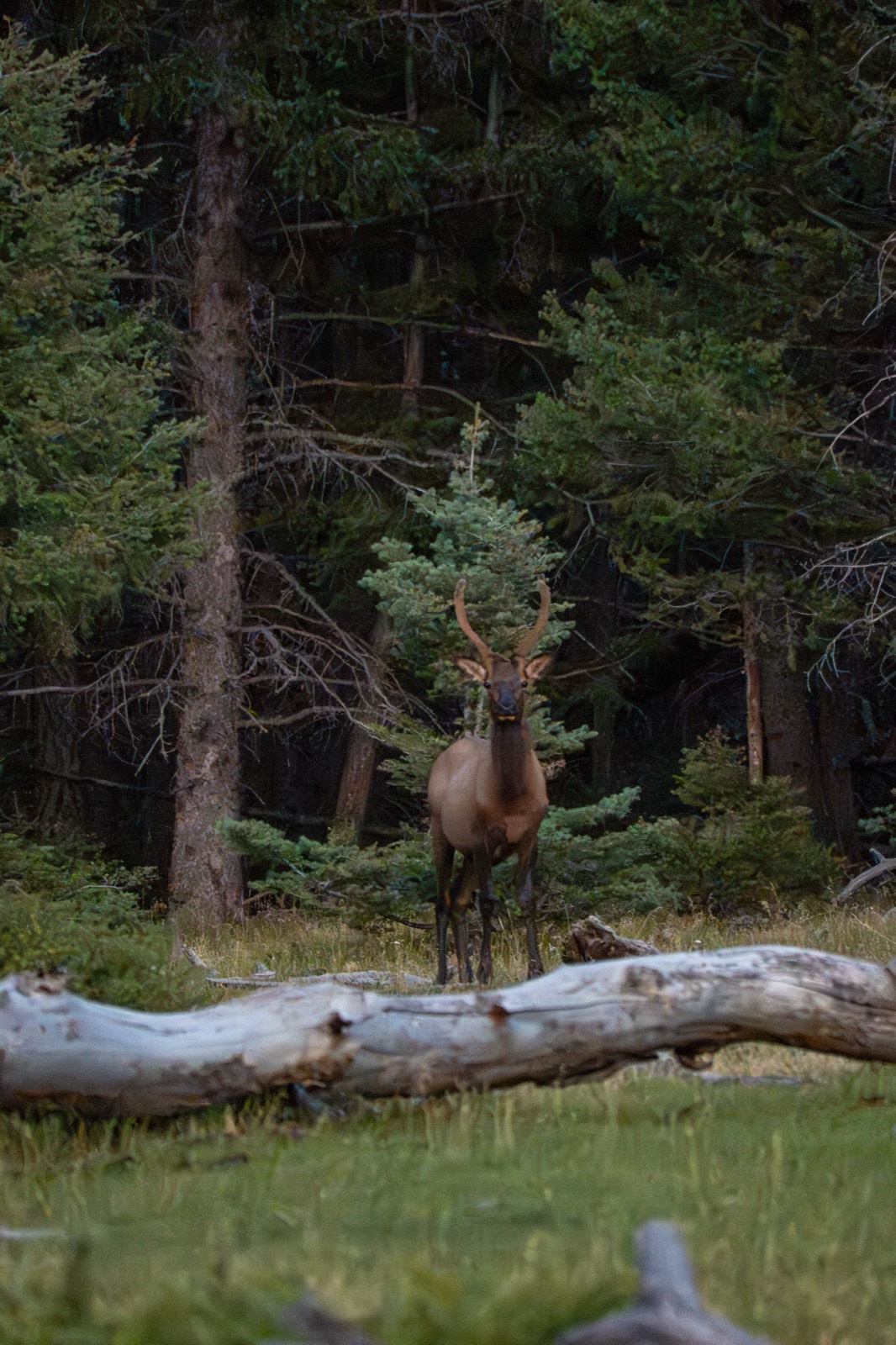
Rocky Mountain Elk
common qualityPart of the single Blue Mountains elk herd and one of the forested GMUs WDFW manages for population stability or growth. Branched-bull harvest is permit-only (quality management, 22-28 bulls:100 cows target). Calf recruitment has been at record lows, so yearling-bull availability in the general spike season is thin, and archery has been restricted to spike-only with no antlerless opportunity.
- →Hunt the 2021 burn edges — 2-to-5-year-old post-fire forbs and grasses pull elk to feed.
- →Glass forested north slopes and canyon heads at first and last light, then still-hunt the timber pockets between feed and bedding.
- →For general-season spike hunters, focus timbered draws off the main road net where pressure thins.
- →Put in for a branched-bull permit if you want a mature bull; the general tag is spike-only.
Mule Deer
common opportunityPresent on the open south slopes and broken breaks, but WDFW data show GMU 175 among the LOWEST-success deer units in District 3 (~17% muzzleloader success cited) despite the best public access — a function of high hunter numbers, heavy legal-buck harvest, and predator density. It is a great opportunity unit for road-accessible days, not a trophy unit.
- →Glass open south-facing slopes and broken tops at dawn/dusk from high points.
- →Get well off the dense road system on foot to find lightly pressured bucks.
- →Hunt the arid eastern breaks where mule deer favor bunchgrass benches.
Whitetail Deer
common opportunityWhitetails hold in the brushy creek bottoms and timber along Lick Creek and the North Fork Asotin Creek. Like the mule deer, harvest success is depressed by heavy pressure, but a patient hunter working the cover can find bucks.
- →Still-hunt slowly through the berry brush and reed-grass creek bottoms.
- →Watch edges between timber and open graze morning and evening.
- →Hunt the mid-November rut in the thicker cover.
Black Bear
common opportunityBlack bears — many the cinnamon color phase typical of the Blues — occur through the foothills and forested slopes. Part of Southeast Black Bear Management Unit 3, with a robust, stable population.
- →Glass avalanche chutes, burn edges, and open forbs/berry slopes in early season.
- →Work the post-fire regrowth for feeding bears.
- →Check creek-bottom berry brush in late summer/fall.
Cougar
common opportunityCougars follow the deer and elk through the canyon country; District 3 offers general-season opportunity, though harvest is variable and hunts are usually incidental or reactive to fresh sign/snow.
- →Hunt fresh snow after storms, cutting canyon roads and ridgelines for tracks.
- →Concentrate near wintering deer/elk in the lower breaks.
Pro tips
- →This is the access unit — if you want to hunt the Blues on public ground without chasing landowner permission, 175 is the play.
- →Work the 2021 burn: 2-to-5-year-old regrowth is now prime forbs-and-grass forage pulling deer and elk.
- →Because the road net is the densest in District 3, the animals are behind the gates and off the roads — hike in.
- →General-season elk is spike-only; put in for a branched-bull permit for a mature bull.
- →Cinnamon-phase black bears are common here — don't assume a brown bear is a grizzly (none present).
Watch out for
- !Deer success is genuinely low despite easy access — high pressure and heavy legal-buck harvest, not a trophy unit.
- !Elk calf recruitment is below replacement; general season is spike-only, no antlerless.
- !Wildfire and USFS road/area closures can shut access on short notice in September — check InciWeb/USFS before you go.
- !Mandatory CWD testing and the Region 1 whole-carcass transport ban apply.
- !Public/private ownership interleaves along the eastern dryland-farm boundary — map before you hunt.
Logistics
Access from Asotin up the Asotin Creek Road corridor, or from Pomeroy/Anatone into the Umatilla NF road net. Clarkston-Lewiston is the nearest full-service hub for fuel, lodging, and supplies. Dispersed camping on the national forest; the wildlife area has designated access. Carry a DNR Public Lands Quadrangle map or onX — public/private lines interleave along the eastern farm edge. Mandatory CWD testing applies to all deer/elk in the 100-series GMUs, and whole carcasses cannot be moved out of Region 1.
Nearest towns: Asotin, Clarkston, Anatone, Pomeroy
Seasons & regulations
This page carries no season dates or regulations. Get current rules from the official Washington sources:
Research sources: WDFW 2025 District 3 Hunting Prospects (Asotin, Garfield, Columbia, Walla Walla) · WDFW Blue Mountains Elk Herd Management Plan (2020) · GoHunt — Washington Unit 175 (Lick Creek) profile
FAQ
- How big is GMU 175 in Washington?
- GMU 175 (Lick Creek) covers about 162 square miles, ranging from roughly 2,000 to 5,200 feet in elevation. Area is computed from the unit boundary polygon.
- How much public land is in GMU 175?
- Approximately 93% of the unit is public land. Primary managers: US Forest Service (Umatilla National Forest), WDFW (Asotin Creek Wildlife Area), Washington DNR (state forest sections), Private dryland farms (eastern boundary, some Feel Free to Hunt). Always verify ownership boundaries on the ground.
- What species does the catalog list for GMU 175?
- Rocky Mountain Elk, Mule Deer, Whitetail Deer, Black Bear, Cougar. For seasons, tags, and regulations, use the official Washington agency resources linked on this page — this page carries no regulatory information.
Put GMU 175 on your map.
Boundary lines, public/private ownership, topo, and offline maps for this unit — in Baseline Maps, free for 14 days.