GMU 334 Ellensburg
Private farm-country unit around Ellensburg: crop-drawn deer and depredation-managed elk that live and die on landowner permission.
Region 3 — Kittitas Valley / Ellensburg (Kittitas County) · Last reviewed 2026-07-12
Area
189
sq mi
Public land
2%
approx.
Elevation
1,500–2,400
feet
Motorized
limited
access
Overview
GMU 334 "Ellensburg" is a ~190-square-mile unit centered on the town of Ellensburg and the Yakima River in the heart of the Kittitas Valley, part of WDFW District 8. It is overwhelmingly private farmland — only about 2% public — which makes it difficult to hunt without landowner permission or local access, and lots of human activity limits shot angles and game retrieval. WDFW manages GMU 334 for minimal numbers of elk because of chronic crop-depredation conflict with the surrounding agriculture: the entire unit lies within Elk Area 3911, which carries antlerless permits and master-hunter damage-control opportunity. The unit holds little resident game, but mule deer and elk that winter on the valley floor work the farm crops hard once snow pushes them down from the surrounding mountains. This is an access-first unit — the animals are here, but getting to them legally is the whole challenge.
Terrain
Flat-to-gently-rolling irrigated valley floor along the Yakima River, rising slightly to dry sage-and-grass benches at the edges. Little vertical relief and abundant roads, homes, and farm infrastructure throughout.
Cover: Irrigated agriculture — hay, timothy, grain, and pasture — laced with the Yakima River riparian corridor and its cottonwoods and brush; dry shrubsteppe (sagebrush, bunchgrass) on the unfarmed valley margins.
Landmarks: Yakima River · City of Ellensburg · Kittitas Valley farmland · Interstate 90 corridor · Elk Area 3911 (covers all of GMU 334)
Access
Only about 2% public — this is a largely private farming unit and the single biggest obstacle to hunting it is legal access. Success hinges on landowner permission, local relationships, or a WDFW damage-control/master-hunter opportunity; there is very little walk-on public ground. Heavy human activity, homes, roads, and farm operations throughout constrain safe shot angles and game retrieval. The Yakima River corridor offers some access but much of the bank is private. Hunters should lean on the WDFW Hunt Planner web map to distinguish the small public and hunt-access parcels from private ag, and always confirm boundaries and get written permission before hunting. Master hunters can access antlerless-elk damage opportunity in Elk Area 3911.
Managers: Private (agricultural — dominant), WA DNR (scattered small parcels), WDFW (minor)
Access points: Public/county roads through the Kittitas Valley (for reaching permitted private parcels) · Yakima River corridor (mixed public/private banks) · Small scattered DNR parcels on the valley margins · Landowner-permission access on farm ground (the practical route)
Species notes
Mule Deer
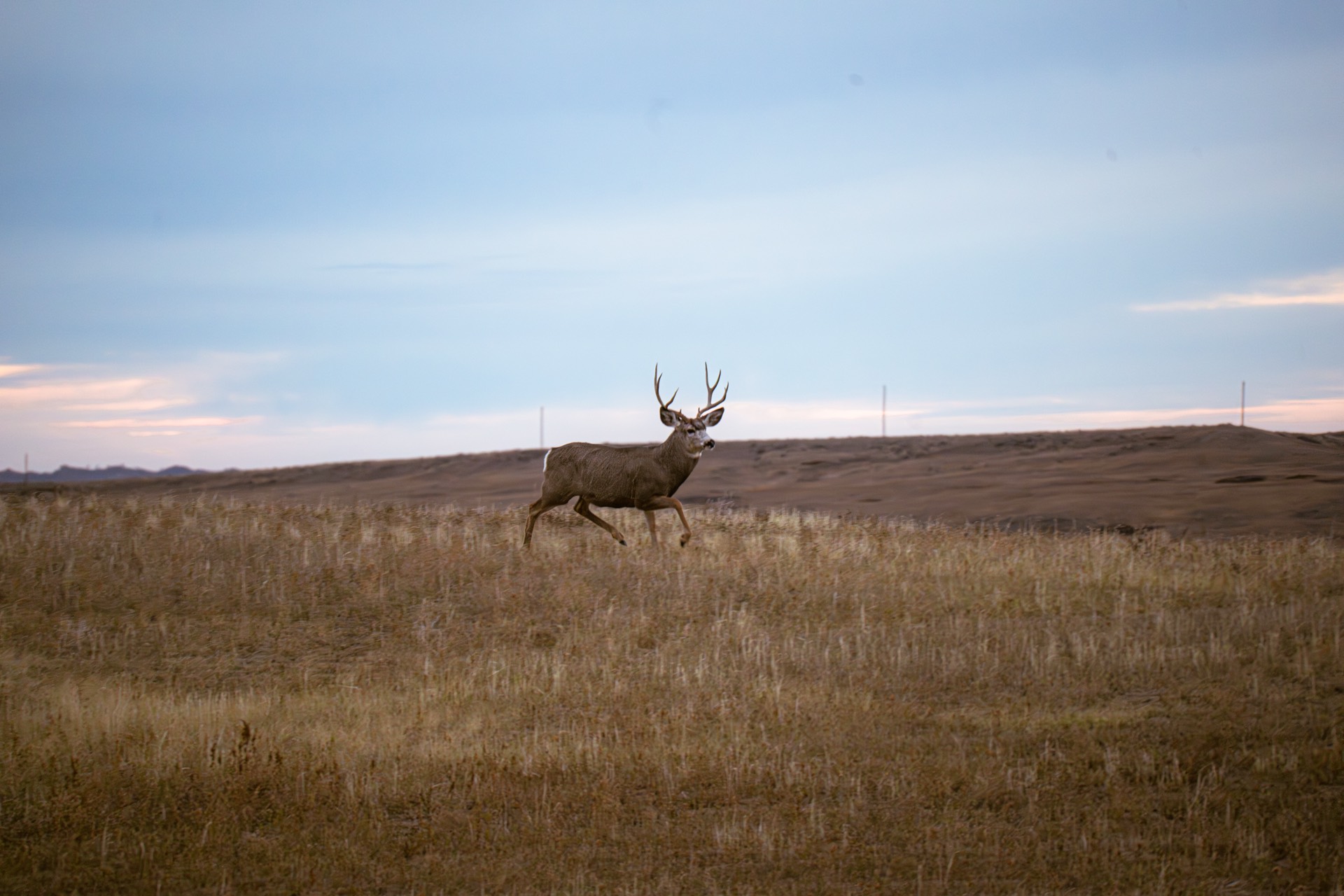
common opportunityMule deer are the unit's most huntable big game, but they are largely seasonal — deer drop out of the surrounding mountains with snow and work the valley farm crops, so density swings with weather. Reported general-season success rates look high in places but come off small samples on limited-access ground; the real limiter is legal access, not deer. Some mule-blacktail intergrades occur at the valley fringe.
- →Line up landowner permission before the season — on this private-dominated ground, access is the hunt
- →Hunt the ag-to-sage and riparian edges where deer stage between feeding on crops and bedding cover
- →Time your effort to snow that pushes deer down onto the valley floor and concentrates them on the farms
- →Glass at first and last light along field edges and the Yakima River bottom, and mind homes and roads for safe shot angles
- →Muzzleloader and archery opportunities can be productive here given crop-drawn deer — plan around crop and harvest timing
Rocky Mountain Elk
limited opportunityGMU 334 is deliberately managed for minimal elk numbers to reduce crop depredation, and the whole unit is Elk Area 3911. Most elk that use the unit are in the lower valley, and antlerless permits plus master-hunter damage-control hunts (modern firearm Aug through late Jan in 3911) are the primary tools. Archery hunters here actually post higher success than modern-firearm hunters on the limited antlerless opportunity. This is a depredation-management hunt, not a bull unit.
- →Understand this is antlerless/damage-focused elk management — secure the right permit and, for master hunters, the 3911 damage opportunity
- →Hunt the lower valley where the few elk concentrate on and near agriculture
- →Wear hunter orange or pink even bowhunting — master hunters may be using modern firearms in Elk Area 3911 simultaneously, so treat it as a safety issue
- →Coordinate with landowners experiencing crop damage; that is where both the elk and the access are
- →Set expectations low for a general-season bull — the unit is managed to keep elk numbers down
Cougar
limited opportunityCougars range the Yakima River corridor and valley margins following deer, but this developed, private ag unit is not a focus cougar area. Any harvest is incidental and constrained by the same access limits as everything else here.
- →Treat cougar as a purely opportunistic add-on while pursuing deer on permitted ground
- →Hunt the riparian corridor and cover edges where deer concentrate
- →After fresh snow, check for tracks along the river bottom and field edges you have permission to hunt
- →Check the cap-managed cougar hunt-area status before hunting
Pro tips
- →Access is everything here — secure landowner permission (or a damage/master-hunter opportunity) before the season, or you'll have game you can't legally reach
- →Hunt the snow: deer and the few elk pour onto the valley crops once weather pushes them down from the mountains
- →Focus on ag-edge, riparian, and field-corner staging areas at first and last light
- →Wear hunter orange or pink even when bowhunting Elk Area 3911 — modern-firearm master hunters may be afield at the same time
- →Mind your backdrop constantly: homes, roads, and I-90 make safe shot angles and retrieval the real constraint
- →Use the WDFW Hunt Planner web map to separate the ~2% public/access parcels from private ag before you go
Watch out for
- !Only ~2% public land — this is a private farming unit and hunting it legally requires landowner permission or a damage/master-hunter opportunity
- !Heavy human activity, homes, roads, and I-90 sharply limit safe shot angles and game retrieval
- !GMU 334 is managed for minimal elk numbers via Elk Area 3911 — it is an antlerless/depredation hunt, not a bull unit
- !Bowhunters must wear hunter orange or pink in Elk Area 3911 because master hunters may be using modern firearms simultaneously
- !Trespass risk is high in a checkerboard of private farms — confirm every boundary and get written permission
- !Little resident game — much of the opportunity depends on a snow-driven migration onto the crops
Logistics
Ellensburg sits in the center of the unit on I-90 and offers full services — fuel, groceries, lodging, and the WDFW Yakima regional resources are close by. There is essentially no public camping inside this private farming unit; base in town or use the surrounding public-land units (L.T. Murray to the west, Naneum to the north) for camping and hunt the valley by day on permitted access. The practical logistics here are social, not logistical: identify landowners, get written permission, and clarify where you can safely shoot and retrieve given homes, roads, and I-90 traffic. Use the WDFW Hunt Planner map to find the few public and hunt-access parcels.
Nearest towns: Ellensburg, Kittitas, Thorp, Cle Elum, Yakima
Seasons & regulations
This page carries no season dates or regulations. Get current rules from the official Washington sources:
Research sources: WDFW 2024 District 8 Hunting Prospects — GMU 334 managed for minimal elk (Elk Area 3911), antlerless permits, master-hunter damage season, archers out-succeed modern firearm, mule deer working farm crops with snow, hunter-orange requirement · GoHunt Washington Unit 334 Ellensburg Profile (elevation ~1,800-2,200 ft, ~2% public, private farming unit on Yakima River, little resident game, elk/deer work crops with snow, heavy human activity) · WDFW L.T. Murray Wildlife Area Unit (adjacent public ground, mule deer, elk winter feeding to reduce ag damage)
FAQ
- How big is GMU 334 in Washington?
- GMU 334 (Ellensburg) covers about 189 square miles, ranging from roughly 1,500 to 2,400 feet in elevation. Area is computed from the unit boundary polygon.
- How much public land is in GMU 334?
- Approximately 2% of the unit is public land. Primary managers: Private (agricultural — dominant), WA DNR (scattered small parcels), WDFW (minor). Always verify ownership boundaries on the ground.
- What species does the catalog list for GMU 334?
- Mule Deer, Rocky Mountain Elk, Cougar. For seasons, tags, and regulations, use the official Washington agency resources linked on this page — this page carries no regulatory information.
Put GMU 334 on your map.
Boundary lines, public/private ownership, topo, and offline maps for this unit — in Baseline Maps, free for 14 days.