GMU 373 Horse Heaven
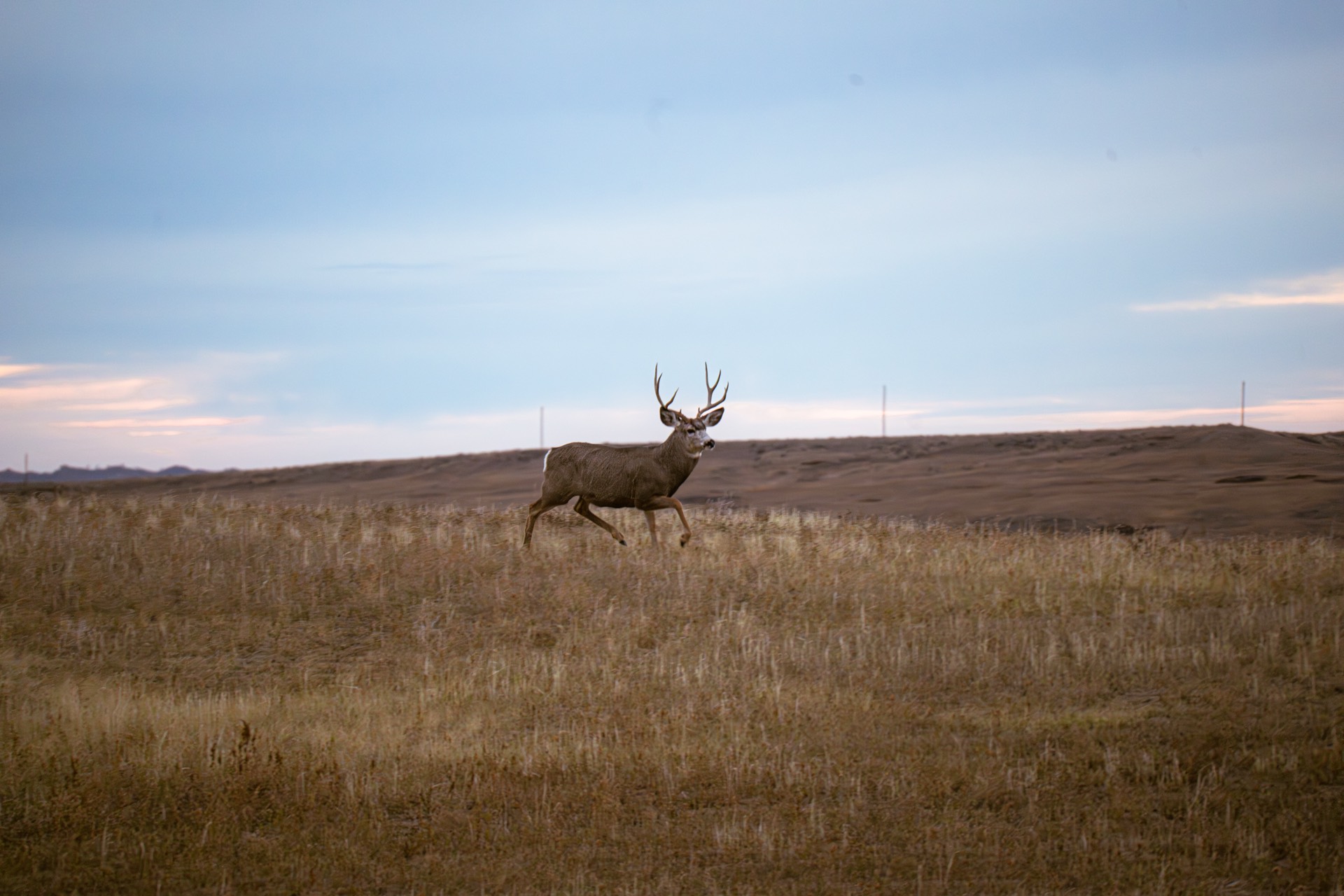
Horse Heaven Hills wheat country — CRP muleys on a nearly all-private, wind-farmed ridge
WDFW Region 3 — South Central (District 4, Benton) · Last reviewed 2026-07-12
Area
1,161
sq mi
Public land
10%
approx.
Elevation
300–3,100
feet
Motorized
limited
access
Overview
GMU 373 Horse Heaven is the dryland-wheat ridge arching over the southern edge of the Tri-Cities in Benton County. It is almost entirely private ground — a few small BLM tracts in the Horse Heaven Hills, scattered DNR parcels, and the USFWS Umatilla National Wildlife Refuge along the Columbia are the only public options. Thousands of acres of winter wheat and CRP/SAFE cover have become important mule deer habitat as native shrub-steppe has been lost, so muleys are the draw, with occasional small groups of Rocky Mountain elk and a rare whitetail. Success here is fundamentally about private-land access — through WDFW's access programs or landowner permission.
Terrain
A single dominant east-west ridge — the Horse Heaven Hills — of rolling dryland farm country climbing from the Columbia River bottom to a broad grain-and-CRP plateau, with urban sprawl pushing up the eastern slope near the Tri-Cities.
Cover: Dryland winter wheat and other dryland grains interlaced with CRP and SAFE grass cover and remnant big-sagebrush shrub-steppe; riparian brush along the Columbia. The plateau is now heavily developed with wind-turbine farms.
Landmarks: Horse Heaven Hills · Columbia River (south boundary) · Umatilla National Wildlife Refuge · Tri-Cities urban edge (northeast) · Wind-turbine developments
Access
GMU 373 is essentially all private except a few small pieces of BLM, DNR, and the Umatilla NWR along the Columbia. Some private ground is locked up among family and friends, so preseason legwork and early permission requests are essential. The practical public path is WDFW's private-lands access programs — Register to Hunt, Feel Free to Hunt, Hunt by Reservation, and Hunt by Written Permission — which enroll working farms; check the Private Lands website and Hunt Planner map each year because enrolled properties change. Umatilla NWR (Deer Areas 3071) offers additional deer opportunity under refuge rules. Know exactly whose land you're on.
Managers: Private dryland-wheat ranches, BLM (Horse Heaven Hills tracts), WA DNR (scattered tracts), USFWS Umatilla National Wildlife Refuge
Access points: BLM parcels in the Horse Heaven Hills · WDFW access-program (Register/Feel Free to Hunt) enrolled farms · Umatilla NWR units along the Columbia (near Paterson/Plymouth) · Scattered DNR tracts
Species notes
Mule Deer
common opportunityMule deer are the headline species, holding in the winter wheat and CRP/SAFE cover that has replaced native shrub-steppe. Deer are on the BLM tracts in the Horse Heaven Hills, scattered DNR, the Umatilla NWR deer areas, and private ground within WDFW access programs — but district general-season buck success is modest (roughly a 22–28% five-year range) and access is the limiter.
- →Do the preseason work: map BLM/DNR tracts and lock in access-program or private permission early
- →Glass CRP fields, wheat-stubble edges, and coulees at first and last light where muleys feed and bed
- →Cover ground between grain and cover blocks — deer relate to the ag/CRP mosaic
- →Hunt the Umatilla NWR deer areas as a public fallback under refuge rules
Rocky Mountain Elk
transient opportunityOnly small groups of Rocky Mountain elk (part of the broader Hanford/Rattlesnake Hills spillover) drift through 373, and they are rarely encountered off private land. Elk here is an opportunistic bonus, not a reliable hunt.
- →Elk success depends almost entirely on private land access — coordinate early
- →Watch large grain and CRP blocks where transient groups feed
- →Don't build a trip around elk in this unit
Whitetail Deer
transient lowWhite-tailed deer are under one percent of deer on district surveys; the season exists so hunters can legally take an incidental whitetail encountered during mule deer season.
- →Watch riparian brush and cropland edges near the Columbia
- →Treat any whitetail as a target of opportunity only
Pro tips
- →Access is everything — start knocking on doors and checking WDFW access-program enrollment (Register/Feel Free to Hunt) months before the opener
- →Learn the small BLM and DNR tracts in the Horse Heaven Hills exactly; they're islands in a sea of private wheat
- →Glass the CRP-and-stubble mosaic at the edges of light where muleys feed and bed
- →Use the Umatilla NWR deer areas as a reliable public backstop under refuge rules
- →Verify boundaries constantly with the WDFW Hunt Planner map — public and private are tightly interwoven
Watch out for
- !Nearly all private land — trespass risk is high and some ground is locked up for family/friends only
- !Urban sprawl and wind-farm development on the plateau limit where you can safely and legally hunt
- !Access-program enrolled properties change year to year — confirm before you go
- !Cheatgrass/CRP wildfire and burn closures
- !Dry, windy, waterless country — plan water and check refuge-specific rules on the Umatilla NWR
Logistics
I-82, Hwy 397, and I-84 (across the river in Oregon) rim the unit; Kennewick and the Tri-Cities supply fuel, lodging, and services, with Prosser to the west. This is the dry Columbia Plateau (6–9 inches of precipitation) — carry water. Most hunters day-trip from town; camping is limited. Cell coverage is good across the developed ridge and valley.
Nearest towns: Kennewick, Prosser, Paterson, Plymouth, Roosevelt
Seasons & regulations
This page carries no season dates or regulations. Get current rules from the official Washington sources:
Research sources: 2025 District 4 Hunting Prospects (Benton & Franklin Counties), WDFW · Washington Unit 373 — Horse Heaven Unit Profile, GoHunt · WDFW Game Management Units
FAQ
- How big is GMU 373 in Washington?
- GMU 373 (Horse Heaven) covers about 1,161 square miles, ranging from roughly 300 to 3,100 feet in elevation. Area is computed from the unit boundary polygon.
- How much public land is in GMU 373?
- Approximately 10% of the unit is public land. Primary managers: Private dryland-wheat ranches, BLM (Horse Heaven Hills tracts), WA DNR (scattered tracts), USFWS Umatilla National Wildlife Refuge. Always verify ownership boundaries on the ground.
- What species does the catalog list for GMU 373?
- Mule Deer, Rocky Mountain Elk, Whitetail Deer. For seasons, tags, and regulations, use the official Washington agency resources linked on this page — this page carries no regulatory information.
Put GMU 373 on your map.
Boundary lines, public/private ownership, topo, and offline maps for this unit — in Baseline Maps, free for 14 days.