GMU 379 Ringold
Hanford Reach mule-deer wintering ground on the Columbia — a public-land island in a private-land county
WDFW Region 3 — Columbia Basin / District 4 (Franklin County) · Last reviewed 2026-07-12
Area
512
sq mi
Public land
20%
approx.
Elevation
350–1,200
feet
Motorized
moderate
access
Overview
GMU 379 Ringold covers roughly 512 square miles of western Franklin County along the Hanford Reach of the Columbia River, and it is one of District 4's better bets for the do-it-yourself hunter because it holds real public ground: the Ringold Unit of the Hanford Reach National Monument and several units of the WDFW Sunnyside Snake River Wildlife Area. WDFW calls this excellent mule-deer habitat and an important winter range — most deer migrate in from GMUs to the north starting in October, so the unit fills as the season deepens. Small groups of around 100 elk (part of the Rattlesnake Hills sub-herd of the Yakima herd) also drift through, and Ringold has both early and late archery/muzzleloader elk seasons plus modern rifle.
Terrain
Low, open Columbia Basin river country: the Hanford Reach and its White Bluffs on the west edge rising east over sagebrush terraces, sand dunes, and dryland-farm plateau. Riparian ribbons and irrigated ground provide the cover and forage in an otherwise treeless landscape.
Cover: Big sagebrush, bitterbrush, rabbitbrush, and bunchgrass shrubsteppe on the untillable ground; cheatgrass carpets the burned and disturbed areas; riparian willow, cattail, and Russian olive along the river and drains; irrigated crops, orchards, vineyards, and CRP/SAFE cover on the farmed ground.
Landmarks: Hanford Reach of the Columbia River · White Bluffs · Ringold Unit (Hanford Reach National Monument) · Sunnyside Snake River Wildlife Area units · Ringold Springs / fish hatchery area · town of Mesa
Access
Better public access than most of District 4, but still an access-driven unit. The Ringold Unit of the Hanford Reach National Monument and the WDFW Sunnyside Snake River Wildlife Area provide the core walk-in ground (check weapon restrictions — parts of the Monument are archery/muzzleloader only). WDFW notes these areas are parking-limited, with vehicle-lot caps (about eight vehicles per lot at Ringold), so arrive early. Everything off the public blocks is private with high demand — coordinate landowner permission well ahead of the opener, and pin down WDFW Private Lands Access (Hunt by Written Permission / Feel Free to Hunt) parcels on the Hunt Planner. Discover Pass required on WDFW/DNR land.
Managers: USFWS Hanford Reach National Monument (Ringold Unit), WDFW Sunnyside Snake River Wildlife Area (Thornton, Rattlesnake Slope, Hope Valley units), Private dryland-wheat and irrigated ag, WDNR parcels (often ag-leased), BLM tracts, WDFW Private Lands Access Program enrollments
Access points: Ringold Road / Ringold River Road off SR 17 · Hanford Reach Monument Ringold Unit river access · Sunnyside Snake River WLA unit parking lots (limited vehicles) · SR 17 and county section-line grid north of Mesa · Columbia River access below the White Bluffs
Species notes
Mule Deer
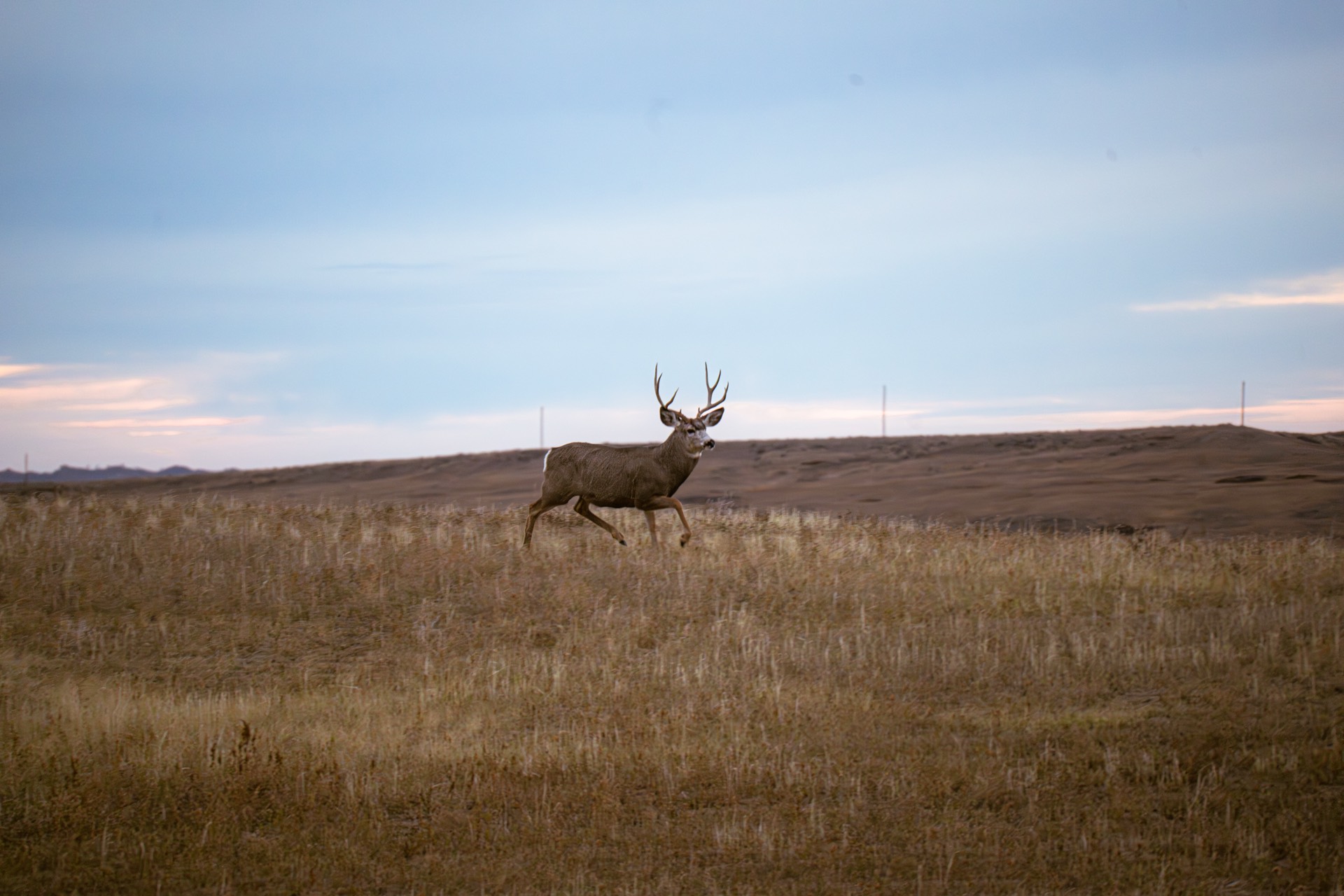
common opportunityThe unit's headline species and its reason to hunt. WDFW describes GMU 379 as excellent mule-deer habitat and an important wintering area — a modest resident herd is boosted by migrants pushing down from northern GMUs beginning in October, so the deer build through fall. Early archery/muzzleloader, modern firearm, and a late muzzleloader season all run here, with the late primitive hunt a solid November option as migrants arrive.
- →Hunt the public core first: the Ringold Unit of the Hanford Reach Monument and the Sunnyside Snake River WLA units
- →Glass sage terraces, draws, and the river-break edges at first and last light
- →Key on the wheat/CRP-to-sage edges and irrigated-ground fringes where deer feed
- →Time a late-muzzleloader hunt to the October–November migration when the unit fills with northern deer
- →Lock down Private Lands Access written-permission parcels before the opener
Rocky Mountain Elk
limited opportunitySmall groups of around 100 elk use the unit — outliers of the Rattlesnake Hills sub-herd of the Yakima Elk Herd, which winter-counted about 2,497 animals across the broader Hanford area in 2024 (well above objective). Ringold offers early and late archery/muzzleloader plus modern elk seasons, and hunter success here has been increasing, but numbers are low and the herd famously beds on closed federal Hanford ground by day.
- →Hunt the Sunnyside Snake River WLA and occasionally-open Ringold Monument ground when elk are present
- →Chase fresh sightings — these are mobile, low-density groups that come and go
- →Work dawn and dusk when elk move off refuge ground to feed on crops and forage
- →Private-land access near forage crops is the single biggest success driver
Whitetail Deer
limited opportunityWhite-tailed deer are uncommon district-wide (under one percent of deer on surveys) but occur in small numbers along the richer riparian corridors and irrigated bottoms rather than the open sage.
- →Focus on Columbia-side riparian brush and irrigated ag bottoms
- →Identify species carefully — mulies and whitetails overlap and season rules can differ
- →Antlerless/ag opportunity is easier to arrange than mature-buck access
Cougar
transient opportunityA thin cougar presence tracks the deer along the Columbia and Snake river breaks. Not a destination — an incidental add-on to a deer hunt.
- →Cut for tracks in the river-break draws and riparian cover after fresh snow
- →Treat it as opportunistic to deer hunting
- →Odds are low in this open country
Pro tips
- →This is a migration unit — the deer build through fall, so a late-season or late-muzzleloader hunt can beat the opener as northern deer pour in.
- →Arrive early at the Sunnyside Snake River WLA and Ringold Monument lots; vehicle numbers are capped (about eight per lot) and the good ground fills fast.
- →Check weapon restrictions on the Ringold Unit of the Hanford Reach Monument before you go — parts are limited to archery/muzzleloader.
- →Elk here are increasing and huntable but low-density and refuge-savvy; success hinges on catching them off the closed Hanford ground at first and last light.
- →Map WDFW Private Lands Access (HBWP/Feel Free to Hunt) parcels on the Hunt Planner and secure written permission early — private demand is high.
Watch out for
- !Much of the county is private and demand for access is intense — do not trespass, including on corners and during game retrieval.
- !The core Hanford Site itself is closed federal ground; elk and deer use it as daytime refuge and it is off-limits.
- !Public parking is limited with vehicle caps — showing up late can mean no legal parking on the best units.
- !Cheatgrass fuels fast shrubsteppe fires; be fire-wise and expect possible fire closures in dry autumns.
- !CWD carcass-transport rules apply in eastern Washington — check the current pamphlet.
Logistics
Pasco (Tri-Cities) is the natural base for fuel, lodging, and full resupply, about 30–45 minutes south; Mesa, Connell, and Othello cover quick supplies. Cell coverage is decent near the towns and highways and thins on the back sage and monument roads. Roads are a paved-plus-gravel section grid; unimproved tracks turn greasy when wet, and river-bottom sand can trap two-wheel-drive.
Nearest towns: Pasco, Mesa, Othello, Connell, Basin City
Seasons & regulations
This page carries no season dates or regulations. Get current rules from the official Washington sources:
Research sources: WDFW 2024 District 4 Hunting Prospects (Benton & Franklin counties) · WDFW 2025 District 4 Hunting Prospects · WDFW Game Management Units · GoHunt — Washington Unit 379 Ringold Profile
FAQ
- How big is GMU 379 in Washington?
- GMU 379 (Ringold) covers about 512 square miles, ranging from roughly 350 to 1,200 feet in elevation. Area is computed from the unit boundary polygon.
- How much public land is in GMU 379?
- Approximately 20% of the unit is public land. Primary managers: USFWS Hanford Reach National Monument (Ringold Unit), WDFW Sunnyside Snake River Wildlife Area (Thornton, Rattlesnake Slope, Hope Valley units), Private dryland-wheat and irrigated ag, WDNR parcels (often ag-leased), BLM tracts, WDFW Private Lands Access Program enrollments. Always verify ownership boundaries on the ground.
- What species does the catalog list for GMU 379?
- Mule Deer, Rocky Mountain Elk, Whitetail Deer, Cougar. For seasons, tags, and regulations, use the official Washington agency resources linked on this page — this page carries no regulatory information.
Put GMU 379 on your map.
Boundary lines, public/private ownership, topo, and offline maps for this unit — in Baseline Maps, free for 14 days.