GMU 388 Grayback
Oak-and-ponderosa transition country in the Simcoe Mountains: a trophy-managed 3-point buck unit walled off by private land.
WDFW Region 5 — Southwest Washington (Klickitat County, East Cascades transition) · Last reviewed 2026-07-12
Area
489
sq mi
Public land
11%
approx.
Elevation
500–5,500
feet
Motorized
limited
access
Overview
GMU 388 "Grayback" is a ~489-square-mile unit in WDFW District 9 straddling the east-Cascade transition of Klickitat County, north of the Columbia and southeast of Mount Adams. It runs from shrub-steppe and dryland wheat ground up through Oregon-white-oak and ponderosa savanna into heavier Douglas-fir timber in the north near Grayback Mountain and the Simcoe range. It is roughly 87% private and only about 11% public — the WDFW-managed Klickitat Wildlife Area (Soda Springs Unit) is the anchor of open ground. Grayback is one of three Klickitat GMUs (with 382 and 578) managed under a 3-point-or-better antler restriction that collectively produce about 1,000 mature bucks a year, making it a genuine trophy-buck destination for hunters who solve the access puzzle. Elk are scarce and require an Eastern Washington elk tag; deer are the draw.
Terrain
A tilted, east-Cascade transition unit: low shrub-steppe and river-canyon breaks along the south and east climb north and west into oak-ponderosa foothills and finally timbered ridges of the Simcoe Mountains near Grayback Mountain. Relief is substantial from the Klickitat River canyon up to the forested divide.
Cover: A mosaic of bunchgrass/sagebrush shrub-steppe, dryland agriculture, and Oregon-white-oak and ponderosa-pine savanna, grading into denser mixed conifer (Douglas-fir, ponderosa) in the higher, wetter north end. Oak draws, brushy canyons, and clearcut/regen pockets on industrial timber hold deer.
Landmarks: Grayback Mountain / Simcoe Mountains (north) · Klickitat Wildlife Area — Soda Springs Unit · Klickitat River corridor · Yakama Nation 'Tract D' (northwest finger of the GMU) · Glenwood / Camas Prairie area · Goldendale (south)
Access
Access is the hard part: GMU 388 is roughly 87% private and only ~11% public. The Klickitat Wildlife Area's Soda Springs Unit is the main block of open public ground and offers good deer and turkey hunting. Major industrial timber owners — American Forest Management (AFM), DGS Timber LLC (also AFM-managed), and Manulife (formerly Hancock Forest Management) — generally allow non-motorized (walk-in) access on their Klickitat holdings; obey posted signs at access points, check the AFM website for maps, and call the Manulife hotline (509-364-3331) to confirm current status. Note a major closure: as of Sept. 1, 2023, all Western Pacific Timber lands in Klickitat County are closed to hunting. The northwest finger of the unit falls inside Yakama Nation 'Tract D' — a reservation area where both public and private ground carries tribal jurisdiction; hunt it only with an understanding of those rules. Some ground closes to motorized and even non-motorized access during fire season.
Managers: Private landowners (dryland ag & ranch), WDFW — Klickitat Wildlife Area (Soda Springs Unit), American Forest Management (AFM), DGS Timber LLC (managed by American Forest Management), Manulife (formerly Hancock Forest Management), Yakama Nation (Tract D)
Access points: Klickitat Wildlife Area — Soda Springs Unit access roads · Highway 142 / Klickitat River corridor from Goldendale · Glenwood-Goldendale road network (north) · Gated timber-company mainlines (AFM / Manulife) open to walk-in
Species notes
Blacktail Deer
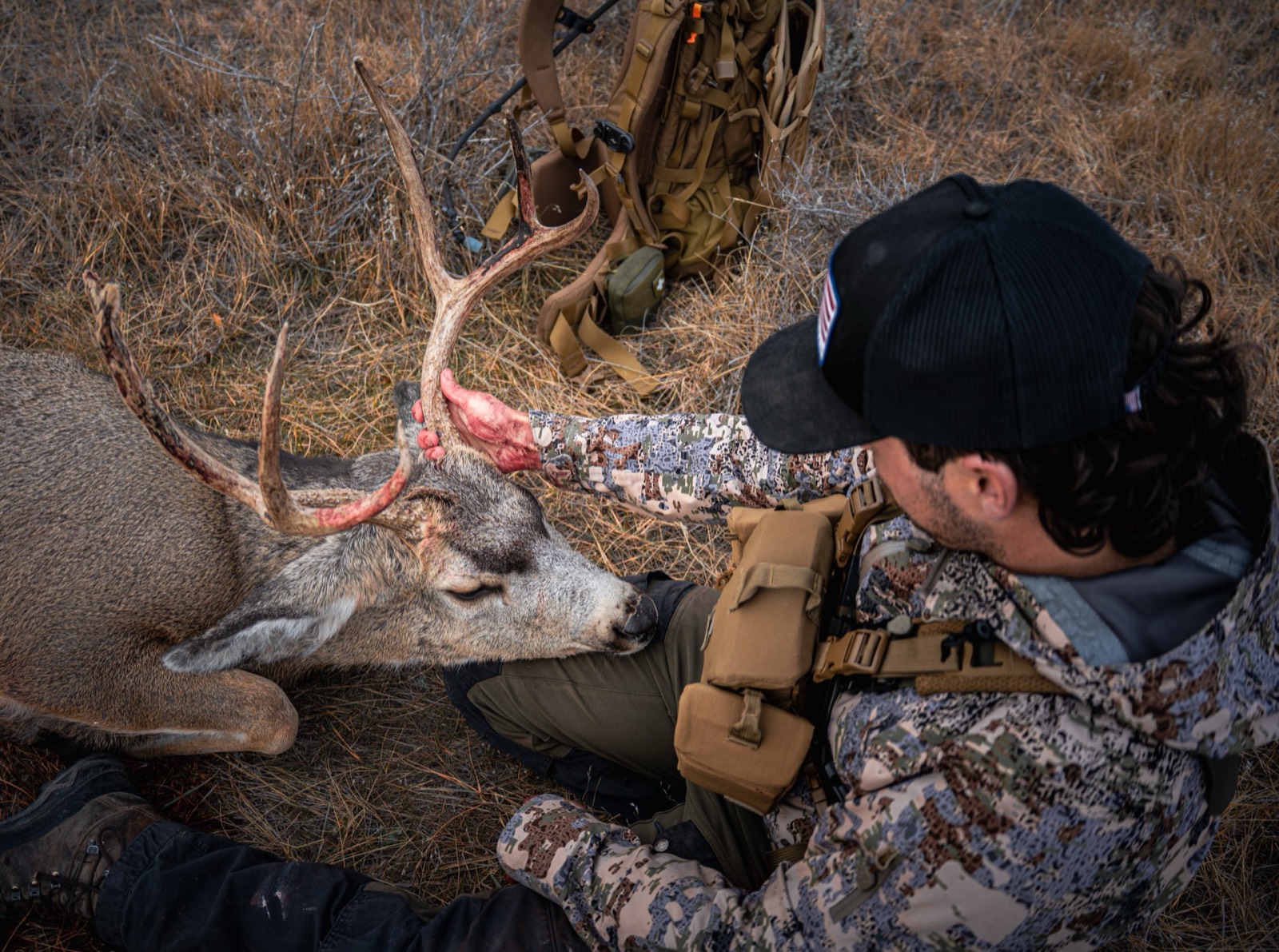
common trophyWDFW manages Grayback's deer as black-tailed deer under a 3-point-or-better antler restriction, and it's a legitimate trophy-buck unit — the three Klickitat GMUs (388, 382, 578) together yield roughly 1,000 mature bucks a year. This is a Cascade-crest transition zone, so black-tail/mule-deer hybrids are common and the eastern shrub-steppe fringe shows mule-deer influence. Aerial and driving-route surveys show a slightly increasing population with fawn ratios near the 10-year average; antlerless permits have been cut nearly to zero to aid recovery.
- →Focus on the Klickitat Wildlife Area's Soda Springs Unit — the anchor of public deer ground in the GMU.
- →Hunt oak-draw and ponderosa edges where forage meets thick escape cover; mature bucks here are nocturnal and use brushy canyons hard.
- →Be in position at first and last light near food sources adjacent to security cover.
- →Hunt the rut hard — bucks travel widely and expose themselves in clearcuts and open oak savanna searching for does. Note: none of the Klickitat GMUs allow a general-season late-buck rifle hunt, so plan around the regular rut window.
- →On AFM and Manulife walk-in timber, get well back from gated mainlines to reach bucks off the road-hunting pressure.
Mule Deer
limited qualityGrayback sits on the Cascade-crest transition, so true mule deer and blacktail-mule hybrids appear on the drier, eastern shrub-steppe and dryland-ag fringe of the unit. WDFW counts hybrids toward mule-deer management. Numbers are lower than the blacktail core, but the open eastern breaks give a mule-deer-style spot-and-stalk option.
- →Glass sage/bunchgrass breaks and dryland-ag edges on the eastern and southern fringe at dawn.
- →Work the transition line where oak-ponderosa meets open shrub-steppe.
- →Most of this eastern ground is private ranch/ag — line up landowner permission before the season.
Rocky Mountain Elk
limited opportunityA small number of elk (part of the greater Yakima/Klickitat Rocky Mountain elk range) use the northwest, higher-elevation portion of the unit. GMU 388 requires an Eastern Washington elk tag — a key distinction from most of District 9. Elk are less abundant here than in the Cascade units to the west, so treat elk as a bonus, not the objective.
- →Concentrate on the timbered northwest end of the unit where the few resident elk hold.
- →Carry the correct Eastern Washington elk tag — 388 and 382 are the District 9 exceptions.
- →Be mindful of the Yakama Nation Tract D boundary in the northwest finger.
- →Glass timber/forage edges early and late; expect bulls to stay in cover by day.
Black Bear
limited opportunityGMU 388 falls in the South Cascades East Black Bear Management Unit, with a general season that runs Aug. 1 through Nov. 15 (two-bear statewide limit). Bears are present but at lower densities than the wet west-Cascade units, and East Cascade success rates run well below the statewide average (roughly 6-7%). A successful bear hunter must submit the premolar tooth.
- →Scout late-summer berry feed — blackberries, huckleberries, and snowberries — on regen timber and oak edges.
- →Glass open clearcuts and burns early and late for feeding bears.
- →Check carefully for cubs before shooting; harvesting a female with cubs is illegal.
- →Submit the required premolar tooth by the reporting deadline.
Cougar
common opportunityCougars occur throughout the Klickitat oak-ponderosa and timber country, tracking the deer herds. Most are taken opportunistically by deer hunters. The season is harvest-cap managed by population unit and can close mid-season, so verify current status before and during your hunt.
- →Treat cougar as an opportunistic add-on while hunting deer — carry the species option on your license.
- →Hunt where deer concentrate; cats follow the prey.
- →Cut fresh snow on ridge roads and oak benches for tracks.
- →Check the cap-managed hunt-area status regularly, as it can close once the threshold is hit.
Pro tips
- →Play 388 for what it is: a trophy 3-point-buck unit. If you want a mature blacktail, this is one of the best corners of District 9.
- →Lean on the Klickitat Wildlife Area (Soda Springs Unit) as your public-land anchor, then expand onto AFM/Manulife walk-in timber.
- →Get landowner permission early — 87% of the unit is private and the good eastern mule-deer ground is ranch and dryland ag.
- →Carry the correct Eastern Washington elk tag if you plan to chase the few elk in the northwest end.
- →Know exactly where Yakama Nation 'Tract D' begins in the northwest finger — tribal jurisdiction applies to both public and private ground there.
- →Hunt the rut and hunt hard away from gated mainlines; there is no general late-buck rifle season to fall back on.
Watch out for
- !Access is the limiting factor — ~87% private, ~11% public. Don't assume open ground without checking ownership.
- !All Western Pacific Timber lands in Klickitat County have been CLOSED to hunting since Sept. 1, 2023.
- !The northwest finger lies in Yakama Nation 'Tract D'; public and private land there carries tribal jurisdiction.
- !3-point-or-better antler restriction applies, and there is NO general-season late-buck rifle hunt in the Klickitat GMUs.
- !Early-season wildfire danger can close timber and wildlife-area roads to motorized and even non-motorized travel.
- !GMU 388 requires an Eastern Washington elk tag — different from most of District 9.
Logistics
Base out of Goldendale for motels, fuel, and groceries, or the White Salmon/Bingen area on the Columbia to the southwest; Glenwood is the small crossroads nearest the north end. Roads are a mix of county blacktop, dryland-ag gravel, and gated timber mainlines — carry a current ownership/access map (WDFW Hunt Planner, plus AFM and Manulife maps) because the public/private mosaic is tight and unforgiving. Camping is limited; plan on the Klickitat Wildlife Area (Soda Springs Unit) or dispersed sites, and line up private permission well ahead of the season.
Nearest towns: Goldendale, Glenwood, Lyle, Klickitat, White Salmon
Seasons & regulations
This page carries no season dates or regulations. Get current rules from the official Washington sources:
Research sources: WDFW 2025 District 9 Hunting Prospects — GMU 388 Grayback summary (~87% private/~11% public, habitat, Soda Springs Unit, Tract D, Western Pacific Timber closure), deer/elk/bear narratives · WDFW 2023 District 9 Hunting Prospects (Klickitat GMU deer/elk/access) · WDFW GMU 388 boundary map · WDFW Game Management Units (boundaries & maps)
FAQ
- How big is GMU 388 in Washington?
- GMU 388 (Grayback) covers about 489 square miles, ranging from roughly 500 to 5,500 feet in elevation. Area is computed from the unit boundary polygon.
- How much public land is in GMU 388?
- Approximately 11% of the unit is public land. Primary managers: Private landowners (dryland ag & ranch), WDFW — Klickitat Wildlife Area (Soda Springs Unit), American Forest Management (AFM), DGS Timber LLC (managed by American Forest Management), Manulife (formerly Hancock Forest Management), Yakama Nation (Tract D). Always verify ownership boundaries on the ground.
- What species does the catalog list for GMU 388?
- Blacktail Deer, Mule Deer, Rocky Mountain Elk, Black Bear, Cougar. For seasons, tags, and regulations, use the official Washington agency resources linked on this page — this page carries no regulatory information.
Put GMU 388 on your map.
Boundary lines, public/private ownership, topo, and offline maps for this unit — in Baseline Maps, free for 14 days.