GMU 41 Spokane Indian Reservation
A sovereign tribal unit above Lake Roosevelt — hunting here is closed to the general public and reserved for Spokane Tribal members.
WDFW Region 1 — Eastern Washington (Spokane Indian Reservation, Stevens County) · Last reviewed 2026-07-12
Area
245
sq mi
Public land
0%
approx.
Elevation
1,290–4,200
feet
Motorized
limited
access
Overview
GMU 41 covers the Spokane Indian Reservation, a ~245-square-mile block of tribal and trust land in the pine-forested hills of Stevens County, bounded by the Spokane River to the south, the Columbia River / Lake Roosevelt to the west, and Chamokane Creek to the east, with Wellpinit as the tribal seat. Unlike a standard WDFW game unit, this is sovereign land: hunting and fishing within the reservation boundaries are open ONLY to enrolled members of the Spokane Tribe of Indians (with a limited courtesy-permit privilege for member spouses and first-generation descendants). Wildlife is managed by the Spokane Tribe's Wildlife Program under its own Fish, Wildlife and Recreation Code, not by Washington state seasons. The country holds strong whitetail deer along with mule deer, a managed elk herd, black bear, moose, cougar, and turkey — but for the non-tribal app user, this GMU is effectively closed to hunting.
Terrain
Rolling, timbered plateau and river-canyon country: from the shoreline of Lake Roosevelt and the Spokane River arm (~1,290 ft at full pool) up through forested draws and ridges to plateau highlands well above 4,000 ft around Wellpinit. Deep river breaks rim the west and south.
Cover: Interior-Northwest dry forest — ponderosa pine and Douglas-fir with grand fir and larch on cooler aspects, open bunchgrass and shrub on south-facing breaks, and brushy riparian bottoms along creeks and the reservoir shoreline. Old burns and timber-harvest openings create forage edges.
Landmarks: Lake Roosevelt / Columbia River (west boundary) · Spokane River (south boundary) · Chamokane Creek (east boundary) · Wellpinit (tribal headquarters) · Little Falls (Spokane River) · Ford / Tshimakain Creek area
Access
This is not open public hunting ground. Hunting and fishing within the exterior boundaries of the Spokane Indian Reservation are open ONLY to enrolled members of the Spokane Tribe of Indians. As a privilege, spouses of enrolled members and first-generation descendants may hunt deer only after first obtaining a tribal Courtesy Permit and the applicable Hunting Permits, and only during designated seasons. There is no general-public or non-tribal state-license access, and Washington state (WDFW) seasons and tags do NOT authorize hunting here — the reservation is managed under the Spokane Tribe's own Fish, Wildlife and Recreation Code. Non-members should treat GMU 41 as closed. Questions go to the Spokane Tribe Wildlife Program / Tribal Law Enforcement, not WDFW. Note also that harvest of collared deer, elk, and bear is prohibited under tribal rules.
Managers: Spokane Tribe of Indians (tribal & BIA trust land), Spokane Tribe Wildlife Program (wildlife management authority)
Access points: Wellpinit (tribal headquarters / Wildlife Program) · Reservation road network (tribal jurisdiction — members and permitted hunters only)
Species notes
Whitetail Deer
common qualityWhite-tailed deer are the mainstay of the reservation's deer hunting, thriving in the mixed pine-fir forest, timber edges, and brushy creek bottoms typical of northeastern Washington. The Spokane Tribe runs distinct white-tail buck and antlerless seasons for members. Note this is tribal-managed hunting — the strong regional whitetail resource is accessible only to Spokane Tribal members and permitted family.
- →Hunt timber-edge and riparian bottoms along Chamokane Creek and the reservoir draws where whitetails concentrate.
- →Work forest openings and old harvest units at first and last light.
- →Rut movement in the late season is the prime window for a mature whitetail buck.
- →Members should follow tribal season structure and avoid collared animals per tribal code.
Mule Deer
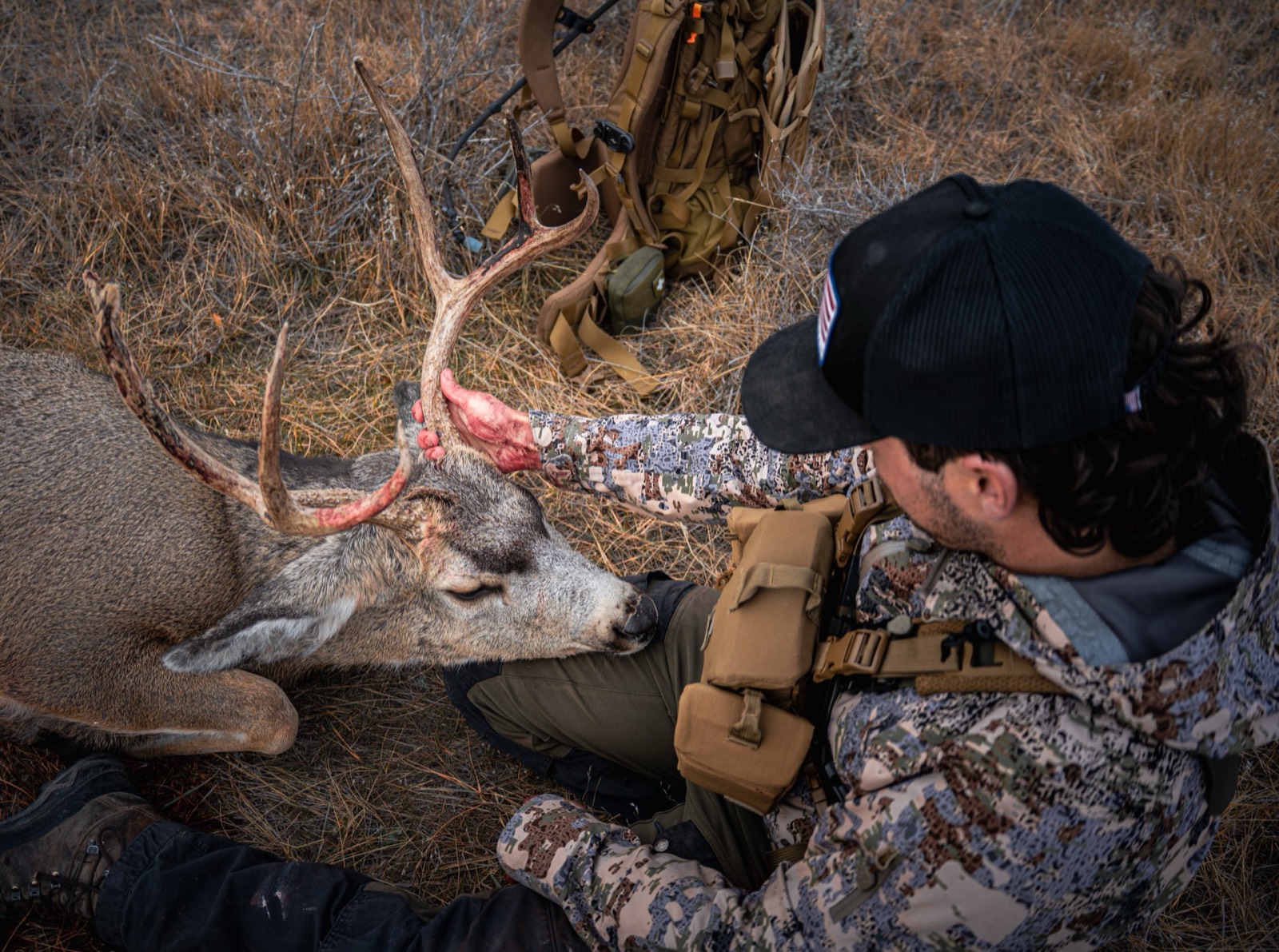
common qualityMule deer share the reservation with whitetails, favoring the drier, more open south- and west-facing breaks above the Spokane and Columbia rivers. Tribal rules cap mule deer at no more than two per household and — importantly — classify any black-tail or white-tail/mule-deer hybrid as a mule deer for bag purposes. Antlerless mule-deer opportunity is tightly managed and has been closed in some years.
- →Glass open bunchgrass and shrub breaks on south and west aspects above the river canyons at dawn.
- →Hunt the ponderosa/grassland transition where mule deer feed and bed.
- →Respect the household mule-deer limit and the hybrid classification rule under tribal code.
- →Do not harvest collared mule deer.
Rocky Mountain Elk
limited opportunityThe reservation supports a managed elk herd that the Spokane Tribe hunts through general and special-permit seasons (senior antlerless, a South Half spike-only bull area west of Little Falls to Wellpinit, and antlerless cow permits), with a limit of one elk per member per year. Elk are a permit-limited, tribally managed resource rather than an abundant general opportunity.
- →Members should apply for the appropriate tribal special elk permit for the area they intend to hunt.
- →The spike-only bull area lies south of the highway from Little Falls west to Wellpinit — key on that timbered ground.
- →Glass forest-meadow and timber-harvest edges early and late.
- →Avoid collared elk per tribal regulations.
Black Bear
common opportunityBlack bears inhabit the reservation's pine-fir forest and brushy draws and are hunted by tribal members under the Spokane Tribe's bear season; pursuing bears with hound dogs requires an annual special hound permit issued through Tribal Council. All bears must be physically checked in at the tribal Department of Natural Resources within 72 hours of harvest.
- →Scout berry-rich draws, old burns, and harvest openings in late summer and early fall.
- →Glass open feeding areas at dawn and dusk.
- →Members using hounds must hold the annual special hound permit from Tribal Council.
- →Check bears in at tribal DNR within 72 hours and avoid collared bears.
Moose
limited opportunityMoose have expanded across northeastern Washington and the Spokane Tribe offers a limited moose season for members, reflecting a small but present population in the reservation's wetter timber and riparian bottoms. This is a rare, closely managed opportunity.
- →Focus on willow-and-brush riparian bottoms, beaver ponds, and moist timber pockets.
- →Hunt early and late when moose move to feed.
- →Follow the tribal moose permit/season structure and check-in requirements.
Cougar
common opportunityCougars range throughout the reservation's forested country, following the deer and elk. They are taken by tribal members largely opportunistically or with hounds under tribal regulation. Densities track the strong deer base.
- →Hunt where deer concentrate — the cougars' primary prey — in timbered draws and river breaks.
- →Cut fresh snow on ridge roads and benches for tracks.
- →Follow tribal rules on hound use and mandatory check-in.
Pro tips
- →For non-tribal hunters this unit is effectively closed — plan your hunt on the surrounding WDFW GMUs (e.g., the 100-series units) instead.
- →Enrolled members and eligible family should coordinate seasons and permits directly through the Spokane Tribe Wildlife Program in Wellpinit.
- →Whitetail along the timbered creek bottoms and mule deer on the open river breaks are the twin deer opportunities.
- →Elk are permit-limited and area-specific (note the South Half spike-only bull area from Little Falls to Wellpinit).
- →Never harvest a collared animal — tribal code prohibits it for deer, elk, and bear.
- →Bear (and hound) hunting requires tribal permits and a 72-hour check-in at tribal DNR.
Watch out for
- !GMU 41 is sovereign tribal land — hunting is open ONLY to enrolled Spokane Tribal members (and courtesy-permit spouses/first-generation descendants). It is closed to the general public.
- !A Washington state (WDFW) license and tags do NOT authorize hunting on the reservation; seasons are set by the Spokane Tribe's Fish, Wildlife and Recreation Code.
- !Trespass by non-members on tribal land can carry serious legal consequences under tribal jurisdiction.
- !Harvest of collared deer, elk, or bear is prohibited under tribal rules.
- !Regional CWD has been confirmed in nearby Region 1 GMUs — follow all carcass-handling and check-in requirements.
- !Do not rely on state-style season dates/bag limits for this unit; confirm everything with the Spokane Tribe.
Logistics
Wellpinit is the tribal headquarters and the seat of the Spokane Tribe Wildlife Program; off-reservation services (fuel, lodging, groceries) are found in Chewelah, Davenport, and the Spokane metro to the southeast. Because access is limited to tribal members and permitted family, there is no general-public logistics picture here — enrolled hunters coordinate seasons, permits, and mandatory check-ins directly through the Spokane Tribe Wildlife Program and tribal DNR. Non-members should plan hunts on the surrounding WDFW GMUs instead.
Nearest towns: Wellpinit, Ford, Reardan, Davenport, Chewelah, Spokane
Seasons & regulations
This page carries no season dates or regulations. Get current rules from the official Washington sources:
Research sources: Spokane Tribe of Indians — 2025 Tribal Members Hunting Seasons and Regulations (member-only access; whitetail, mule deer, elk permit areas, bear/hound & 72-hr check-in, moose season, collared-animal prohibition, courtesy permits) · Spokane Tribe Wildlife Program — 2024 Hunting Regulations · Spokane Tribe Reservation Fish, Wildlife and Recreation Code (Chapter 17) · WDFW Game Management Units (boundaries & maps; GMU 41 boundary near Chamokane Creek / Spokane Reservation)
FAQ
- How big is GMU 41 in Washington?
- GMU 41 (Spokane Indian Reservation) covers about 245 square miles, ranging from roughly 1,290 to 4,200 feet in elevation. Area is computed from the unit boundary polygon.
- How much public land is in GMU 41?
- Approximately 0% of the unit is public land. Primary managers: Spokane Tribe of Indians (tribal & BIA trust land), Spokane Tribe Wildlife Program (wildlife management authority). Always verify ownership boundaries on the ground.
- What species does the catalog list for GMU 41?
- Whitetail Deer, Mule Deer, Rocky Mountain Elk, Black Bear, Moose, Cougar. For seasons, tags, and regulations, use the official Washington agency resources linked on this page — this page carries no regulatory information.
Put GMU 41 on your map.
Boundary lines, public/private ownership, topo, and offline maps for this unit — in Baseline Maps, free for 14 days.