GMU 130 Cheney
Channeled Scablands mixed-deer unit around Cheney and Turnbull — the one District 2 GMU where mule deer outnumber whitetail in the bag, but the big public block is closed to hunting.
WDFW Region 1 — Spokane / Palouse (District 2) · Last reviewed 2026-07-12
Area
935
sq mi
Public land
7%
approx.
Elevation
1,900–2,800
feet
Motorized
moderate
access
Overview
GMU 130 "Cheney" is a 935-square-mile unit spanning Spokane and Lincoln counties southwest of Spokane, laid over the Channeled Scablands, ponderosa-pine breaks and Palouse farmland around the town of Cheney. It is the most mixed-deer unit in District 2: mule deer make up the majority (~62%) of the modern-firearm deer harvest here, sharing the ground with white-tailed deer along the wetter draws and timber. Public land is a bit higher than its neighbors (~7%), but the marquee block — Turnbull National Wildlife Refuge — is NOT open to general hunting (elk by special permit only), so most opportunity is still private and permission-based. Chronic Wasting Disease sampling is mandatory for deer, elk and moose taken in the unit.
Terrain
Classic Channeled Scablands and Palouse-margin country: basalt coulees, rock buttes, pothole lakes and pine-dotted scab rock interspersed with rolling wheat and grass. Elevations run roughly 1,900–2,800 ft with little vertical relief — this is expansive, broken-flat terrain, not mountains. The Turnbull refuge in the east holds pine forest, wetlands and lakes.
Cover: A scabland-Palouse mosaic: ponderosa pine stringers and groves on the basalt, bunchgrass and shrub-steppe on the scab rock, extensive dryland wheat and grass on the deeper soils, and cattail marsh/pothole wetlands (concentrated on Turnbull). Aspen and brush line the wetter draws where whitetail hold.
Landmarks: Turnbull National Wildlife Refuge (special-permit elk only) · Town of Cheney / Eastern Washington University · Fishtrap Lake and the Fishtrap scablands (west) · Channeled Scablands coulees and pothole lakes · Amber Lake / Williams Lake area · Lincoln County wheat ground (west)
Access
About 7% public — the highest of the three Spokane-area units — but the largest public block, Turnbull NWR, is closed to general hunting (elk only by WDFW special-permit draw, plus a limited youth waterfowl hunt and a planned reservation turkey hunt). Outside the refuge the unit is almost entirely private ag; larger public blocks are generally not open, and moose here are described as almost entirely on private ground. Real access comes from securing landowner permission, WDFW private-lands access enrollments (Feel Free to Hunt / Hunt by Written Permission), and CPWMA cooperative properties near Turnbull that host late-season and special-permit hunts. Scattered DNR and BLM scabland tracts add walk-in ground. Use onX and the county assessor maps to sort the checkerboard of private, refuge and scattered public parcels.
Managers: Private landowners (Palouse/scabland agriculture — majority), Turnbull National Wildlife Refuge (USFWS — NOT open to general hunting), Washington DNR (scattered state sections), BLM (scattered scabland tracts), Columbia Plateau Wildlife Management Association (CPWMA) cooperative properties
Access points: I-90 / Cheney-Spokane Road corridor (Cheney hub) · SR-904 through Cheney to the Fishtrap/Sprague scablands · CPWMA cooperative properties (special-permit/late-season hunts near Turnbull) · Scattered DNR/BLM scabland access roads west toward Lincoln County
Species notes
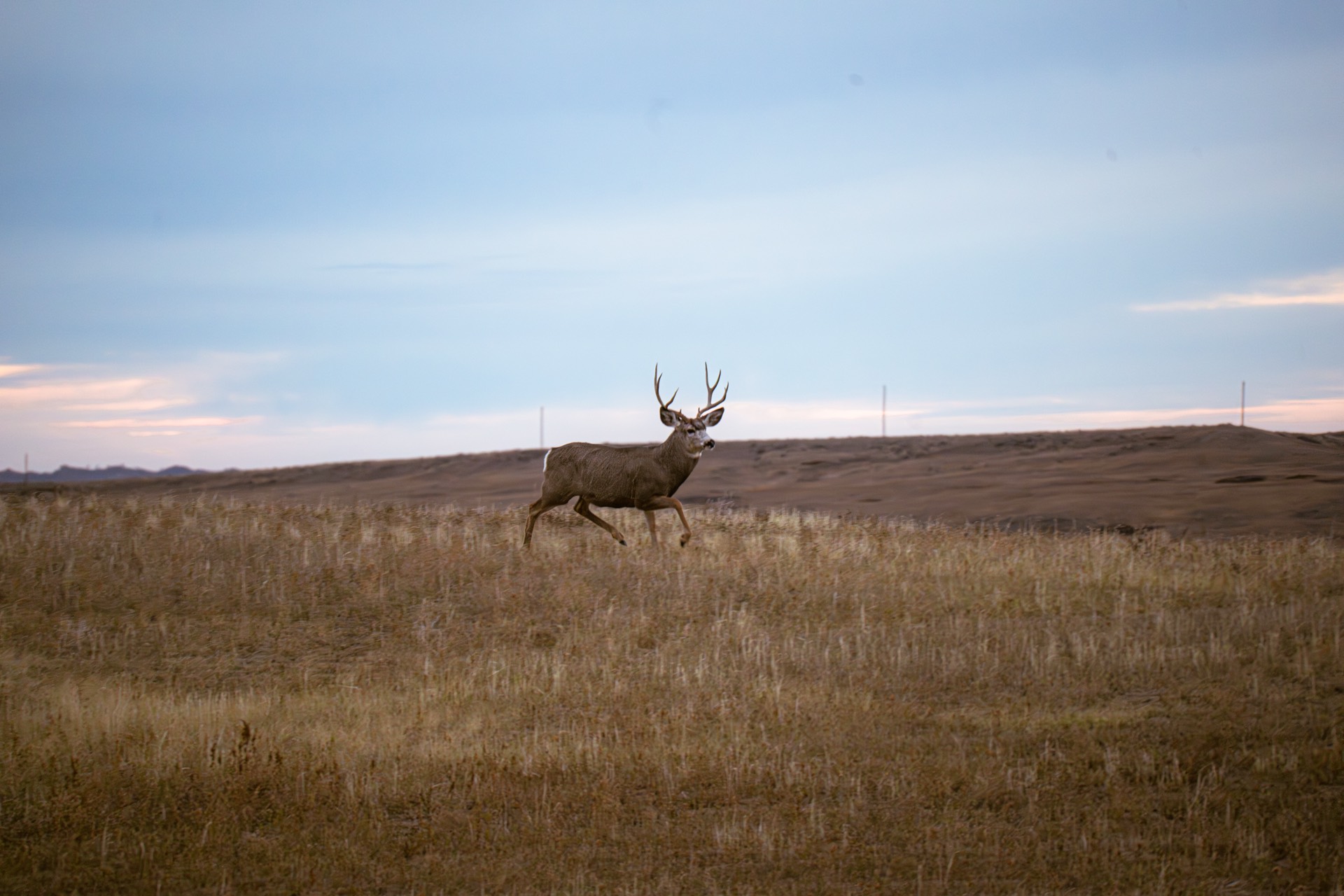
Mule Deer
common opportunityGMU 130 is the mule-deer standout among the Spokane-area units — muleys make up roughly 62% of the modern-firearm deer harvest, by far the highest whitetail-to-muley ratio of the three. These are scabland/Palouse-margin mule deer on the western edge of District 2's mule deer range. A 3-point minimum applies, and there are late general muzzleloader whitetail seasons in 130–142. Overall deer success is modest (~16% modern firearm) and mule deer recruitment took a hit in the 2021 heat/drought.
- →Glass scabland coulees, rock rims and pine stringers at first and last light, then plan a stalk on bedded bucks.
- →Hunt the transition where wheat and grass meet the broken basalt and pine — muleys use both.
- →Cover country; scabland deer are spread out — a spotting scope and boot leather beat road-hunting.
- →Be certain of species before shooting — whitetail and mule deer overlap and carry different rules.
Whitetail Deer
common opportunityWhite-tailed deer share the unit, holding in the wetter draws, aspen pockets, riparian brush and around the Turnbull/pothole margins rather than the open scab rock. They make up a bit under 40% of the deer harvest. A 3-point minimum applies to whitetail (late whitetail season is the draw-only Palouse Special Permit). District whitetail numbers are down after Bluetongue (2015) and EHD (2021) but recruitment is rebounding.
- →Hunt creek bottoms, aspen draws and brushy edges near water and ag where whitetail concentrate.
- →Still-hunt slowly and glass for pieces of a deer in the thicker cover.
- →Time the mid-November rut; the late muzzleloader whitetail season offers extra opportunity.
- →Submit head/lymph nodes for mandatory CWD sampling within the required window.
Rocky Mountain Elk
common qualityHunters who secure private access in GMUs 130 and 127 have often had the highest elk success in District 2 (~16% modern-firearm). In GMU 130 hunters likely benefit from elk moving on and off Turnbull NWR during the season, and elk are frequently targeted by landowners over crop, fence and haystack damage. A special-permit elk hunt (Elk Area 1015) operates within Turnbull, plus CPWMA raffle/permit hunts nearby.
- →Get permission on private ground adjacent to Turnbull and hunt elk as they move off the closed refuge.
- →Look into CPWMA cooperative hunts and the Turnbull special-permit draw for refuge access.
- →Glass pine groves and scabland edges at dawn/dusk where herds feed on ag and grass.
Moose
limited opportunityShiras moose occur but are dispersed and highly mobile, and the unit is almost entirely private with the larger public blocks closed to hunting. Moose are hunted under the Cheney MHU as antlerless-only permits — split off from the Hangman MHU in 2015 mainly to address suburban/rural moose conflict. Historically very few permittees hunt it and success has been spotty.
- →Secure private access first — the huntable moose ground is overwhelmingly private.
- →Glass willow and brushy wetland margins and aspen draws at first and last light.
- →Expect to cover ground and put in days; moose here are few and mobile.
Black Bear
limited lowBlack bear are scarce in this open scabland/ag unit — bear habitat and harvest in District 2 concentrate in the more heavily forested country to the north and east, not the Cheney scablands. Encounters are incidental at best.
- →Focus on the wetter, pine-timbered draws and refuge margins if pursuing bear at all.
- →Do not shoot sows with cubs; a premolar tooth submission is mandatory.
- →Treat bear as an opportunistic add-on to a deer/elk hunt here.
Cougar
limited opportunityCougars are present following deer through the scabland and refuge fringes, but GMU 130 harvest is usually very low compared with the district's top cat units. Take is opportunistic during deer and elk seasons.
- →Carry a cougar tag while deer/elk hunting; most cats are taken by chance.
- →Cut tracks in fresh snow along pine stringers and coulee rims near deer.
- →Hunt where deer concentrate along the refuge and riparian margins.
Pro tips
- →This is the mule-deer unit of the Spokane trio (~62% of the deer bag) — glass the scabland coulees and pine rims, don't hunt it like a whitetail-timber unit.
- →Turnbull NWR is closed to general hunting — but private ground next to it catches elk and deer moving off the refuge.
- →Chase the Turnbull special-permit elk draw and CPWMA cooperative hunts for the best refuge-adjacent access.
- →Know your species before you shoot — mule and whitetail overlap here with different rules.
- →Cover ground: scabland deer are spread thin, so a spotting scope and miles beat road-hunting.
- →Plan for mandatory CWD sampling of any deer, elk or moose taken in the unit.
Watch out for
- !Turnbull National Wildlife Refuge — the biggest public block — is CLOSED to general hunting (elk by special permit only; limited youth waterfowl / planned reservation turkey).
- !Despite ~7% public, most huntable ground is private ag requiring permission; larger public blocks are generally not open.
- !CWD confirmed in the Spokane area — mandatory sampling and carcass-transport rules apply.
- !Whitetail and mule deer overlap with different antler/season rules — positive ID required before shooting.
- !Open scabland/Palouse offers little stalking cover and can be windy and exposed.
- !Moose are antlerless-permit only, dispersed, and almost entirely on private land — a low-odds draw.
Logistics
Cheney (with Eastern Washington University) and nearby Spokane/Airway Heights cover fuel, lodging, processing and gear. Access is the work here — line up private permission, check WDFW private-lands enrollments and CPWMA hunts, and know exactly where Turnbull NWR (closed to general hunting) begins. Carry onX/county assessor maps and confirm CWD sampling rules before opening day.
Nearest towns: Cheney, Spokane, Medical Lake, Sprague, Airway Heights
Seasons & regulations
This page carries no season dates or regulations. Get current rules from the official Washington sources:
Research sources: WDFW District 2 Hunting Prospects 2022 (Atamian/Lowe) · WDFW District 2 Hunting Prospects 2019 · NW Sportsman — 2021 WA Big Game Stats (GMUs 124/127/130 harvest) · WDFW GMU 130 Cheney boundary map
FAQ
- How big is GMU 130 in Washington?
- GMU 130 (Cheney) covers about 935 square miles, ranging from roughly 1,900 to 2,800 feet in elevation. Area is computed from the unit boundary polygon.
- How much public land is in GMU 130?
- Approximately 7% of the unit is public land. Primary managers: Private landowners (Palouse/scabland agriculture — majority), Turnbull National Wildlife Refuge (USFWS — NOT open to general hunting), Washington DNR (scattered state sections), BLM (scattered scabland tracts), Columbia Plateau Wildlife Management Association (CPWMA) cooperative properties. Always verify ownership boundaries on the ground.
- What species does the catalog list for GMU 130?
- Mule Deer, Whitetail Deer, Rocky Mountain Elk, Moose, Black Bear, Cougar. For seasons, tags, and regulations, use the official Washington agency resources linked on this page — this page carries no regulatory information.
Put GMU 130 on your map.
Boundary lines, public/private ownership, topo, and offline maps for this unit — in Baseline Maps, free for 14 days.