GMU 437 Sauk
Skagit Valley + the Sauk — the district's premier permit-only Roosevelt bull unit and its second-best general blacktail ground
WDFW Region 4 — North Puget Sound (District 14) · Last reviewed 2026-07-12
Area
874
sq mi
Public land
40%
approx.
Elevation
120–6,852
feet
Motorized
moderate
access
Overview
GMU 437 (Sauk) lies almost entirely within Skagit County, spanning the Skagit River valley and islands from the Rockport-Concrete-Marblemount corridor, the Sauk River and Sauk Prairie, and the timbered Cascade foothills that rise toward the Mt. Baker-Snoqualmie National Forest. It is one of two North Cascades (Nooksack) elk herd units — bull elk here are special-permit-only, and the 2024 hunt ran a strong 57% success (12 of 21 permit holders) on mature five-point-plus bulls. For general hunters, blacktail deer are the draw: 191 deer came out of 437 in 2024, the second-best general harvest in District 14, with a permit-only late 'quality buck' rut hunt on top. Black bear are common in the working forest, and cougar shadow the deer. The catch is land: the best elk and deer ground is private agricultural bottomland along the Skagit, and securing permission is the whole game.
Terrain
A broad, fertile Skagit/Sauk river valley (roughly 120-500 ft) of farm fields, river islands and floodplain, walled by steep, timbered Cascade foothills that climb toward glaciated peaks — Whitehorse Mountain (6,852 ft) and Prairie Mountain on the southern/eastern rim. Flat, farmed, and private low; steep, wet and roaded to alpine high.
Cover: Skagit Valley agricultural ground — pasture, corn, small grains and river-island cottonwood — grading into westside Douglas-fir/western hemlock working forest with regenerating clearcuts, alder bottoms and dense brush on the foothill slopes; subalpine parks and huckleberry up high.
Landmarks: Skagit River and valley islands · Sauk River / Sauk Prairie · Rockport · Concrete · Marblemount · Whitehorse Mountain (6,852 ft)
Access
WDFW is blunt that the elk and best deer hunting here is on private Skagit Valley farmland — securing landowner permission along and in the Skagit River bottoms and islands is essential, and drawn elk permit holders are mailed a letter with private-land tips before the season. The valley floor is dominated by private ag with scattered firearm-restricted and no-shooting zones near developed ground. Public opportunity is on the timbered foothill margins: Mt. Baker-Snoqualmie NF (Darrington Ranger District 360-436-1155) offers USFS-road access, though many roads are decommissioned or gated for timber-theft and dumping control; WDNR and private industrial timberlands (including Sierra Pacific Industries) hold the mid-slopes, with many gates that can be walked or biked. Check ownership before you go and obey posted rules.
Managers: Private agricultural (Skagit Valley), USFS Mt. Baker-Snoqualmie National Forest, WDNR, Sierra Pacific Industries, Private industrial timber
Access points: Highway 20 (North Cascades Highway) corridor through Rockport-Concrete-Marblemount · Sauk Prairie / Sauk River road access west and east of Darrington · Skagit River valley private ag (permission required) · Mt. Baker-Snoqualmie NF roads out of the Darrington Ranger District · WDNR foothill roads (Discover Pass, often gated)
Species notes
Roosevelt Elk
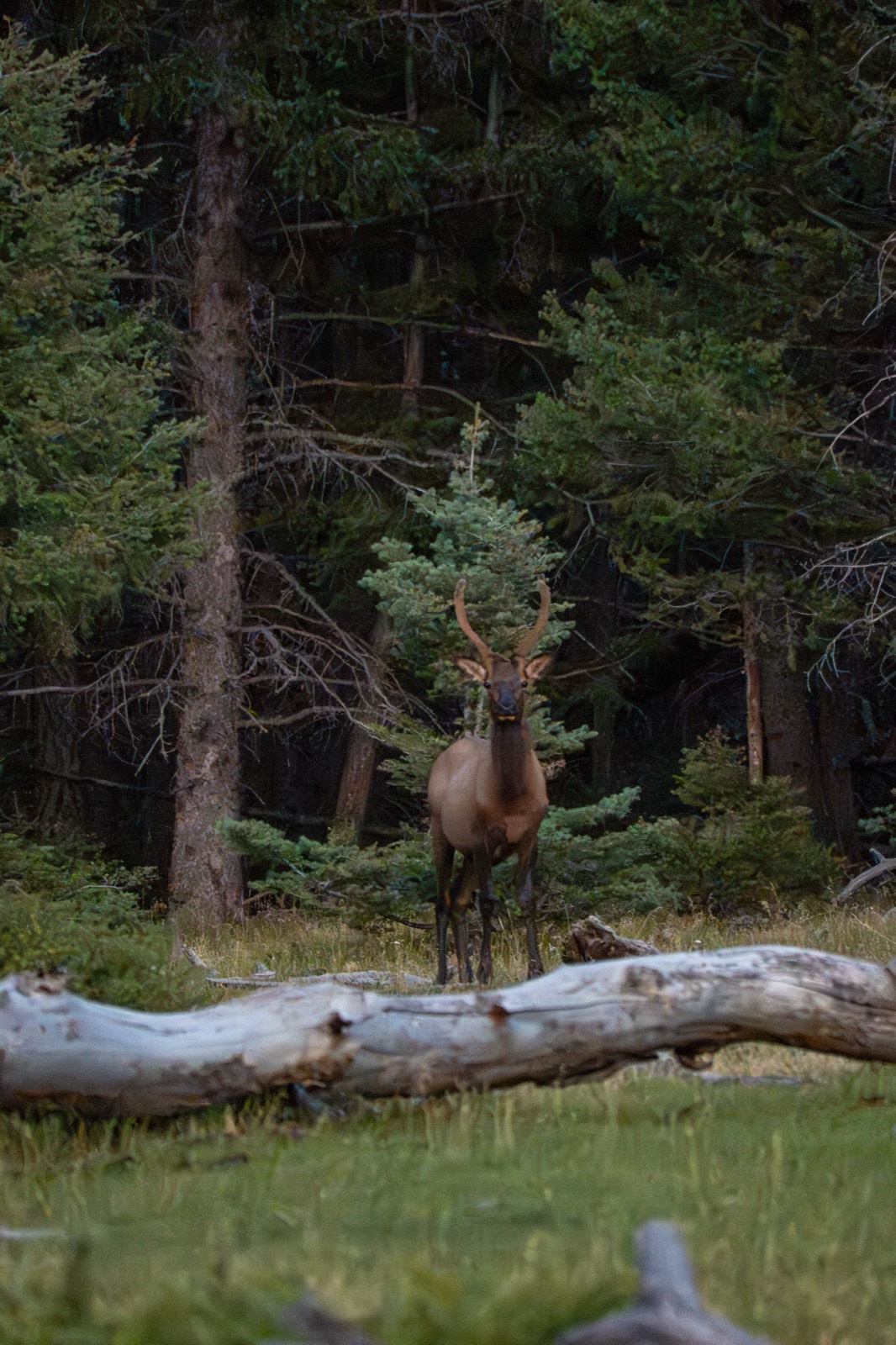
common qualityGMU 437 is one of two special-permit bull units for the North Cascades (Nooksack) elk herd, estimated near 1,600 animals with a healthy 18 bulls per 100 cows. Of 21 bull permits in 2024, 12 holders killed a bull (57% success), at least nine of them five-point-or-better and six of them six-point-plus — genuine trophy quality on a long, low-pressure season. Elk concentrate in the northern third of the GMU in and near Skagit Valley agricultural land; densities elsewhere are very low. A limited youth/senior/disabled any-elk permit also exists (4 of 15 took a cow in 2024).
- →Concentrate on the northern third of the unit near Skagit Valley ag ground and the river islands where elk actually live
- →The permit is only half the battle — lock down private-land permission along the Skagit before the season; that is where success is decided
- →Use the long season and low pressure to pattern a specific herd rather than run-and-gun
- →Away from the valley, elk occur at very low density and are hard to hunt — don't burn days in the high timber
Blacktail Deer
common opportunityThe best general deer hunt of the three North Cascades foothill units: 191 blacktail (177 bucks) came out of 437 in 2024, second in the district only to urbanized GMU 407. Densities are reportedly down somewhat, but the unit still carries the district's strongest true-DIY general blacktail opportunity, plus a permit-only late 'quality buck' rut hunt (16% success in 2024 — the best of the district's three quality-buck GMUs).
- →Work the interface where Skagit Valley farm edges meet foothill timber, and glass regenerating clearcuts up-slope
- →Walk or bike behind timber and DNR gates to reach lightly hunted cuts
- →The late quality-buck permit hunt targets the rut — hunt field and cut margins in the November rut window
- →Still-hunt dark timber and alder bottoms in midday
Black Bear
common opportunityBlack bear are common across the Sauk working forest; District 14 as a whole (GMUs 407/418/426/437) yielded 190 bears in 2024 at ~14% success. As everywhere on the westside, bear opportunity is a function of gated access and the year's berry crop rather than population.
- →Glass green regenerating clearcuts and grassy road edges at first and last light
- →Push higher into subalpine huckleberry fields in late summer for spot-and-stalk
- →Get behind gates on foot or bike to reach unpressured young cuts
- →Submit the required premolar tooth after a successful fall hunt
Cougar
common opportunityCougar follow the blacktail through the unit and are taken opportunistically by hunters after other game. GMUs 426 and 437 share a combined cougar harvest cap of 9 for 2025 that can close the units mid-season.
- →Hunt where deer concentrate
- →Verify the combined 426/437 cap hasn't closed the season before a late hunt via the cougar hotline (1-866-364-4868, press 2)
- →Predator calling can work; no dogs allowed statewide
Pro tips
- →Drawing the bull tag is step one — the hunters who kill are the ones who nailed down private Skagit Valley access months ahead; start knocking on doors before the draw results even post
- →Elk live in the northern third near the ag land and river islands; don't waste the season chasing low-density animals in the high timber
- →For general deer, hunt the farm-edge-to-timber interface and bike behind gates for pressure-free cuts
- →The late quality-buck permit is one of the district's better rut hunts (16% success) — apply for it
- →Map ownership carefully: Skagit Valley is a mosaic of private ag, firearm-restricted zones, DNR and Sierra Pacific timber
Watch out for
- !The productive elk and deer ground is overwhelmingly private farmland — no permission, no hunt
- !Firearm-restricted and no-shooting areas sit around developed valley ground; check page 80 of the regulations and county ordinances
- !Many foothill USFS and timber roads are gated or decommissioned; don't assume vehicle access from old maps
- !Combined 426/437 cougar cap can close the late season without notice — call the hotline
- !Elevated dry-fall wildfire risk can trigger sudden public-land closures
Logistics
Sedro-Woolley and Mount Vernon anchor the west end for full services; Concrete, Rockport, Marblemount and Darrington are the in-valley waypoints for fuel and basics along the Highway 20 and Sauk corridors. National-forest camping is available out of the Darrington Ranger District. Because so much productive ground is private, the pre-season work is landowner relationships and parcel mapping, not just scouting animals.
Nearest towns: Darrington, Concrete, Rockport, Sedro-Woolley, Mount Vernon
Seasons & regulations
This page carries no season dates or regulations. Get current rules from the official Washington sources:
Research sources: WDFW 2025 District 14 Hunting Prospects (Skagit & Whatcom) · WDFW Game Management Units · WDFW North Cascades Elk Management
FAQ
- How big is GMU 437 in Washington?
- GMU 437 (Sauk) covers about 874 square miles, ranging from roughly 120 to 6,852 feet in elevation. Area is computed from the unit boundary polygon.
- How much public land is in GMU 437?
- Approximately 40% of the unit is public land. Primary managers: Private agricultural (Skagit Valley), USFS Mt. Baker-Snoqualmie National Forest, WDNR, Sierra Pacific Industries, Private industrial timber. Always verify ownership boundaries on the ground.
- What species does the catalog list for GMU 437?
- Roosevelt Elk, Blacktail Deer, Black Bear, Cougar. For seasons, tags, and regulations, use the official Washington agency resources linked on this page — this page carries no regulatory information.
Put GMU 437 on your map.
Boundary lines, public/private ownership, topo, and offline maps for this unit — in Baseline Maps, free for 14 days.