GMU 550 Coweeman
District 10's #1 blacktail buck factory on Weyerhaeuser's Saint Helens Tree Farm — big deer numbers, permit-gated access, a struggling elk herd.
Region 5 — Southwest WA / Mount St. Helens foothills · Last reviewed 2026-07-12
Area
345
sq mi
Public land
15%
approx.
Elevation
100–3,200
feet
Motorized
moderate
access
Overview
GMU 550 "Coweeman" is a 347-square-mile unit in WDFW Region 5 (District 10), entirely within Cowlitz County east of Interstate 5 and south of State Route 504 in the Cascade foothills. It is overwhelmingly private industrial forestland (~80%), most of it Weyerhaeuser's Saint Helens Tree Farm, with scattered DNR ground and rural/ag land in the northwest. WDFW rates it as having very good productivity for black-tailed deer — it posted the single highest general-season buck harvest in District 10 in 2024 — and good elk productivity, though the Mount St. Helens elk herd it belongs to sits below management objective. This is a bread-and-butter opportunity unit: lots of deer, lots of hunters, and access that hinges on a Weyerhaeuser permit.
Terrain
Rolling-to-mountainous Cascade-foothill timber country cut by the Coweeman, Kalama, and Cowlitz river drainages. Elevations run from roughly 100 ft on the northwest valley floor near Silver Lake up toward 3,000+ ft on the interior ridges around Baird Mountain and Georges Peak. A dense industrial-forest road network laces the whole unit.
Cover: Industrial Douglas-fir/western hemlock timber in every age class — fresh clearcuts, replanted seedlings, and brushy reprod thick with salmonberry, huckleberry, blackberry, salal, and grass-and-forb greenup along cuts and roads. Wet maritime foothill climate keeps cover thick; blowdown and slash slow off-road travel.
Landmarks: Coweeman River · Kalama River · Cowlitz River (west) · Silver Lake · Baird Mountain · Georges Peak · State Route 504 (north boundary) · Rose Valley Road / Kalama River Road
Access
About 80% industrial timber and only ~15% public, so access is the central challenge. Most of the unit is Weyerhaeuser's Saint Helens Tree Farm, which requires a paid recreation access permit — motorized permits historically run $250–$400 and non-motorized (walk-in) permits $75–$125, with a limited number sold. Weyerhaeuser allows free public access only on the parcels it enrolls in WDFW's Private Lands Access program (find these on the WDFW Private Lands Hunting Access map). DNR forest ground is open to the public. Expect gates, seasonal and fire-danger road closures, and active logging; buy the permit and download the company's road/gate map before you rely on any route. Cell coverage is poor across the interior.
Managers: Weyerhaeuser (Saint Helens Tree Farm — paid permit access), Washington DNR (state forest), Small private / agricultural landowners
Access points: State Route 504 along the north boundary · Rose Valley Road east from the Kelso/Longview area · Kalama River Road up the south side · Weyerhaeuser mainlines 4700, 6100, and 6300 (permit/gate controlled) · DNR and industrial spur roads (seasonally gated)
Species notes
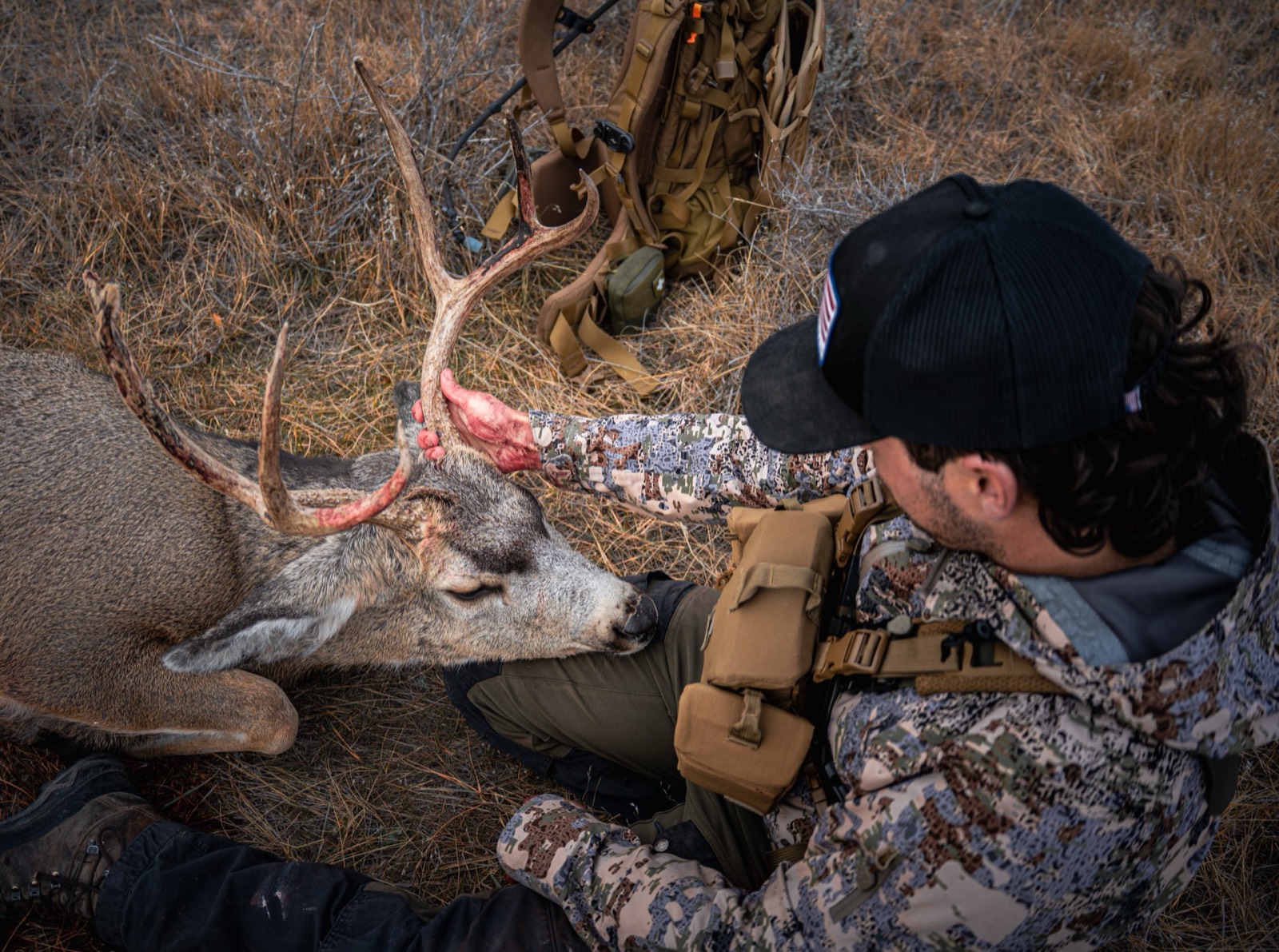
Blacktail Deer
abundant qualityThe top blacktail unit in District 10 — GMU 550 posted the district's highest general-season buck harvest in 2024, with a 5-year modern-firearm average of about 708 bucks at ~31% success (both district highs) and the district's highest buck harvest per square mile (~1.5). It also draws the most hunters (~1,680), so expect company. Numbers are strong and trending up on mild winters; mature bucks exist but the thick cover and crowds make them hard-won.
- →Glass fresh-to-mid-age clearcuts and replants at first and last light where bucks feed on new growth before slipping to timber.
- →Hunt the mid-November late buck season, when the rut meets cool, wet still-hunting weather — a large share of the harvest comes then.
- →Escape the road-hunting crowd: buy the walk-in permit and hike behind gates into back cuts most hunters skip.
- →Still-hunt slowly through second-growth and brush stringers on damp mornings; wet duff quiets your steps.
- →Watch cut-to-timber transition edges and creek-drainage pinch points.
Roosevelt Elk
common opportunityGMU 550 is part of the Mount St. Helens elk herd and is one of District 10's higher general-season elk producers (roughly 45 elk taken at ~5–6% success). But the MSH herd sits below management objective — surveys index about 1,000–1,250 adult females after a run of hard late winters and TAHD — so WDFW warns of a generally challenging elk season and has trimmed antlerless opportunity. Honest opportunity, not a high-odds bull hunt.
- →Locate herds around clearcuts and replants where elk feed on grass and seedlings; feeding-cut sign builds fast.
- →Glass big cuts at dawn/dusk, then still-hunt timbered benches and creek bottoms where herds bed by day.
- →Run the extensive road net to cut fresh sign, then commit on foot to the drainage holding the herd.
- →Find the cows and the bulls follow; hunt the pockets away from the mainline pressure.
- →Inspect harvested elk hooves and follow WDFW guidance on reporting and leaving TAHD-affected hooves in the field.
Black Bear
common opportunityBlack bear are common across this productive, brushy foothill habitat — 550 yields roughly a dozen-plus bears a year in District 10. Wet climate and abundant berry-and-greenup feed support solid densities, making it a reasonable opportunity bear unit.
- →Glass clearcuts and reprod for bears on grass and forbs early, then on ripening berries later.
- →Watch sunny cut faces and edges morning and evening.
- →Cover roads to spot feeding bears in openings, then stalk carefully with the wind.
- →Look along creek bottoms and skid roads where forage and travel concentrate.
Cougar
common opportunityCougars are present unit-wide, following the strong deer and elk prey base. Most are taken incidentally; the general season runs Sept. 1 through March 31 or until the Cougar Hunt Management Unit harvest cap is met, so confirm the CHMU is open before and during your hunt.
- →Hunt cougar alongside deer/elk seasons — cats hold where prey concentrates.
- →Cut for tracks on muddy and snow-dusted logging roads after weather; look for four-claw raking.
- →Focus on rugged, brushy drainages near deer wintering ground.
- →Call the WDFW Cougar Hotline or check the online CHMU status (updated Thursdays) before hunting.
Pro tips
- →Solve access first: buy the right Weyerhaeuser Saint Helens Tree Farm permit (motorized vs. walk-in) and confirm which parcels are PLA-enrolled/open before you leave home.
- →Hunt 550 for what it's best at — it's District 10's #1 blacktail unit by buck harvest; a walk-in permit plus a willingness to hike beats the road-hunting crowd.
- →Treat fresh and mid-age clearcuts as your primary glassing terrain for deer, elk, and bear at first and last light.
- →Time your hardest deer effort to the late buck hunt when rut movement meets ideal still-hunting weather.
- →Set realistic elk expectations — the MSH herd is below objective and success runs low; scout hard and run roads to cut sign.
- →Carry offline ownership maps; the gate network and DNR-vs-Weyerhaeuser boundaries decide where you can legally hunt.
Watch out for
- !~80% private Weyerhaeuser tree farm: most access requires a paid permit (roughly $250–$400 motorized / $75–$125 walk-in), and a permit does not open every road or every parcel.
- !Only ~15% public — don't assume open ground; verify DNR vs. Weyerhaeuser vs. PLA-enrolled boundaries.
- !Mount St. Helens elk herd is below objective; WDFW warns of a challenging elk season with reduced antlerless opportunity.
- !Treponeme-Associated Hoof Disease (TAHD) is common in District 10 elk — follow WDFW reporting guidance and leave affected hooves in the field.
- !Highest hunter density in the district for deer — expect crowds on the accessible cuts, especially opening weekend.
- !Fire-danger gate/road closures possible in late summer/early fall; active logging and log-truck traffic on mainlines.
- !Poor cell coverage inland; carry navigation and emergency gear and share your plan.
Logistics
Base out of Kelso/Longview, Castle Rock, or Kalama on the I-5 corridor for motels, fuel, and groceries; work the interior via SR 504, Rose Valley Road, Kalama River Road, and the Weyerhaeuser 4700/6100/6300 mainlines. The unit is mostly gated Weyerhaeuser tree farm, so buy your access permit (motorized or walk-in) and download the road/gate map before arriving. Carry offline maps with land-ownership layers (interior cell service is poor), fuel up before heading in, and plan for slow, greasy gravel travel with active logging traffic. DNR parcels and PLA-enrolled Weyerhaeuser ground offer the only fee-free options.
Nearest towns: Kelso, Longview, Castle Rock, Kalama, Woodland
Nearby units
Seasons & regulations
This page carries no season dates or regulations. Get current rules from the official Washington sources:
Research sources: WDFW — 2025 District 10 Hunting Prospects (Region 5): GMU 550 land summary, deer #1 buck harvest, elk & bear tables, Weyerhaeuser Saint Helens Tree Farm permit pricing · WDFW — Mount St. Helens Elk Herd Plan / population assessment (below-objective status, ~1,000-1,250 adult females) · WDFW — Game Management Units (GMUs) · Weyerhaeuser Recreation — Permits
FAQ
- How big is GMU 550 in Washington?
- GMU 550 (Coweeman) covers about 345 square miles, ranging from roughly 100 to 3,200 feet in elevation. Area is computed from the unit boundary polygon.
- How much public land is in GMU 550?
- Approximately 15% of the unit is public land. Primary managers: Weyerhaeuser (Saint Helens Tree Farm — paid permit access), Washington DNR (state forest), Small private / agricultural landowners. Always verify ownership boundaries on the ground.
- What species does the catalog list for GMU 550?
- Blacktail Deer, Roosevelt Elk, Black Bear, Cougar. For seasons, tags, and regulations, use the official Washington agency resources linked on this page — this page carries no regulatory information.
Put GMU 550 on your map.
Boundary lines, public/private ownership, topo, and offline maps for this unit — in Baseline Maps, free for 14 days.