GMU 556 Toutle
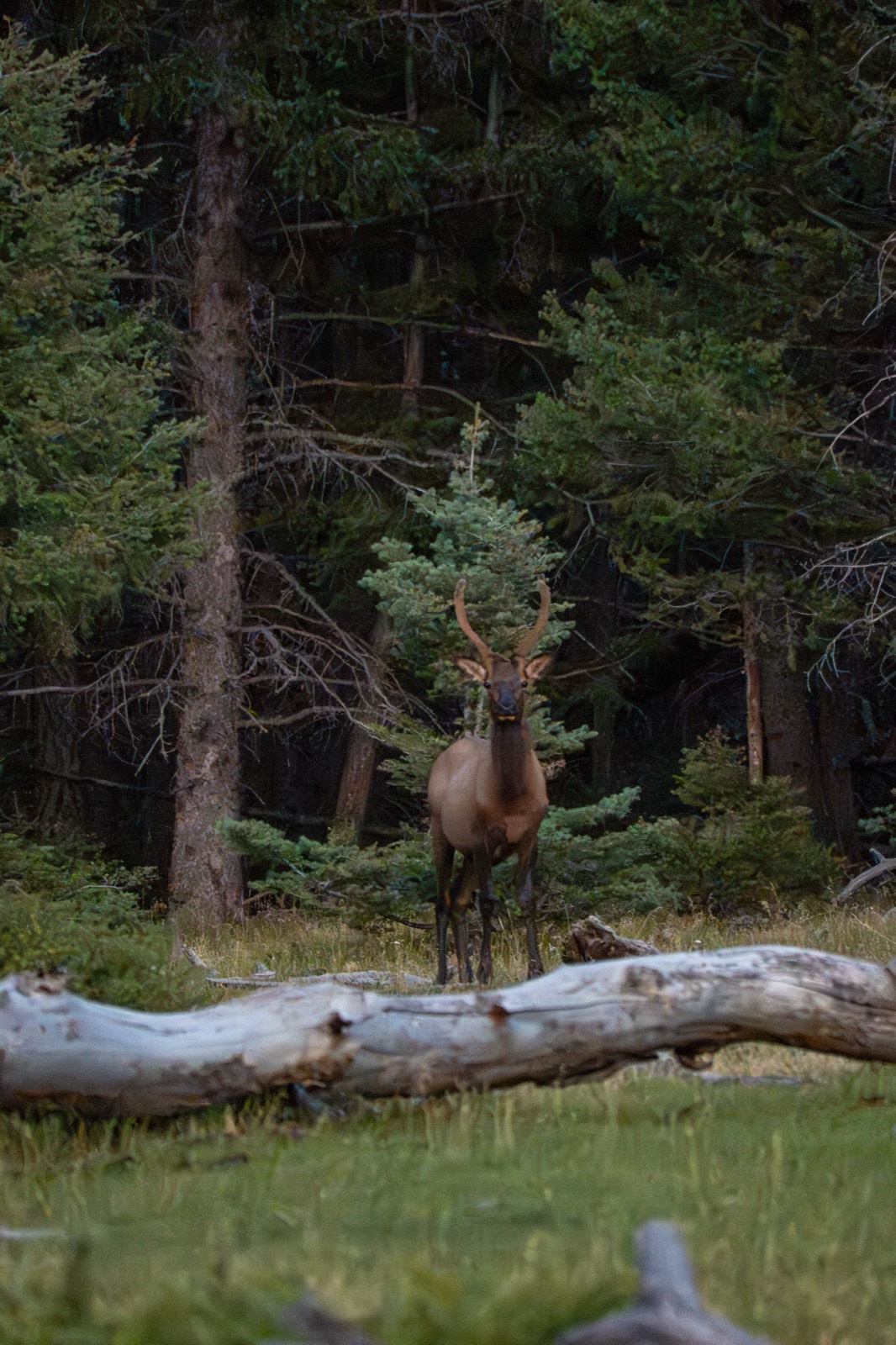
Permit-only Mount St. Helens elk on a Weyerhaeuser tree-farm patchwork west of the volcano.
WDFW Region 5 — Southwest Washington / Mount St. Helens (District 10) · Last reviewed 2026-07-12
Area
234
sq mi
Public land
35%
approx.
Elevation
500–4,000
feet
Motorized
moderate
access
Overview
GMU 556 (Toutle) covers roughly 230 square miles in Cowlitz County, east of Interstate 5 in the upper watersheds of the Coweeman, Kalama, and South Fork Toutle rivers. It is mountainous westside timber country that is about two-thirds private industrial forestland (chiefly Weyerhaeuser's Saint Helens Tree Farm) with large blocks of WDNR state forest to the north and south. The defining feature for hunters is that ALL elk hunting here is by Special Permit only — there is no general elk season — because 556 sits inside the Mount St. Helens elk herd area, which WDFW is deliberately holding below historic highs. Blacktail productivity is modest and elk productivity is good, but drawing a tag and solving industrial-timber access are the two hurdles.
Terrain
Steep, rolling west-Cascade foothill and mountain terrain draining the upper Coweeman, Kalama, and South Fork Toutle rivers. Valley bottoms near I-5 and the river corridors sit around 500-800 ft and climb to forested peaks such as Lakeview Peak and Big Bull, Elk, and Little Cow mountains. Slopes are cut by an extensive logging-road network and a mosaic of clearcuts in every age class.
Cover: Industrial Douglas-fir/western hemlock timber managed on a cutting rotation — fresh clearcuts, replanted seedlings, dense brushy reprod, and second-growth stands — interspersed with WDNR forest. Wet maritime climate keeps grass, forbs, and berry brush thick in the cuts and along roads.
Landmarks: South Fork Toutle River · Coweeman River (upper watershed) · Kalama River (upper watershed) · Lakeview Peak · Big Bull Mountain · Elk Mountain · Little Cow Mountain · Weyerhaeuser Saint Helens Tree Farm · SR 504 (Spirit Lake Hwy) corridor
Access
About 65% of the unit is private industrial timber, most of it Weyerhaeuser's Saint Helens Tree Farm, which requires a purchased recreation access permit — WDFW reports motorized permits running roughly $250-$400 and non-motorized (walk-in) permits $75-$125, with limited numbers sold. Weyerhaeuser lands enrolled in WDFW's Private Lands Access program are the exception and are free to walk in; check the Private Lands Hunting Access webpage or OnX 'WA Private Lands Hunting Opportunities' layer. The remaining ~35% is WDNR state forest (open, though motorized access can be gated) concentrated in the northern and southern portions. Gates, seasonal and fire-season road closures, and active logging are routine; verify each road before you rely on it.
Managers: Weyerhaeuser (Saint Helens Tree Farm — paid recreation access permit), Washington DNR (state forestland, north and south portions), WDFW (Private Lands Access enrollments)
Access points: State Route 504 (Spirit Lake Highway) · State Route 503 · DNR 4200 and 4250 roads · Weyerhaeuser mainlines 4950, 5500, 7200, 1400, and 6600 · Rock Creek Road
Species notes
Roosevelt Elk
common qualityGMU 556 is part of the Mount St. Helens (MSH) elk herd and has good elk productivity, but it is entirely SPECIAL PERMIT ONLY for both bull and antlerless elk — there is no general season. The MSH herd sits below its historic highs and its management objective; spring 2024 surveys indexed roughly 1,250 adult females, a slight uptick from about 1,000 in prior years, and WDFW has trimmed antlerless opportunity accordingly. Draw a tag here and you're hunting a managed, lightly pressured herd, but expect a challenging hunt.
- →This is a draw unit — apply for the 556 special permits; you cannot hunt elk here on a general tag
- →Use the Hunt Planner aerial layer to pin recent clearcuts and thinning, then glass those openings and their timbered edges at first and last light
- →Elk favor cooler, wetter, north-facing timber and creek bottoms in warm weather; push into gated back cuts the road crowd skips
- →Cut roads to find fresh sign (tracks, droppings, rubs) in active feeding cuts, then commit on foot to the drainage holding the herd
- →Inspect harvested elk hooves for TAHD and report affected animals; leave deformed hooves in the field per WDFW guidance
Blacktail Deer
common opportunityColumbian blacktails offer a general-season, high-opportunity hunt across the unit, though WDFW rates 556's deer productivity as only modest compared with top District 10 units like Coweeman and Winston. Plenty of deer live in the cut-and-timber mosaic, but mature bucks are scarce and dense reprod makes them hard to pattern.
- →Glass fresh-to-mid-age clearcuts and reprod at dawn and dusk when bucks feed on new growth before slipping into cover
- →Be in position before light near food-and-cover edges; blacktails here are largely nocturnal
- →Still-hunt slowly through damp second-growth on quiet mornings — wet duff lets you move silently
- →Hunt the late buck period around the November rut, when bucks travel and show in clearcuts and along openings
Black Bear
common opportunityBlack bear are common in this productive, berry-rich timberland, which lies within the Mount St. Helens Black Bear Management Unit (fall season generally Aug. 1-Nov. 15, two-bear statewide limit). The wet climate and abundant clearcut forage support solid densities, making 556 a reasonable opportunity bear unit.
- →Glass clearcuts and reprod for bears feeding on grass and forbs early, and on huckleberries, blackberries, and salmonberries as they ripen
- →Watch sunny cut faces and edges morning and evening; look near cascara and berry patches
- →Cover the road network to spot feeding bears, then make a careful stalk
- →Check for cubs before shooting, and submit the required premolar tooth after harvest
Cougar
common opportunityCougars follow the deer and elk prey base through the dense timber. Most are taken incidentally by deer and elk hunters; the unit lies within a Cougar Hunt Management Unit that closes once its seasonal harvest cap is met.
- →Hunt cougar alongside deer/elk seasons where prey concentrates
- →Cut for tracks on muddy or snow-dusted logging roads after weather; look for four-toe prints and claw raking
- →Focus rugged, brushy drainages near deer wintering areas
- →Verify the CHMU is still open via the WDFW cougar closures page or hotline before hunting
Pro tips
- →Elk here is entirely special permit — build points and apply for 556; there is no general elk tag.
- →Solve access before you leave home: confirm whether your ground is paid Weyerhaeuser permit, free WDFW Private Lands Access, or open WDNR forest.
- →Treat fresh and mid-age clearcuts as your primary glassing terrain for deer, elk, and bear at first and last light.
- →Pressure collapses past the gates — walk into back cuts on the walk-in permit rather than road-hunting mainlines.
- →Carry offline ownership maps; there is effectively no cell service in the interior of the tree farm.
Watch out for
- !No general elk season — elk are SPECIAL PERMIT ONLY for both bull and antlerless; hunting elk here without a drawn tag is illegal.
- !Roughly two-thirds of the unit is private Weyerhaeuser timber requiring a paid permit; a permit does not open every road, and gates/closures are common.
- !Treponeme-associated hoof disease (TAHD) is common in Mount St. Helens herd elk — follow WDFW reporting guidance and leave deformed hooves in the field.
- !Fire-season access restrictions (August-October) can close timberland roads and camping with little notice.
- !Active logging and log-truck traffic on mainline gravel roads — drive defensively.
- !The 2021 boundary change moved 556's southern line to follow Lewis River Road — confirm you are in 556 and not 554 (Yale) before hunting.
Logistics
Base out of Castle Rock, Kelso, or Longview on the I-5 corridor for fuel, lodging, and supplies, then work in via SR 504 or SR 503. Buy the Weyerhaeuser Saint Helens Tree Farm access permit well before the season and download its road/gate map, or confirm which nearby parcels are enrolled in WDFW Private Lands Access (free). Carry offline maps with land-ownership and permit-boundary layers; cell coverage is thin to nonexistent in the interior. Expect gravel-road travel, mud, and active log-truck traffic — high clearance and good tires help.
Nearest towns: Toutle, Castle Rock, Kelso, Longview, Kalama, Woodland
Seasons & regulations
This page carries no season dates or regulations. Get current rules from the official Washington sources:
Research sources: WDFW — 2025 District 10 Hunting Prospects (Region 5) · WDFW — Special elk permit hunts around Mount St. Helens · WDFW — Mount St. Helens Elk Population Assessment · WDFW — Elk Hoof Disease (TAHD) · Weyerhaeuser Recreation — Permits
FAQ
- How big is GMU 556 in Washington?
- GMU 556 (Toutle) covers about 234 square miles, ranging from roughly 500 to 4,000 feet in elevation. Area is computed from the unit boundary polygon.
- How much public land is in GMU 556?
- Approximately 35% of the unit is public land. Primary managers: Weyerhaeuser (Saint Helens Tree Farm — paid recreation access permit), Washington DNR (state forestland, north and south portions), WDFW (Private Lands Access enrollments). Always verify ownership boundaries on the ground.
- What species does the catalog list for GMU 556?
- Roosevelt Elk, Blacktail Deer, Black Bear, Cougar. For seasons, tags, and regulations, use the official Washington agency resources linked on this page — this page carries no regulatory information.
Put GMU 556 on your map.
Boundary lines, public/private ownership, topo, and offline maps for this unit — in Baseline Maps, free for 14 days.