GMU 621 Olympic
Big east-Olympic unit: sea-level Hood Canal to alpine peaks — top blacktail and bear, permit-only elk.
WDFW Region 6 — Olympic Peninsula (Districts 15 & 16) · Last reviewed 2026-07-12
Area
648
sq mi
Public land
60%
approx.
Elevation
0–6,900
feet
Motorized
moderate
access
Overview
GMU 621 "Olympic" is a large (~650-square-mile) unit wrapping the eastern and northeastern flank of the Olympic Mountains, split administratively between WDFW Districts 15 and 16, running from the Dungeness/Sequim lowlands south down the Hood Canal drainages. It is a genuine sea-to-summit unit — marine tideflats on Hood Canal up to alpine meadows above timberline — built on Olympic National Forest, DNR state forest, the roadless Buckhorn/The Brothers/Mount Skokomish Wilderness areas, Nuveen-managed timber, and private ag/timber along the coast, with Olympic National Park forming the closed western border. It is the district's best black bear unit and a top blacktail deer producer (District 16's highest buck harvest), while elk hunting is by special bull permit only and takes deliberate planning.
Terrain
Full sea-to-summit relief: from Hood Canal and Puget Sound marine shoreline and the Dungeness lowlands up through mid-elevation forest to alpine meadows above timberline on the Buckhorn, The Brothers, and Mount Skokomish massifs (peaks near 6,800-7,000 ft) along the Olympic National Park boundary. Mid and lower elevations hold the deer; the high country is roadless wilderness.
Cover: Maritime Douglas-fir and western hemlock forest with red alder bottoms and a patchwork of clearcut/regen openings on timberland, grading up into subalpine fir and open alpine meadow at the crest. Large blocks of older, dense USFS forest offer less forage than the cut-over lower ground; lower elevations and forest openings hold high deer densities.
Landmarks: Dosewallips River · Duckabush River · Hamma Hamma River · North Fork Skokomish River · Lilliwaup Swamp · Hood Canal · Lake Cushman / Staircase · Buckhorn Wilderness · The Brothers Wilderness · Mount Skokomish Wilderness · Dungeness / Sequim lowlands · US 101 (Hood Canal corridor)
Access
A mixture of USFS, DNR, private timber, and private ag — WDFW notes 621 (with 636) offers the most accessible public land in District 15. USFS Olympic National Forest land is generally open to vehicle access year-round (some winter wildlife closures); DNR land is motorized or walk-in depending on the area; most private timberland is non-motorized (walk-in / mountain-bike) or requires an access permit; all private agricultural land in the Dungeness/Sequim area requires owner permission. Nuveen Natural Capital manages Olympic Peninsula Timberlands here and allows hunting with a free online permit. Private industrial and DNR-managed lands are largely gated (timber theft, dumping, vandalism), but many roads are open to foot or mountain-bike access. Olympic National Park forms the western/high border and is closed to all hunting; the Buckhorn, The Brothers, and Mount Skokomish Wilderness areas are huntable but roadless.
Managers: USFS Olympic National Forest, WDNR (Olympic Region / South Puget Sound state forest), Buckhorn / The Brothers / Mount Skokomish Wilderness (roadless USFS), Nuveen Natural Capital (Olympic Peninsula Timberlands — free online permit), Private industrial timberland, Private agricultural land (Dungeness/Sequim), Olympic National Park (western border — closed to hunting)
Access points: US 101 Hood Canal corridor to the Dosewallips, Duckabush, and Hamma Hamma river roads · Lake Cushman / Staircase road to the North Fork Skokomish · Olympic National Forest roads up each Hood Canal drainage (generally open year-round) · DNR state-forest roads (motorized or walk-in by area) · Nuveen timberland via free online access permit (nncpermits.com)
Species notes
Blacktail Deer
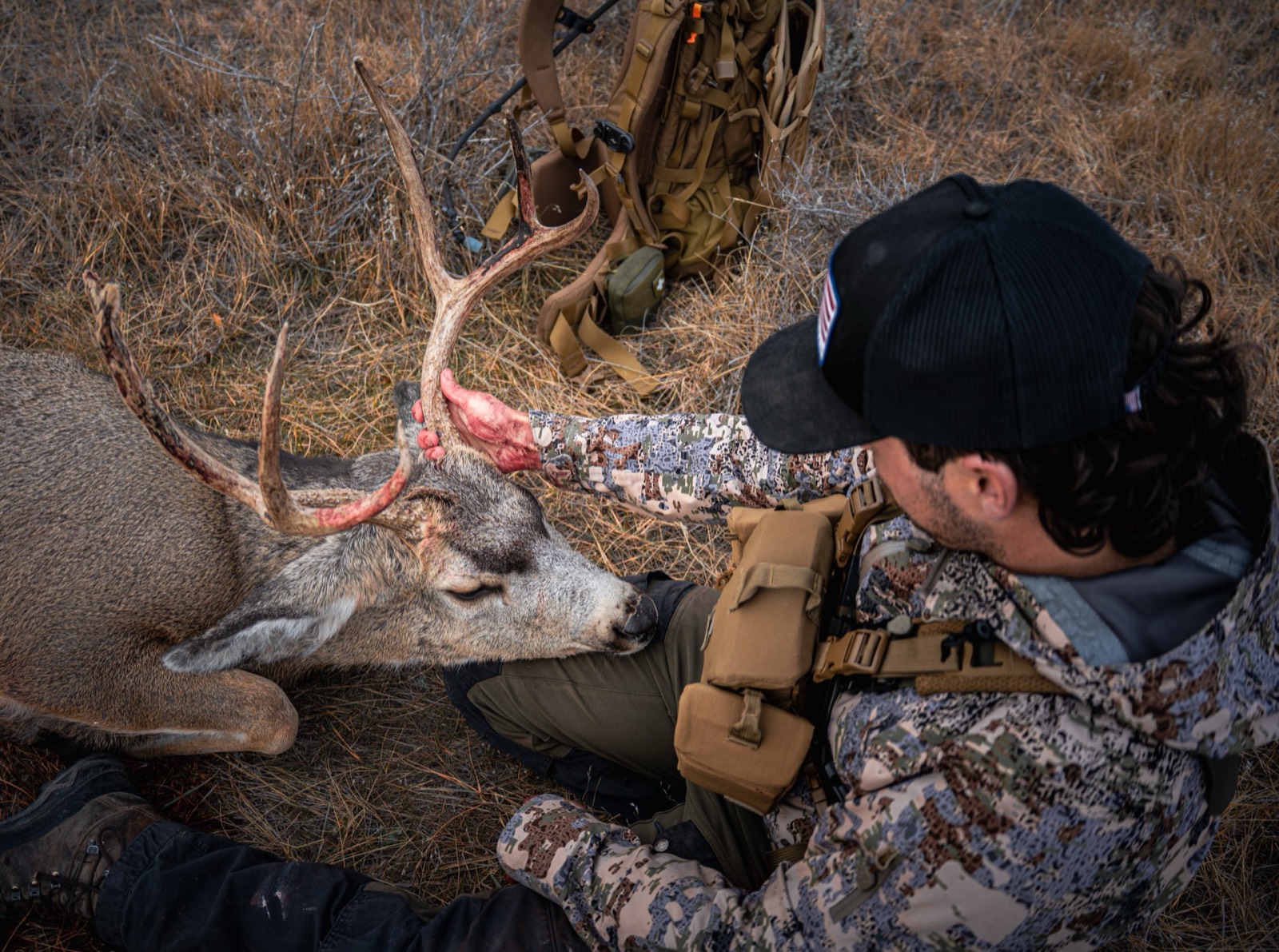
abundant qualityA top blacktail unit: the mid and lower elevations of 621 hold high deer densities, and the GMU posts District 16's highest buck harvest (460 state bucks in 2024, plus tribal). Deer are readily observed — often in groups near farmland in the Dungeness/Sequim lowlands where they're a nuisance — and there's an early-archery Olympic Wilderness high-buck hunt (shared with GMUs 627/633) for the high country. This is the primary reason to hunt 621.
- →Work the mid- and lower-elevation forest openings and clearcut/regen edges where deer densities are highest; glass at first and last light.
- →For a backcountry buck, hunt the September Olympic Wilderness high-buck hunt in the alpine near the ONP boundary.
- →In the Dungeness/Sequim lowlands, deer concentrate near farmland — but you'll need private-land permission and must check local firearm restrictions.
- →Many gated DNR and timber roads are open to foot or mountain bike — pedal in past the crowds to less-pressured deer.
- →Time the late-October/early-November rut for mature bucks moving in daylight.
Black Bear
abundant qualityThe district's standout bear unit — District 15/16 bear harvest is usually highest in GMU 621 (40 bears in 2024, roughly double the prior year). WDFW notes 621 offers the most accessible public land in the district for bears, and hunting the higher-elevation huckleberry patches is a strong strategy. Bears are common but hard to spot in the thick east-Olympic cover.
- →Hunt the higher-elevation huckleberry patches on USFS/wilderness ground in early fall — WDFW's recommended 621 bear strategy.
- →Glass clearcuts and regen openings full of berry shrubs at dawn and dusk on the lower timberland.
- →Find fresh sign (scat, torn bark, flipped logs) in a berry-rich opening, then sit long watches rather than covering ground.
- →Use the good public access — pedal or hike gated USFS/DNR roads into berry country away from roadside pressure.
Roosevelt Elk
common qualityPart of the Olympic elk herd, but hunting is by special bull permit only (three-point minimum) — the entire GMU is permit-only for state elk, with only a handful of modern-firearm/archery/muzzleloader permits (reduced in 2025). The most reliable groups live along four Hood Canal drainages: the Dosewallips and Duckabush (most consistently found, low valleys and ridges year-round), plus the Hamma Hamma and North Fork Skokomish/Lilliwaup Swamp (increasingly hard to find as elk shift into ONP). Heavy tribal harvest overlap.
- →This is a draw hunt — apply for the special bull permit; there is no general-season elk opportunity in 621.
- →If you draw, focus first on the Dosewallips and Duckabush valleys and adjacent ridges, where elk are most reliably found year-round.
- →Check the North Fork Skokomish/Staircase and Lilliwaup Swamp on decent USFS/DNR public access, but expect elk to spend more time in the closed park.
- →Scout the private-ag margins for damage-pattern groups, but you'll need landowner permission to hunt them.
- →Plan around heavy tribal elk harvest, which can equal or exceed state harvest in this unit.
Cougar
common opportunityGMU 621 consistently has the district's highest cougar harvest, riding on its strong deer and elk numbers. Most cats are taken opportunistically by deer and elk hunters. The hunt area is harvest-cap managed (PMU/CHMU spanning 621/624) and can close mid-season once the guideline is met.
- →Carry the tag and treat cougar as a bonus while glassing for deer and bear — where prey concentrates, cats follow.
- →After a fresh snow, cut roads, landings, and ridge saddles for tracks to follow up.
- →Hunt the deer-dense mid/lower elevations for the best odds of crossing a cat.
- →Watch the cap-managed hunt-area status closely — it can close before season's end.
Pro tips
- →Hunt 621 for its two best things: blacktail deer (District 16's highest buck harvest) and black bear (the district's top bear unit).
- →Elk is permit-only — apply for the special bull draw; if you draw, key on the Dosewallips and Duckabush drainages first.
- →Use the good public access: USFS Olympic NF roads are generally open year-round, and Nuveen timberland is huntable with a free online permit.
- →Pedal or hike gated DNR/timber roads to reach less-pressured deer and bear behind the closures.
- →For a backcountry buck or a high huckleberry-patch bear, work the alpine near the Olympic National Park boundary in the early season.
- →In the Dungeness/Sequim lowlands, deer are thick but access is private ag — get permission and check local firearm restrictions before hunting near town.
Watch out for
- !Olympic National Park forms the western/high border and is closed to all hunting — and elk increasingly shelter inside it.
- !Elk is special-permit only for the whole GMU; there is no general-season elk hunt here.
- !Private agricultural land in the Dungeness/Sequim area requires owner permission, and some lowland areas near town have firearm restrictions (check the regs).
- !Most private industrial timber is non-motorized or permit-required and heavily gated — confirm each owner's rules and read gate signage.
- !Cougar hunt area is harvest-cap managed and can close mid-season — check status.
- !Mountain goats have been largely removed from the Olympics and there is no goat season — do not plan on it.
- !Heavy tribal harvest overlaps state seasons, especially for elk — expect shared pressure.
Logistics
Base along the US 101 Hood Canal corridor at Quilcene, Brinnon, or Hoodsport for fuel, lodging, and groceries, or out of Sequim/Port Angeles for the northern lowlands; the USFS Hood Canal Ranger District (Quilcene) is the local contact. Access is up each Hood Canal drainage road (Dosewallips, Duckabush, Hamma Hamma) and the Lake Cushman/Staircase road to the North Fork Skokomish. Developed camping is available on Olympic National Forest and around Lake Cushman. Expect gated timber roads (walk-in/mountain-bike behind many gates), spotty cell service in the drainages, and steep terrain if you push toward the wilderness high country — carry a DNR/USFS ownership map and preload offline navigation.
Nearest towns: Quilcene, Brinnon, Hoodsport, Sequim, Port Angeles
Seasons & regulations
This page carries no season dates or regulations. Get current rules from the official Washington sources:
Research sources: WDFW 2025 District 15 Hunting Prospects — GMU 621 permit-only elk (Dosewallips/Duckabush/Hamma Hamma/N Fk Skokomish drainages, ~13 avg permits), bear (highest district harvest), deer (high-buck hunt), ownership/access (USFS/DNR/private, Nuveen free permit) · WDFW 2025 District 16 Hunting Prospects — GMU 621 highest District 16 buck harvest (460 in 2024), high deer densities mid/lower elevation, 40 bears in 2024, highest district cougar harvest, gated DNR/timber but foot/bike access · GoHunt — Washington Unit 621 Olympic unit profile (predominantly public; ONF + DNR; Buckhorn/The Brothers/Mount Skokomish Wilderness; sea level to alpine) · WDFW Game Management Units (GMU boundaries & maps)
FAQ
- How big is GMU 621 in Washington?
- GMU 621 (Olympic) covers about 648 square miles, ranging from roughly 0 to 6,900 feet in elevation. Area is computed from the unit boundary polygon.
- How much public land is in GMU 621?
- Approximately 60% of the unit is public land. Primary managers: USFS Olympic National Forest, WDNR (Olympic Region / South Puget Sound state forest), Buckhorn / The Brothers / Mount Skokomish Wilderness (roadless USFS), Nuveen Natural Capital (Olympic Peninsula Timberlands — free online permit), Private industrial timberland, Private agricultural land (Dungeness/Sequim), Olympic National Park (western border — closed to hunting). Always verify ownership boundaries on the ground.
- What species does the catalog list for GMU 621?
- Blacktail Deer, Black Bear, Roosevelt Elk, Cougar. For seasons, tags, and regulations, use the official Washington agency resources linked on this page — this page carries no regulatory information.
Put GMU 621 on your map.
Boundary lines, public/private ownership, topo, and offline maps for this unit — in Baseline Maps, free for 14 days.