GMU 636 Skokomish
Skokomish and upper Wynoochee timber-and-forest country: one of District 15's few reliable Roosevelt elk units, with strong low-elevation blacktail.
WDFW Region 6 — Olympic Peninsula / Hood Canal (District 15) · Last reviewed 2026-07-12
Area
375
sq mi
Public land
40%
approx.
Elevation
100–5,500
feet
Motorized
moderate
access
Overview
GMU 636 "Skokomish" is a ~375-square-mile unit on the southeast Olympic Peninsula in WDFW District 15, draining the South Fork Skokomish and upper Wynoochee river valleys between Hood Canal and the Olympic high country. Ownership is a checkerboard of private industrial timber (Green Diamond Resource Co. is the largest private owner), scattered small private parcels, and U.S. Forest Service (Olympic National Forest) ground at the upper elevations. It is one of only three District 15 units (with 621 and 651) that offer reliable Roosevelt elk hunting — bull-only by special permit — and it holds good low-elevation blacktail deer plus a Coastal-BBMU black bear season. Tribal (Skokomish) hunting is significant here and can account for a large share of the elk harvest.
Terrain
Low river valleys along the Skokomish and Wynoochee climb north and west into the steep, forested foothills and peaks of the Olympic Mountains, bordering the Mount Skokomish Wilderness and Olympic National Park. Deer density is best in the lower-elevation managed timber and declines as you gain elevation into the high country.
Cover: Douglas-fir and western hemlock industrial forest in a patchwork of clearcuts, replanted stands, and older timber, with red alder river bottoms; regen cuts and higher huckleberry patches provide the key deer forage and bear feed. Wet, mild maritime cover is dense and low-visibility between the harvest openings.
Landmarks: South Fork Skokomish River · North Fork Skokomish River · Upper Wynoochee River / Lake Wynoochee (west edge) · Lake Cushman · Mount Skokomish Wilderness (north boundary with ONP) · Olympic National Forest (upper elevations) · Community of Matlock (Green Diamond permit ground) · Hood Canal (east)
Access
GMU 636 is a mix of private timberland, small private parcels, and USFS. Green Diamond — the largest private owner — opens some areas to motorized use from roughly September through December, keeps some areas non-motorized walk-in only, and requires an access permit for part of its ground, particularly near Matlock; elsewhere on the unit no company permit is needed. Fire-danger risk and active logging can delay gate openings. The upper Wynoochee and Skokomish valleys are primarily Olympic National Forest, with most roads open year-round for vehicles, though USFS closes some areas to motorized use in winter to reduce wildlife disturbance. WDFW notes GMUs 621 and 636 offer the most accessible public land in District 15. Verify current Green Diamond policy before hunting (WDFW Region 6 Montesano office 360-249-4628 or the company website).
Managers: Green Diamond Resource Company, Olympic National Forest (USFS), WA DNR (Olympic Region), Skokomish Tribe, Small private landowners
Access points: US 101 corridor along Hood Canal (Hoodsport, Potlatch) into the Skokomish valley · Skokomish Valley Road up the South Fork toward Olympic National Forest · Wynoochee Valley Road / FS roads toward Lake Wynoochee (west approach) · Green Diamond gated mainlines near Matlock (dot-system / permit controlled)
Species notes
Roosevelt Elk
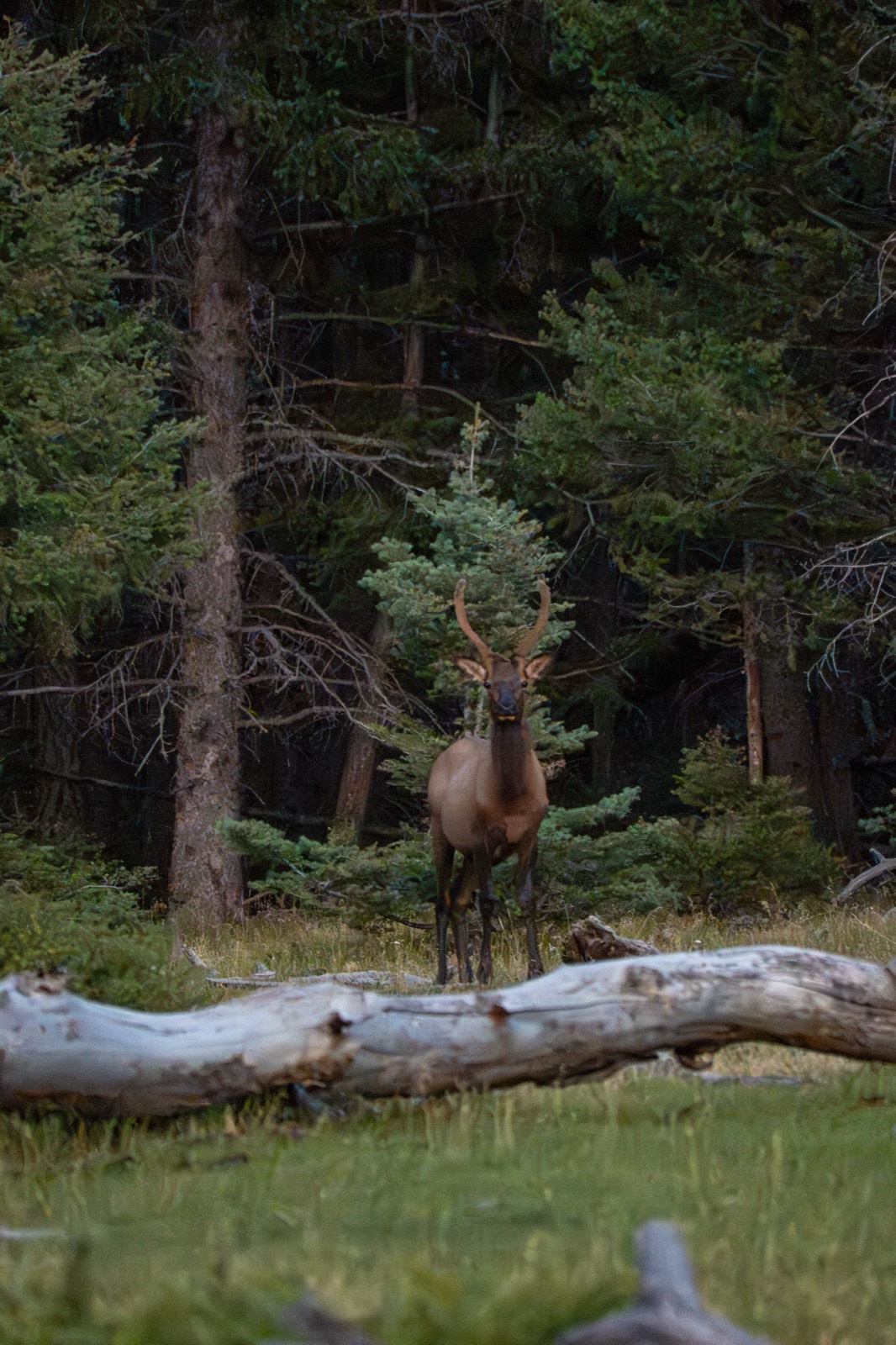
common qualityOne of only three reliable elk units in District 15. Part of the Olympic elk herd; hunted bull-only through a special permit draw (on average about eight permits split among weapon types). Quality is rated fair — within the target 12-25 bulls per 100 cows post-season but below population objective — yet permit-holder success is strong (five-year averages near 80% muzzleloader, 70% modern firearm, low for archery), with bull harvest averaging about three. Treponeme-associated hoof disease is present and may be suppressing calf recruitment.
- →Focus on the upper Wynoochee valley around Lake Wynoochee, the South Fork Skokomish valley, and the Matlock area, where elk are most reliably found.
- →Get a Green Diamond access permit if you plan to hunt the Matlock ground where much of the elk activity is.
- →Scout the timber-harvest edges, swamps, and river bottoms near cover during warm early weather; expect bulls to hold in closed-canopy timber by day.
- →As a low-pressure permit unit, invest scouting time up front — few hunters but you must locate the resident groups yourself.
- →Expect and plan around tribal (Skokomish) hunting pressure, which can take a large share of the district elk harvest.
Blacktail Deer
common opportunityGood low-elevation blacktail hunting under a two-point-minimum rule that many hunters enjoy. Deer density is solid in the lower managed-timber habitats and drops off at higher elevations. Maritime climate means severe winter die-offs are rare, so numbers stay fairly stable year to year.
- →Hunt the lower-elevation clearcuts and 3- to 9-year replants where blacktail density is highest, not the high country.
- →Glass cut units at first and last light, then still-hunt the timber/clearcut edge as deer move to bed.
- →Time your hardest effort to the late-October to early-November rut when bucks move most and drop their guard.
- →Get a Green Diamond permit for the Matlock-area ground; elsewhere on the unit no company access permit is required and much is USFS.
- →Rattling and grunting can pull rutting blacktails — a less-used but effective tactic in the thick coastal cover.
Black Bear
common opportunityPart of the Coastal Black Bear Management Unit (with 621 and 651). WDFW's 2023 density sample of the USFS foothills portion of 636 estimated about 12 bears per 100 square kilometers. District bear success averages roughly 8%, and most bears are taken opportunistically by deer and elk hunters, though dedicated bear hunters do better.
- →Glass open clearcuts and regen units with ripe berry shrubs — huckleberry, salmonberry, blackberry, salal, elderberry, cascara — at dawn and dusk.
- →Work the accessible higher-elevation huckleberry patches on the USFS ground, a WDFW-suggested strategy for 621/636.
- →Hunt open terrain so you spot a bear before it winds you; in dense cover the bear smells you first.
- →Find fresh sign in a berry-rich cut, then sit it for long watches rather than covering ground.
Cougar
common opportunityCougars occur throughout the unit and are taken mostly opportunistically by deer and elk hunters. The season is harvest-cap managed and can close mid-season once the removal cap is reached, so check current status before and during a hunt.
- →Treat cougar as an opportunistic add-on while glassing cuts and river bottoms for deer, bear, and elk.
- →Hunt where deer concentrate — regen stands and valley bottoms — since cougars follow the prey.
- →Cut roads and landings for fresh tracks after snow at the higher north/west end.
- →Check the cap-managed hunt-area status regularly, as it can close on short notice.
Pro tips
- →For elk, this is a special-permit bull unit — apply here if you want low hunter density and decent public-land elk hunting, and target the upper Wynoochee, South Fork Skokomish, and Matlock areas.
- →Sort out Green Diamond access early: some roads open to motorized use Sept-Dec, some are walk-in only, and the Matlock ground requires a company permit.
- →Hunt blacktail low, not high — deer density falls off with elevation in 636.
- →Use the USFS upper elevations for the most accessible public land and for higher huckleberry-patch bear hunting.
- →Expect tribal (Skokomish) hunting activity and plan your effort accordingly, especially for elk.
- →Confirm current access with the WDFW Region 6 Montesano office (360-249-4628) or company websites before the trip.
Watch out for
- !Green Diamond permit/dot access varies by area, season, and fire danger; the Matlock ground specifically requires a company permit — verify before you go.
- !District 15 is a checkerboard of ownerships; don't assume open ground without a current parcel/access map.
- !Fire-danger risk and active logging operations can delay or keep timber gates closed early in the season.
- !USFS closes some upper-elevation roads to motorized use in winter to protect wildlife.
- !Elk is bull-only by special permit — this is not a general-season elk unit.
- !Treponeme-associated hoof disease is present in the herd; report obviously lame elk to WDFW.
- !Tribal harvest can be a large fraction of the total elk take, raising effective pressure.
Logistics
Base out of Shelton or the US 101 Hood Canal towns (Hoodsport, Potlatch, Union) for motels, fuel, and groceries, or Montesano to the southwest. The Skokomish Valley Road runs up the South Fork toward Olympic National Forest, and Wynoochee Valley Road reaches Lake Wynoochee from the west. Developed and dispersed camping is available on the Olympic National Forest at the upper elevations (subject to seasonal closures and fire bans); most of the lower unit is gated private timberland where dispersed camping is not an open option. Carry a current ownership/access map — District 15 is a checkerboard — and arrange any Green Diamond permit for the Matlock ground before you arrive.
Nearest towns: Shelton, Hoodsport, Matlock, Union, Montesano
Seasons & regulations
This page carries no season dates or regulations. Get current rules from the official Washington sources:
Research sources: WDFW 2024 District 15 Hunting Prospects — GMU 636 elk (special permit, success, herd), deer, bear (BBMU, density), access (Green Diamond, USFS) · WDFW 2023 District 15 Hunting Prospects · GoHunt — Washington Unit 636 Skokomish unit profile (land ownership, terrain, elevation) · WDFW Game Management Units (GMU boundaries & maps) · Olympic National Forest — Recreation (terrain, forest management)
FAQ
- How big is GMU 636 in Washington?
- GMU 636 (Skokomish) covers about 375 square miles, ranging from roughly 100 to 5,500 feet in elevation. Area is computed from the unit boundary polygon.
- How much public land is in GMU 636?
- Approximately 40% of the unit is public land. Primary managers: Green Diamond Resource Company, Olympic National Forest (USFS), WA DNR (Olympic Region), Skokomish Tribe, Small private landowners. Always verify ownership boundaries on the ground.
- What species does the catalog list for GMU 636?
- Roosevelt Elk, Blacktail Deer, Black Bear, Cougar. For seasons, tags, and regulations, use the official Washington agency resources linked on this page — this page carries no regulatory information.
Put GMU 636 on your map.
Boundary lines, public/private ownership, topo, and offline maps for this unit — in Baseline Maps, free for 14 days.