GMU 654 Mashel
Eatonville–Ashford timber and Rainier foothills: District 11's top elk unit with a high-country blacktail bonus.
WDFW Region 6 — South Sound / West Cascade Foothills (District 11) · Last reviewed 2026-07-12
Area
332
sq mi
Public land
30%
approx.
Elevation
500–6,000
feet
Motorized
limited
access
Overview
GMU 654 "Mashel" sits in eastern Pierce County in WDFW District 11, running from the Manulife-managed Kapowsin and Eatonville timberlands up the Mashel and Nisqually drainages into the higher west-slope Cascade country bordering Mount Rainier National Park near Ashford and Elbe. It is a mix of private industrial timber (Manulife/Hancock, Olympic Resource Management, Hampton Lumber, Rayonier, Muckleshoot Tribe forestland) and genuine public ground — DNR's Elbe Hills and Tahoma State Forests, the UW Pack Forest, and USFS land ringing the park. WDFW reports GMU 654 as one of District 11's two highest elk-harvest units (with 652), part of the growing South Rainier herd, and a steady black bear producer; deer success runs lower here (~15%) than the urbanized western GMUs, but the eastern high country offers a legitimate trophy-blacktail experience.
Terrain
A west-to-east elevation gradient from rolling low-elevation timber and river bottoms around Eatonville and the Mashel River up into rugged mountainous country toward Mount Rainier National Park. Snowpack from fall through summer in the eastern high country dictates game availability and gates off road access.
Cover: Douglas-fir and western hemlock industrial forest — a patchwork of clearcuts and 3- to 9-year regen stands thick with salmonberry, salal, and huckleberry (prime blacktail and bear feed) — grading upslope into higher-elevation conifer, subalpine parks, and wilderness near the park boundary.
Landmarks: Mashel River · Nisqually River · Elbe Hills State Forest · Tahoma State Forest · UW Pack Forest (Charles Lathrop Pack Experimental Forest) · Glacier View Wilderness · Mount Rainier National Park (east boundary, closed to hunting) · Eatonville / Ashford / Elbe
Access
Access is mixed. The Manulife/Hancock, ORM, Hampton, and Muckleshoot industrial timberlands are gated year-round and closed except to special permittees; hunters must buy a Manulife recreational access license (Hancock Recreation, 800-782-1493) to enter, and elk access on the Kapowsin and Eatonville timberlands is by a separate free drawing (11 Kapowsin licenses — 5 modern, 3 archery, 3 muzzleloader — plus one Eatonville license). The real public ground is DNR's Elbe Hills and Tahoma State Forests and UW's Pack Forest, all huntable on foot, bike, or horse. Elbe Hills has limited elk-season vehicle access (the 5 Road closed, the 8 Road open Ashford to Scott Turner Road, the 6 Road closed except disabled permit); much of Tahoma is closed to vehicles from the ski-hut program and road/bridge washouts, but you may walk, bike, or ride behind locked gates unless posted. Elbe Hills runs a Disabled Hunter Program drawing for gate keys. USFS land surrounding the park is open (the park itself is closed to hunting).
Managers: Manulife Investment Management (Hancock) — Kapowsin & Eatonville timberlands, Olympic Resource Management, Hampton Lumber / Mid Valley Resources, Rayonier, Muckleshoot Indian Tribe (managed under Manulife Access Program), WDNR (Elbe Hills & Tahoma State Forests), USFS (Gifford Pinchot / Mt Baker-Snoqualmie NF)
Access points: SR-7 / SR-706 corridor through Eatonville, Elbe, and Ashford · Elbe Hills State Forest gates (5, 6, 8 Roads off Ashford / Scott Turner Road) · Tahoma State Forest road-and-gate network · UW Pack Forest (foot/bike/horse) · USFS roads and trails toward Glacier View Wilderness and the park boundary
Species notes
Roosevelt Elk
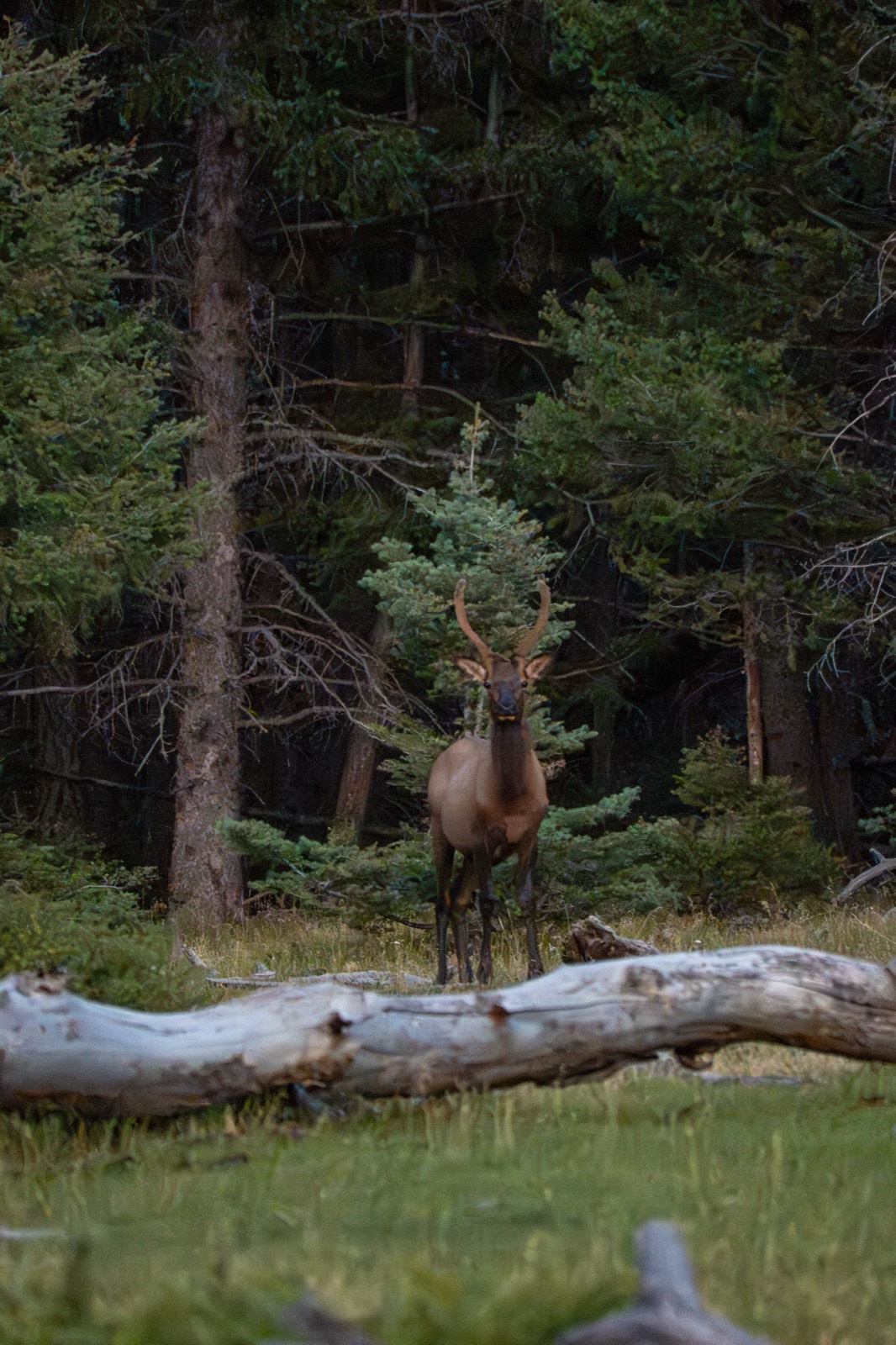
common qualityGMU 654 is a core unit of the South Rainier (Roosevelt) elk herd and one of District 11's two highest elk-harvest GMUs (with 652). It anchors Elk Population Management Unit 67 (653/654), the subherd continues to grow and expand, and — unlike neighboring 653 — antlerless harvest is permitted here, driven partly by damage-abatement hunts. The best elk ground is the Manulife-managed Kapowsin and Eatonville timberlands, accessible only to drawn access-license holders during elk season.
- →Buy a Manulife access license and enter the early-May Kapowsin/Eatonville elk drawing well ahead of season — those timberlands hold the elk but only drawn permittees may hunt them during elk season.
- →Work the growing subherd around the lower timberlands and damage areas; access permission is the primary limiting factor, not elk numbers.
- →On public ground, still-hunt regen stands and forage edges in Elbe Hills and Tahoma State Forests, going behind gates on foot.
- →Hunt closed-canopy timber near openings during warm early seasons when bulls hold cover by day.
Blacktail Deer
common qualityDeer harvest is steady but success is modest here (~15%, below the ~20% urbanized western GMUs), a reflection of limited access and heavier cover. The standout is the eastern high country: WDFW calls out GMUs 653/654 for high-elevation trophy black-tail hunting reached via USFS roads and trails toward Norse Peak, Clearwater, and Glacier View Wilderness.
- →Get away from the crowds by hiking USFS trails into the high eastern basins for a genuine trophy-blacktail hunt.
- →Glass 3- to 9-year clearcuts and regen stands at first and last light, then still-hunt the timber edge as deer bed.
- →Time your hardest effort to the late-October/early-November rut when bucks move most.
- →Use Elbe Hills / Tahoma State Forest walk-in ground to escape the private-timber access bottleneck.
Black Bear
common opportunityGMU 654 sits in the South Cascades Black Bear Management Unit (BBMU #2, with 653) and is a steady producer — WDFW's 7-year figures show roughly 135 bears taken with modest success. Commercial and state timberlands offer the best bear ground; the Kapowsin spring bear hunt was eliminated in 2020 and statewide in 2022, so this is a general-season opportunity now.
- →Scout regenerating timber stands for scat and bark-peeling sign, then glass berry-rich cuts at dawn and dusk.
- →Focus the Manulife Kapowsin/Eatonville lands and Elbe Hills/Tahoma State Forests — WDFW's named best bear ground here.
- →Hunt the open cuts so you spot a bear before it winds you in the thick coastal-type cover.
- →Key on ripe berry and mast feed in early fall before deer and elk pressure scatters bears.
Cougar
common opportunityCougars range throughout the unit following the deer and elk. Most are taken opportunistically by big-game hunters; the season is harvest-cap managed and can close mid-season.
- →Carry a tag and hunt where deer and elk concentrate — cougars follow the prey.
- →After fresh snow in the higher eastern country, cut roads and landings for tracks.
- →Check hunt-area status regularly since cap-managed areas can close once the threshold is hit.
Pro tips
- →Buy a Manulife/Hancock access license and enter the Kapowsin/Eatonville elk drawing in early May — that ground is where District 11's elk harvest comes from and it's drawing-only during elk season.
- →Hunt Elbe Hills, Tahoma State Forest, and Pack Forest as your reliable public fallback — walk, bike, or horse behind the locked gates.
- →For a trophy blacktail, hike USFS trails into the high eastern country toward Glacier View Wilderness rather than road-hunting the lower cuts.
- →This is one of the district's best elk and bear units — plan around those, with the high-country deer as a bonus.
- →Know the Elbe Hills elk-season road rules (5 Road closed, 8 Road open to Scott Turner, 6 Road disabled-only) before you drive in.
- →Watch for Pierce County firearm-restriction zones on the western/urban edge of the district.
Watch out for
- !Most of the low-elevation timber is gated private industrial forest, year-round closed except to Manulife access-license/permittee holders — no license, no entry.
- !Elk hunting on the productive Kapowsin/Eatonville timberlands is drawing-only during elk season; get drawn or you're locked out of the best ground.
- !Mount Rainier National Park forms the east boundary and is entirely closed to hunting — know exactly where the line is.
- !Muckleshoot Tribe forestland is a separate tribal jurisdiction managed under the Manulife program; respect its access rules.
- !Eastern high-country roads and passes can snow shut early — a 4WD and chains are wise for the late hunts.
- !Fire-season closures can shut both private timber and USFS land; check before you go.
- !Archery and muzzleloader hunters often get less (especially vehicle) access than modern-firearm hunters on the timber lands.
Logistics
Base out of Eatonville or Ashford along SR-7/SR-706 for fuel, groceries, and lodging near the park gateway. Dispersed and developed camping is available on the USFS ground and in the state forests; the private Manulife timberlands are gated and not open for dispersed camping. Carry a current ownership/access map, buy your Manulife access license before the season, and expect gravel mainlines behind locked gates. Snow can shut down the eastern high-country roads early.
Nearest towns: Eatonville, Ashford, Elbe, Graham, Puyallup
Seasons & regulations
This page carries no season dates or regulations. Get current rules from the official Washington sources:
Research sources: WDFW 2023 District 11 Hunting Prospects — GMU 654 elk (PMU 67, South Rainier herd), deer, bear, access/ownership, road closures · WDFW 2025 District 15/11 Hunting Prospects (current) · WDFW Game Management Units (GMU boundaries & maps)
FAQ
- How big is GMU 654 in Washington?
- GMU 654 (Mashel) covers about 332 square miles, ranging from roughly 500 to 6,000 feet in elevation. Area is computed from the unit boundary polygon.
- How much public land is in GMU 654?
- Approximately 30% of the unit is public land. Primary managers: Manulife Investment Management (Hancock) — Kapowsin & Eatonville timberlands, Olympic Resource Management, Hampton Lumber / Mid Valley Resources, Rayonier, Muckleshoot Indian Tribe (managed under Manulife Access Program), WDNR (Elbe Hills & Tahoma State Forests), USFS (Gifford Pinchot / Mt Baker-Snoqualmie NF). Always verify ownership boundaries on the ground.
- What species does the catalog list for GMU 654?
- Roosevelt Elk, Blacktail Deer, Black Bear, Cougar. For seasons, tags, and regulations, use the official Washington agency resources linked on this page — this page carries no regulatory information.
Put GMU 654 on your map.
Boundary lines, public/private ownership, topo, and offline maps for this unit — in Baseline Maps, free for 14 days.