Unit 60 Thorofare (Area 60)
The Thorofare — the most remote country in the Lower 48, a horseback wilderness elk hunt on Yellowstone's back doorstep.
Absaroka Range / Teton Wilderness · Last reviewed 2026-07-12
Area
332
sq mi
Public land
100%
approx.
Elevation
7,500–12,000
feet
Motorized
wilderness
access
Overview
Hunt Area 60 is the Thorofare, tucked against the southeast corner of Yellowstone National Park in the Teton Wilderness of the Bridger-Teton National Forest. It holds the single most remote spot in the contiguous United States — more than twenty miles from the nearest road in any direction — and it is elk country to the bone, feeding migratory herds that summer in and around Yellowstone. This is a wall-tent, string-of-horses, pack-in-for-a-week wilderness hunt through steep drainages, high plateaus and vast timber and meadow parks. It is also serious grizzly country. Every acre is federal wilderness, and by Wyoming law nonresidents must hunt designated wilderness with a licensed outfitter or a resident guide.
Terrain
Steep Absarokan drainages and volcanic breaks climbing to broad high plateaus and alpine basins, with the Yellowstone River, Thorofare Creek and their tributaries braiding through timber and expansive meadow parks.
Cover: Lodgepole, spruce-fir and whitebark pine timber, willow and sedge riparian bottoms, sagebrush and grass parks, and open alpine tundra on the plateaus above treeline.
Landmarks: Thorofare Creek · upper Yellowstone River · Bridger Lake · Hawks Rest · Younts Peak (headwaters) · Yellowstone NP boundary · Two Ocean Plateau
Access
Entirely designated wilderness — no checkerboard and no private inholdings, but also NO motorized access of any kind. Entry is by horseback or on foot over long, well-established pack trails from trailheads on the Buffalo Valley/Brooks Lake side or up the South Fork of the Shoshone. By Wyoming statute, nonresident hunters may not hunt in a designated wilderness area without a licensed outfitter or a resident guide. Yellowstone National Park along the north/west boundary is closed to hunting — know exactly where the line is.
Managers: USFS Bridger-Teton NF (Teton Wilderness)
Access points: Turpin Meadow / Buffalo Valley trailheads (Bridger-Teton NF) · Brooks Lake area trailheads · Deer Creek / South Fork Shoshone approaches · long pack trails up the Yellowstone River and Thorofare Creek
Species notes
Rocky Mountain Elk
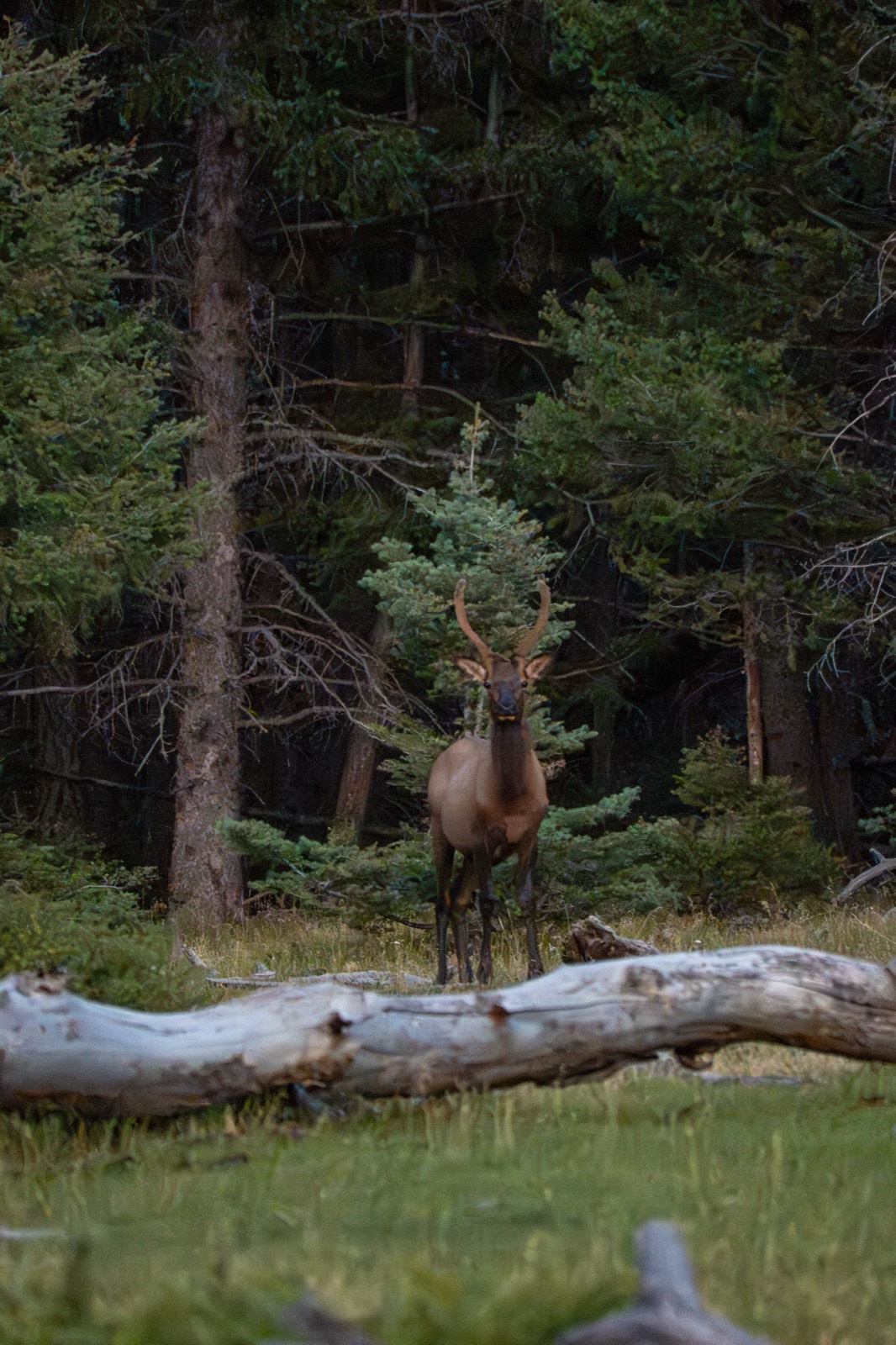
abundant trophyThe reason to be here. The Thorofare feeds large migratory elk herds tied to Yellowstone, and early wilderness seasons put hunters in during the rut on mature, bugling bulls in country that sees very little pressure.
- →Hunt the rut — locate bugling bulls at dawn from timbered meadow parks, then work in on the wind
- →Glass big open plateaus and burn edges at first and last light
- →Watch for migratory elk streaming out of the Park as weather and snow build
- →Plan a genuine backcountry hunt: pack camp, cover big country, and be self-sufficient for days
Moose
common qualityShiras moose work the willow bottoms and riparian meadows along the Yellowstone River, Thorofare Creek and side drainages — a coveted limited-draw resource.
- →Glass willow flats and beaver-pond meadows morning and evening
- →Still-hunt riparian stringers where bulls hold in cover
- →Cover multiple drainages on horseback to locate a mature bull
Bighorn Sheep
limited qualityAbsaroka bighorn use the high alpine ridges, cliffs and plateaus of the surrounding peaks — a rare, coveted tag in extremely rugged country.
- →Glass high alpine basins, escape cliffs and plateau rims
- →Expect long approaches above treeline and rapidly changing weather
- →Be prepared for physically demanding spot-and-stalk hunting
Mule Deer
common opportunityMule deer summer in the high basins and timber edges, mixing with elk on the parks and plateau country.
- →Glass alpine basins and timberline meadow edges at dawn
- →Hunt higher early, then follow deer down as snow pushes them out
Black Bear
abundant opportunityThis is core grizzly habitat — one of the densest grizzly populations in the Lower 48 — with black bears also present. Grizzlies are the defining hazard of any Thorofare hunt; carry bear spray, keep a clean camp, and guard kills and gut piles.
- →Treat every hunt as a grizzly encounter waiting to happen — bear spray on your belt at all times
- →Hang meat and food well away from camp; approach carcasses loudly and cautiously
- →Black bears can be glassed on burn slopes and berry patches; be certain of species and status before any shot
Cougar
common opportunityMountain lions range the timber and breaks following deer and elk; largely an incidental or winter pursuit resource in this remote country.
- →Cut tracks after snow along drainages and timber edges
- →Focus on rugged breaks holding wintering deer and elk
Pro tips
- →Nonresidents legally cannot hunt this wilderness without an outfitter or resident guide — book early
- →This is a horseback, pack-in-for-a-week hunt; don't underestimate the logistics or the fitness required
- →Hunt the September rut for bugling bulls — the Thorofare's calling card
- →Grizzlies are everywhere: bear spray always, clean camp, guard your kill
- →Know the Yellowstone Park boundary cold — it is closed to hunting
- →Watch the weather and have an exit plan; early snow can trap you and your stock
Watch out for
- !High-density grizzly country — the single biggest hazard here
- !Nonresident wilderness-guide requirement (Wyoming law)
- !No motorized access — horseback or foot only, 20+ miles from any road
- !Sudden deep snow stranding stock and closing trails
- !Yellowstone National Park boundary closed to hunting
- !Remoteness — rescue and evacuation are slow; self-sufficiency is mandatory
Logistics
There is no in-unit infrastructure — plan a full wilderness expedition. Trailhead staging comes from the Buffalo Valley/Moran area (Jackson is the nearest full-service town, roughly two-plus hours by trail beyond the road's end) or from Dubois and Cody on the east side. Most hunters go with an outfitter running stock; a self-guided resident hunt demands horses, backcountry skill and days of food. Weather can turn to deep snow with no warning.
Nearest towns: Moran / Moran Junction, Jackson, Dubois, Cody
Seasons & regulations
This page carries no season dates or regulations. Get current rules from the official Wyoming sources:
Research sources: GOHUNT — Wyoming Area 60 Thorofare unit profile · Graylight Outfitters — Wyoming Elk Hunting Unit 60, the Thorofare Wilderness · WGFD Hunt Planner
FAQ
- How big is Unit 60 in Wyoming?
- Unit 60 (Thorofare (Area 60)) covers about 332 square miles, ranging from roughly 7,500 to 12,000 feet in elevation. Area is computed from the unit boundary polygon.
- How much public land is in Unit 60?
- Approximately 100% of the unit is public land. Primary managers: USFS Bridger-Teton NF (Teton Wilderness). Always verify ownership boundaries on the ground.
- What species does the catalog list for Unit 60?
- Rocky Mountain Elk, Moose, Bighorn Sheep, Mule Deer, Black Bear, Cougar. For seasons, tags, and regulations, use the official Wyoming agency resources linked on this page — this page carries no regulatory information.
Put Unit 60 on your map.
Boundary lines, public/private ownership, topo, and offline maps for this unit — in Baseline Maps, free for 14 days.