Unit 70 Buffalo Fork (Area 70)
Roadless Teton Wilderness elk country north of Buffalo Valley — the Jackson herd's old-bull backcountry
Teton Wilderness / Buffalo Fork (Bridger-Teton NF) · Last reviewed 2026-07-12
Area
448
sq mi
Public land
98%
approx.
Elevation
6,900–11,000
feet
Motorized
wilderness
access
Overview
Hunt Area 70 covers roughly 450 square miles of the Buffalo Fork drainage inside the Bridger-Teton National Forest, running north from Buffalo Valley up into the Teton Wilderness toward the Yellowstone boundary. This is remote, horseback-oriented country and a piece of the famous Jackson elk herd, where light pressure and rugged relief let bulls reach maturity. Nearly the entire unit is roadless designated wilderness, so success is earned by getting deep — most hunters never reach the best basins. Grizzly bears are established throughout.
Terrain
Broad glacial valleys of the North and South Buffalo Fork climbing to timbered ridges, high meadows, and alpine plateaus of the southern Absarokas near the Yellowstone line. Deep, steep drainages separate long timbered spines.
Cover: Lodgepole and spruce-fir timber on the slopes, willow and grass along the Buffalo Fork bottoms, aspen pockets on lower benches, and open sage-grass parks and alpine tundra up high. Extensive standing and downed beetle-kill and old burns.
Landmarks: North Buffalo Fork · South Buffalo Fork · Buffalo Valley / Turpin Meadow · Soda Fork · Terrace Mountain · Teton Wilderness boundary · Yellowstone National Park boundary (north)
Access
Essentially all public forest, the great majority of it designated Teton Wilderness — so no checkerboard and no permission chase, but no motorized access either. Wyoming law bars nonresidents from hunting big or trophy game in designated wilderness without a licensed guide or a resident companion (the resident must obtain a free non-commercial guide license from a Game & Fish office). Realistic access is on horseback from valley trailheads; foot hunters are limited to the fringe.
Managers: USFS Bridger-Teton NF (Teton Wilderness), private ranch (Buffalo Valley inholdings)
Access points: Turpin Meadow trailhead (Buffalo Fork) · Box Creek trailhead · North Buffalo Fork trail · Soda Fork trail · Angles trailhead / Buffalo Valley Road (FR 30050)
Species notes
Rocky Mountain Elk
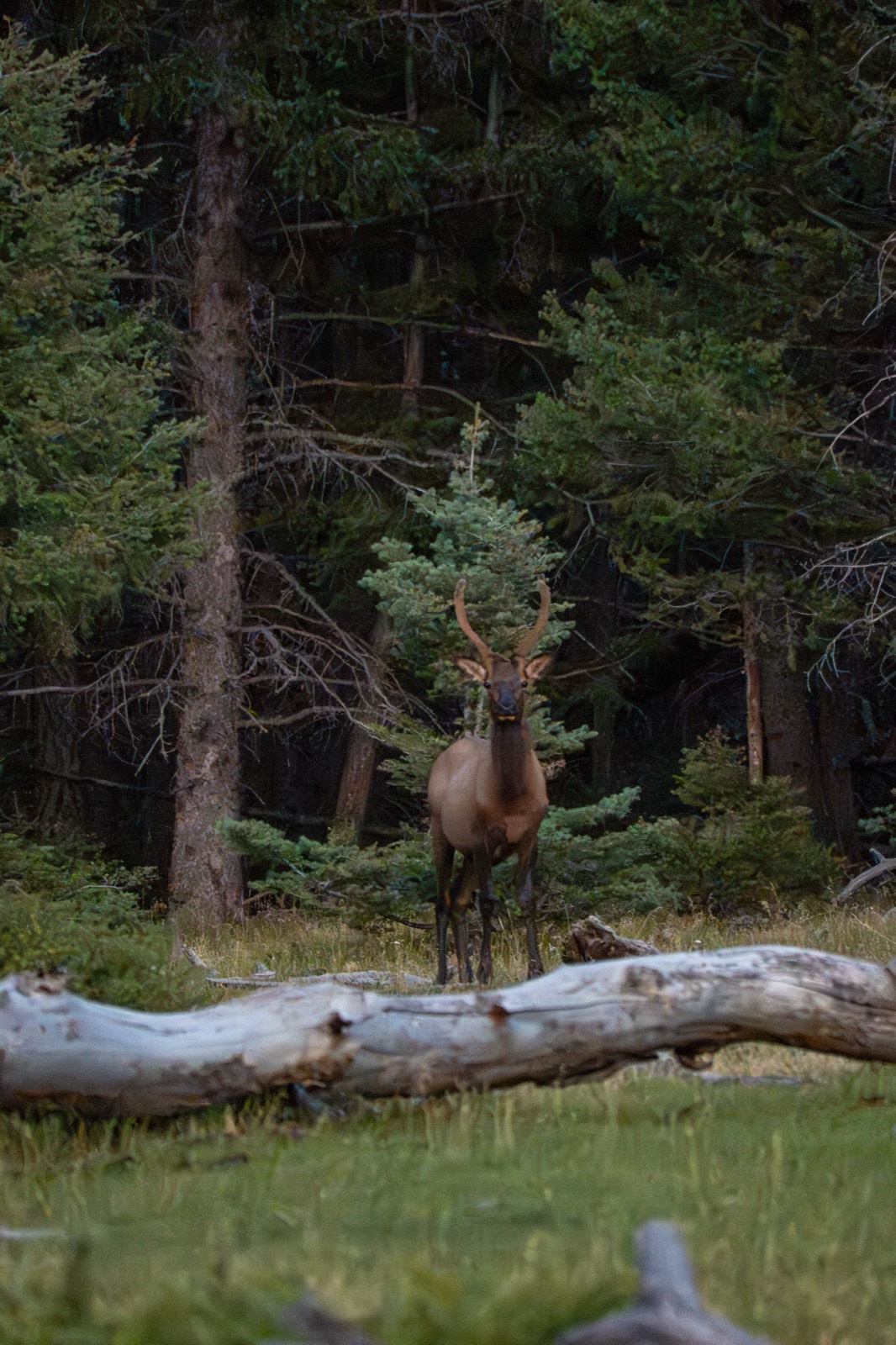
abundant trophyThe marquee species and the reason to draw this area. Part of the Jackson elk herd, one of Wyoming's best-managed, Area 70 grows mature bulls thanks to remoteness and limited pressure. Early rifle timing can overlap the tail of the rut, and outfitted success on bulls is commonly cited in the 50-60% range with very high opportunity. Elk shift with weather and pressure, moving to south-facing timber pockets and pushing toward wintering ground as snow builds.
- →Get deep — pack in on horseback well past the trailhead crowds into the roadless basins
- →Glass timbered-park edges and high meadows at first and last light
- →Work bugles in the early season when bulls are still rutting in the dark timber
- →Watch the weather — a hard snow shoves elk down out of the high country and concentrates them
- →Hunt the transition benches and burns where regrowth forage draws feeding elk
Moose
common qualityThe Buffalo Fork willow bottoms and beaver-pond drainages are classic Shiras moose habitat and part of the Jackson moose herd. Tags are very limited draw-only, but bulls can be excellent for the hunter who pulls one. Numbers are down from historic highs regionally, so scout willow complexes and riparian pockets.
- →Still-hunt and glass the willow flats along the North and South Buffalo Fork
- →Check beaver-pond drainages and spring seeps at dawn and dusk
- →Move slowly through mixed willow-timber edges where bulls bed
Mule Deer
limited opportunityMule deer use the lower benches, aspen, and open parks but this is elk-and-moose country first; deer density is modest and bucks are incidental to backcountry elk trips. Higher basins hold summer bucks that leave early as snow arrives.
- →Glass aspen edges and sage-grass parks on lower south slopes
- →Hunt early before high-country bucks migrate out
- →Treat deer as opportunity alongside a primary elk hunt
Black Bear
common opportunityBoth grizzly and black bears inhabit the unit. Grizzlies are federally managed and not a hunting species here, but their presence dictates how you camp, hang meat, and pack out a kill. Black bears are huntable on their own seasons.
- →Run a bear-safe camp — store food and hang or move meat well away from tents
- →Carry bear spray and be loud in thick timber and near carcasses
- →Never leave a downed elk overnight without a plan to defend or retrieve it fast
Pro tips
- →Nonresidents must line up a licensed guide or a resident companion (with a free non-commercial guide license) before hunting the wilderness — arrange it early
- →Pack in beyond the day-hunter zone; the bulls live where the crowds don't go
- →Have a stock or heavy-pack plan for meat retrieval before you pull the trigger miles from the trailhead
- →Time your hunt to a weather front — snow is what pushes elk down and makes them findable
- →Bring certified weed-free feed for horses and mules as required on the forest
Watch out for
- !Designated wilderness: no motorized/mechanized access, and nonresidents need a guide or resident companion by law
- !Established grizzly country — food storage, bear spray, and fast meat care are non-negotiable
- !Early and heavy snow can strand stock and close high routes
- !Deep backcountry with no cell coverage; carry a satellite communicator and a self-rescue plan
- !Private inholdings in Buffalo Valley near trailheads — respect boundaries at the edges
Logistics
Stage from Buffalo Valley off US-26/287 near Moran, with Jackson the full-service hub for licenses, groceries, and gear. Most hunters use pack stock or an outfitter to reach the wilderness core; plan multi-day backcountry camps and weed-free certified feed for stock. Cell service is unreliable to nonexistent past the trailheads.
Nearest towns: Moran, Jackson, Dubois
Seasons & regulations
This page carries no season dates or regulations. Get current rules from the official Wyoming sources:
Research sources: WGFD Elk Hunt Area Maps (2023) · GOHUNT Wyoming Elk Unit 70 Profile · Graylight Outfitters — Hunting Elk in Wyoming's Unit 70 (Teton Wilderness)
FAQ
- How big is Unit 70 in Wyoming?
- Unit 70 (Buffalo Fork (Area 70)) covers about 448 square miles, ranging from roughly 6,900 to 11,000 feet in elevation. Area is computed from the unit boundary polygon.
- How much public land is in Unit 70?
- Approximately 98% of the unit is public land. Primary managers: USFS Bridger-Teton NF (Teton Wilderness), private ranch (Buffalo Valley inholdings). Always verify ownership boundaries on the ground.
- What species does the catalog list for Unit 70?
- Rocky Mountain Elk, Moose, Mule Deer, Black Bear. For seasons, tags, and regulations, use the official Wyoming agency resources linked on this page — this page carries no regulatory information.
Put Unit 70 on your map.
Boundary lines, public/private ownership, topo, and offline maps for this unit — in Baseline Maps, free for 14 days.