GMU 5BS Unit 5BS — Flagstaff
Big elk harvest and mesa pronghorn in the Mormon Lake country
Anderson Mesa / Mormon Lake high country — Coconino NF · Last reviewed 2026-07-12
Area
283
sq mi
Public land
85%
approx.
Elevation
5,500–7,300
feet
Motorized
moderate
access
Overview
Unit 5B South covers the southern portion of Anderson Mesa and the Mormon Lake country southeast of Flagstaff, a rolling high plateau of grassland parks, ponderosa pine, and shallow timbered draws. Rocky Mountain elk drive the unit and post one of the larger bull harvests in the region, backed by pronghorn on the open mesa grasslands, mule deer through the pine transition, and scattered black bear in the timber. It is a heavily public Coconino National Forest unit with restricted-route motorized access.
Terrain
Southern Anderson Mesa plateau and the Mormon Lake basin — broad grassy parks and pine flats cut by shallow timbered drainages.
Cover: Grassland and sagebrush parks grading into ponderosa pine and pinon-juniper, with oak brush and seasonal wet meadows around Mormon Lake.
Landmarks: Mormon Lake · Mormon Mountain · Anderson Mesa (south) · Long Lake · Soldier Lake · Double Springs
Access
Almost entirely Coconino National Forest with a dense forest-road network, but motorized travel is limited to designated routes under travel management. Scattered State Trust parcels require an Arizona State Land recreation permit, and there are private inholdings around Mormon Lake village. The mesa lakes draw heavy general recreation.
Managers: USFS Coconino NF, AZ State Trust, Private (Mormon Lake/inholdings)
Access points: Lake Mary Road (FH 3) from Flagstaff to Mormon Lake · Mormon Lake Loop Road · FR 90 / FR 213 forest roads · Anderson Mesa road network
Species notes
Rocky Mountain Elk
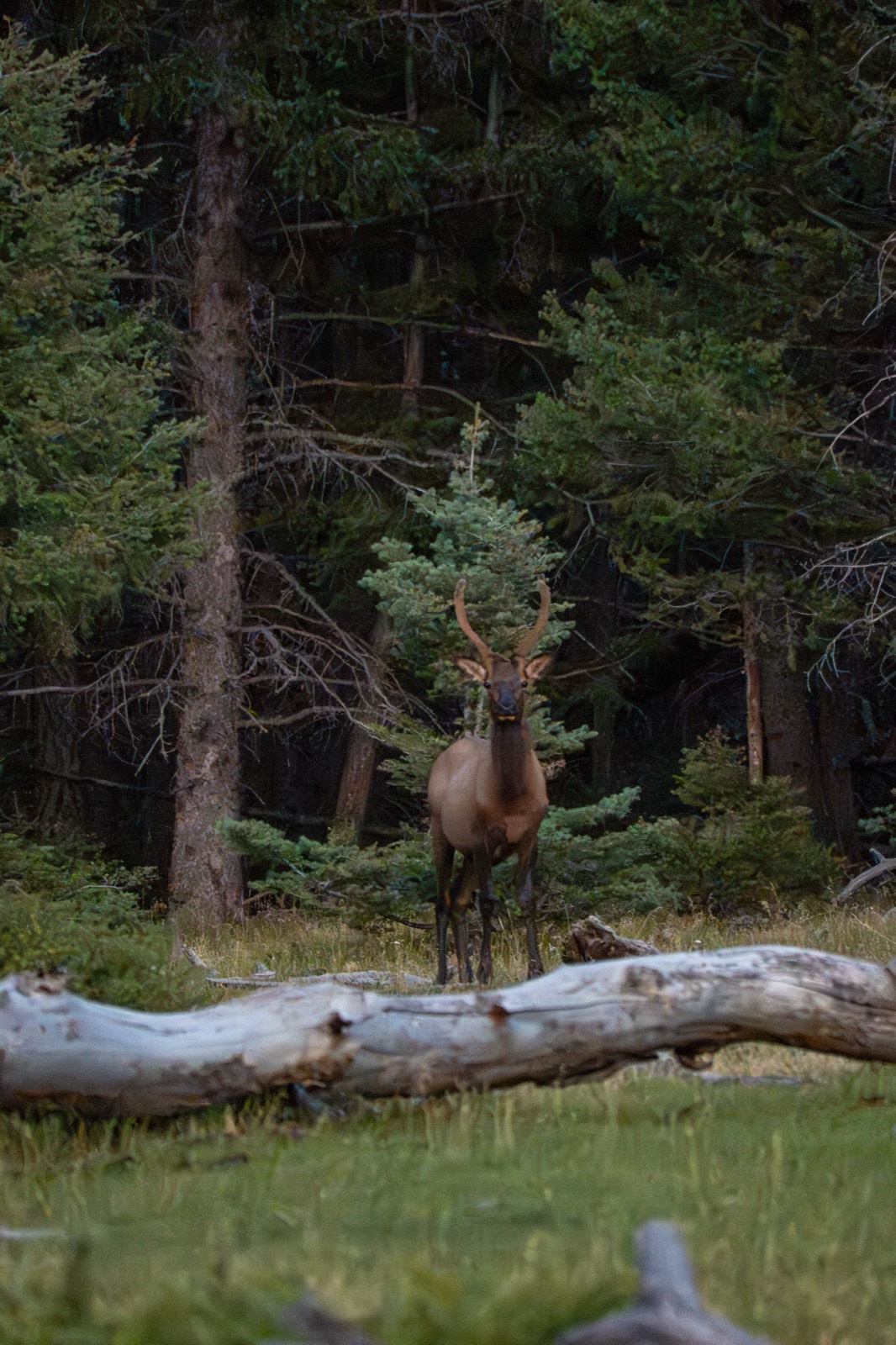
abundant qualityThe marquee species and by far the largest harvest; excellent bull numbers using the Mormon Lake basin and mesa parks, with strong rut hunting on limited-entry tags.
- →Glass the big meadows and park edges around Mormon Lake at first and last light
- →Work timbered draws between feeding parks and bedding timber
- →Sit water tanks and lakeshores during dry early seasons
- →Call the September rut at meadow-timber transitions
- →Move to Mormon Mountain's dark timber during midday heat
Pronghorn
common qualityThe open southern mesa holds a healthy pronghorn population on scarce, sought-after tags, part of the larger Anderson Mesa herd.
- →Glass the open mesa parks from high points
- →Spot-and-stalk using terrain rolls and swales
- →Watch stock tanks and fence lines for feeding movement
- →Hunt morning and evening grazing patterns
- →Cover ground between open parks to find bucks
Mule Deer
common opportunityA dependable general mule deer hunt through the ponderosa and pinon-juniper transition rather than a trophy unit.
- →Glass draw edges and meadow fringes at dawn
- →Focus the pine-to-oak-brush transition
- →Still-hunt timber pockets midday
- →Hunt storm fronts that push deer lower
Black Bear
limited opportunityBlack bear are present in the timber and oak brush, especially around Mormon Mountain, but at modest densities — an opportunistic add-on.
- →Glass oak brush and berry patches in early fall
- →Work Mormon Mountain drainages and riparian corridors
- →Check acorn concentrations
- →Hunt timber edges slowly at dawn and dusk
Pro tips
- →Hunt the Mormon Lake basin and mesa park edges for elk — feeding parks by dawn, timber by midday
- →In dry early seasons, water tanks and lakeshores concentrate both elk and pronghorn
- →Anderson Mesa pronghorn tags are hard to draw and worth targeting on the open south mesa
- →Buy an Arizona State Land recreation permit before hunting State Trust parcels
- →Stay on designated motorized routes under Coconino travel management
Watch out for
- !Motorized travel restricted to designated routes on the Coconino NF
- !State Trust land requires an Arizona State Land recreation permit
- !Private inholdings around Mormon Lake village
- !Early snow and cold high-country weather; dry tanks in early seasons
- !Fire restrictions and possible closures in dry years
Logistics
Flagstaff is the main full-service base 30-40 minutes north via Lake Mary Road, with limited seasonal services at Mormon Lake village. Dispersed and developed camping is plentiful around Mormon Lake and the mesa. Prepare for cold nights, early-snow potential, and dry stock tanks in early seasons.
Nearest towns: Flagstaff, Mormon Lake, Munds Park, Happy Jack
Seasons & regulations
This page carries no season dates or regulations. Get current rules from the official Arizona sources:
Research sources: AZGFD Where to Hunt / GMU 5B · AZGFD Hunt Arizona unit guidelines · Coconino NF recreation and motor vehicle use maps · Arizona State Land Department recreation permits
FAQ
- How big is GMU 5BS in Arizona?
- GMU 5BS (Unit 5BS — Flagstaff) covers about 283 square miles, ranging from roughly 5,500 to 7,300 feet in elevation. Area is computed from the unit boundary polygon.
- How much public land is in GMU 5BS?
- Approximately 85% of the unit is public land. Primary managers: USFS Coconino NF, AZ State Trust, Private (Mormon Lake/inholdings). Always verify ownership boundaries on the ground.
- What species does the catalog list for GMU 5BS?
- Rocky Mountain Elk, Pronghorn, Mule Deer, Black Bear. For seasons, tags, and regulations, use the official Arizona agency resources linked on this page — this page carries no regulatory information.
Put GMU 5BS on your map.
Boundary lines, public/private ownership, topo, and offline maps for this unit — in Baseline Maps, free for 14 days.