GMU 431 GMU 431 — Pitkin Co.
Rugged, wilderness-heavy alpine elk and deer at the foot of the Maroon Bells
Central Colorado — Elk Mountains high country south of Aspen · Last reviewed 2026-07-12
Area
221
sq mi
Public land
90%
approx.
Elevation
8,000–14,000
feet
Motorized
wilderness
access
Overview
GMU 431 sits in the Elk Mountains of Pitkin County, taking in the steep, alpine country south and southwest of Aspen — the Castle Creek, Conundrum, and upper Crystal River drainages beneath the Maroon Bells, Pyramid Peak, and Castle Peak. This is a small, extremely rugged unit dominated by White River National Forest and the Maroon Bells-Snowmass Wilderness, with terrain running from valley floors near 8,000 feet to fourteeners above 14,000. Elk and mule deer are the backbone tags but numbers and success are modest here — the harvest reflects a low-density, hard-to-hunt wilderness unit, not a target-rich basin. The alpine also holds bighorn sheep and mountain goat.
Terrain
Classic Elk Mountains relief — glacially carved valleys and creek bottoms climbing hard through spruce-fir and aspen to timberline basins, alpine tundra, and jagged fourteeners.
Cover: Aspen and mixed spruce-fir on the mid-slopes, willow and cottonwood in the valley bottoms, oakbrush and serviceberry on the lower dry faces, grading to alpine tundra, talus, and rock in the high basins.
Landmarks: Maroon Bells · Pyramid Peak · Castle Peak · Castle Creek · Conundrum Creek / Conundrum Hot Springs · upper Crystal River
Access
Overwhelmingly public national-forest and designated wilderness, which means most hunting is a boots-and-horses backcountry effort well off the road. Private ground is concentrated on the valley floors and around Aspen; verify boundaries there. Wilderness designation over much of the unit prohibits motorized and mechanized travel, so plan on backpack or stock access. State Trust Land is generally closed unless enrolled in CPW's Public Access Program.
Managers: USFS White River NF, Maroon Bells-Snowmass Wilderness, private (Aspen / Castle Creek valley floors), Colorado State Trust Land (generally closed unless in CPW Public Access Program)
Access points: Castle Creek Road (CR-15) trailheads · Conundrum Creek trailhead · Maroon Creek corridor access (seasonal restrictions near the Bells) · Crystal River / CO-133 side roads on the west
Species notes
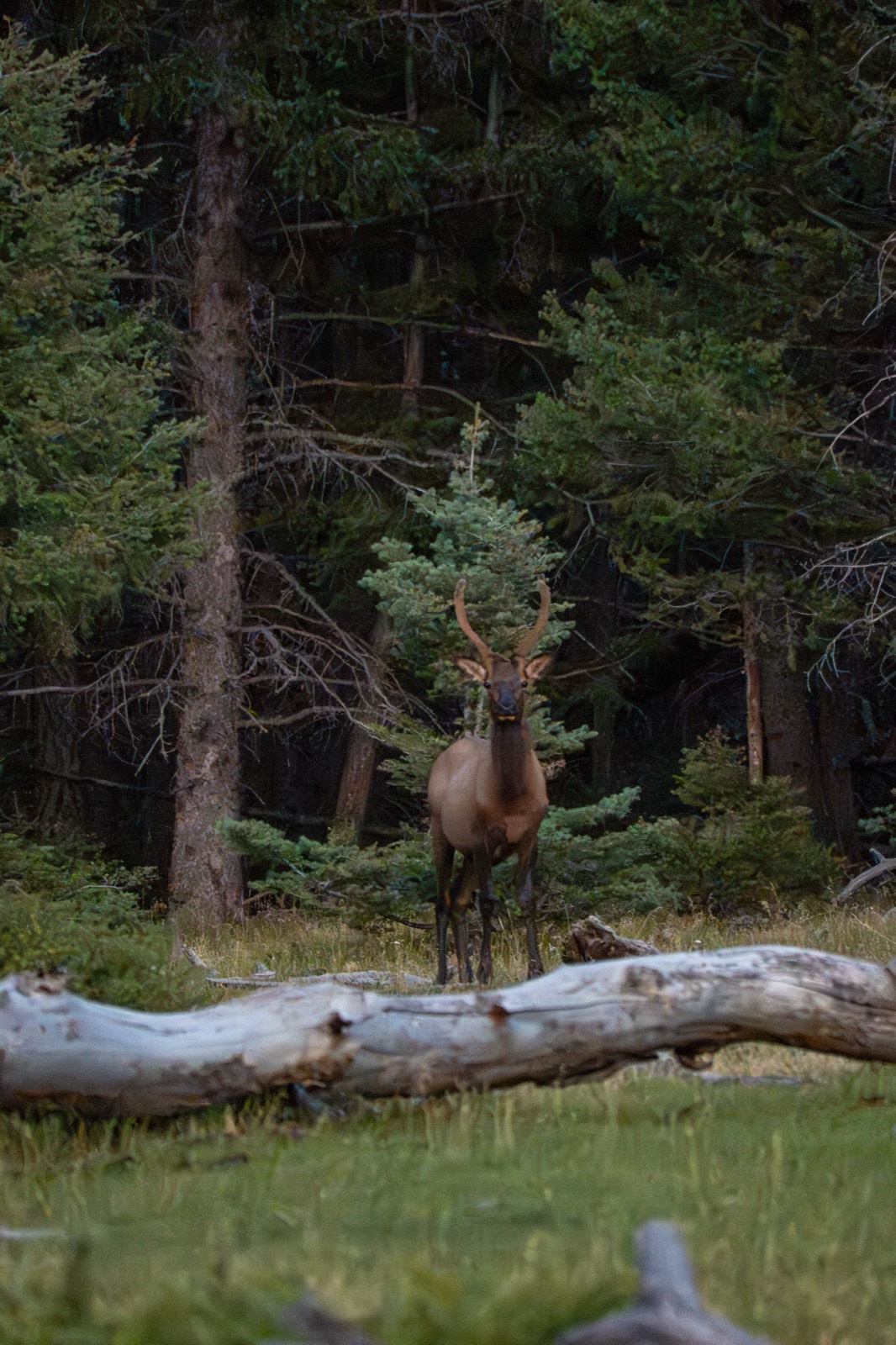
Rocky Mountain Elk
common opportunityThe primary big-game tag, but this is low-density, high-effort wilderness elk hunting — modest harvest and low success are the fingerprint of steep country and hunting pressure that pushes elk into the roughest terrain. Where the White River NF units around Aspen carry an over-the-counter bull component, expect company at the trailheads; the reward goes to hunters who get deep and high.
- →Backpack or pack in past the day-hunter zone into timberline basins and dark timber pockets
- →Glass avalanche chutes, aspen benches, and the oak-to-timber transition at first and last light
- →During the rut, work timbered draws and wallows with calling high in the wilderness
- →Let early snow push elk down off the peaks into the aspen and oakbrush
- →Plan on horses or a strong pack strategy for meat off the mountain
Mule Deer
common qualityLimited-draw deer sharing the aspen, oakbrush, and timberline country with the elk. Numbers are modest in this alpine unit, but the draw-only structure protects age structure — a bucks-in-the-high-country hunt rather than a numbers game.
- →Glass oakbrush benches and aspen edges at dawn and dusk
- →Bucks hold in high timbered pockets and rockslides through midday
- →Hunt the timberline transition early season, dropping with the deer as snow builds
- →Cover ground with optics — density is low, so glassing beats still-hunting
Bighorn Sheep
limited trophyThe Elk Mountains hold Rocky Mountain bighorn in the alpine cliffs and basins around the fourteeners — a rare, coveted, very-limited-draw tag. A once-in-a-lifetime type hunt for those who draw.
- →Glass high cliff bands, talus, and alpine basins from long range
- →Focus on rugged escape terrain near the peaks
- →Plan a physically demanding high-alpine hunt and scout thoroughly beforehand
Mountain Goat
limited trophyMountain goats inhabit the highest cliffs and tundra of the Elk Mountains. A prized, very-limited-draw alpine tag on the same rugged fourteener terrain as the sheep.
- →Glass the highest rock and tundra near the summits
- →Expect steep, exposed climbing to reach goats
- →Scout access routes and weather windows in advance
Black Bear
common opportunityBlack bears work the oakbrush, serviceberry, and aspen belts, especially where mast and berries are heavy in early fall — typical of the mountain-shrub habitat on the lower flanks. Usually an incidental opportunity.
- →Hunt oakbrush and berry patches on the lower slopes in early fall
- →Glass shrubby faces at dawn and dusk for feeding bears
- →Focus on mast-heavy benches that also hold deer and elk
Pro tips
- →Treat this as a backcountry wilderness hunt — depth and elevation, not roads, put you on game
- →Verify the valley-floor private boundaries around Aspen and Castle Creek with a GPS layer
- →Time a rifle hunt to the first hard snow that pushes elk and deer off the high peaks
- →Sort out meat-hauling (horses or a strong pack plan) before you shoot in this terrain
- →Watch fast alpine weather and early snow — have an exit plan for the high basins
Watch out for
- !Extremely rugged, high-elevation terrain — physically demanding and slow to hunt
- !Wilderness rules prohibit motorized/mechanized access over much of the unit
- !Valley-floor private ground around Aspen — verify boundaries
- !State Trust Land generally closed unless enrolled in CPW's Public Access Program
- !Sudden alpine storms and early snow; short weather windows above timberline
Logistics
Aspen is the trailhead hub with full services (fuel, lodging, groceries), though it is an expensive resort town — Basalt and Carbondale downvalley are more economical bases. Access is largely by foot or stock into wilderness, so plan pack logistics and meat-hauling carefully. High-elevation weather turns fast and early snow is common; carry alpine gear. Cell coverage drops off quickly in the drainages.
Nearest towns: Aspen, Snowmass Village, Basalt, Carbondale
Seasons & regulations
This page carries no season dates or regulations. Get current rules from the official Colorado sources:
Research sources: CPW Big Game Hunting Statistics · CPW Hunting Atlas — GMU boundaries and public access · USFS — White River National Forest (Aspen-Sopris Ranger District) · CPW — Hunting Elk (OTC vs limited)
FAQ
- How big is GMU 431 in Colorado?
- GMU 431 (GMU 431 — Pitkin Co.) covers about 221 square miles, ranging from roughly 8,000 to 14,000 feet in elevation. Area is computed from the unit boundary polygon.
- How much public land is in GMU 431?
- Approximately 90% of the unit is public land. Primary managers: USFS White River NF, Maroon Bells-Snowmass Wilderness, private (Aspen / Castle Creek valley floors), Colorado State Trust Land (generally closed unless in CPW Public Access Program). Always verify ownership boundaries on the ground.
- What species does the catalog list for GMU 431?
- Rocky Mountain Elk, Mule Deer, Bighorn Sheep, Mountain Goat, Black Bear. For seasons, tags, and regulations, use the official Colorado agency resources linked on this page — this page carries no regulatory information.
Put GMU 431 on your map.
Boundary lines, public/private ownership, topo, and offline maps for this unit — in Baseline Maps, free for 14 days.