GMU 55 GMU 55 — Gunnison Co.
High-alpine elk and mule deer in the Fossil Ridge and Collegiate Peaks wilderness country
Central Colorado — Taylor Park and the Elk Mountains · Last reviewed 2026-07-12
Area
887
sq mi
Public land
85%
approx.
Elevation
8,900–14,000
feet
Motorized
moderate
access
Overview
GMU 55 is a big, almost entirely mountainous unit east and northeast of Gunnison, built around Taylor Park and hundreds of square miles of the Elk Mountains in the Gunnison (GMUG) National Forest. It takes in Fossil Ridge Wilderness and edges of the Collegiate Peaks, Maroon Bells–Snowmass, and Raggeds wilderness areas, with terrain running from 9,000-foot foothills near Gunnison up past 14,000-foot peaks along the Continental Divide. Elk and mule deer carry the harvest, both fully limited draw — elk live high (10,000 to 12,000-plus feet) and hunters work for them. As of 2026 the over-the-counter second- and third-rifle bull elk tags were eliminated across the northern Gunnison Basin, so GMU 55 is now completely limited. The high country also holds bighorn sheep, mountain goat, and moose on once-in-a-lifetime and limited draws.
Terrain
Overwhelmingly high mountain country — timbered foothills near Gunnison climbing through aspen and spruce-fir into vast alpine basins and 13,000–14,000-foot peaks of the Elk Mountains and Continental Divide.
Cover: Sagebrush and aspen on the lower foothills, extensive spruce-fir and lodgepole through the mid and high slopes, willow-choked drainages, and alpine tundra and rock above timberline.
Landmarks: Taylor Park & Taylor River · Fossil Ridge Wilderness · Cumberland Pass · Continental Divide · Collegiate Peaks Wilderness (east edge) · Taylor Park Reservoir
Access
This is a very high-public unit — the great majority is Gunnison National Forest and designated wilderness, with only limited private ground in the lower valley bottoms and around Taylor Park. Non-wilderness Taylor Park is heavily roaded and a well-known OHV/ATV destination, while Fossil Ridge and the Collegiate Peaks edges are closed to motor vehicles and reached on foot or horseback. State Trust Land is generally closed unless enrolled in the Public Access Program.
Managers: USFS Grand Mesa-Uncompahgre-Gunnison NF, Fossil Ridge Wilderness, Collegiate Peaks / Maroon Bells-Snowmass / Raggeds Wilderness (edges), private (limited, valley bottoms), Colorado State Trust Land (generally closed unless in CPW Public Access Program)
Access points: Taylor Canyon / Taylor River Road (FR 742) into Taylor Park · Cumberland Pass Road · Fossil Ridge Wilderness trailheads · extensive Gunnison NF road/trail network off Almont
Species notes
Rocky Mountain Elk
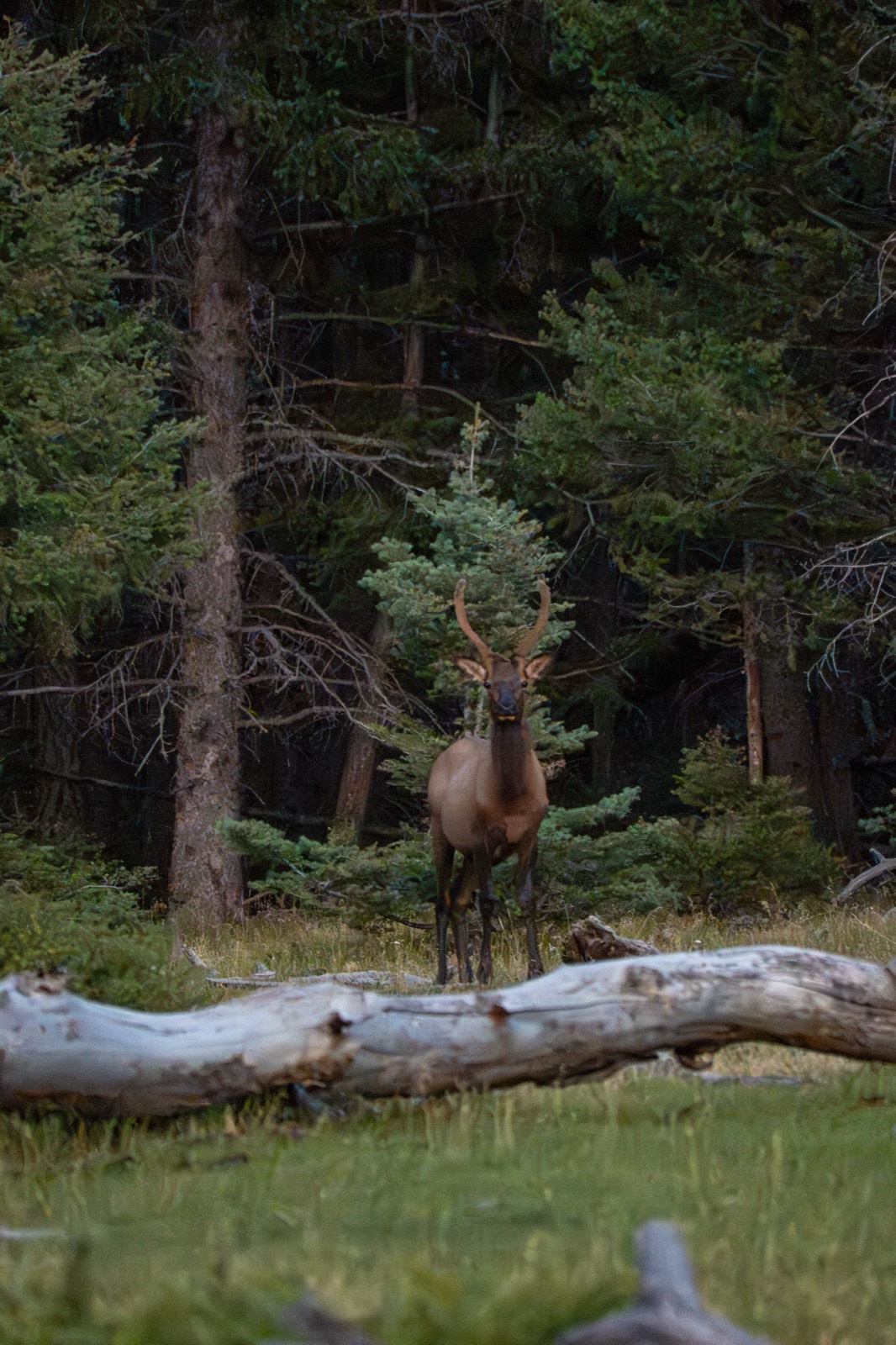
abundant opportunityHigh-country elk are the harvest backbone — herds hold at 10,000-plus feet in the timber and alpine basins and are genuinely hard-earned, which shows in the strong harvest volume but modest success. As of 2026 the bull tags are drawn rather than over-the-counter across the northern Gunnison Basin.
- →Hunt high — elk often sit above 10,000 feet and push toward 11,000–12,000 by muzzleloader season
- →Get well back from the roaded Taylor Park corridors into timber and wilderness basins
- →Work spruce-fir pockets, dark timber, and wallows with calling during the rut
- →Later rifle: use snow to catch elk shifting down out of the high basins
Mule Deer
common qualityA solid, quality mule deer unit in the Elk Mountains, with good success rates. Deer summer high in the aspen and alpine edges and drop toward the lower foothills and valley with snow. Fully limited draw.
- →Glass alpine and timberline basins and aspen edges at first and last light
- →Bucks hold in high krummholz and dark timber pockets through midday
- →Time later hunts to migration as snow pushes bucks toward the lower foothills
- →Prioritize the extensive public high country away from the OHV corridors
Black Bear
common opportunityBlack bears work the aspen and berry country of the mid-elevation slopes in early fall — abundant across the Gunnison NF forests.
- →Hunt aspen stands and berry-heavy slopes in early fall
- →Glass feeding bears at dawn and dusk
- →Typically incidental to elk or deer hunting
Bighorn Sheep
limited trophyThe high Elk Mountains and Fossil Ridge / Collegiate Peaks country hold Rocky Mountain bighorn on strictly limited, essentially once-in-a-lifetime draws — a bonus opportunity for the fortunate few who draw.
- →Glass alpine cliffs, high basins, and rocky ridgelines
- →Scout well ahead — sheep hold to traditional rugged high country
- →Plan a physically demanding alpine hunt
Mountain Goat
limited trophyMountain goats inhabit the high alpine and cliff country of the Collegiate Peaks and surrounding Elk Mountains — a rare, limited once-in-a-lifetime draw.
- →Glass the highest cliffs, alpine ledges, and rock faces near timberline and above
- →Expect steep, exposed alpine terrain
- →Locate goats well before the season and plan the approach
Moose
limited qualityShiras moose use the willow-choked high drainages and riparian bottoms around Taylor Park and the surrounding wilderness — a limited, high-demand draw.
- →Hunt willow bottoms and beaver-pond drainages morning and evening
- →Glass riparian meadows and wet basins
- →Move slowly and quietly along creek corridors
Pro tips
- →Hunt high and get off the roads — the OHV-heavy Taylor Park corridors are crowded, but the wilderness basins hold the elk
- →This is a draw unit now for elk; the 2026 OTC elimination is the big change — apply and build points
- →Be in alpine shape and ready for cold — animals live at 10,000-plus feet here
- →The overwhelming public land is the asset; only the valley bottoms are meaningfully private
- →If you draw sheep, goat, or moose, scout the high basins and willow bottoms well ahead of the season
Watch out for
- !Very high-elevation hunting — altitude, cold, and rapid weather changes in any season
- !Heavy OHV/ATV traffic in Taylor Park early in the season
- !Wilderness areas closed to motor vehicles — plan foot or horse access and pack-out
- !State Trust Lands generally closed unless enrolled in the Public Access Program
- !Long, demanding pack-outs from the high basins
Logistics
Gunnison and Almont are the practical bases for fuel, lodging, groceries, and processing, with Crested Butte to the northwest. Access into Taylor Park is via the Taylor River Road; the wilderness requires foot or horse travel and serious fitness. This is high, cold country — winter weather can hit any season, and Taylor Park draws heavy OHV traffic that tapers after Labor Day. Carry recovery gear, dress for alpine conditions, and expect no cell service off the main corridors.
Nearest towns: Gunnison, Almont, Crested Butte (~40 min northwest), Buena Vista (services, over the divide east)
Seasons & regulations
This page carries no season dates or regulations. Get current rules from the official Colorado sources:
Research sources: CPW Big Game Hunting Statistics · CPW — OTC bull elk eliminated in northern Gunnison Basin (GMUs 54, 55, 551) for 2026 · CPW Hunting Atlas — GMU boundaries and public access · USFS — GMUG National Forest / Fossil Ridge Wilderness
FAQ
- How big is GMU 55 in Colorado?
- GMU 55 (GMU 55 — Gunnison Co.) covers about 887 square miles, ranging from roughly 8,900 to 14,000 feet in elevation. Area is computed from the unit boundary polygon.
- How much public land is in GMU 55?
- Approximately 85% of the unit is public land. Primary managers: USFS Grand Mesa-Uncompahgre-Gunnison NF, Fossil Ridge Wilderness, Collegiate Peaks / Maroon Bells-Snowmass / Raggeds Wilderness (edges), private (limited, valley bottoms), Colorado State Trust Land (generally closed unless in CPW Public Access Program). Always verify ownership boundaries on the ground.
- What species does the catalog list for GMU 55?
- Rocky Mountain Elk, Mule Deer, Black Bear, Bighorn Sheep, Mountain Goat, Moose. For seasons, tags, and regulations, use the official Colorado agency resources linked on this page — this page carries no regulatory information.
Put GMU 55 on your map.
Boundary lines, public/private ownership, topo, and offline maps for this unit — in Baseline Maps, free for 14 days.